
From gravestone to cookbook. Here’s the story of a Tacoma mom’s pie recipe
Like many women of her era, Margaret Davis kept the household humming. For holidays and birthdays, it was at her house — for decades in Tacoma — that the family gathered, almost always with a glazed blueberry pie on the table.
After her death in 2004 at age 86, the family waited to memorialize her until she could be joined by her husband of 63 years. Eddy Davis, a U.S. Air Force veteran who flew in the “initial wave” into Normandy with the Allied Forces on D-Day, died a few years later. He wanted the gravesite to honor their marriage, said their daughter, Linda Willingham. But they planned just one tombstone at Mountain View Cemetery in Lakewood.
“There was room there,” recalled Willingham in an interview with The News Tribune this fall. “My mom was such a good cook. I should just put her blueberry pie recipe on there. If we forget it, we can go take a picture!”
In the moment, she thought the idea of etching a family recipe onto a tombstone was “a fluke,” a one-off — until an archivist named Rosie Grant tracked down Willingham’s daughter, Lisa. Grant is also the creator of Ghostly Archive, a digital taphophile project that has amassed more than half-a-million combined followers on Instagram and TikTok.
Willingham’s first response was: “Mom gets her moment.” And then: Wait a second — other people have chosen recipes as their epitaph?
“To find out there were more,” Willingham said in October, “I was totally surprised.”
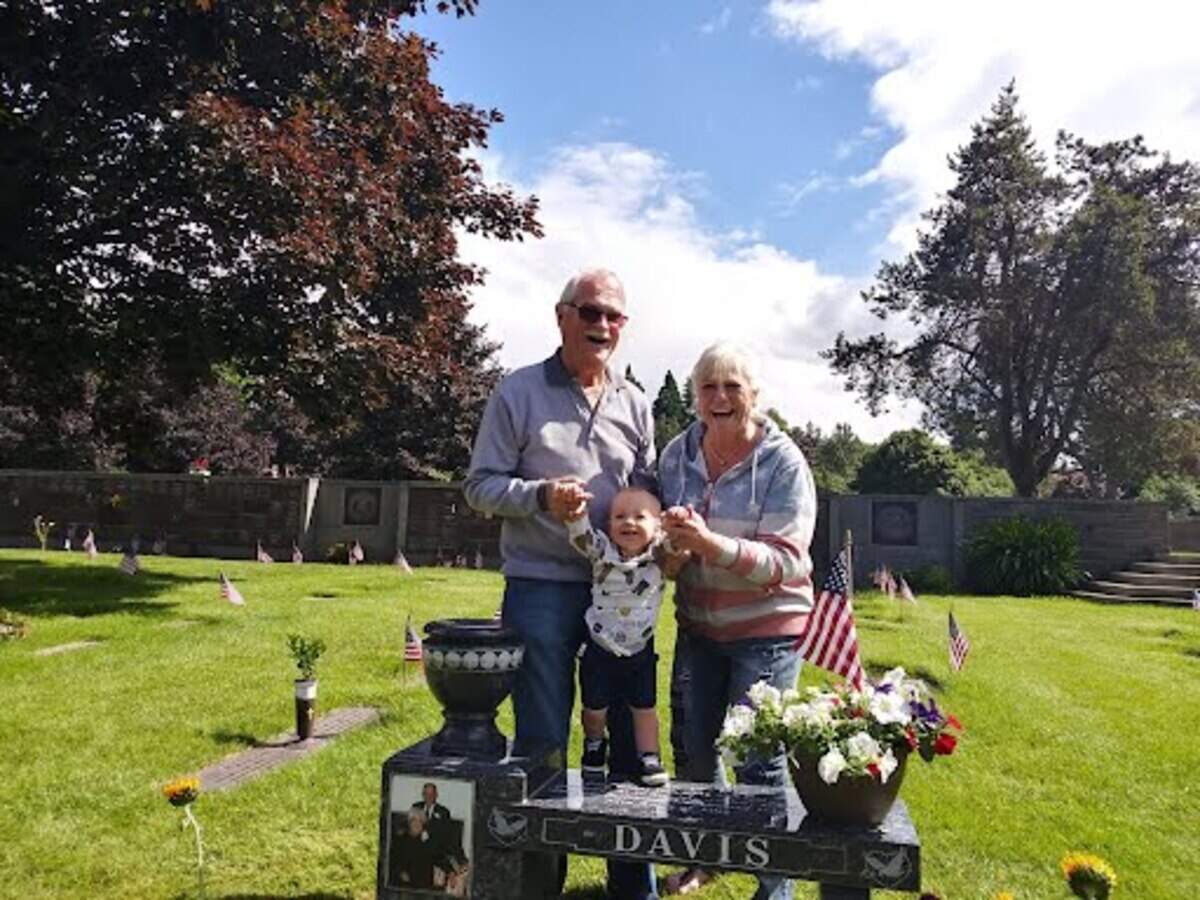
Grandma Big, as her family called her, and her glazed blueberry pie are now celebrated alongside 39 recipes in Grant’s new book, “To Die For: A Cookbook of Gravestone Recipes,” published in October by HarperCollins.
Most of the recipes are sweets — snickerdoodles and “cross country cookies,” carrot cakes and fruitcake, apricot ice cream and nut rolls — and most honor women. The few men tended to be “volunteer-minded,” said Grant in an October phone call, and “the cooks of their families.” Nine savory entries share the secrets of “Dr. Death’s Ranch,” kasha varnishkes and, in perhaps the most enigmatic of the etched evidence, “the best meatloaf” with beef and bacon.
A cookbook of family recipes and food stories
From a daily-use standpoint, “To Die For” is a cookbook, but it differs from contemporary collections of perfected commercial recipe-testing paired with personal anecdotes. Instead, these are recipes tested by time and the eclectic family bonds that made them, told through the people who knew them best.
“The project was born out of essentially community archives principles,” explained Grant, who launched Ghostly Archive on TikTok in 2020 while interning at Congressional Cemetery in Washington, D.C. “It needs to be in the voices of the people who are featured in it. Most of those people have passed — the next best thing is their family.”
The social-media adventure started as a class assignment in her library and information sciences graduate program at the University of Maryland. She began cataloguing her day-to-day, which involved photographing gravestones and curating a digital tour for 150 of the cemetery’s most famous residents. Those entries evolved into highlighting gravestones, also on Instagram, at cemeteries around the region that sparked her interest.
“I loved cemeteries growing up, but I knew very little about the behind-the-scenes,” said Grant in an interview. Many of those physical memorials, she learned, reached beyond simple sentimental messages.
“It was just so… human,” she said.
In October 2021, as she and her own mother swapped recipes from the New York Times Cooking app, Grant read about Naomi Odessa Miller-Dawson’s spritz cookie gravestone recipe in Brooklyn in Atlas Obscura, which chronicles the world’s peculiarities. She journeyed to the location, snapped a photo and then recorded the process of recreating the treat at home.
“It went viral overnight,” recalled Grant — less for the cookies than the thread that seemed to connect everyone who watched it. “I was surprised how personalized people’s comments were. ‘What would I put on my gravestone?’ ‘My mom died last year and I make her cookies every weekend; cooking makes it feel like she’s still with me,’ or ‘chili on my dad’s birthday.’ These really, really hit the heart of personalized food stories: How people were using food to remember a loved one.”
Connecting gravestone recipes across America
With the help of an ever-growing legion of fans, Grant discovered more gravestone recipes: chocolate fudge from Kay Kirkham Andrews in Utah, Christmas-Eve cookies from Maxine Menster in Iowa. Along with Miller-Dawson’s recipe, those two had been featured previously on local news and widely circulated on Facebook.
“If you were in a taphophile community,” said Grant, which she defines as cemetery and gravestone enthusiasts who celebrate the history, art and culture of them, “you probably would have seen it. There was less of connecting the dots.”
She continued cooking and sharing, then began flying around the country to visit cemeteries and connecting directly with living family members. Davis and the glazed blueberry pie — so named for its technique of cooking the fruit on the stovetop and pouring the hot preserves over more blueberries in a pie shell layered with cream cheese — was among them.
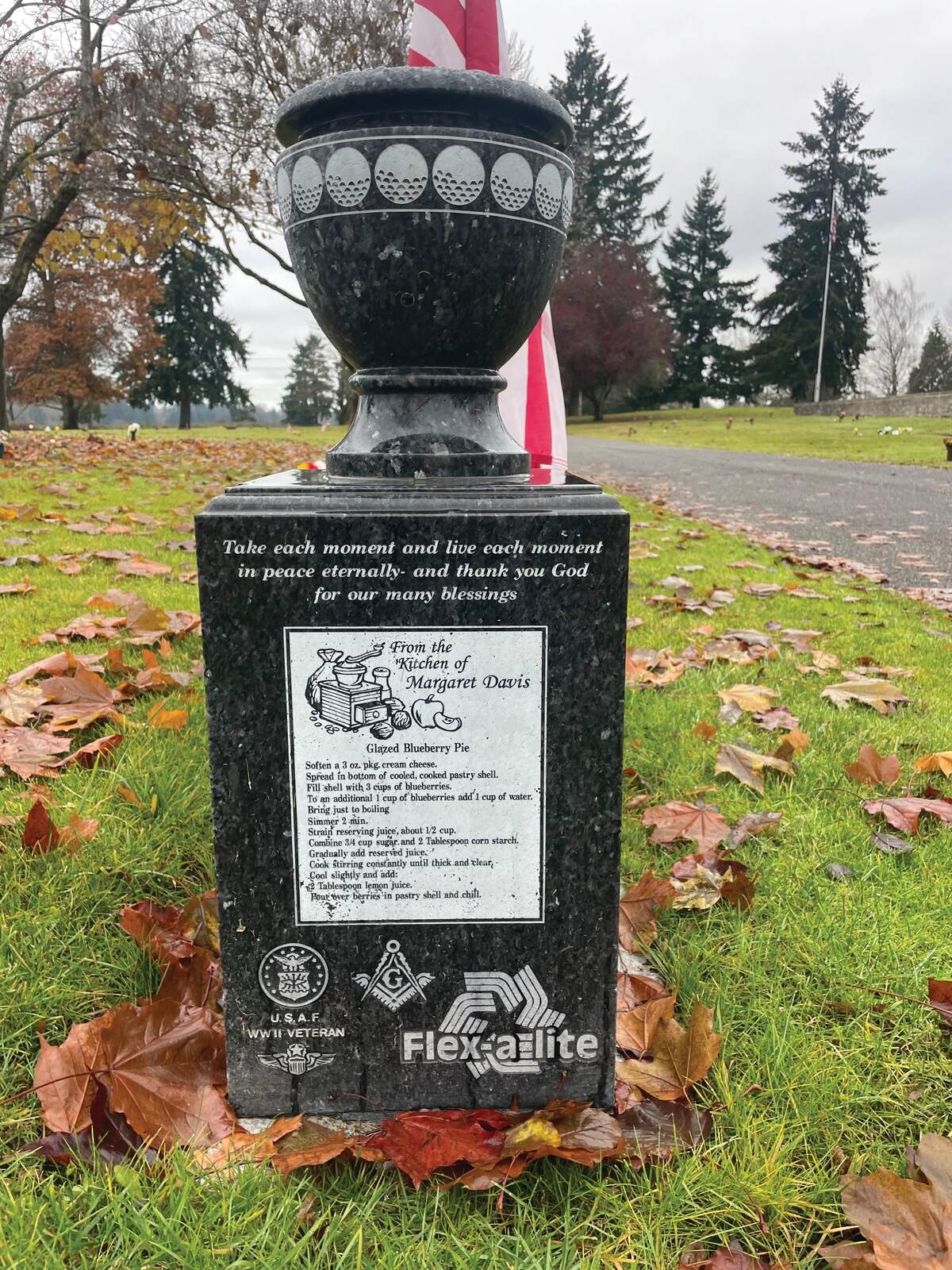
Getting Grant’s call was “an eye-opener for me, too,” said Willingham. “I just did it for my mother, for her, never thinking that there were other people.” She sees the book and Ghostly Archive as a reminder that cemeteries hold memories you can’t find on the internet.
Raised on a farm (still in the family) in rural Illinois, Davis was known to iron sheets and sometimes made the kids iron socks and underwear. The family was stationed at several Air Force bases, including in Germany, Scotland and Cape Cod, before Joint Base Lewis-McChord. After Eddy retired, they started a business selling automotive fans (since sold).
“She was a fantastic entertainer. She was a fantastic tour guide,” said Willingham. “She had a good sense of humor” and “loved Washington — she loved the weather.”
For the author, who was inspired by community cookbooks — the kind collated for school fundraisers and church groups — and who lost both of her grandmothers during the pandemic, the book also bears a call to action. A 21-question guide might spark your own quest to record the food history of your family, whether by blood or by choice.
“Documenting your family’s history isn’t just an exercise in nostalgia — it’s necessary for knowing who you are. And food lies at the beating heart of it all,” writes Grant in the introduction. “A culinary legacy is often taken for granted until it’s too late. There’s no time like now to start documenting.”
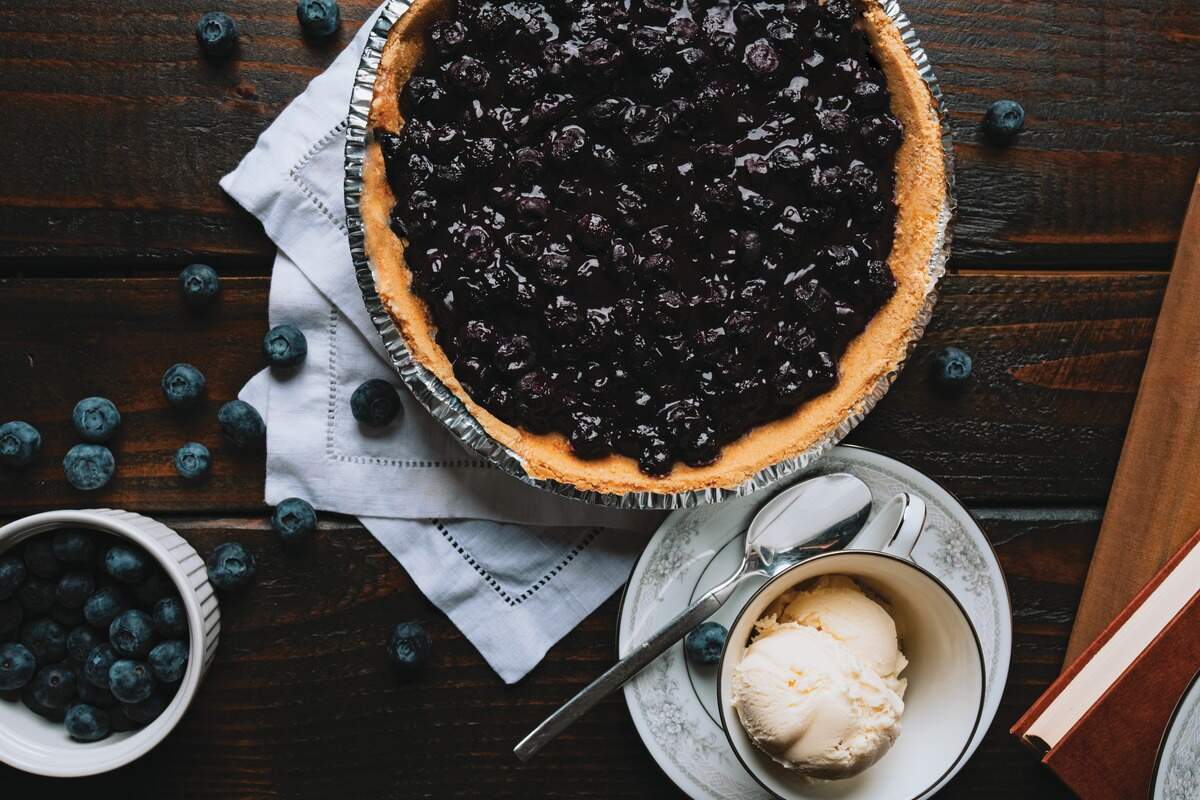
Grandma Big’s Glazed Blueberry Pie (from “To Die For”)
- 3 ounces cream cheese, at room temperature
- 1 pie shell, baked and cooled (or store-bought)
- 4 cups blueberries
- 3/4 cup sugar
- 2 tablespoons cornstarch
- 2 tablespoons lemon juice
Spread the softened cream cheese in the bottom of the pie shell. Fill the shell with 3 cups of the blueberries.
In a pot, combine the remaining 1 cup blueberries and 1 cup water and heat over medium-low heat. Bring the pot just to boiling. The blueberries will get soft and the water will turn blue. Simmer for 2 minutes. Strain and reserve the juice, about ½ cup, and put the juice in a saucepan.
In a bowl, combine the sugar and cornstarch. Gradually add to the blueberry juice and cook while stirring constantly, until the mixture is thick and clear. You don’t want it to get too thick — if you cook it too long, it doesn’t spread over the berries as well.
Let the blueberry slurry cool slightly and add the lemon juice.
Pour the mixture over the uncooked blueberries in the prepared pastry shell and chill in the refrigerator for at least 1 hour before serving.
Linda’s tip: Add a sprinkle of sugar to the cream cheese. You can skip the draining part and leave the berries in the slurry if you prefer. “You can’t go wrong. It just comes out perfect.”
This story was originally published October 29, 2025 at 5:15 AM.