
Author explores untold stories of Tacoma’s ‘Pappy’ Boyington in Flying Tigers book
Sam Kleiner was still in school when he gave himself a difficult assignment: write a book about a subject that had already been well told.
That’s why his book, “The Flying Tigers,” bears the subtitle, “The Untold Story.”
As clichéd as that might be, Kleiner — and the book — really mean it.
The impetus to write the book about the storied World War II fighter pilots — including famed Tacoma-raised pilot Greg “Pappy” Boyington — was inspired by a series of love letters between a nurse and pilot.
He found them while getting his law degree at Yale.
“I love writing history that is accessible and relatable to the public,” Kleiner said in a phone interview.
He contacted and visited families and small archives to find other personal letters, diaries and combat reports — including Boyington’s.
“Having access to those kind of documents opened up a whole world of being able to write about these guys that hadn’t been done before,” Kleiner said.
He was also inspired by his grandfather, Tacoma resident Herman Kleiner, 95. The elder Kleiner was a navigator on a B-25 bomber in the Pacific during World War II.
“I grew up listening to his stories about the war,” Sam Kleiner said.
FLYING TIGERS
Before Pearl Harbor became a household phrase and rallying cry across America, the Tigers were a secret group of U.S. pilots assigned by the Roosevelt administration to assist the Chinese in their war against Japan.
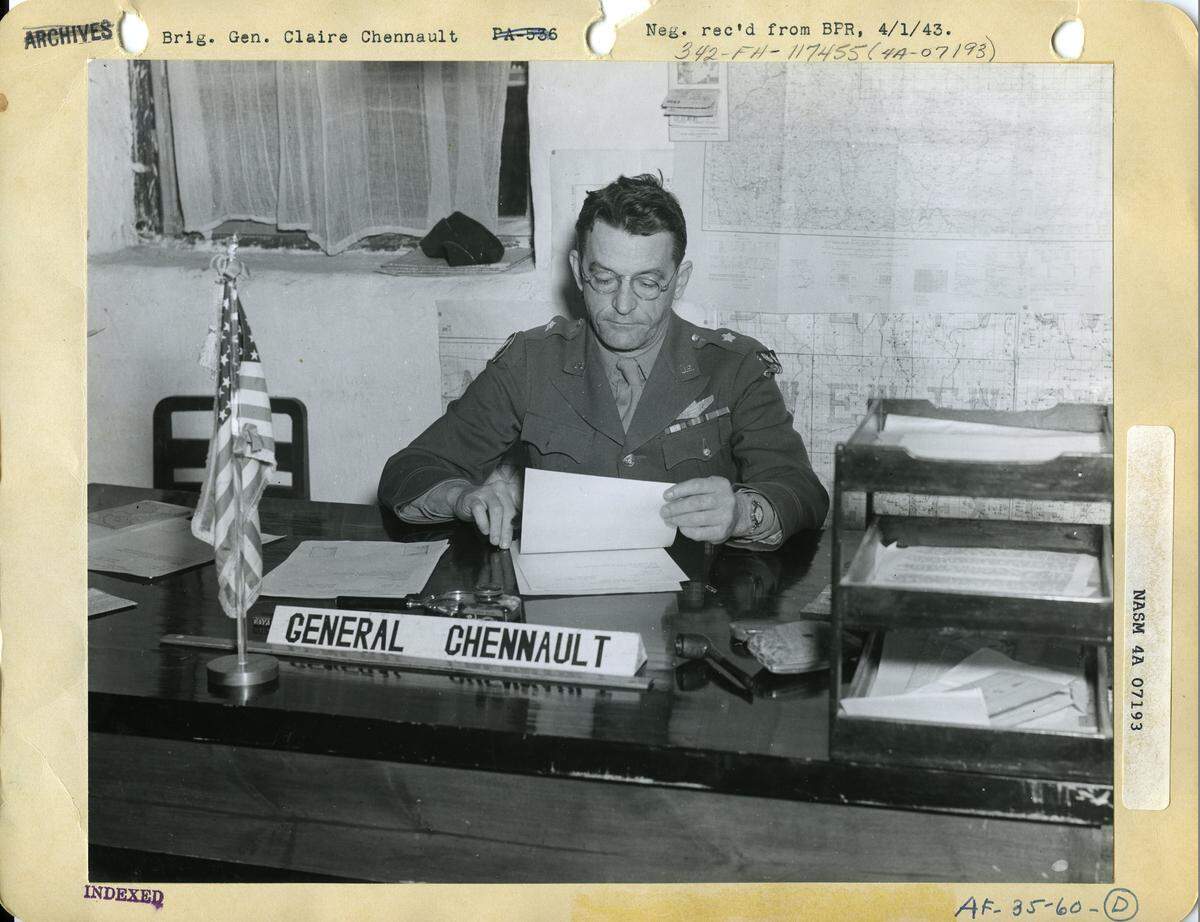
About 100 pilots and 200 supporting crew members traveled to Burma (now Myanmar) in 1941 to fly the missions under the command of Claire Chennault.
They had months to train before their first battle on Dec. 20, just a few days after the attack on Pearl Harbor.
Their P-40 planes, with their gaping, shark-toothed noses, and their impressive battle kills, captivated the American public.
“The Flying Tigers really inspired the country that we could fight and win this war,” Kleiner said.
Soon, John Wayne had made a movie about the squadron.
“The Flying Tigers” is Kleiner’s first book. Though his roots go far back in Tacoma history — his great-grandfather Morris began Liberty Lumber in 1914 — he grew up in Tucson, Arizona.
He got his doctorate in international relations at Oxford and a law degree at Yale, where he learned about the Flying Tigers.
“I found a series of love letters between a nurse and a pilot that were in an archive at Yale and decided I really needed to write this book,” he said.
The book is full of personal stories and engrossing details.
In 2015, he attended a Flying Tigers reunion, where he met the Chennault family. He also interviewed the last surviving Flying Tiger, Frank Losonsky, 97.
BOYINGTON
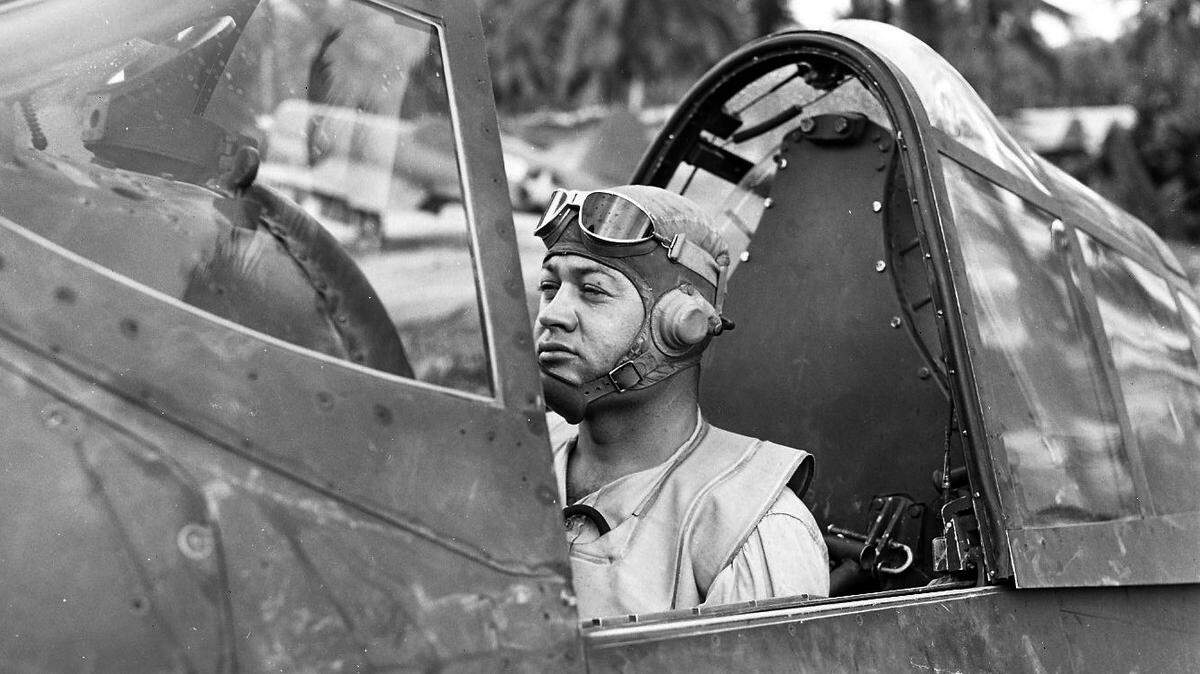
Gregory “Pappy” Boyington, a Medal of Honor recipient, is one of Tacoma’s most famous sons.
Boyington, a 1930 Lincoln High School graduate, led a famous band of misfit pilots, dubbed the Black Sheep Squadron, during World War II.
Boyington appears sporadically in Kleiner’s book but there’s enough there to paint a good picture of the pilot and offer new insights into his life.
Boyington studied aeronautical engineering at the University of Washington.
When Richard Aldworth, a recruiter for Chennault, went to Pensacola, Florida, in August 1941 looking for pilots he found Boyington. By then Boyington was a 28-year-old Marine pilot with a drinking problem and 30 pounds of extra weight.
He had a reputation of being the kind of guy who could “kill a fifth of whiskey before 10 o’clock in the morning.”
It wasn’t just bottles he couldn’t stay away from. Boyington apparently pursued women with the same abandon.
“Boyington’s wife, Helene, had finally had enough and left for Seattle, taking their children with her,” Kleiner writes.
Thousands of dollars in debt, Boyington went to see Aldworth. The pilot was offered $650 a month plus $500 for each Japanese kill.
He loaded up his car with his possessions and dog, Fella, and headed for San Francisco. His parents drove down from Washington. His mother tried and failed to talk him out of going.
Boyington and the other fliers pretended to be missionaries on board the Boschfonstein, the ship that took them to Burma.
The Flying Tigers eventually reached Rangoon, where Boyington’s delinquent behaviors continued, including one incident where he drunkenly tried to wrestle a cow to the ground.
Even when Boyington was sober his brashness and confidence would get him in trouble.
In March 1942, while flying an escort mission for Chinese leader Chiang Kai-shek and his wife, Madame Chiang, Boyington took command of the mission mid-flight when the leader had to drop out.
After the Chiangs’ plane continued on alone to its destination at Chungking, Boyington promptly got lost and the five P-40s ran out of fuel and were forced to land in a graveyard near the Indochina border, damaging them.
Two of the planes were salvaged but, “It was increasingly clear that his days in the outfit were numbered,” Kleiner writes.
In May, Boyington resigned from the squadron. Although he had had a blowup with Chennault, a letter from home did the trick, Kleiner said.
His mother wrote that Boyington’s ex-wife had been neglecting their children and that the juvenile court system in King County had intervened.
He eventually found a ship bound for the United States, made his way back to Washington and won custody of his children.
He got a job parking cars in Seattle while the war raged on.
“He finds himself basically washed up after his time in the Flying Tigers,” Kleiner said.
The self-imposed furlough ended when he rejoined the Marine Corps in September 1943 as commander of a Marine fighter squadron — the fabled Black Sheep.
“With the Black Sheep squadron, he accrues what is considered the most remarkable record of any pilot in World War II,” Kleiner said.
At 30, Boyington was older than his Corsair-flying pilots. They took to calling him “Gramps” and then “Pappy.”
Stationed on an island near Guadalcanal, Boyington issued challenges to the Japanese over radio channels.
Ultimately, he was shot down and presumed dead. In actuality, he spent more than a year in a Japanese prisoner-of-war camp.
His mother never gave up hope that he was still alive.
Kleiner writes that she spoke at the inauguration of a new ship in a Tacoma shipyard.
“Just as the bottle breaks, I’m going to say, ‘Ship go out and bring my boy back to me and his babies’,” she promised.
“One of the most remarkable stories from the end of World War II was the miraculous liberation of Pappy Boyington from that POW camp,” Kleiner said.
Boyington returned to Washington and reunited with his family.
“He had a pretty troubled life,” Kleiner said. “His battle with alcohol is something that would define the rest of his life.”
In May 2017, the Medal of Honor recipient was finally honored with a memorial at Lincoln High School. He is buried at Arlington National Cemetery.
“The Flying Tigers”
The Untold Story of the American Pilots Who Waged a Secret War Against Japan
By Sam Kleiner
294 pages, Viking, $28
This story was originally published September 20, 2018 at 1:07 PM.