Caretakers who disappeared with 4 vulnerable clients retain WA state licenses for now
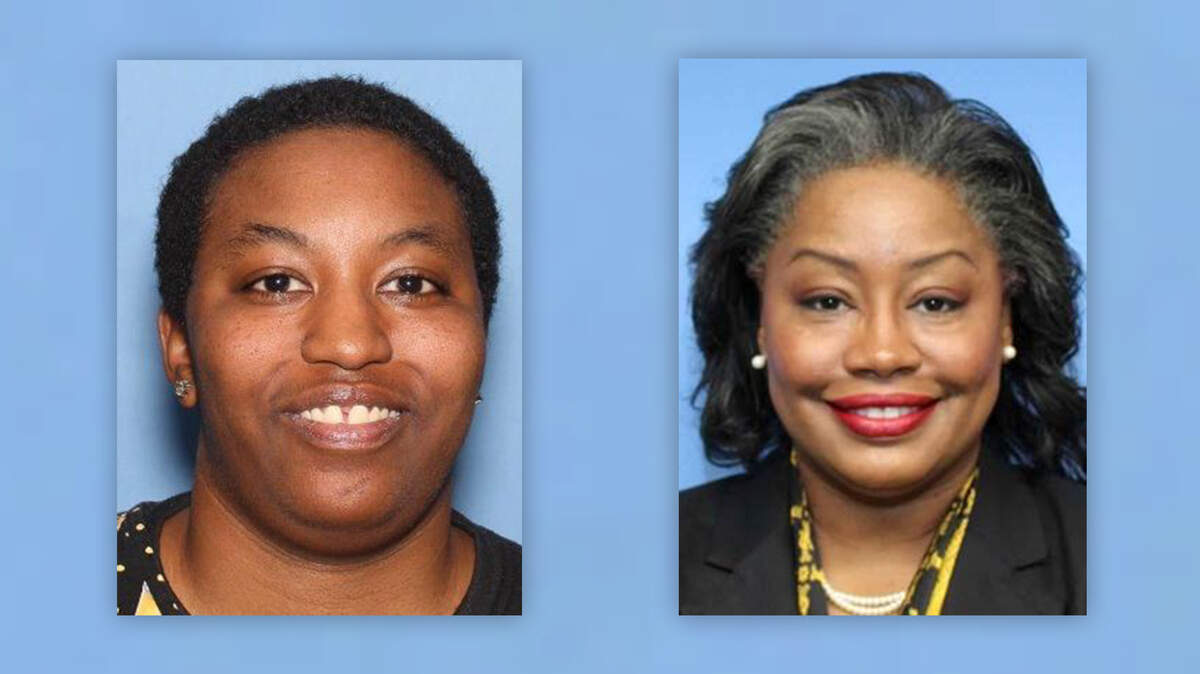
Two caretakers who disappeared in August with four vulnerable adults are still licensed as nursing assistants but cannot house clients at their Spanaway home until a state investigations wraps up.
Although the Pierce County Prosecutor’s Office declined to file criminal charges against Nicole Emanuel, 46, and her sister Jessica Newkirk, 33, the state Department of Social and Health Services is investigating them after a complaint was filed following their Aug. 23 disappearance.
A 57-page investigation with police reports, licensing records and interviews with the vulnerable adults recently released to The News Tribune offers new details on the caretakers and their interaction with DSHS before they went missing.
Police found the group safe after several days and the vulnerable adults have since been moved to different group homes.
The records indicate there was a history of problems with Emanuel’s care facility dating back at least a decade.
A Residential Care Service worker sent to the Spanaway home after the disappearance of Emanuel, Newkirk and the four vulnerable adults told sheriff’s deputies she also responded to Emanuel’s home in 2010 with a notice of license revocation.
“She told me that Ms. Emanuel never talks or allows anyone in for an inspection without the presence of her attorney,” according to a police report. “I asked her what she thought and she believes there is a mental health issue with Ms. Emanuel.”
It’s unclear whether Emanuel’s license was ever revoked.
The News Tribune has requested previous complaints and investigative records from DSHS but has not yet received them.
State workers last inspected Emanuel’s family home Jan. 23, 2020, and found no deficiencies. A DSHS spokesman said inspections are done every 18 months, but it appears the COVID-19 pandemic delayed the most recent inspection.
For now, Emanuel has an active contract with DSHS to provide services but cannot house clients until the investigation is over. That also means she is not being paid.
“All providers are entitled to due process,” Wright said. “There is an active and open investigation into the facility, and pending the results of the investigation the provider could have her license revoked or face other enforcement action.”
Emanuel could also appeal the findings of DSHS’s investigation.
Her group home is licensed to provide care to vulnerable adults diagnosed with development disabilities, mental illness, dementia and diabetes, according to her contract with the state.
In addition to basic care, Emanuel’s facility offers gardening, crafts, bingo and other games.
“We value the unique needs of our residents and we are committed to maintaining their dignity and independence,” she wrote in the disclosure of services.
Emanuel could not be reached for comment. Her attorney, Gary Preble, did not return a call for comment.
Caretakers, clients go missing
It started the afternoon of Aug. 23 when Emanuel and Newkirk brought their four clients, who range in age from 44 to 63, to a DSHS office in Tacoma and tried to leave them there.
Emanuel told one of the employees “she was being followed,” according to a police report. “She stated she threw her phone away because it was being tracked.”
The group arrived in a rented minivan. It would later be discovered that Emanuel’s vehicle was parked outside her house.
A DSHS employee told Emanuel “he could not take the clients. He stated their office was closed and they did not have a home for them to go to. He also stated the hospitals are too busy to take the four clients,” according to a police report.
The employee told Emanuel to keep in contact, records say. A DSHS spokesman later said Emanuel left before employees could help her.
“The caretaker arrived at a DSHS office that is not a shelter or equipped to immediately take clients in,” DSHS spokesman Chris Wright said. “Our employee attempted to help them, but they refused to give any contact information and left. A DSHS investigator went to the home in the Spanaway the next day to follow up, but no one was home.”
The employee was concerned enough about Emanuel’s visit that he emailed his boss and case manager shortly after she left, records say.
DSHS asked the Sheriff’s Department to do a welfare check that night and again in the morning because their case worker had been unable to reach Emanuel.
An employee who spoke with Emanuel told investigators she had been calm at the office “but fearful,” according to a police report. “I asked him if he thought she appeared to be on drugs and he said no, but that this appeared to be a more of a mental health issue.”
A deputy who checked the Spanaway family home found nobody there. Neighbors told him Emanuel and others who lived there kept to themselves and hadn’t been seen in days. Family members of the vulnerable adults said they hadn’t had contact in five days.
The department put out a bulletin and released to the public photos of Emanuel, Newkirk and the four vulnerable adults.
A Seattle police officer called to report seeing the group in the rented minivan on the morning of Aug. 22. Emanuel cut off a van and caused a minor collisions in the Harbor Island area, then insisted the other driver was drunk and insisted he be ticketed or arrested, records say.
The officer said Emanuel told him she was on the way to Sea-Tac Airport but drove away in the opposite direction.
Emanuel’s father also called investigators after she was reported missing.
He said she does not have a history of mental illness but appeared to be suffering from paranoia. She thought her son was out to get her, was convinced her phone was bugged and recently deleted her social media accounts, according to the investigation.
On Aug. 25, Emanuel emailed a DSHS behavioral specialist to say one of her clients was no longer at the Spanaway family home and she’d left him at a Tacoma motel.
The specialist notified police, who found Emanuel and the others at the motel.
Emanuel and Newkirk stayed in the motel room while the four vulnerable adults slept in the minivan for three nights, according to the Sheriff’s Department.
Police said the vulnerable adults were unharmed but neglected.
“They were vocal that they were tired, wanted to shower, change clothes, brush their teeth, smoke, and have lunch,” an officer wrote in a police report.”I found them all to be utterly filthy and smelling foul of body odor. Their hair was greasy and hanging, their faces drawn and tired, their clothes ill fitted and dirty with food and other stains.”
One of the vulnerable adults told investigators Emanuel told them they couldn’t go back to the Spanaway home because “too many people to count” were chasing them. Another said he was forced to leave his cell phone — the only means of contact with his family — at the home.
“He said that whenever he or the other residents of the care home asked about going home, Nicole would yell at them, curse at them, and threaten to ‘put them out’ of the van,” reports say. “He said they even threatened to kick them out on the freeway, and that at one point Nicole made (a vulnerable adult) get out on the highway, but then let her back in.”
Deputies noted there were toiletries and clothes in the van, but no blankets or pillows.
No criminal charges filed in disappearance
The sisters were arrested on suspicion of kidnapping and criminal mistreatment.
Prosecutors the next day declined to file charges.
“A kidnapping charge is problematic because the main caregiver, who was clearly in distress, tried to turn the adults in her care over to the state when she went to DSHS seeking help,” Adam Faber, spokesman for the Prosecutor’s Office, said in August. “A criminal mistreatment charge requires evidence that someone was deprived the necessities of life, which the investigation at this point has not shown.”
“It is regrettable that a caregiver seeking help from DSHS was denied it, and that fact makes proving a case like this beyond a reasonable doubt problematic,” Faber said.
Wright, the DSHS spokesman, said no employees have been disciplined due to the incident and that they are conducting an after-action review “to determine if anything could be done differently if something like this were to happen again.”
The office is still contracting with Emanuel’s family home but there are currently no clients living there.
The four vulnerable adults were placed in other long-term care facilities after they were found in August.
Both Emanuel and Newkirk still hold nursing assistant licenses.
Emanuel was first licensed in December 2009. Newkirk was first licensed in May 2011. Both renewed their registration within days of each other in March of this year.
Timeline
Aug 22, 7:15 a.m.: Emanuel, Newkirk and their four clients were involved in a car crash in Seattle.
Aug. 23, 2:50 p.m.: Emanuel went to a DSHS office in Tacoma and tries to surrender the vulnerable adults.
Aug. 23, 6:02 p.m.: DSHS called the Pierce County Sheriff’s Department and requested a welfare check at Emanuel’s Spanaway family home.
Aug. 24, 9:30 a.m.: DSHS again called the Pierce County Sheriff’s Department to request a welfare check.
Aug. 25, 7:46 a.m.: Emanuel sends an email to a state worker with her location and police find her and the others at a Tacoma hotel hours later.
This story was originally published October 10, 2021 at 5:00 AM.