Indigenous leaders urge western WA nonprofit to address bullying, harassment allegations

Western Washington-based conservation nonprofit Nia Tero is being called out over allegations of lack of proper consultation with staff over Indigenous-led and serving programming. The organization, which states on its website that it works “in solidarity with Indigenous peoples and movements worldwide,” is also being accused of bullying and abusing staff.
The organization works with Indigenous peoples and projects primarily in North America, northern Amazon, and Pacific Islands to provide grants and training on storytelling and leadership. In 2022, it awarded almost $30 million in grants to 117 different organizations.
More than five dozen Indigenous leaders — some of whom are based in Washington state and have worked with Nia Tero — formed a group called the Global Indigenous Alliance to address their concerns. The GIA has sent multiple letters in recent weeks to the Nia Tero’s board. The letters voice concerns over treatment of staff as well as the Nia Tero’s decision to dissolve its celebrated Storytelling division. The letters also call for an investigation into the situation.
“We must express our distress at the lack of consultation with the Indigenous Nia Tero alumni,” states a partially-redacted March 19 letter that was shared with The News Tribune by GIA. “As an organization claiming to stand in solidarity with Indigenous Peoples’ efforts to secure guardianship of their home territories, it’s imperative that decisions of such magnitude are made in consultation with the very communities you aim to support.”
Nia Tero’s board has responded in writing about some of the concerns to individuals, staff and partners. A March 25 letter explains the organization’s decision to restructure its storytelling program.
“We will continue to produce creative content, but we will do it differently,” states the letter from the board. “We will combine our storytelling and strategic communications teams and capacities to be more responsive to and aligned with our partners in the media we create or support.”
An emailed statement from Nia Tero to The News Tribune on Friday stated:
“As an organization, Nia Tero greatly values its globally diverse network of employees, board members, advisors and partners. We are guided by a majority Indigenous Board, including our Chair and Vice Chair being Indigenous. At all times, we strive to promote a culture of inclusivity and the free exchange of thoughts and ideas so that we can execute on our critically important mission to work in solidarity with Indigenous Peoples who sustain thriving territories and cultures to strengthen guardianship of Earth and all beings. We address all HR issues immediately and thoroughly and if necessary bring in outside expertise to provide counsel and guidance.”
Ongoing calls for change
Despite the recent attention from Nia Tero’s board, calls to address concerns over programming and treatment of staff have persisted. The redacted GIA letter also raises allegations from staff, consultants and partners about an unhealthy workplace culture.
“It has been brought to our recent attention that complaints of a serious nature including bullying and harassment have been a persistent issue from leadership,” the GIA letter states. “We cannot, in good conscience as a community, stand idly by and not address this.”
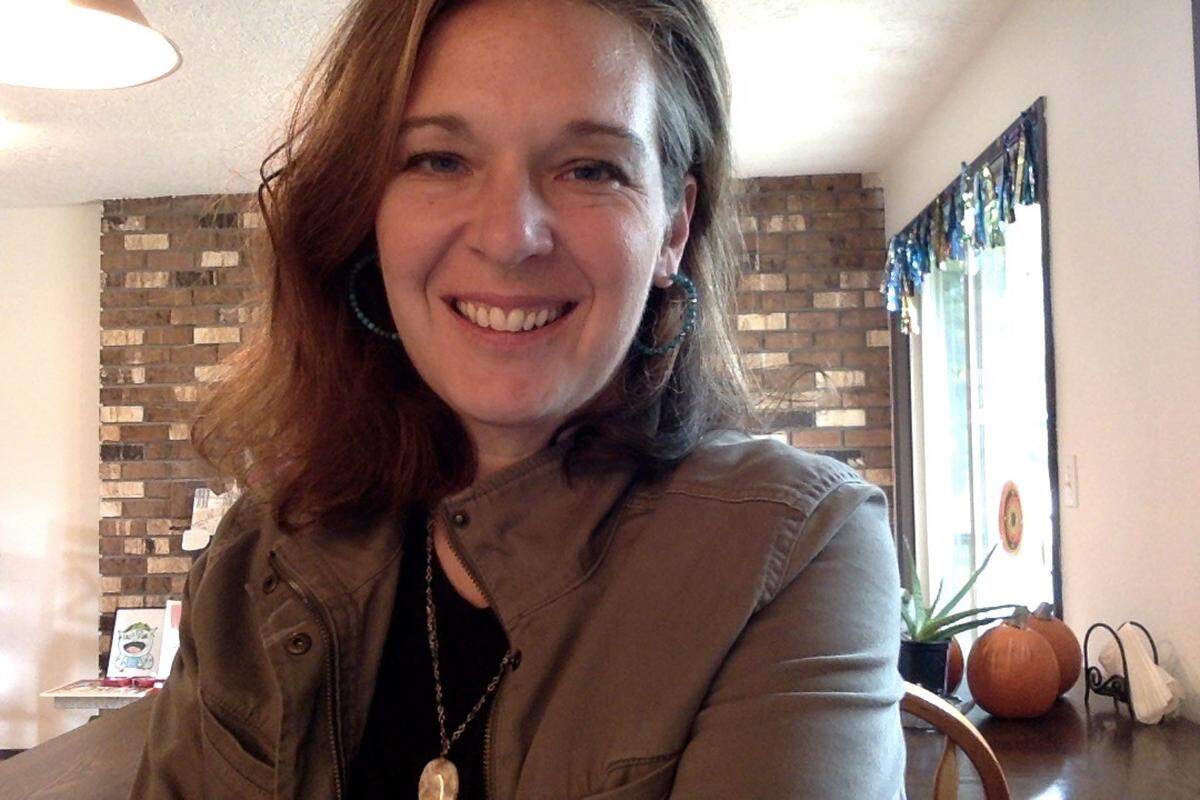
One Tacoma-based consultant, Vicky Murray, worked with Nia Tero as a program manager from 2021-2023. She said in an interview that she experienced being treated poorly as a human being and as a person of Indigenous descent. Murray is a member of the Bad River Band Chippewa.
“It was essentially an abusive workplace and not the kind of place I’d trust with the kinds of projects I was working on,” Murray said. “It’s using the name of Indigenous people and environmental conservation to line the pockets of a few people. And then underpaying and overworking BIPOC staff.”
Murray said that she was forced to continue working even when she was sick two different times with COVID, and that the demands of the job impacted her physically. She said she was “overworked, stressed, and treated like (expletive).”
She also said that personal and family emergencies were disregarded, including being forced to continue working when her father was diagnosed with terminal cancer and kidney disease.
“I was not given any option to take time off — it was business as usual,” Murray said. “The events I was planning [at the time] were really high-profile with TED talks and the UN. There was intense pressure and no time off – or even condolences.”
Murray noted that she experienced being exploited as “one of the few” Indigenous staff working at the organization at the time. Once, just prior to the arrival of a VIP, Murray says she was asked to “do something” to welcome them. An Indigenous welcoming ceremony for an honored guest would typically be performed by a local tribal elder. Murray is not an elder and, though she is based in the Pacific Northwest, her tribe is not from or based in the region.
“I was asked to perform blessings for our board,” Murray said. “It would typically not be my role. I don’t have the proper credentials. I wouldn’t even do it for my family.”
Nia Tero has multiple board members who are Indigenous, but they did not respond to requests for comment.
Legacy of storytelling
Victoria Cheyenne, an Indigenous Bolivian-American documentary filmmaker, says she was contracted by Nia Tero in February 2023 after attending the Big Sky Documentary Film Festival that the organization sponsored. Cheyenne served as the outreach coordinator for the organization’s Kin Theory team, a global community of Indigenous media makers that supports the telling and sharing of their own stories.
Cheyenne said in an interview that during her time with Nia Tero, she did not experience bullying or harassment but did witness several instances of non-Indigenous leadership speaking over and taking control of conversations that were being led by Indigenous members.
“I witnessed a lot of non-Indigenous leadership performatively engage in a way that made them seem like they were a spokesperson for Indigenous value systems, while they themselves were non-Indigenous,” Cheyenne said. “That respect is like being a part of something, but not being a spokesperson for something I think is a really important line and seeing people not toe that line and also not listen, speak over and disregard the perspective of Indigenous and BIPOC folks within Nia Tero was something I did witness.”
Cheyenne worked with Nia Tero until January 2024. Just prior to the end of her contract with the organization, she and others on the Kin Theory team were notified that Nia Tero would be deprioritizing the program and making additional budget cuts to the storytelling division.
“It was decided that Kin Theory as an initiative was not in alignment with Nia Tero, which was really heartbreaking to hear because as someone who worked in the field, I saw a lot of direct results from the work that we were doing, so to find out it was deprioritized was really disappointing,” Cheyenne said.
Cheyenne also noted that she had mixed feelings about her relationship with Nia Tero and had concerns due to the fact that the organization wasn’t created by or led by Indigenous peoples.
“I think it’s really important to have these really transparent conversations that Nia Tero is not an Indigenous organization,” Cheyenne said. “Nia Tero was not founded by Indigenous peoples and has repeatedly not set up the organization in a way as to encourage Indigenous leadership, which is really disheartening because the goals of the nonprofit are supposed to be in alignment with Indigenous value systems.”
Cheyenne added that Nia Tero’s unwillingness to listen or even acknowledge the feedback from members of Indigenous communities continues to prove that its current values systems are not in alignment with uplifting and amplifying Indigenous voices.
“The realities of the nonprofit structure that I entered by working with Nia Tero was heartbreaking,” Cheyenne said. “To see a system that was not upholding the values it promoted and the outward image that it shared and to see people that I respected from within the nonprofit system be pushed down in their work even though they were people who have vast experience and ancestral knowledge to share was something that showed me that internally there’s so much work that would need to be done to restructure Nia Tero to be able to continue to uphold the work in a way that’s actually reciprocally beneficial to the community.”
Widespread ties to conservation
Nia Tero, founded in 2017, has deep ties to major funding and well-established entities, including the MacArthur Foundation, the Emerson Collective and the Mulago Foundation.
Nia Tero is also notably connected to Conservation International, which has faced its own set of allegations of abuse and harassment over the years. CI’s founder, chairman of the board and former CEO Peter Seligmann is also Nia Tero’s founder and CEO. CI and Nia Tero share ties through other executive staff, too.
MacArthur, Emerson, Mulago and CI were all contacted, but were unable to respond with comment by time of publication.
This story was originally published April 13, 2024 at 5:00 AM.