Its job is to advise Tacoma on police issues. What happens when the advice isn’t taken?
A committee of Tacoma residents tasked with advising the city on police policy and reviewing complaints against officers is questioning whether its limited powers have blocked it from ensuring transparency and accountability in the Police Department.
Members of the Community Police Advisory Committee say they lack access to evidence in investigations of complaints filed by the public, have no say in the outcome of the inquiries and can’t ask questions or speak with Internal Affairs investigators before investigations are complete.
Restrictions on what the committee can do have fueled an identity crisis among members. Its chair, Allen McKenzie, said some members have questioned whether they are only a performative body that allows the City of Tacoma to point to it as evidence it is doing something about police accountability. Efforts to bring a more direct police oversight role to CPAC with expanded powers have been met with inaction by city officials.
What they do see in citizen complaint investigations, McKenzie said, are summaries of what the evidence was. He said the idea is that the committee can review the investigations to look for improvements to policy or to highlight patterns of alleged misconduct.
“But that’s totally different than oversight,” McKenzie said. “And I don’t think that really provides much accountability to the civilians of Tacoma. Just seeing these summaries of what the evidence allegedly was.”
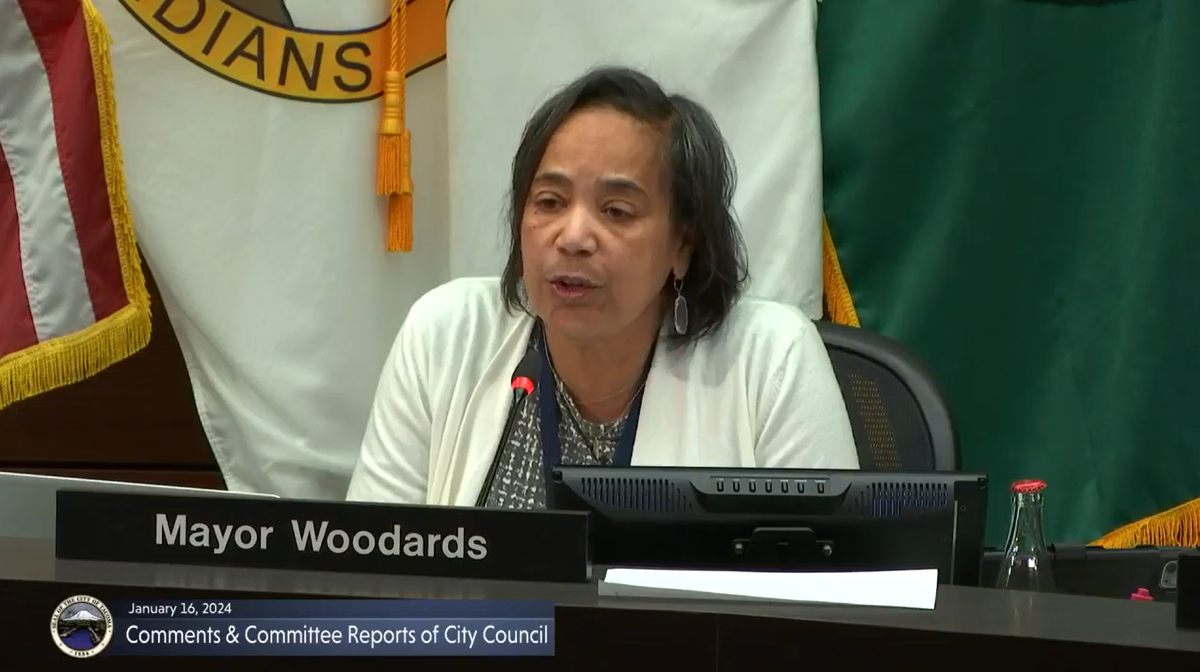
In a phone call with The News Tribune, Tacoma Mayor Victoria Woodards defended CPAC’s role in the city, stating that it was effective at ensuring transparency and accountability based on its design in 2007 as an advisory board.
“As I look at what their charge is, I know that getting it afterwards doesn’t allow them to question the decision that the chief made, ultimately,“ Woodards said. “But again I would come back and say, but it does allow them to change policies.”
Looking at the overall data allows CPAC to make recommendations for necessary changes, according to Woodards. For example, she said if the Police Department got 100 complaints in a month on officers’ courtesy in interactions with civilians, that would tell Woodards the policy might need changing, and additional training could be done.
“But I don’t feel like they don’t have any power,” Woodards said.
CPAC began looking into making the switch to an oversight model, rather than advisory, in 2020, when debate around police misconduct and how to address systemic racism in American institutions was raging. That summer, Tacoma passed a resolution committing to an anti-racist transformation of its institutions, systems and policies.
But CPAC hasn’t changed. As Tacoma officials work through a once-every-decade review of the city’s charter, eyeing whether to put the creation of a new Office of Policing Accountability on the November ballot, the future of CPAC’s role in keeping cops accountable is in the air.
What is CPAC meant to do?
Depending on the city, police oversight boards have varying purposes, levels of power and say in shaping police policy or making decisions about internal investigations. They range from committees that review investigations or advise a department on policy to entities that conduct independent investigations or wield adjudicative power in handling complaints against police.
In Tacoma, “regular folks” make up the Community’s Police Advisory Committee, according to McKenzie, a local attorney who previously worked as a strategic advisor at the Seattle Police Department.
The 11-seat board is made up of volunteers who aren’t members of the Police Department or their family members. McKenzie started working with CPAC in 2022. He said he thought his background in working on civil-rights cases would be useful to Tacoma. He also wants his two young sons to grow up in a safe city where they can trust the police.
“At the time that I applied for CPAC it felt like there was a movement going forward in terms of civilian oversight and accountability, and just realized that there’s a lack of trust with the community and the Tacoma Police Department,” McKenzie said.
Trying to restore that trust is a big goal for CPAC and a lofty one. The most recent survey of community satisfaction in Tacoma found that 55 percent of 750 respondents felt that police will keep them “very or somewhat safe from crime,” in 2022, down from 70 percent in 2020.
Reviewing citizen complaints against police for troubling trends is also a major part of the committees’ work, but it’s hard to tell how effective it has been.
The News Tribune in January reported that of the more than 1,100 citizen allegations investigated by the Police Department’s Internal Affairs Division since 2015, fewer than 9 percent were sustained. Much more often, investigators couldn’t substantiate whether there had been any misconduct or violation of department policy.
McKenzie said the low rate of sustained complaints isn’t very worrisome in itself.
“Giving IA the benefit of the doubt, if the evidence is what they say it is, they probably shouldn’t be sustained,” McKenzie said.
But the second trend, when there isn’t enough information to decide if there’s been misconduct, has caught CPAC’s attention. Sometimes that happens because the department tried to follow up with the person who filed a complaint but couldn’t get in touch with them, according to McKenzie, and the complaint isn’t sustained. He said it isn’t clear what lengths investigators go to to make contact.
CPAC highlighted the trend to the city. McKenzie said he doesn’t know if there has been any change.
There is less transparency for complaints made against Tacoma police that come from within the department. McKenzie said it’s his understanding that those are sustained at a much higher rate. But if a sergeant reviews body-camera footage and reports misconduct such as biased policing, CPAC won’t hear about it.
“We’ll never know about it, and neither will the community,” McKenzie said. “And those can be much more serious.”
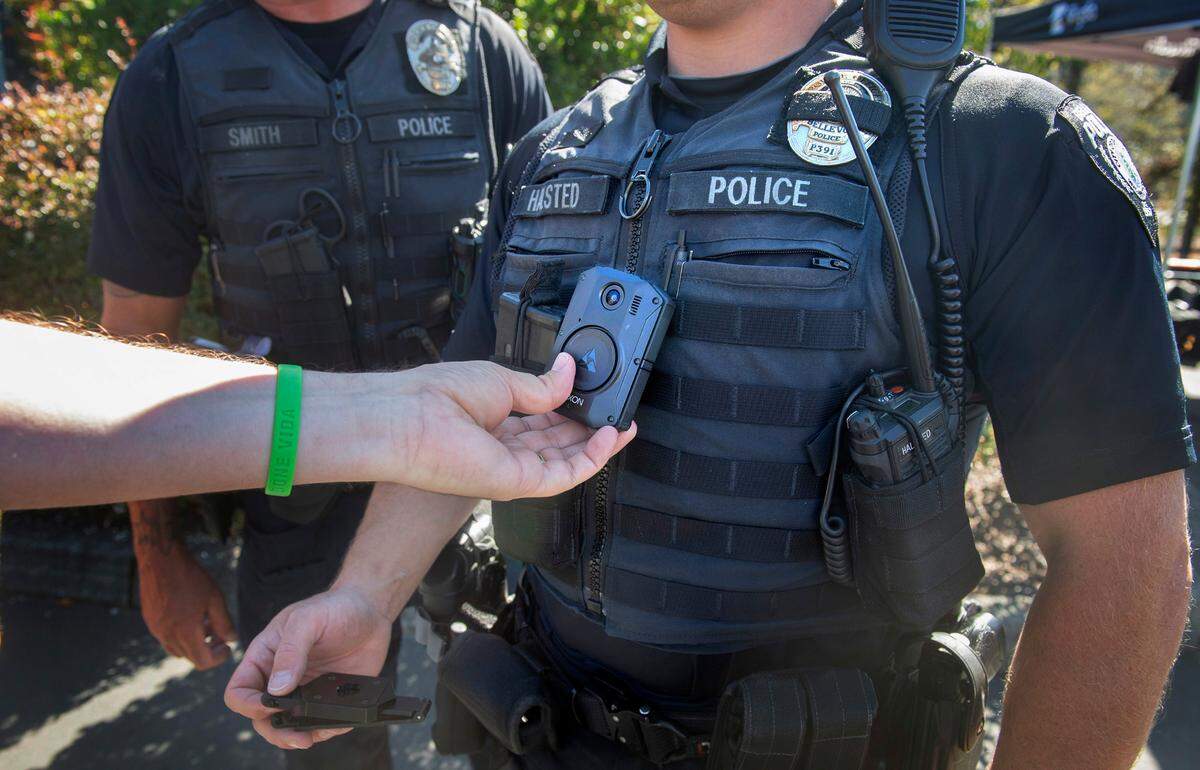
The committee has had at least one major policy win: the implementation of body-worn cameras.
The work predated McKenzie, but he said CPAC had a hand in writing the policy for how the devices are used. The first cameras were rolled out in December 2020. McKenzie said they’ve been a “game changer,” making it easy to check citizen allegations against video of what happened. He also sees them as a preventative measure because people who know they are being recorded are likely to behave more professionally.
CPAC has been weighing in on the Police Department’s effort to overhaul its policies, which Chief Avery Moore announced in January when he cleared three officers of wrongdoing in the March 3, 2020 death of Manuel Ellis. The policy rewrite is being done with the support of Lexipol, a Texas-based company that has helped write policies for thousands of police departments.
“We see drafts, and we give our two cents, but as an advisory board I mean the department can just ignore that,” McKenzie said. “Very often the only response we’ll get to our suggestions is ‘received.’”
Inaction stopped oversight from coming to CPAC
The committee has tried to add police oversight to its duties, but competing priorities in labor negotiations between the city and its police union sidelined the effort.
In July last year the committee presented to City Council its recommendations to change to an oversight model. It recommended hiring one or two full-time employees tasked with reviewing all complaints and bringing specific ones to the committee’s attention. The employees would have had certain privileges, such as receiving all complaints, not just those filed by civilians, at the same time as the department. Also access to evidence in Internal Affairs investigations, the opportunity to interview complainants and the chance to meet with the police chief before those investigations were complete to relay CPAC’s questions and insights.
“Get to actually review the evidence without having to make a public records request, and not decide what happens, but at least be able to weigh in before the chief makes his decision,” McKenzie said. “And oftentimes we would concur, right? I’m not saying there’s a huge conspiracy going on here.”
The recommendations were born out of community engagement and years of study, including the legal advice of Nick Brown, who is running for Washington state Attorney General and was formerly the top federal prosecutor in the state.
None of the proposed changes were implemented in the new contract, which was finalized in January and runs through 2026. McKenzie said it was a “shock” to learn that the recommendations never even made it to the bargaining table.
Asked why the city didn’t negotiate for police oversight, Woodards said there were competing priorities, and getting oversight could have led to protracted negotiations or years-long litigation. She said if police oversight does come to Tacoma, legal disputes will still probably happen.
“You can’t bring everything to the table,” Woodards said. “And initially we talked about a lot of things, tested, you know, checked to see what seemed like we could get through, and we focused on those things that we thought we could get done.”
Police oversight is a priority, Woodards said, but the highest priority was what the new contract did secure, stopping officers charged with certain serious crimes from remaining on paid leave while the criminal case plays out and allowing the police chief the option to complete Internal Affairs investigations and decide on discipline before the criminal case is concluded.
McKenzie said he understood why the city focused on fixing that piece of the collective bargaining agreement, but it was still surprising to CPAC that its recommendations weren’t brought to the table. He said the committee asked for updates a couple of times in fall, but it didn’t really hear anything until the contract was done.
In January, Woodards volunteered to become the first liaison between City Council and CPAC. McKenzie said they are building a closer relationship so there won’t be more surprises.
“I think that’s more than performative,” McKenzie said. “I think she really means to work with us towards a similar goal if not exactly the same goal.”
Police oversight could be on November ballot
Depending on what Tacoma’s City Council does with the recommendations of its Charter Review Committee, adding independent oversight of the police department could be up to voters to decide in November.
The Charter Review Committee has suggested creating an Office of Policing Accountability, which would oversee use-of-force investigations, manage the external civilian complaint process and have authority to conduct independent investigations, including power to subpoena witnesses and documents. Final recommendations were put forward at a special City Council meeting Tuesday evening.
The new office also would be able to review and analyze internal investigations and disciplinary action taken by the police chief regarding conduct or use of force incidents, with “full access and cooperation from” the police chief and Internal Affairs staff, according to the Charter Review Commitee’s report.
If adopted, the recommendations would have CPAC or a successor committee report on the effectiveness of the new office while it continues to advise the police chief on areas for systemic improvement in the police force and conduct community outreach.
Andre Jiminez said during Tuesday’s meeting that the Charter Review Committee spoke with law enforcement officers and people who have been affected by over-policing before coming to its recommendation. It also looked at oversight models in Chicago, Philadelphia and King County, among others in Washington, to determine how to best set up police oversight in Tacoma.
Nine members of the Charter Review Committee voted in favor of the recommendations, with one vote against, one abstaining and three absent. According to the report, the dissenting opinion was that the new office added significant layers of unnecessary oversight, and it wouldn’t be cheap.
McKenzie had only seen a draft of the final recommendations before he spoke with The News Tribune, but he said he’s supportive of creating an Office of Policing Accountability with a civilian director. He added he’s aware it could be “very expensive,” and he was interested in how the city would propose to pay for it.
What he doesn’t want to see is CPAC’s current duties diminished. The committee takes public comments at its meetings, and he said members go to community council meetings all over Tacoma.
“We’re all drawn to this for different reasons, but I think that we’re here for the right reasons,” McKenzie said. “We just want to make our community a better place.”
This story was originally published May 9, 2024 at 5:15 AM.