Trump administration orders purge of some online health data. What will that mean in WA?
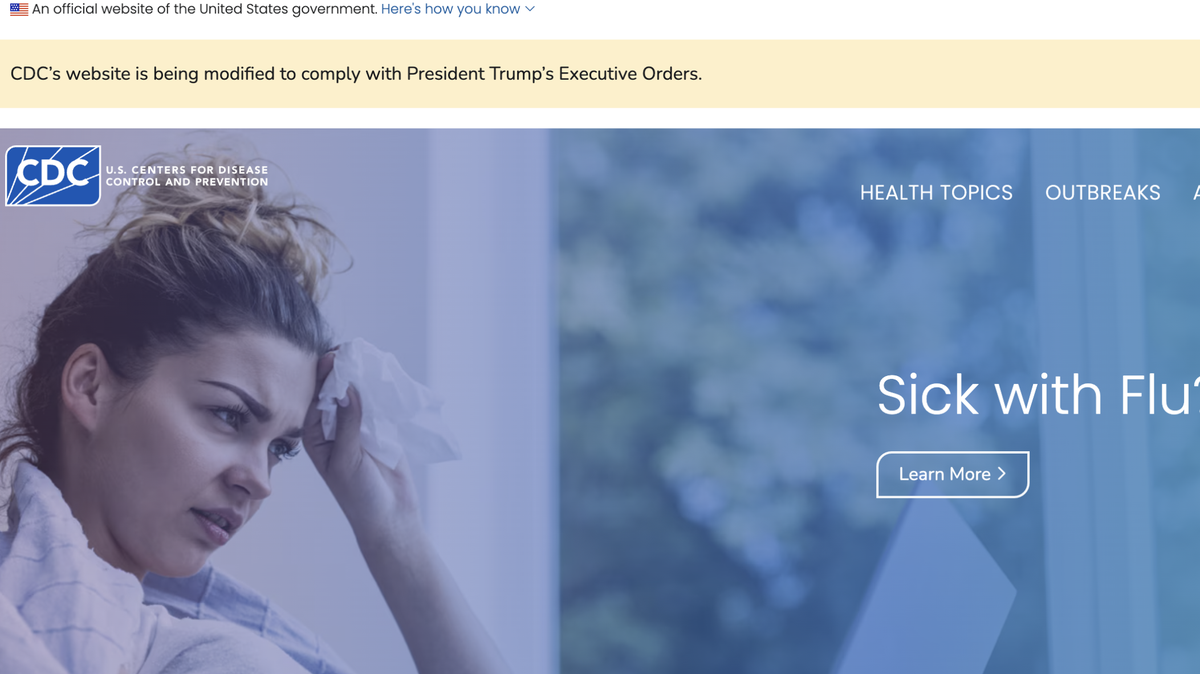
State and local health officials are assessing effects of online changes involving national health datasets and informational pages previously available through the Centers for Disease Control and Prevention.
A message at the top of the CDC’s main page says, “CDC’s website is being modified to comply with President Trump’s Executive Orders.”
Roberto Bonaccorso is Resiliency & Health Security public information officer for the Washington State Department of Health. In response to questions, he told The News Tribune on Feb. 3 via email that state DOH teams “are working to understand the extent of the changes to CDC data websites and the impacts on the public health work we do for Washingtonians.”
Bonaccorso added that DOH is “currently working to download and archive critical data that may be at risk, but the loss of public access would make ongoing public health monitoring more challenging.”
He noted that DOH “relies on national data for some of our dashboards and population health estimates. National data is also used to understand how disease rates in Washington compare to other states and the nation.”
In some cases the CDC also uses data from Washington and other states for its own maps and graphs showing national disease trends and patterns.
“We hope the interruptions are temporary and that full access is restored soon,” he wrote.
Kenny Via is communications and community relations director at the Tacoma-Pierce County Health Department. He said in response to questions Feb. 3 via email that while the CDC website changes “have not impacted our ability to track diseases locally,” it has altered some information access.
“We are currently unable to access some national databases and the Morbidity and Mortality Weekly Report (MMWR). Some webpages containing important guidance are also not available,” Via wrote.
He added, “We rely on the CDC for important health advisories and timely updates about national public health information and trends. Any long-term pause in the agency’s ability to communicate would have an impact on local public health.”
What spurred the changes
A memorandum from the federal Office of Personnel Management dated Jan. 29 and sent to leaders of federal departments and agencies stated that as of 5 p.m. Eastern on Jan. 31, they must, “Take down all outward facing media (websites, social media accounts, etc.) that inculcate or promote gender ideology.”
The guidance stemmed from an executive order titled, “Defending Women from Gender Ideology Extremism and Restoring Biological Truth to the Federal Government,” according to the memo. Other guidance was tied to another executive order: “Ending Radical And Wasteful Government DEI (Diversity, Equity and Inclusion) Programs And Preferencing,” both signed by President Trump on Jan. 20.
By noon Eastern Feb. 7, the OPM memo directs officials to “report to OPM on all steps taken to implement this guidance... .”
On Jan. 31, multiple media outlets reported that CDC websites and datasets related to HIV, LGBTQ populations, youth health behaviors and more had been removed or replaced, as well as treatment guidelines for certain infections.
On Feb. 3, for example, a page from the U.S. Department of Health and Human Services’ Office for Civil Rights displayed a “Page Not Found” notification.
The CDC’s Social Vulnerability Index, under the Agency for Toxic Substances and Disease Registry, also remained down the morning of Feb. 3. That data helps identify communities vulnerable to the effects of disasters and public health emergencies.
The Youth Risk Behavior Surveillance System, which tracks health trends among U.S. high school students, also remained offline Feb. 3.
A CDC link to a page on where to find Mpox vaccines also appeared to be disabled.
This story was originally published February 3, 2025 at 12:03 PM.