Old Navy emailed a Pierce County woman. More than 80 lawsuits followed
AI-generated summary reviewed by our newsroom.
- A Pierce County woman sued Old Navy for allegedly deceptive email subject lines.
- The Washington Supreme Court clarified consumer protections under a related state law.
- In the wake of the court’s ruling, dozens of lawsuits alleged violations of the law.
The Washington Supreme Court affirmed last April that it was illegal for marketers to send emails with subject lines containing any false or misleading information, not just those that concealed a commercial intent.
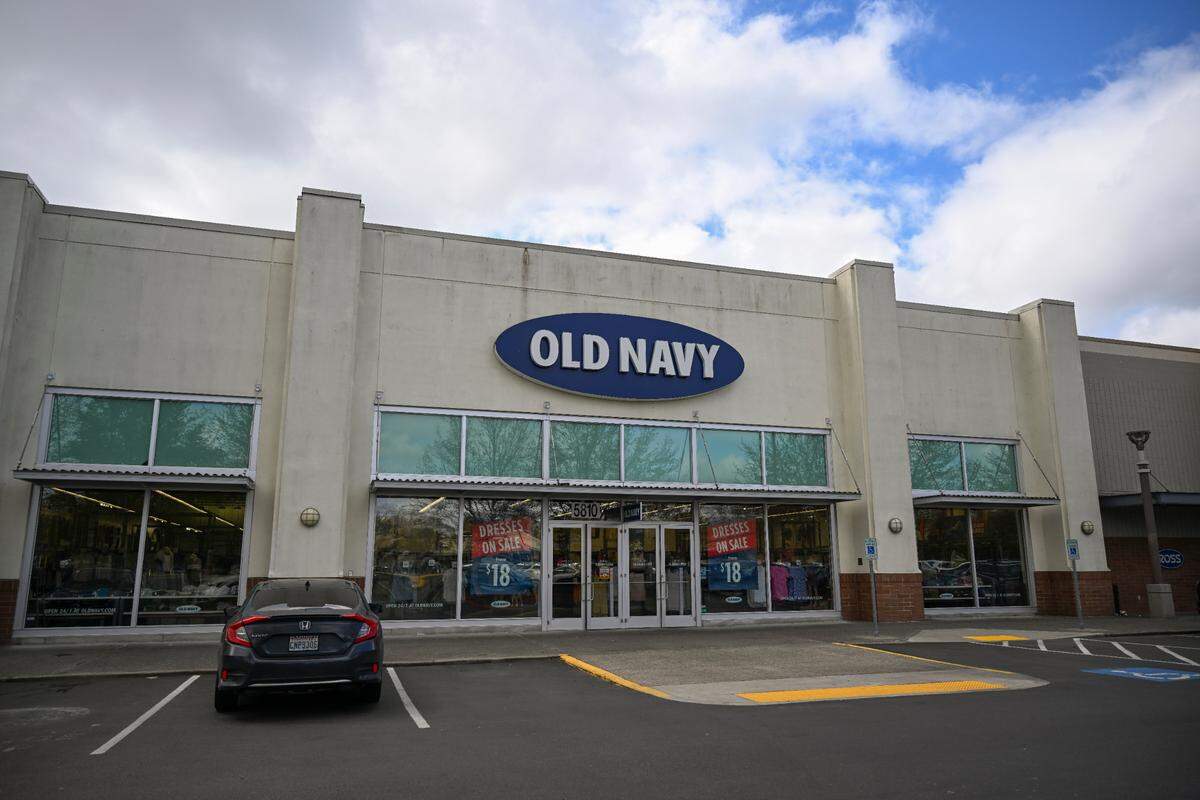
The ruling, prompted by a Pierce County woman’s ongoing federal lawsuit against Old Navy, was a broader interpretation of the state’s Commercial Electronic Mail Act (CEMA) than hoped by industry groups representing retailers. The groups feared the decision would significantly increase legal risks for businesses that send emails to customers.
Not quite a year later, the Washington Retail Association says that more than 80 related lawsuits have been filed against businesses in Washington courts, “many targeting routine email subject lines without allegations of consumer harm.” Prior to the court’s decision, only eight such lawsuits had been filed since CEMA was introduced in 1998, according to The Seattle Times’ editorial board.
The Washington Retail Association, which represents more than 3,500 storefronts statewide, has been lobbying for legislative protections.
On Wednesday, the association announced that Gov. Bob Ferguson signed into law this week a bipartisan bill that the group called “a first step in slowing the growing number of lawsuits.” House Bill 2274 requires someone who sends a commercial email to know that its subject line is considered false or misleading for it to be a violation of CEMA and decreases statutory damages for recipients of emails that violate the act.
“The current trajectory of lawsuits caused by the broad interpretation of CEMA is unsustainable and puts an undue level of uncertainty for businesses that genuinely offer sales and promotions,” Alesha Shemwell, the association’s interim president and CEO, said in a statement.
Rep. Larry Springer, D-Kirkland, was one of House Bill 2274’s sponsors. When the bill was introduced in January, Springer offered the example of “up to 80% off” to illustrate current legal disputes involving email subject lines.
“What if you came in and the item you bought was 65% off?” Springer said. “That’s technically a violation or could be construed to be a violation.”
The state Supreme Court weighed in on CEMA after a Pierce County woman and another plaintiff in a proposed class-action lawsuit against Old Navy sought to clarify the scope of the law’s protections. Their lawsuit, filed in 2023, claimed that the national clothing retailer’s email subject lines misstated the duration of promotions to create a false sense of urgency, among other allegedly deceptive practices.
“No joke! $12.50 JEANS (today only)” was one example offered in their complaint, which was lodged in the U.S. District Court for Western Washington.
Old Navy has denied a practice of sending emails about sales with imaginary time limits or fake extensions. Regardless, its attorneys argued that CEMA only prohibited false or misleading subject lines concealing that an email was commercial in nature, and they hoped that justices would follow a recent federal court ruling that held the same. In a 5-4 opinion, the state’s highest court favored CEMA’s plain language.
“CEMA does two things: it prohibits disguising the sender of commercial e-mail and it prohibits including false or misleading information in the subject line,” Justice Steven González wrote in the published opinion on April 17, 2025.
Common marketing subject lines, including “best deal of the year” and other subjective statements, opinions or hyperbole, weren’t violations of the law, according to the state Supreme Court’s ruling.
Since then, subject lines that consumers see every day have become the subject of litigation, according to Washington Retail Association lobbyist Crystal Leatherman, who warned in January that law firms were exploiting a loophole and demanding millions of dollars to settle cases.
“That surge alone should concern the Legislature,” Leatherman told the state’s House Consumer Protection & Business Committee. “Laws don’t suddenly generate dozens of lawsuits overnight unless something has gone wrong.”
Blythe Chandler, co-chair of the consumer protection section with the Washington State Association for Justice, said during the same hearing that businesses whose email marketing was truthful maintained an “airtight defense” to claims.
While acknowledging uncertainty over how CEMA will be applied, Chandler noted that she was unaware of any cases filed in the wake of the state Supreme Court’s ruling that had been resolved, and thus it was too early to suggest the ruling had caused issues.
“I do think this is sort of a premature, very extreme response to a bit of a speculative problem,” she said.
Even if no cases had concluded at the time of the January hearing, retailers were spending time and money to defend themselves in court, including small businesses. Meegan Brooks, a retail lawyer whose firm is representing defendants in more than a dozen of the cases, said settlements were practically impossible because of plaintiffs’ monetary demands.
“Companies are really, really stuck,” Brooks said during the hearing. “There is no option out of this litigation.”
Springer told the committee that House Bill 2274 was “the initial attempt to get at a problem that was created by a Supreme Court decision that overturned years and years and years of standard practice in email marketing.” An early version of the bill limited claimants to people who received, reviewed and relied upon an email violating CEMA. Under the law as it stands, merely receiving an email is an injury.
The Washington Retail Association said Wednesday it was “incredibly grateful” for collaboration from the state Attorney General’s Office, business owners and legislative sponsors, including of Senate Bill 5976, which also sought to address CEMA’s broad interpretation but didn’t make it out of committee.
“We made some strides in a busy, short session and we are committed to continuing to work with all the stakeholders to modernize CEMA to work for both businesses and consumers,” the group said.
The state Attorney General’s Office previously expressed support for the state Supreme Court’s “straightforward” interpretation of the law.