Could Tacoma be the new Hollywood? Some people think so
To support the independent film scene in Tacoma is to love Tacoma.
It’s to know that the city has so much to offer, to dedicate time to helping others see it and to not expect much in return.
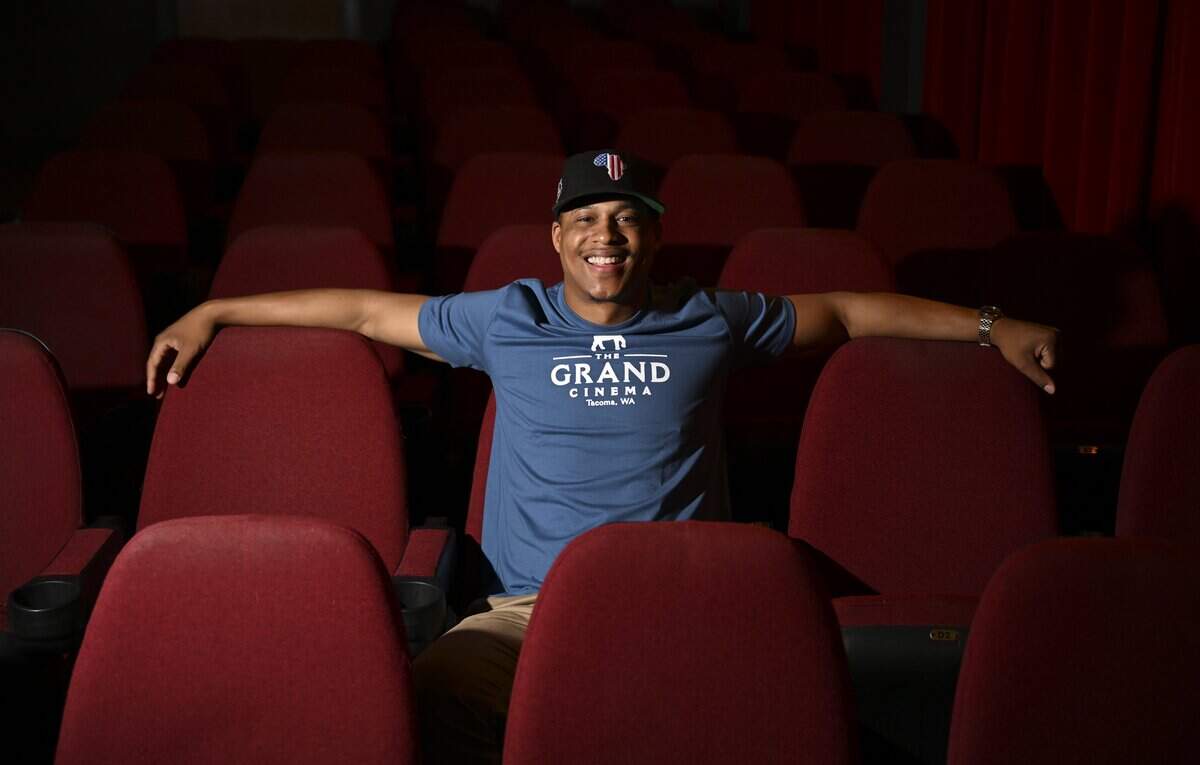
Nowhere is that more embodied than at The Grand Cinema. The nonprofit independent theater in downtown Tacoma has for years served as a hub for the city’s creatives through offerings like the 253 short film competition, the Tacoma Film Festival and an annual student film summer camp.
For all the theater has done for Tacomans, Tacomans have returned the favor. Tacomans rallied when in 2023 the theater announced its plans to raise $5 million so it could buy its building and guarantee its future long-term. By July 2025, The Grand announced that it was able to buy the building. When the city asked voters in 2018 if they would approve a one-tenth of one percent sales tax to pay for arts and cultural programming, 67% of voters said yes.
Armed with those dollars and the security of owning its building, The Grand has increasingly sought to bolster the film community in Tacoma, most recently by spearheading a task force that received $10,000 after a unanimous vote from the City Council to identify ways to streamline the process for productions to get permits to make movies that take place in Tacoma.
For filmmakers and artists invested in the city’s film community who spoke to The News Tribune, that give and take is indicative of one overall conclusion: Tacoma is in the midst of a film renaissance – one that distinguishes Tacoma from its peers and has the potential to transform the region entirely.
Projects for the film community inside and outside Tacoma
Some in Tacoma are seeking to attract more filmmakers and projects to the city. Council member Jamika Scott, who sponsored the City Council resolution to create the film task force, said it arose from conversations she had with local artists and filmmakers in Tacoma about how it can be complicated to get permits to film. If Tacoma could encourage more people to make movies in Tacoma, they’d likely hire staff locally and patronize local businesses, ultimately bolstering the local economy, Scott said.
“As a filmmaker and creative myself, I’ve seen how the film industry can be good for community, for the local economy,” she told The News Tribune.
Elizabeth Calhoun, The Grand’s executive director, told The News Tribune it’s likely that filmmakers would be interested in coming to Tacoma to make movies if they knew it was home to a downtown, natural scenery, suburban neighborhoods, beaches and more – all within a short drive of each other. That’s what she hopes the task force will achieve, Calhoun said.
“What we see missing is that people that don’t live in Tacoma don’t know what Tacoma has to offer,” she said. “One of our big things that we want to do is make it plainly obvious to anybody who’s interested in filming something how much Tacoma has to offer.”
Currently, most people looking to film TV and movies in Tacoma are required to file a film permit that’s accompanied by a $50 to $100 fee and a certificate of $1,000,000 in liability insurance, according to the city’s website. Productions may also be required to pay for additional city services to support their production if necessary, like police staffing to implement street closures.
So far, the task force is in its early stages. Calhoun said the group is in the midst of recruiting others to join and expects to develop recommendations for the City Council between the next six months to a year.
Others are working on film and TV projects in Tacoma, for Tacoma. Kwabi Amoah-Forson, who is spearheading a project to create a sitcom about Tacoma, is one of those people.
Amoah-Forson said the project is still in the works, and he’s still finalizing the cast and script. He described it as a hybrid between “Abbott Elementary” and “Family Matters.” It could be the first sitcom to ever be written, filmed, produced and cast entirely in the city of Tacoma, he said.
Derek Nunn, a board member at The Grand who worked in the film industry in Los Angeles for 15 years, is working with Amoah-Forson on the sitcom. Nunn brought his experience working in L.A. to the production but said he has had to relearn some of the process involved with creating a TV show.
In L.A., Nunn said, he became accustomed to facing bureaucracy and red tape when it came to filming on location. In Tacoma, Nunn has seen how small business owners have welcomed Amoah-Forson and him, offering their space to film often at no cost.
“Tacoma just has a quality to where things just come together when people are excited about it,” Nunn told The News Tribune.
“There’s just something in the air in Tacoma,” he added.
Filming for the project will start this summer, and Amoah-Forson anticipates releasing the first handful of episodes around August — though he is still exploring options for how to distribute the show for viewing. He’s doing it because “Tacoma deserves it. Tacoma deserves to be put on the map in that way.”
What makes Tacoma’s film community special?
Nunn and Amoah-Forson, who both grew up in and around Tacoma, agree that the city’s film community has undergone a renaissance in recent years.
Nunn said he always planned to return to Tacoma from L.A. . When he did in 2022, he found himself missing the filmmaker community he grew accustomed to in L.A. — so the first place he went was The Grand. Many of the filmmakers The News Tribune spoke to lauded The Grand for the work it has done to bring them together.
With Tacoma’s moniker as the “City of Destiny,” Nunn said he has long heard about how the city has potential to become a vibrant, cosmopolitan city. In recent years, Nunn said the city has realized that potential, thanks in large part to its burgeoning art and film scene.
“I think enough people saw what has been lying there all along – a diamond in the rough,” he said.
Amoah-Forson theorized that it’s the grit that’s so often associated with Tacoma that has helped the film community in the city thrive. Filmmakers in Tacoma don’t need fancy equipment and extensive resources to make movies or TV that resonates with viewers, because that kind of gritty mindset of making do with what you have is baked into the spirit of the city, he said.
Amoah-Forson participated in one such project recently in the movie, “Lyle Quasim: Show Up, Suit Up, and Engage,” a movie about Tacoma civil rights leader Lyle Quasim. The Grand has offered screenings of those types of local films, through programming like the Tacoma Film Festival which since 2006 has showcased work from independent filmmakers around the Pacific Northwest.
“Here in Tacoma, you can make a film that’s unvarnished, that is kind of not polished and well-to-do, and people will still find the quality of that film if the story is compelling,” he said.
Calhoun, who came to Tacoma after spending years doing similar work in Seattle, suggested that Tacoma’s success in supporting filmmakers could also be the result of its smaller size, a more collaborative and supportive environment.
“I find that when you’re in larger communities a lot of times [...] there’s people that think what they’re doing is more important than what other people are doing, and I saw that a lot in Seattle,” she said.
History repeats itself
Paul Richter, director of education at The Grand, said the city is “about to blow up in terms of cultural, artistic, vitality and recognition.” That future Richter sees derives partially from Tacoma’s past.
He said Tacoma was known in the early 1900s as “the Hollywood of the North,” given that it was home to a prominent silent film studio called Weaver Studios. The studio folded by 1928 after movies with spoken dialogue began to proliferate, and the studio couldn’t keep up with the new technology.
“I think one of the things that probably helped for silent film up here is when it’s overcast, you don’t have super harsh shadows outside, so everything is kind of just that even lighting, as long as it’s not raining – which makes perfect sense in the days when they weren’t worried about sound, and they just had a big camera,” he said.
Nunn knows that the Puget Sound region is no stranger to the prospect of being transformed by an industry – after the rise of tech over the last few years has fundamentally altered quality of life, cost of living and more in and around Seattle. But in Tacoma and the South Sound, Nunn said, that industry could be film.
“You only need one domino to fall,” he said.