
It’s pupping season. Seal mom, newborn spotted on Gig Harbor dock. Here’s what to know
Wildlife sightings can be a pleasant surprise in Gig Harbor. For anyone who frequents the water or docks, harbor seals are a regular sight.
These curious yet shy creatures are easily identified by their gray spotted bodies and endearing, whiskered faces. They’re generally smaller than sea lions and distinguishable by their lack of external ear flaps, quieter behavior, and using their belly to move on land as opposed to their rear flippers.
Now through September is harbor seal pupping season across the Puget Sound and Salish Sea. Pregnant seals will haul out (rest) to have their pups, which are ready to swim mere minutes after birth and usually weigh around 24 pounds. They will nurse for 4-6 weeks, then are weaned to forage on their own.
Harbor seals also regularly haul out to regulate their body temperatures, molt, interact with other seals, and nurse pups.
During pupping season, it’s not uncommon to see the occasional harbor seal pup resting onshore without its mother. The best – and most legal – thing we can do is give seals space and leash up pets when a hauled out seal is nearby. Do not approach or disturb seal pups; observe how cute they are from at least 100 yards away, if possible.
City of Gig Harbor Public Works Director Jeff Langhelm was recently lucky enough to witness a brand new harbor seal pup born on a dock in the harbor July 19. He was preparing to work on his sailboat when he saw a very pregnant harbor seal on the dock nearby. Less than 15 minutes later, she gave birth.
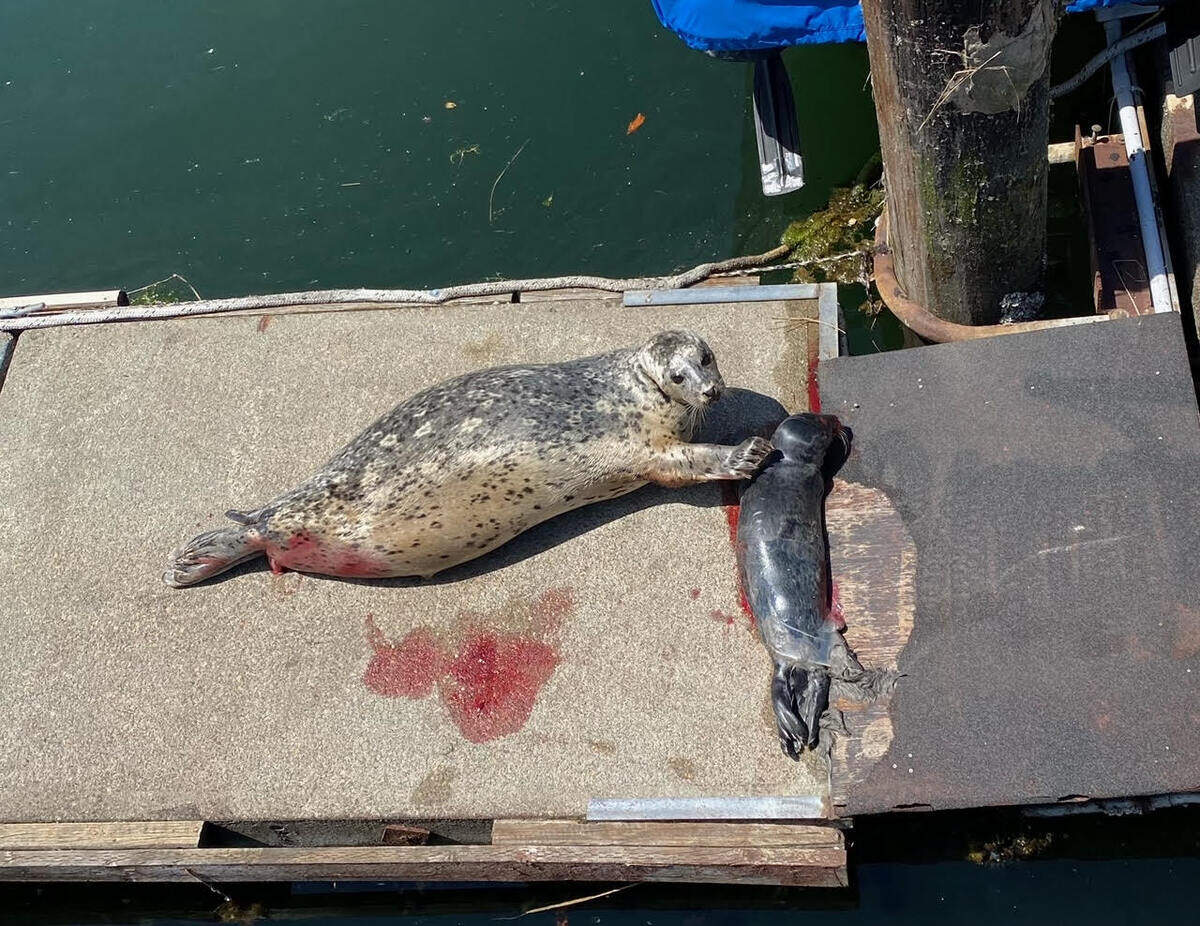
He shared the photos with environmental education nonprofit Harbor WildWatch to welcome the baby seal into the world.
Langhelm’s story also serves as a reminder that harbor seals haul out on docks as well as shorelines. And regardless of location, a mother harbor seal is always attentive to her baby.
While pups are nursing, mothers will leave them onshore to forage for their own food. Because of this, pups may haul out in the same place for several days or weeks at a time.
No mother seal around? Chances are that she’s out feeding herself or the pup is being weaned. In either case, seeing a pup onshore for prolonged periods of time does not mean they have been abandoned. In fact, it can be quite the opposite scenario.
Mothers generally keep a watchful eye on their pup from the water while they’re foraging. If they see a human or animal approach their pup, they may not return to their baby for that reason alone.
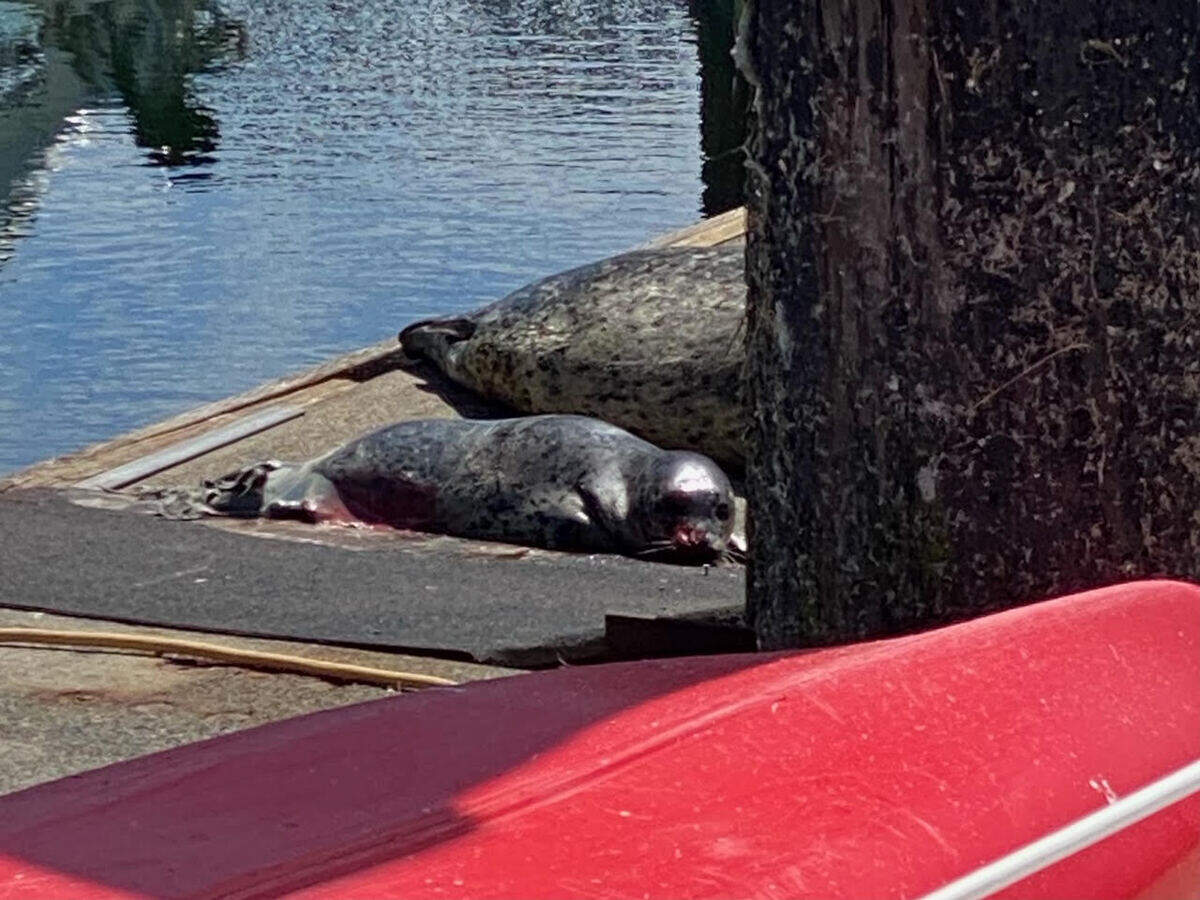
Young harbor seals also often haven’t developed protective wariness yet (their escape response) and may not flee from humans or pets while they’re resting or warming up. They aren’t sick or unresponsive – they just simply don’t have the instinct to wriggle away.
In the case of weaning, pups must learn to survive and forage for food on their own. Once weaned, pups will also haul out for extended periods of time to rest and regulate their body temperature.
Under the Marine Mammal Protection Act (MMPA) it’s illegal to feed, touch, or pick up harbor seals. Any of these actions, alongside general disturbance, are considered harassment. The MMPA also requires 100 yards of distance from these animals, if possible.
Seals also exhibit normal behaviors that may look odd to us. A pup’s umbilical cord falls off between 7-10 days after their birth. NOAA Fisheries reports that this has been mistaken for intestines or a lesion. Pups also lay on their sides and hold a flipper in the air, generally for thermoregulation. Their movements on land can also be awkward and caterpillar-like as they wriggle forward. All of this is normal.
It’s also important to note that occasional injury does happen to seals. They are wild animals after all.
NOAA Fisheries also emphasizes respecting nature’s role. Their research shows that up to 50% of pups born each year will not survive their first year of life. Contributing mortality factors include conditions associated with fetal development or a premature birth, disease, predation by shoreline predators or domestic dogs, infection, dehydration, or starvation.
It’s worth noting that thanks to the Marine Mammal Protection Act, harbor seal populations are at healthy numbers and there are an estimated 3,000-5,000 pups born each year in Puget Sound.
However, if a pup is seriously injured or entangled, contact the NOAA Fisheries hotline at 1-866-767-6114.
Harbor seals are a delightful part of the ecosystem locally. This pupping season, remember to share the shore and admire how cute these creatures are from a comfortable, legal distance.

Carly Vester has been writing an environmental column for The Peninsula Gateway since 2019. Her storytelling focuses on the intersection of people and the outdoors — from adventures across the west, to our environment and the rich history surrounding it. Her documentary films have screened internationally and her writing has been published locally and regionally.