Pierce County parents say kids are riding overcrowded buses, sitting four to a seat
Samm Oreskovich’s son does not like riding the school bus.
“He’ll actually cry if he has to ride the bus because he doesn’t know if he’ll have a seat to sit on,” Oreskovich told The News Tribune in a phone call this month.
She said her son, who attends Key Peninsula Middle School, doesn’t feel safe riding cramped buses, and that sometimes he and other students have to sit four to a seat.
The News Tribune talked to six Key Peninsula parents this month, including Oreskovich, who raised concerns about crowding on their kids’ school buses this year and/or last year.
The district denies allegations of students having to sit four to a seat or sitting in the aisle, and maintains that they keep strict safety standards while facing bus driver shortages.
Parent Mary Jo Anderson-Clapp said her daughter experienced overcrowding on the bus last year.
“There were several times where she had to stand in the aisle (last year),” Anderson-Clapp said about her youngest daughter, who just graduated from Henderson Bay High School. She also told The News Tribune in a Facebook message that her daughter had to sit four to a seat several times and once had to sit on someone else’s lap. The crowding got to the point where Anderson-Clapp decided to start driving her to school, she said.
Another parent, Barb Horn Hartman, whose daughter has since graduated, told the News Tribune via a Facebook message that her daughter saw kids sitting three or four to a seat and sometimes standing in the aisles as far back as 2013. At one point, her daughter stood for the entire ride home, she told The News Tribune.
Peninsula School District Director of Transportation Dawnett Wright told The News Tribune that it’s normal for school districts across the state to experience overloaded buses at the beginning of each year. However, she denied that that results in Peninsula students having to sit four to a seat or stand in the aisle of buses. Instead, she said, drivers call for an additional bus to be sent when they reach capacity.
The district has resolved most of the overloading situations since school started Sept. 3, she told The News Tribune via email Sept. 12. She wrote that all should be resolved by the beginning of this week.
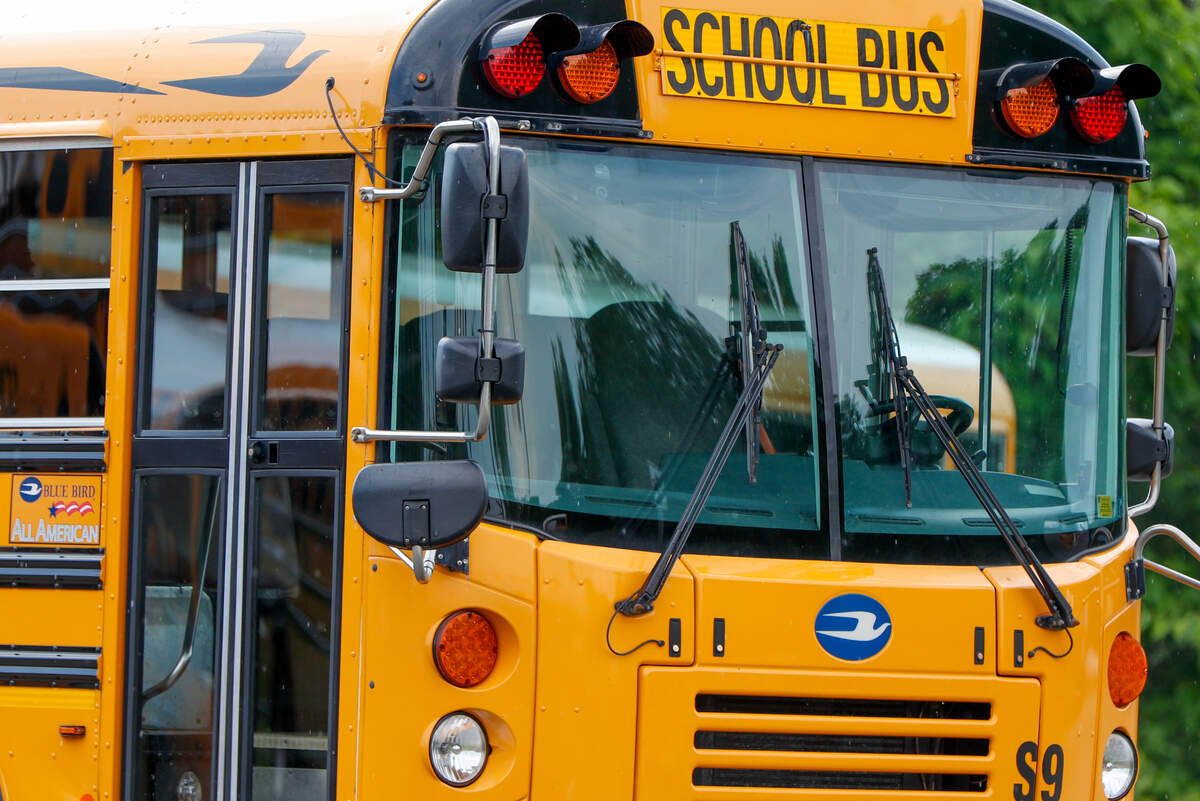
At maximum capacity?
Wright stressed that the district’s bus drivers are well-trained, care about their students and “take really good care of them when they’re in their charge,” she told The News Tribune via phone Sept. 9.
Legally, the district is allowed to transport 78 students in each of their buses, which is the maximum capacity provided by the manufacturer, according to Wright. They can also have up to three students in each seat, but she said the “sweet spot” is having two per seat for middle and high school students.
“We have capacity limits on our buses, so buses aren’t allowed to move if they go over capacity,” she said.
Wright also told The News Tribune via email that drivers count students who board the bus and know how many they can safely transport. If the bus is going to be over capacity, even mid-route, the driver will notify dispatch and another bus will be sent to the location to pick up the extra students.
“Students need to understand that they may have to sit with someone that they may not know, but middle and high school students should expect to be two to a seat,” she said via email.
Parent Theresa Renda King’s son told her that his bus had to leave four students at Key Peninsula Middle School in the afternoon on either Sept. 4 or Sept. 5 because there wasn’t enough space on the bus, she told The News Tribune.
Wright told The News Tribune via phone that the district never leaves kids stranded at school. Any students left at school were waiting for a backup bus to arrive, she said.
Key Peninsula parent Gypsea Salt told The News Tribune via a Facebook message on Sept. 10 that she didn’t receive notifications beforehand of her kids’ bus changes. The morning of Sept. 10, her high school daughter was picked up from her stop and then transferred onto a special education bus for the rest of the trip to school. The district also had her middle school twins ride a smaller bus home instead of their regular combined high school/middle school bus on Sept. 6 and Sept. 9.
Tracking her kids’ buses using the district’s My Ride K-12 App has been difficult, according to Salt.
“All the app does is tell you the time it’s supposed to arrive,” she wrote. “It’s also supposed to track the bus on a map but it doesn’t work.”
Parent Tiffany Higginson told The News Tribune via a Facebook message that the app has worked inconsistently. Her son’s bus showed up as inactive in the app a few weeks into the school year, she wrote. She stopped using the app last year and hasn’t used it since.
She wrote it would be helpful if the district notified parents and guardians beforehand via ParentSquare, the district’s mass communication system, if their kids are going to be riding a different bus than assigned, and has shared that with school staff. On her son’s first day of middle school Sept. 3, she was surprised when she didn’t see him get off with the other kids on his normal route. When she called the school, she learned he was on an overflow bus following not far behind due to overcrowding.
“There hasn’t been any sort of communication on their part to this day, and my son has not once made it on to his actual assigned bus,” Higginson wrote.
Traveling the Key Peninsula
Peninsula High School parent Brian Staples’ daughter is assigned to a route that stops at both Peninsula High School and Key Peninsula Middle School on the way home, increasing the bus’s load, he told The News Tribune via phone Sept. 7.
The district has been doing this for several years and currently has three routes with this arrangement, according to Wright. She said via phone it’s necessary because of the geographical area the bus needs to cover to take kids to some of the farthest neighborhoods on the Key Peninsula.
To drive their high school students out to their homes on the Key Peninsula, then drive all the way back to Key Peninsula Middle School to pick up more students and drive back out to the farthest reaches of the Key Peninsula isn’t possible time- and route-wise, Wright said. Typically, each bus has three runs in the morning — elementary, middle and high school — and three runs in the afternoon. In order to be most efficient, the designated buses that have to travel farthest on the Key Peninsula consolidate their middle and high school runs in the afternoons.
The mornings have another arrangement: Buses pick up students and then transfer high school students to other buses at a Key Peninsula fire station. The buses then go to the middle school and high school separately, according to Wright.
Tawnya King’s grandparents were homesteaders in Gig Harbor and the Key Peninsula, and she and her family have spent many generations in the area. She said the Peninsula School District buses have been combining the middle school and high school routes to travel to the “very end of the peninsula” since at least the 1980s, when her older sister graduated from Peninsula High School.
A temporary situation
Wright said that the district bases their route decisions on last year’s ridership numbers, so they have to make adjustments in the first week of school once they see how many riders they actually get. Over the summer, students may have moved from one area to another, or moved out of the district.
“It’s a logistical puzzle that we have to take our time and look at and put the pieces together,” she said.
It’s not uncommon for school districts to see fuller bus loads at the beginning of the school year, according to Katy Payne, spokesperson for the state’s Office of Superintendent of Public Instruction (OSPI).
“Districts may experience fuller buses when school begins and then (that) lessens as time allows routing changes to compensate for the number of students,” Payne told The News Tribune via email.
Wright said that the district is exploring an opt-in program where parents can indicate if their students will be riding the bus before the school year begins, to help the district better plan their routes. The district has no timeline on when that program will become active.
Currently, their routing software routes any student in the district eligible for transportation service, so their numbers don’t account for students who choose not to ride the bus. It’s been this way for as long as the district has had routing software, which has been 10-plus years, according to Wright.
Bus driver shortages
Wright said the national bus driver shortage plays a role in their ability to offer students transportation.
The district has 63 contracted drivers, which is enough to cover all of their routes, she said. They also have seven to eight substitute drivers with varying availability throughout the week, but they need more in order to cover for illnesses and to allow the district to provide transportation for athletic and academic trips that take place during regularly scheduled routes.
Over the summer, the district was only able to hire enough drivers to make up for those drivers they lost at the end of the previous year, she told The News Tribune via email.
Drivers feel the shortages, too.
Keith Davies has been a substitute bus driver for the district since November 2005, he told The News Tribune via a Facebook message.
The district struggles to maintain enough substitute drivers to cover the need, but all of the drivers and office staff work together to get the job done, Davies said.
“I know that towards the end of last year, due to retirements, injuries or illnesses and not enough sub drivers, there were a few days we had three or more buses we didn’t have drivers for,” Davies wrote. “That meant the rest of us worked together to pick up pieces of the uncovered routes. At times we ran behind but did our best to get all the kids to school.”
Davies told The News Tribune it frustrates him to see parents get angry on social media about their child’s bus being late, unaware that the district may have been down three or four drivers that day.
“Wish they would sign up and come drive a bus,” he wrote.
The News Tribune reported in December of last year that the district had 62 daily bus drivers and eight substitute drivers, and that Wright anticipated four to five retiring or resigning by the end of the year.
The district hosted an open recruitment event for drivers in 2022, The News Tribune reported.
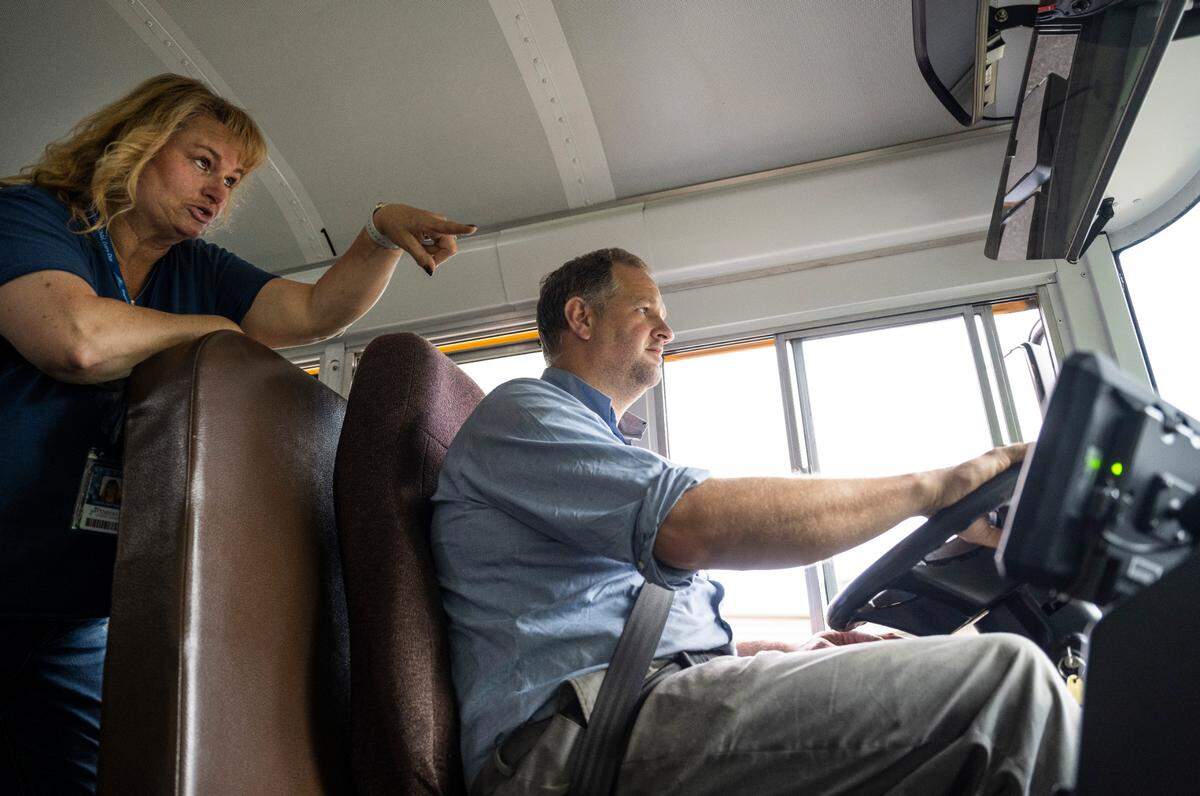
“Always, every day of the school year, every day of the summer, we are consistently looking, going to job fairs, seeking drivers any way we can,” Wright said.
Washington state law says school bus drivers must meet several initial requirements. These include completing training under an authorized school bus driver instructor and driving a passenger car for at least five years.
Active school bus drivers must also complete annual training provided by their school district or contractor and have training in first aid, according to state law.
Wright said the district hosts regular training classes and pays prospective drivers for their time in training. The next course they’re hosting starts Sept. 16 and they have about four students signed up, she said. Their class sizes usually range from four to 12 prospective drivers, and typically only about 50% will pass. Students might not have the ability to take the test, struggle to do the amount of studying required or decide once they go on a ride-along with a bus driver that it isn’t for them, she said.
The combined amount of time drivers must spend in training, including both classroom time and time behind the wheel, is about 70 hours, according to the Peninsula School District transportation website.
According to OSPI spokesperson Katy Payne, existing shortages were exacerbated by the COVID-19 pandemic as bus drivers left the industry. Currently, testing through the Department of Licensing and Educational Service District 112, which authorizes qualified applicants who receive training to become school bus drivers, is close to pre-pandemic levels.
OSPI has provided lesson plans both recently and throughout the years for required driver training, she wrote. School districts also discuss strategies for hiring and retaining drivers with each other and with regional transportation coordinators.
More information for prospective bus drivers is available on the Peninsula School District employment page and on their bus driver job description post.