Free Pierce County classes prep kids for jobs as pilots, air traffic controllers
AI-generated summary reviewed by our newsroom.
- Peninsula School District launches Aviation Academy, enrolls 38 students via lottery.
- Program provides FAA exam prep, Part 107 drone license and 30 college credits.
- Industry demand drives outreach; retirees, FAA hiring cycles shape pilot pipeline.
Most kids at 16 or 17 are learning how to drive. Not many are learning how to fly.
On a dreary Friday afternoon, two high schoolers sat in front of a big computer monitor and checked if their virtual plane was ready to take off.
“Master switch on?”
“Check.”
“Battery voltage check?”
“Check.”
“All lights on and flaps extended?”
“Check and check.”
After completing all the required checks, 17-year-old Abigail Oake put her feet to the pedals and lifted the plane from the runway into the sky, steering with the physical device in front of her. Colin Donalty, 17, and Ben Field, 16, watched as she maneuvered across the Tacoma Narrows and dipped through the air before returning for a landing.
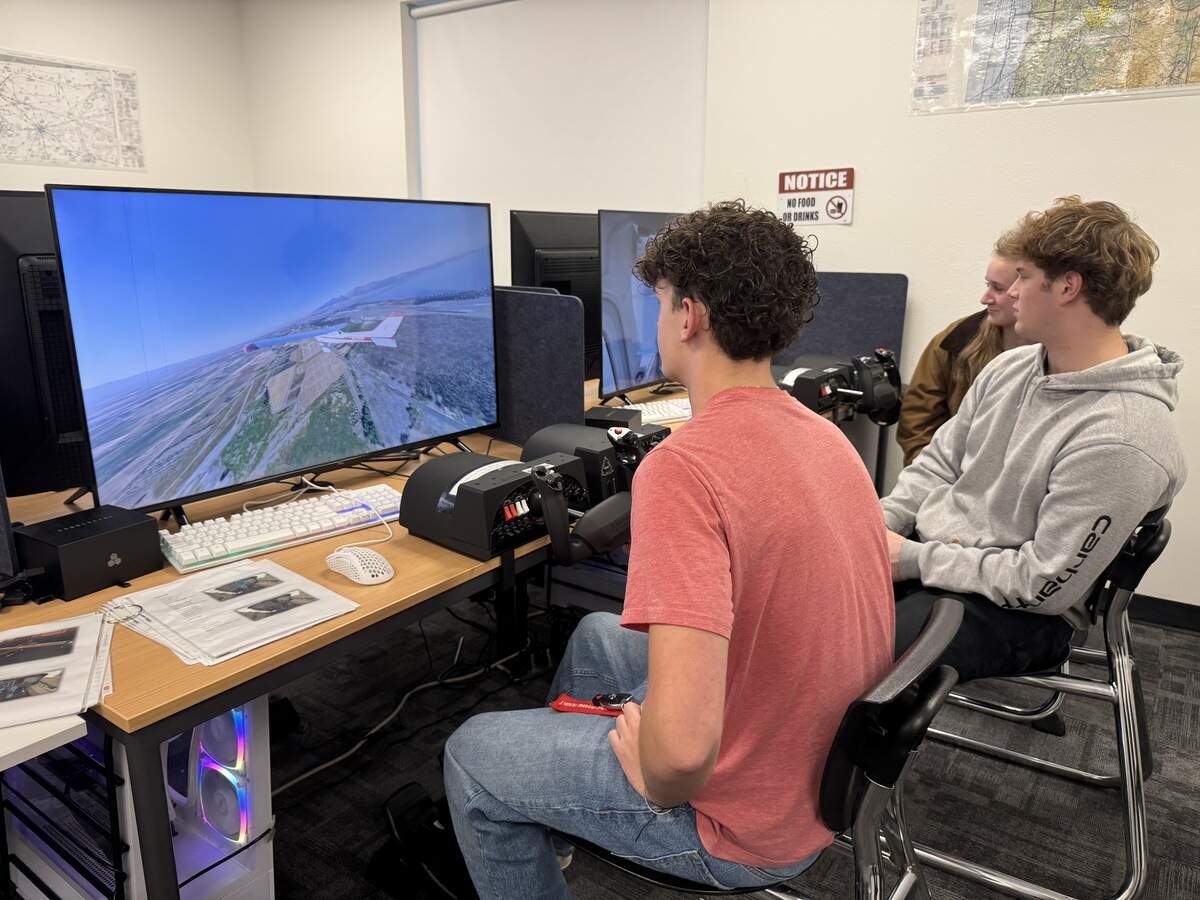
The three students are part of the Peninsula School District’s Aviation Academy, a newly-launched program where students selected through a lottery system can gain aviation skills and knowledge to prepare them for industry careers.
The free program offers students a head start toward careers in the field.
“It’s almost like how most kids, they’ll see a spaceship, and they’ll think it’s awesome,” Donalty said. “It’s super fascinating. They want to go to space. For me, aviation is the same thing. I still feel that excitement ... and you can’t get a better office than the cockpit, too. You can’t beat the views up there.”
Oake remembered how quiet it was on her first day in the academy, when students were asked to read a section of a book.
“In a normal class, it would never be quiet when everyone’s reading,” she said. “And I just remember how surprised I was ... like wow. So actually everyone does actually want to be here.”
Peninsula School District CTE Director Kelsey Parke said in an interview that the district funded the Aviation Academy through grants and state funding for career and technical education, “completely separate from any levy dollars.” The district has about $500,000 on the books from grants, she said.
The program received $179,000 from the state in a special legislative proviso included in the 2025-2026 state budget, according to a district press release in June.
CTE Assistant Director Ashley Stolhand wrote in a follow-up email that the actual start-up cost for the program was $182,000.
Program offers field trips, mentors and hands-on learning
The Aviation Academy currently has about 38 students divided into two groups, one in the morning and one in the afternoon, selected via a lottery system. The district expects that number to grow next year, Stolhand said.
Classes are held in a dedicated space at Henderson Bay High School, and the program allows students the flexibility to take traditional high school classes across the district for the remainder of their schedules.
The full program is two years long. The first semester of the first year focuses mainly on the path to becoming a pilot, including coursework that teaches students foundational knowledge of aerodynamics, flight planning, navigation and other areas needed for flight training. It also prepares them to pass the Federal Aviation Administration written exam. The courses then diverge into other topics such as aviation weather and aviation law, according to the Aviation Academy website.
The second year delves much more into various aviation careers, such as air traffic control or airline management, Stolhand explained.
Their teacher is a retired U.S. Navy commander and aviator, JP Williamson. Williamson served in the Navy for over 23 years and retired in May, actively flying for 18 years and becoming a weapons and tactics instructor, according to a bio shared by the district.
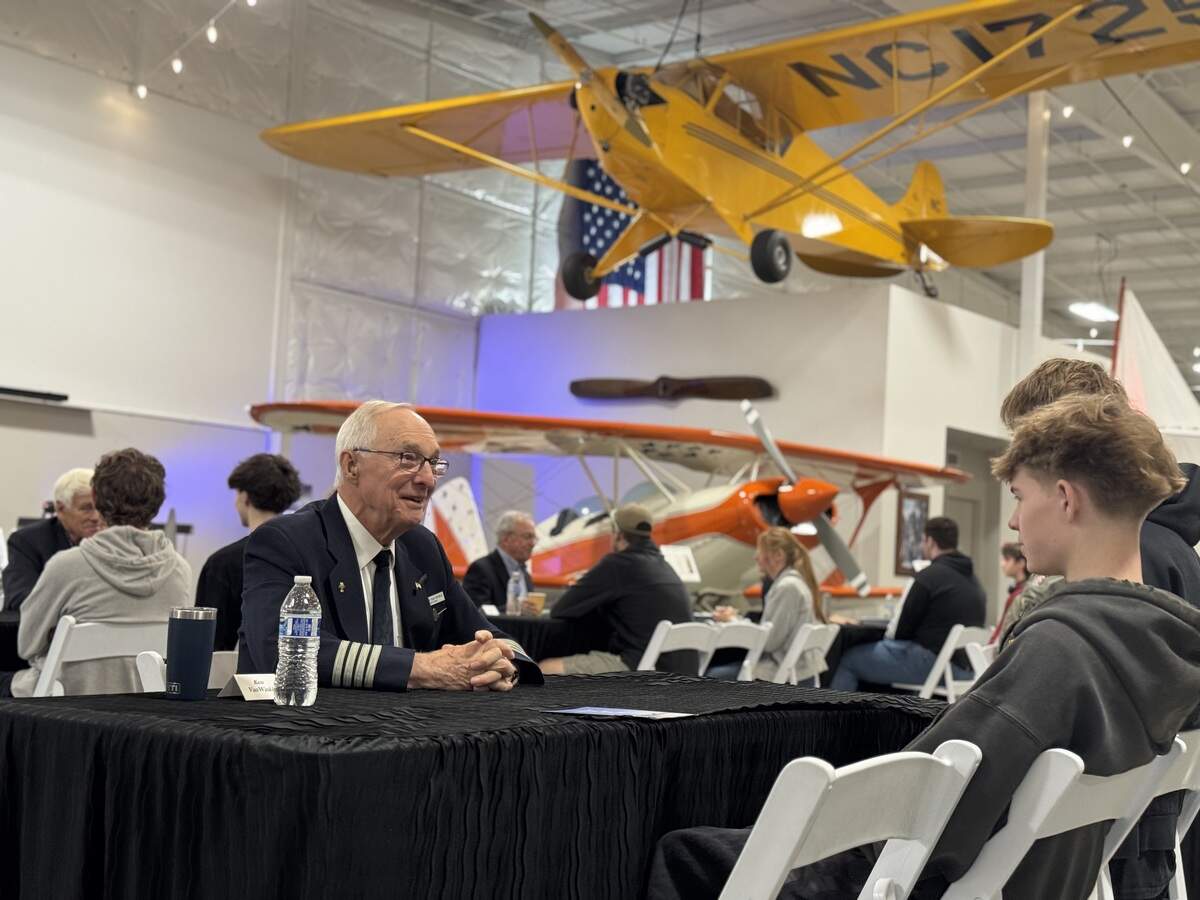
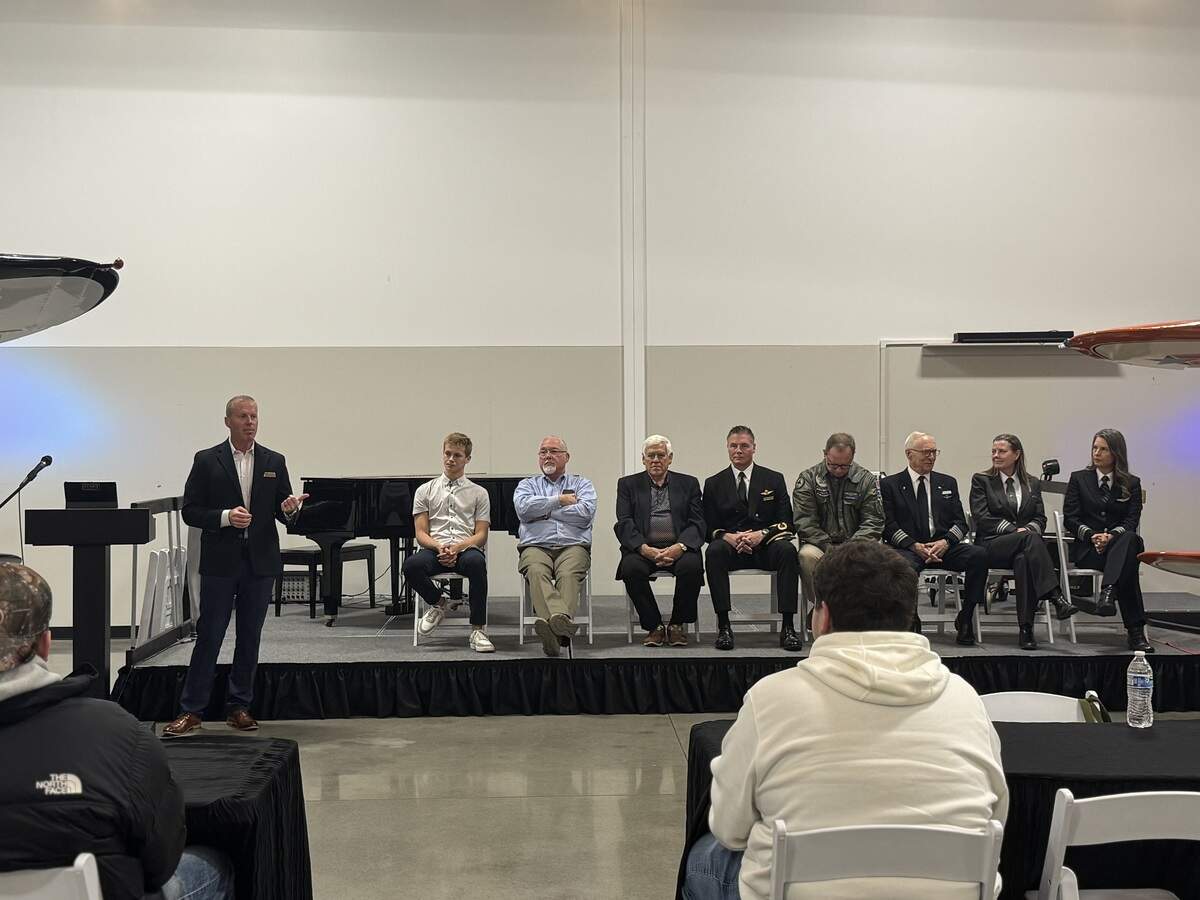
The program provides students with ample opportunities for mentorship. So far, students have met mentors who specialize in maintenance and repair, serve in government agencies like the Federal Aviation Administration or are certified flight instructors, Stolhand said. They’ve also taken field trips to the Vintage Aero Museum at the Tacoma Narrows Airport, where they saw the inner workings of planes and machinery.
“ ... once you can go in and see it in person and how it works, is all the difference to really understanding everything,” Field said about one of the field trips. “That’s probably one of my favorite parts about the program.”
Students won’t graduate the program with commercial pilot licenses, but they’ll be well on their way toward obtaining a private pilot’s certificate if they choose to do so. That certificate requires passing the FAA’s written exam and getting a minimum of 40 hours of flight time, which students can pursue outside of the program, according to Stolhand. Becoming a commercial pilot requires additional ratings and hours of flight time.
Aviation Academy students do earn their Part 107 license to fly drones in the first year of the program, and 30 college credits for each year they’re enrolled, Stolhand said.
Career outlook in the aviation industry
Robert Prosch, education director of preparatory programs at the Museum of Flight, told The News Tribune that there’s an ongoing need for professionals in the aviation industry.
Pilots are legally prohibited from flying past the age of 65, and the industry is seeing a wave of retirements, Prosch explained. The FAA has also taken steps to try to fill vacancies among air traffic controllers, which have been in the spotlight during the federal government shutdown.
What does the job outlook look like for people in the aviation industry? Prosch said it’s important to note that the demand for jobs in airlines tends to be cyclical: There will be times when hiring is hot, and times when it isn’t.
Airlines tend to hire less when passengers are flying less. For example, fewer people booked flights after 9/11. They may also choose to fly less to save money during economic downturns. The federal government shutdown, which forced 40 airports to cut flights under orders from the FAA, will also impact airline revenues, he said.
“And bottom line is, airlines are businesses,” he continued. “They have to make money. They have to keep their shareholders happy. And so they will make adjustments with staffing, and oftentimes that adjustment with staffing and such will come later, after that particular crisis is over, to balance out the budget is really what it amounts to.”
At the same time, salaries in the industry tend to be “very good, higher than median salaries across the board,” and regional airlines where most commercial pilots start out are doing well, he said.
There is an awareness in the industry that they need to reach out to students earlier to help them develop a passion for the field, rather than waiting until students have already gone to college, Prosch told The News Tribune.
“And when you move into the major airlines, American, Delta, United, Alaska, those companies are really looking a lot to the future and estimating what they’re going to need for the future,” he said.