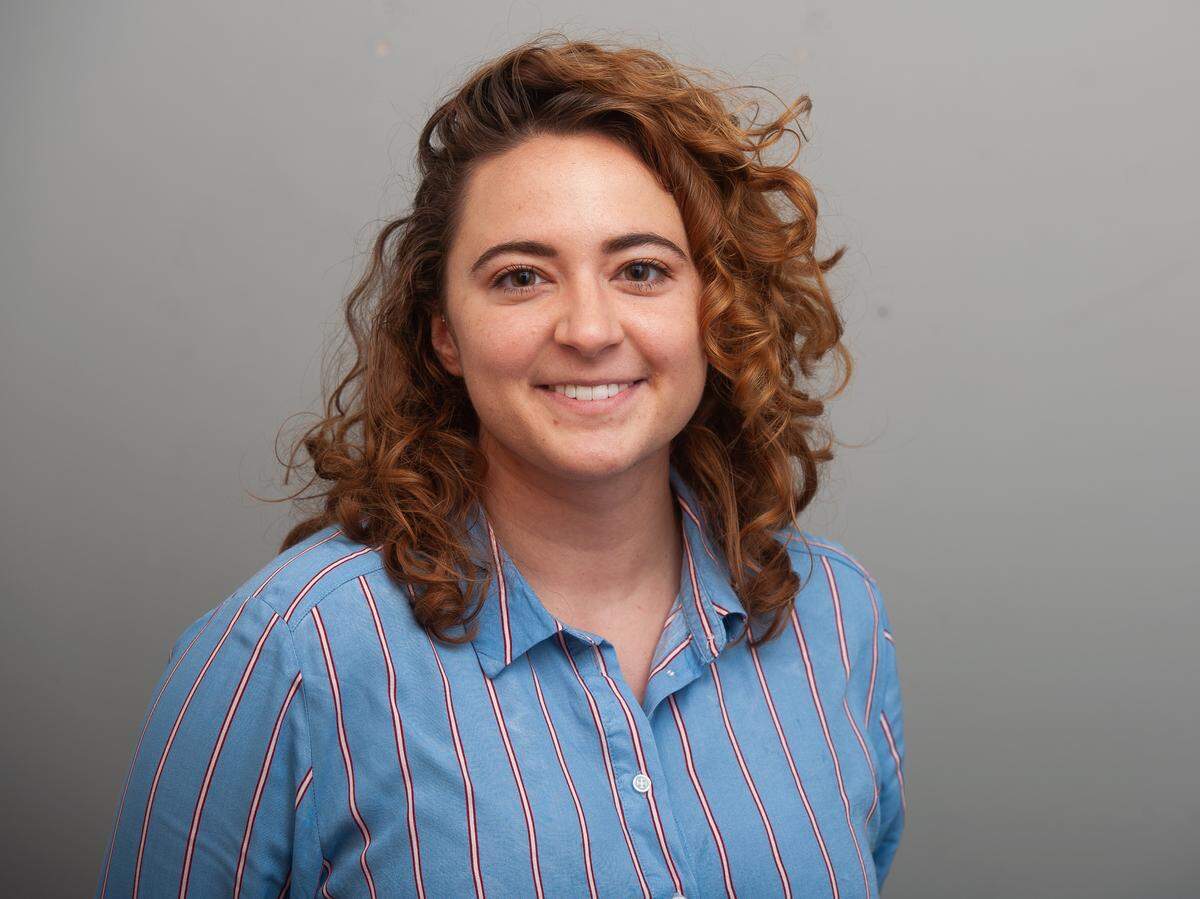
Meet the woman who is working to bring awareness to racial inequities in Puyallup
During 18 years in Puyallup, Davida Haygood has seen the effects of institutional racism and implicit bias in city government, police departments and schools.
Haygood, along with Plamedie Masiala and Gabriel Phillips, organized Black Lives Matter protests in Puyallup and South Hill where up to 400 residents marched in the streets. During the Puyallup march on June 5, Haygood said some onlookers yelled profanities or flipped off the protesters walking from the Puyallup Fairgrounds to Pioneer Park.
“It’s gotten to the point where enough is enough,” she said in an interview with The News Tribune.
In June, she created a Facebook group Puyallup United Against Fear in hopes of “continuing the conversation and standing in action against the racism and oppression that has plagued our city.” There are about 285 members in the Facebook group who discuss being racially literate and share books or YouTube links on race.
Haygood, 42, also started a podcast to help educate and heal. She is using the podcast to educate the largely white region about the history of slavery and it’s far-reaching impacts to society. She feels it’s important to address all aspects of racism, not only calling out community leaders.
“It’s important to always give space to discuss first, communication in essence. If from the communication we don’t see results, we keep putting that pressure on and engaging,” she said. “If communication is not resulting in that very visible action, then we move to the next step. And I feel like that’s what you’re seeing with many protests right now.”
She sees it as her role as a Black woman to implement change in Puyallup, a small and historically white community. In the U.S. Census data’s most recent demographic estimates, 82 percent of the city is white. In 2010, an estimated 86 percent of the city was white. As more diversity flows into the city, Haygood said there is an overdue conversation.
“There is this notion where if you’re not three generations, you’re not Puyallup,” she said. “So creating that invisible shield is part of the racist act we have to penetrate, and it’s hard because people feel like you are invading our castle; we aren’t invading, we want to be a part of it.”
Changes in schools
Haygood is a professor of education and interim director of education programs at Pierce College in Puyallup.
She said she is particularly concerned about the predominately white narrative of textbooks, inequities faced by minority students and lack of diversity of staff in Puyallup public schools.
“I remember when I told her that her teacher was a woman of color, the amount of excitement she had. There was a look of tears in her eyes,” Haygood said of her daughter. “You watch how that ties into that person and affirms the child.”
Haygood has started a petition asking for the Puyallup School District to hire more people of color, evaluate textbooks for a predominant cultural narrative, highlight contributions in scientific fields by people of color and include a curriculum that focuses on racial healing.
Puyallup School District spokesperson Sarah Gillispie said the district recognizes the need to support a diverse student population and has been making an effort to be more inclusive.
“Professional learning involves the training of district administrators and staff on implicit/explicit bias, identity, stereotyping, privilege and high leverage equitable practices that foster students’ unique cultural strengths and experiences,” Gillispie said in an email. “This work is ongoing and we are committed to continuing crucial conversations and reviewing policies focused around equity and social justice.”
City government
Haygood has met with City Manager Steve Kirkelie and Mayor Julie Door regarding diversity in hiring, neither of whom immediately responded to requests for comment.
She also requested the City of Puyallup create a citizen Puyallup Diversity and Equity Board, a link on the city website where people can report complaints of racism and discrimination, and hire for a position that focuses on diversity and equity.
The City of Puyallup asks new hires to complete a form on demographics, spokesperson Brenda Fritsvold said. While not required, 385 of the city’s 391 active employees filled out the questionnaire.
The self-reported data shows 85 percent of employees are white. Less than 7 percent are Black, 4.7 percent are Asian and 2.9 percent are Hispanic.
“When you look at City Council, when you look at a government employee, you see one demographic. And that’s a problem,” Haygood said.
Policing
Haygood also has met with Police Chief Scott Engle.
Haygood said one of the biggest takeaways from the conversation was the ownership and awareness that racism exists.
“I talked about the acknowledgment. Never acknowledging the history, that we have to work to change. We need to reconcile all these different pieces,” she said.
On top of the national “8 can’t wait campaign,” which calls for policing reform, she calls on the police department to require annual implicit-bias and de-escalation training, a thorough background screening for racial hate history or affiliation with any group that promotes racial hate, and the continuation of hiring people of color.
Engle said it was good to listen, and he looks forward to partnering with Haygood.
“I’m not a person of color, so for me being able to listen and hear what Ms. Haygood brought forward was so important to me. Listening and hearing is so important right now,” he said in an email.
Puyallup officers currently get bias training. One of the things Engle and Haygood discussed was the idea of starting a police department citizen advisory board.
“It’s clear that we can do even better with police-community relations for all members of our community, and Ms. Haygood was very committed to that as well,” Engle said.
‘I get it now’
Haygood said she wants to make sure the future for her 21-year-old son and 13-year-old daughter is more fair.
The Black Lives Matter movement has sparked conversations between neighbors and her. Haygood said there is now a mutual understanding and she feels supported.
“I was talking to my neighbor last week and he said he just didn’t know. He said, ‘I didn’t get it then, but I get it now,’” she said. “He said, ‘I value you,’ and that made me feel heard.”
This story was originally published August 2, 2020 at 12:00 AM.