
Defense lawyer tells jury Manuel Ellis ‘created his own death’ by resisting Tacoma police
A lawyer for one of three Tacoma police officers on trial for the death of Manuel Ellis told jurors that Ellis was to blame for his own death by resisting arrest during closing arguments of the historic test of the state’s new police accountability law.
“[The officers] were trying to defuse the situation in the beginning, and it spun out of control,” said Wayne Fricke, representing officer Christopher “Shane” Burbank. “This is a situation where [Ellis] created his own death. It was his behavior that forced the officers to use force against him.”
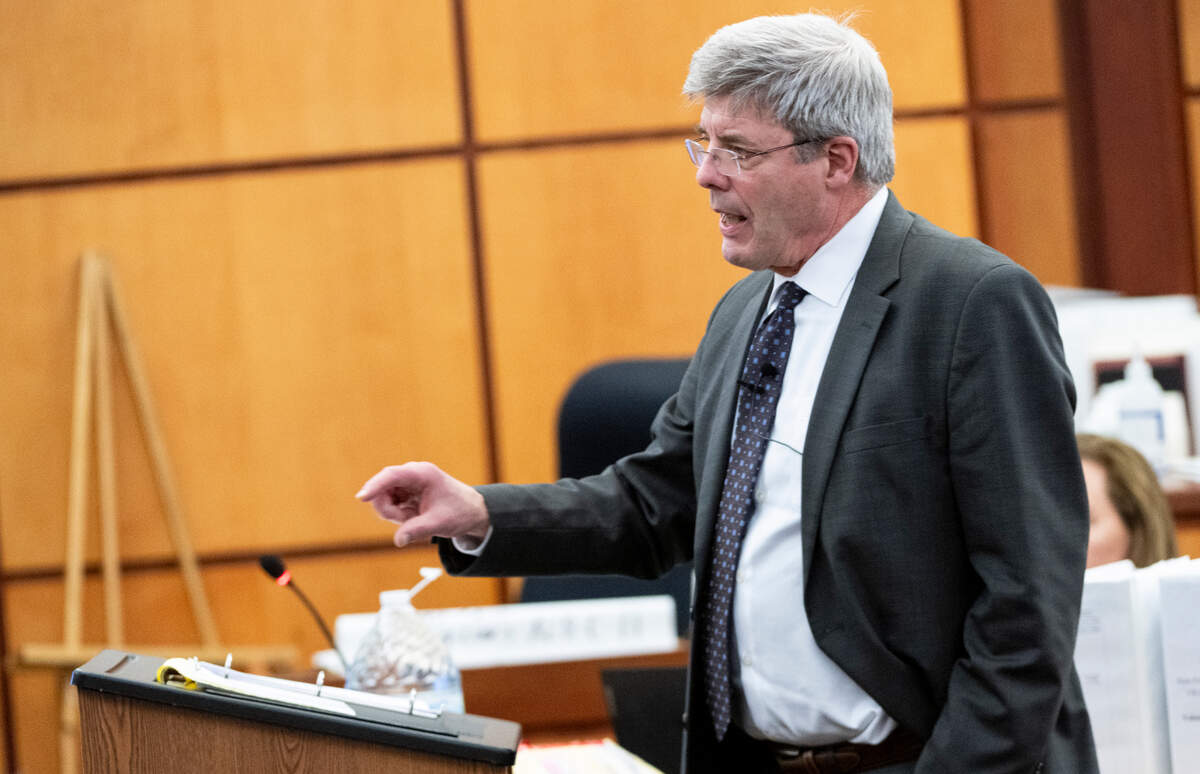
Fricke said prosecutors from the Washington Attorney General’s Office decided to “compound this tragedy” by charging the officers. “It’s not based on the evidence, but it’s based on something else. This should not be a political decision.”
The defense’s closing arguments, which will continue Wednesday, present jurors with a stark choice after a nine-week trial that has pitted eyewitness testimony against the officer’s statements.
Special prosecutor Patty Eakes, in her closing argument, told jurors to be skeptical of the officers’ stories painting Ellis as the aggressor, which were contradicted by eyewitnesses and their videos that portrayed the officers as initiating and continuing the conflict. Fricke, in turn, attacked the credibility of an eyewitness who provided damning testimony against the officers.
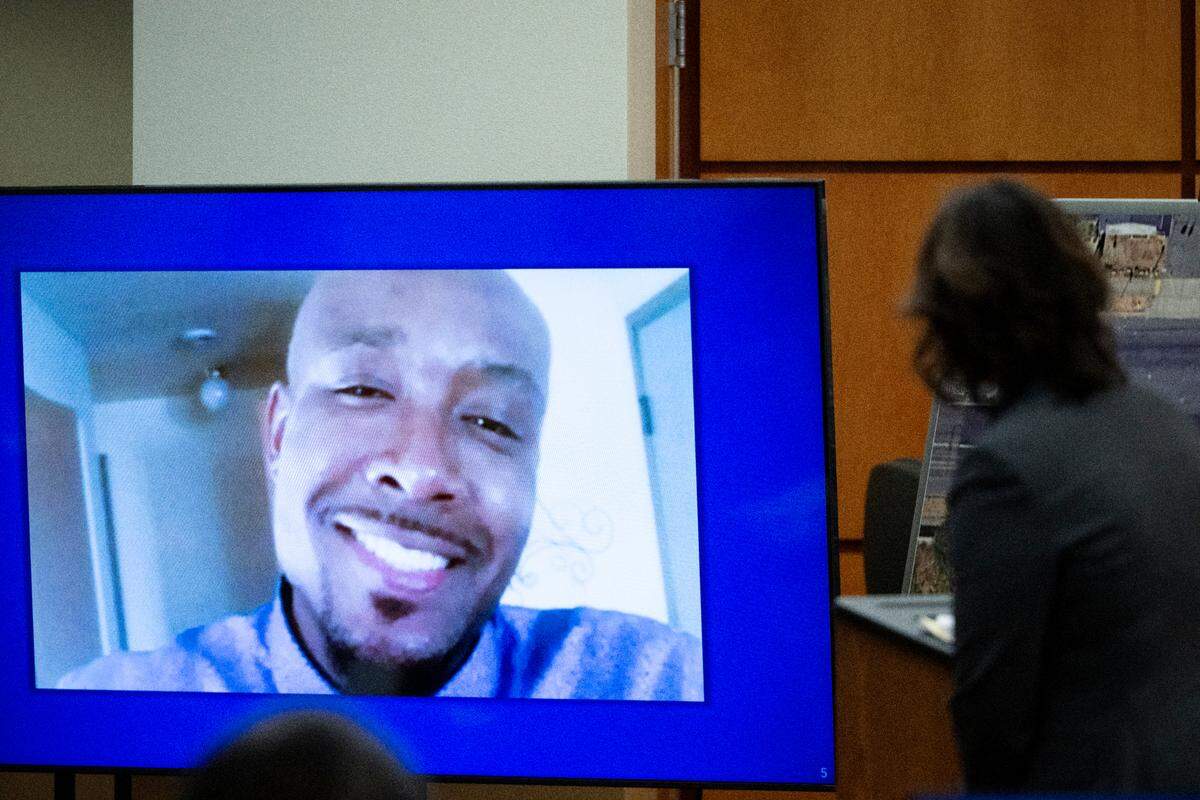
Ellis, a 33-year-old Black man, died March 3, 2020, after repeatedly saying he couldn’t breathe during a struggle with police. The Pierce County Medical Examiner ruled Ellis’ death a homicide caused by oxygen deprivation from physical restraint.
Evidence presented at trial showed that by the time he died, Ellis had been slammed to the ground, struck with fists and elbows, placed in a neck hold, jolted three times with a Taser, knelt and sat upon by a succession of officers, handcuffed with his wrists behind his back and tethered to his ankles with a strap, and had a nylon spit hood placed over his face.
Throughout the trial, lawyers for the officers have pointed to the high level of methamphetamine in Ellis’ system and his enlarged heart that was discovered during his autopsy as the cause of his death.
Officers Matthew Collins, 40, Burbank, 38, and Timothy Rankine, 35, all face charges of first-degree manslaughter. The jury has the option of convicting the officers of the lesser included offense of second-degree manslaughter.
Collins and Burbank, the first officers to encounter Ellis when they say they saw him reaching for the door of a passing car in an intersection, face additional charges of second-degree murder. All three have pleaded not guilty, are free on bail and remain employed by the Tacoma Police Department on paid leave.
The trial is the first courtroom test of Washington’s new voter-approved law that lowered the legal threshold for charging officers with on-duty deaths. It marks the first time since 1938 in which three Washington officers have faced charges for a death.
The murder charges allege Burbank and Collins unlawfully detained Ellis because they hadn’t observed him committing a crime, then committed either third-degree assault by Burbank using a Taser on him unnecessarily, or second-degree assault by Collins placing him in a neck hold without justification, ultimately leading to his death.
The manslaughter charges accuse the officers of acting recklessly and failing to take reasonable steps by continuing to apply force to Ellis after he said he couldn’t breathe. Evidence presented at the trial showed Ellis said he couldn’t breathe at least five times during the fatal struggle.
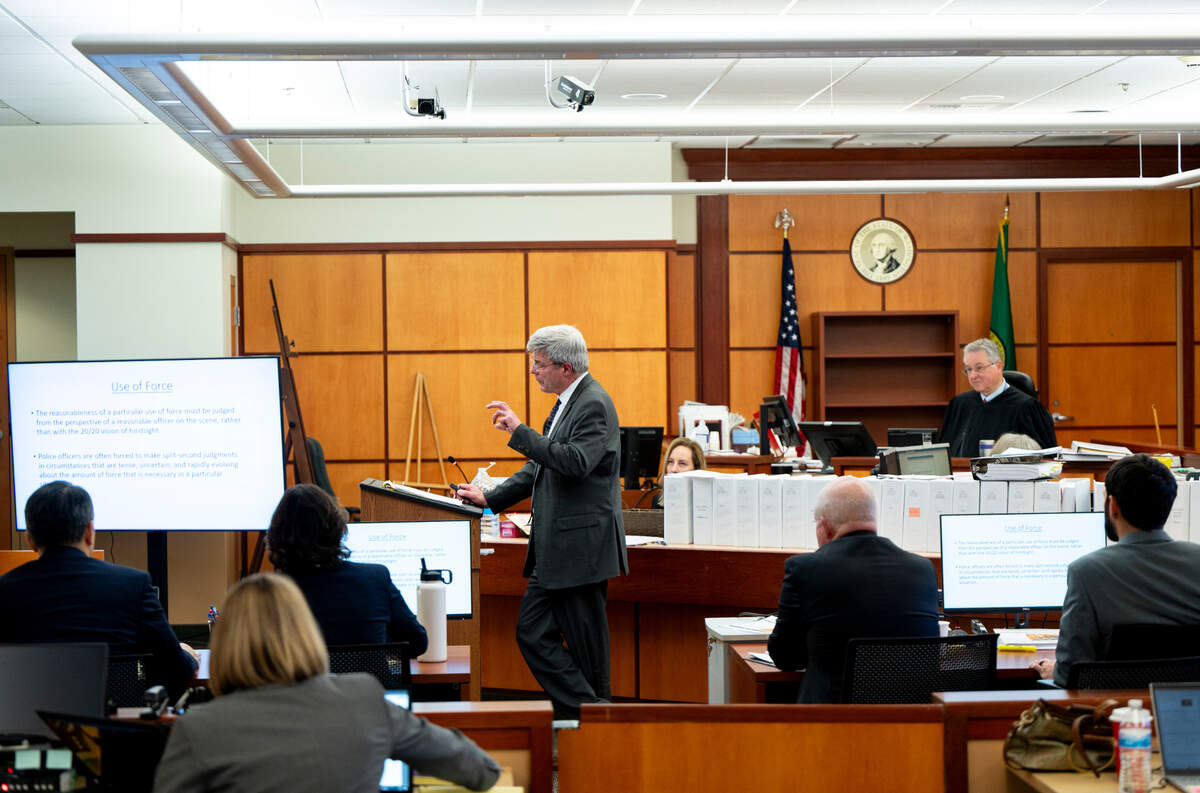
Fricke told jurors that the force Burbank and the other officers used against Ellis was justified because he resisted arrest and that they had legal standing to take Ellis into custody for hitting their patrol vehicle.
Jared Ausserer, a lawyer representing Collins, added that resisting arrest is justification for arrest. As for the manslaughter charge, Fricke and Ausserer said drugs — and not the force used by police — killed Ellis. The jury can rule Ellis’ death was excusable if it determines the officers acted lawfully.
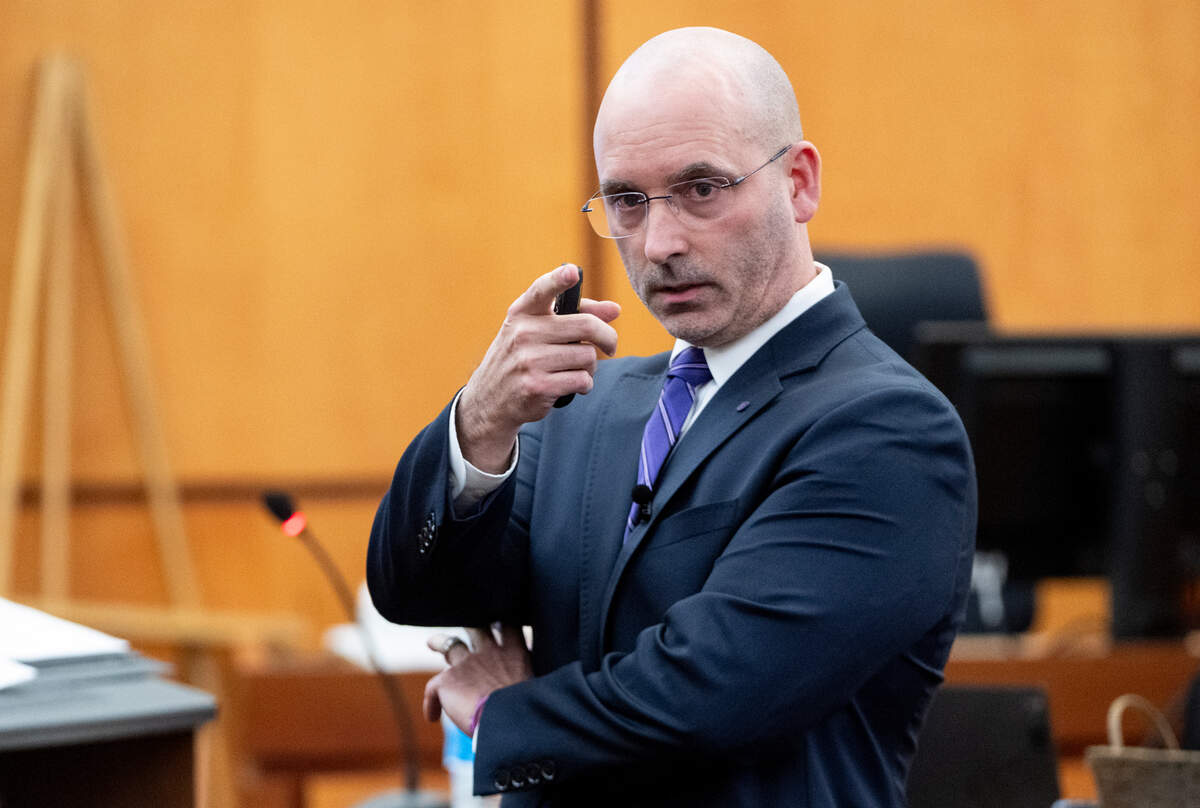
Collins and Rankine testified during the trial, while Burbank elected not to. Collins testified that Ellis acted aggressively toward officers by lifting him off the ground and throwing him through the air – something that nobody else claimed happened, including Burbank, who was sitting in the passenger seat of their patrol vehicle.
Burbank and Collins both told detectives from the Pierce County Sheriff’s Department, which initially investigated the case, that Ellis smacked the window where Burbank sat and threatened to punch Burbank, prompting Burbank to abruptly swing open his door and knock Ellis to the ground.
Three eyewitnesses testified they observed the interaction between Ellis and the officers from the beginning, before either officer left their cruiser. Those witnesses — two of whom recorded cellphone videos of Collins and Burbank roughly handling Ellis — said Ellis was walking away from the police cruiser when he appeared to be summoned back, then promptly was leveled by Burbank’s car door, Eakes said in her closing statements, which concluded Tuesday morning.
Ausserer, during his closing argument, insinuated Ellis’ family lawyer ginned up evidence against the officers by collecting cellphone videos and interviews from eyewitnesses who implicated the officers.
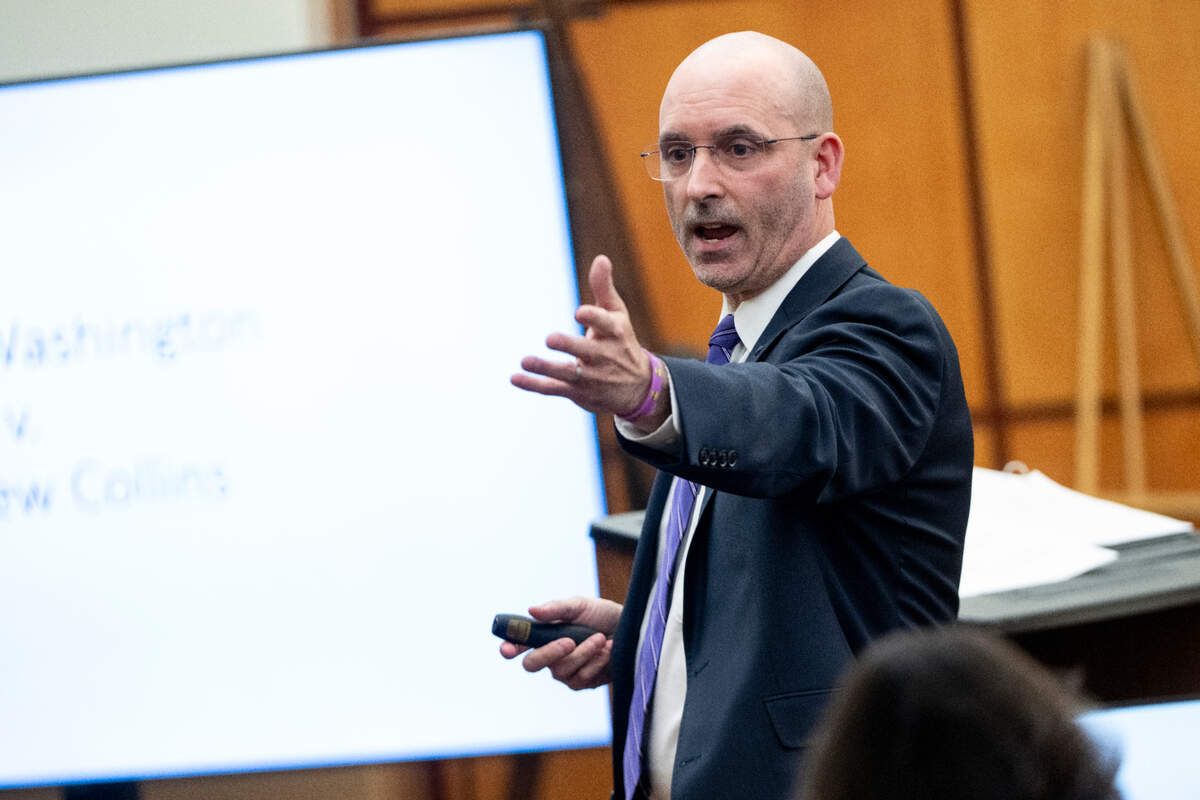
“Those three eyewitnesses are not credible at all,” he said.
Fricke said the eyewitnesses did not see the beginning of the physical struggle between Ellis and the officers.
“We know that tape [from cellphone videos] doesn’t show everything,” he said.
Fricke took aim at the credibility of one of the witnesses who recorded cellphone video and testified against the officers. Sara McDowell, who happened to be driving by, testified that Burbank and Collins attacked Ellis without provocation and provided cell phone video that was critical to the trial.
“We know that she said in a social media post that she’s going to lie on the stand,” Fricke said.
During an online spat with a supporter of the officers over a year before the trial, McDowell said she was “lying to shut you all down.” McDowell testified that it was a typographical error, and she meant to write that she was “dying” to testify against the officers. Ausserer said she showed bias against police by lashing out online at people around the country about the case.
The officers and their lawyers have maintained that Ellis exhibited extraordinary strength and persisted to struggle with them, resisting being handcuffed and flailing his legs as police tried to gain control of him. Fricke said that Ellis’ resistance compelled the officers to use force against him.
Fricke pointed the jury to Ellis’ arrests in 2019 and 2015, both while high on meth and involving physical struggles with police, and said the same thing happened on the night he died.
“It was the Manny Ellis who was high on meth, the paranoid, violent and unpredictable Manny Ellis that officers Burbank and Collins encountered,” Fricke said.
Ausserer played cellphone video of Ellis’ 2019 arrest that showed him nude, charging at deputies and being zapped with a Taser. Ausserer also showed jurors Ellis’ statement to a treatment provider, in which Ellis acknowledged he was anxious whenever he encountered police after that incident.
Fricke argued Ellis’ drug abuse left him vulnerable to sudden death, particularly when compounded by the high level of meth in his system. He called Ellis “a time bomb.”
“All the abuse that he did to his body came to a head,” Fricke said.
Rankine and his partner were the first to arrive on the scene as backup to Collins and Burbank. Rankine told detectives and affirmed when he testified that he heard Ellis say he could not breathe and responded, “If you’re talking to me, then you can breathe just fine.”
Collins and Burbank denied ever hearing Ellis say he could not breathe, though videos admitted as evidence show Ellis said so repeatedly.
Rankine’s partner testified that he heard Ellis say he couldn’t breathe in the presence of Collins and Burbank, and Collins admitted on the witness stand his voice was captured on the videos telling Ellis to “shut the [expletive] up” after he pleaded for air.
“If you’ve been in an altercation that’s hand-to-hand combat, which is how I’d describe it, you don’t hear everything,” Fricke argued.
During nine weeks of testimony, the prosecution presented experts who testified that the officers acted outside of recommended police practices, used excessive force and caused Ellis’ death.
The officers’ defense teams countered with expert testimony supporting their theories that the officers used only the amount of force necessary to subdue a resisting subject.
On Tuesday morning, Ausserer argued to Pierce County Superior Court Judge Bryan Chushcuff that in Eakes’ closing argument, presented Monday afternoon, she ignored rulings limiting what could be presented at trial and altered exhibits before presenting them to the jury, which was part of a pattern of deliberate violations of his orders by prosecutors.
Rankine’s lawyer Mark Conrad joined in, claiming that when Eakes told jurors the officers treated Ellis like he was “less than human,” she violated the judge’s order prohibiting lawyers from comparing anyone to animals.
Legal precedent has excluded references to people as animalistic as “coded racist language,” Conrad pointed out.
“They know exactly what they’re doing,” Conrad said. “They’re trying to invoke stereotypes and prejudice against our clients.” Collins and Burbank are white; Rankine is Asian.
In their statements to detectives and in testimony, the officers at times described the sounds Ellis made as “animalistic.”
Chushcoff refused to dismiss the charges against the officers, but he cautioned Eakes.
“You’re really pushing the boundaries on this and not just on this one occasion – in the totality of the state’s approach in this case. You’re pushing the boundaries. Don’t push it any further.”
As Collins, Burbank and Rankine left the courthouse for the midday break Tuesday, at least seven active Tacoma police officers in uniform, some on bikes, some arriving in cruisers, greeted the defendants in the courthouse parking lot with handshakes, hugs and encouragement.
Closing arguments are expected to conclude Wednesday, when Rankine’s legal team is expected to present its closing argument and the prosecution will offer a rebuttal argument before the jury begins deliberating.
This story was originally published December 12, 2023 at 7:12 PM.