Prosecutors give dramatic account of Tacoma quadruple murder in trial’s opening remarks
Jurors heard a dramatic account of the “execution-style” shootings of four people in Tacoma’s Salishan neighborhood during opening statements Tuesday in the trial of a 24-year-old man accused of murder.
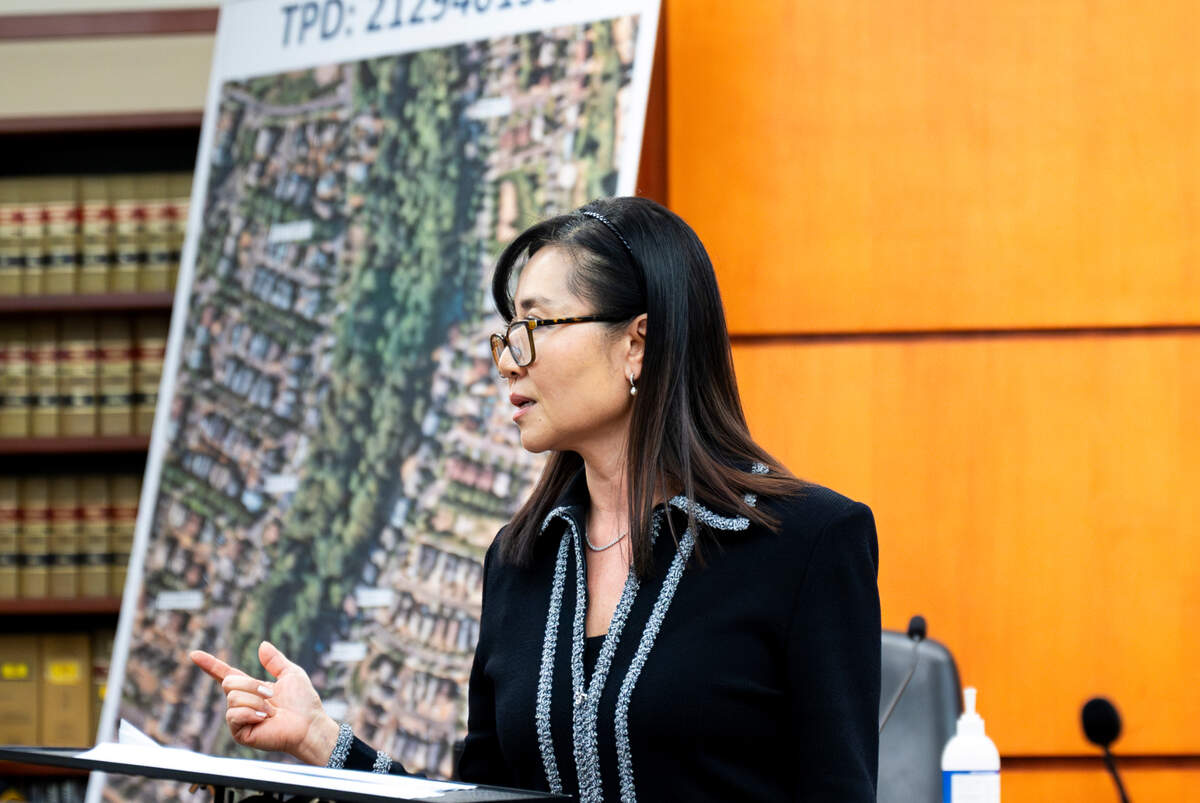
In a crowded courtroom, prosecutors described the ordinary day the victims and their families were having on Oct. 21, 2021, when a gunman walked up to four people gathered in and around a car parked behind a home and shot each of them without warning or preamble.
Deputy prosecuting attorney Sunni Ko told jurors that the state would prove that it was a stranger who killed the unsuspecting victims, and that man was Maleke Pate, seated at the defense table. The victims were Maria Nunez, 42; her son, Emery lese, 19; Nunez’s brother, Raymond Williams, 22; and Williams’ girlfriend, Natasha Brincefield, 22.
“There was nothing in the air or in the skies that warned the families that this day, Oct. 21, 2021, would be the day that would devastate their lives in ways that they had never imagined,” Ko said.
Pate is charged with four counts of aggravated first-degree murder. If convicted as charged, Superior Court Judge Susan Adams, who is presiding over the trial, would be bound by state law to sentence him to multiple terms of life in prison without possibility of parole.
The jury is made up of nine men and three women, including one Black woman and one man who appears to be of Asian descent. Three alternates are on the jury panel in case a juror needs to be excused.
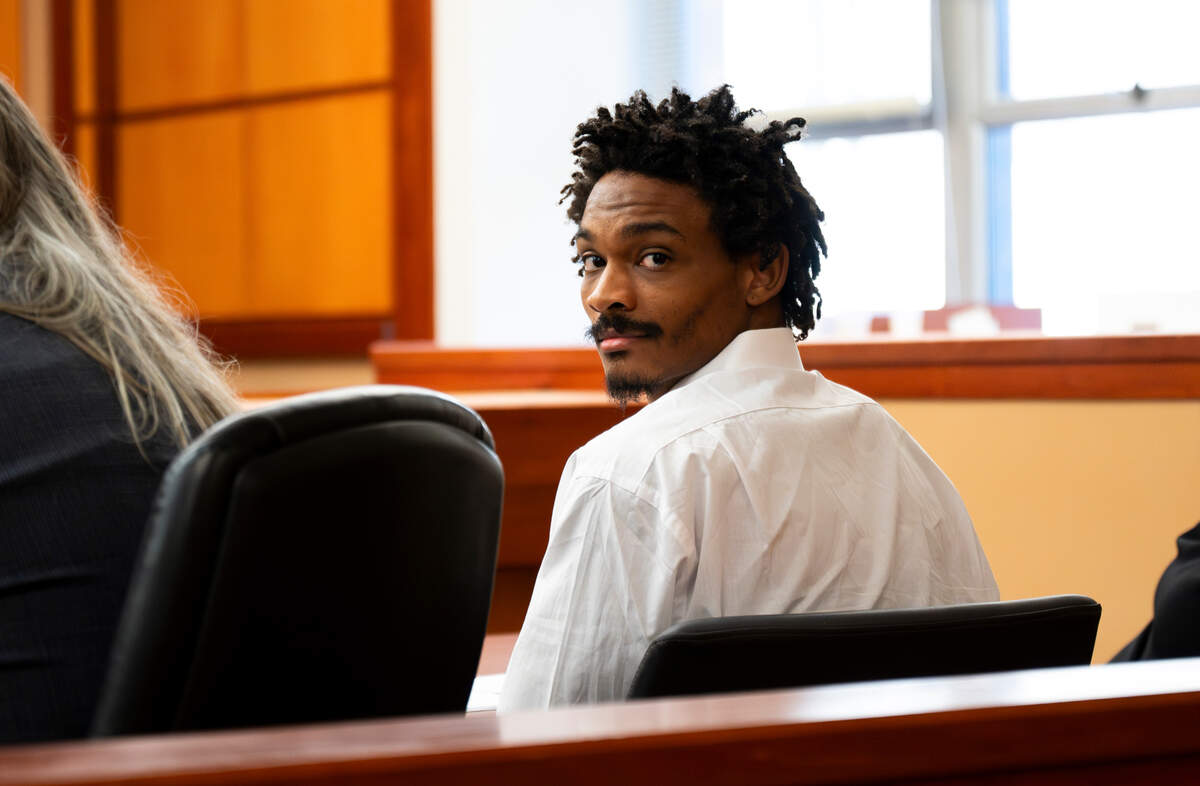
The panel heard comparatively little in opening statements for Pate, who is represented by Travis Currie and Jane Melby from the Department of Assigned Counsel.
In less than five minutes, Currie reminded jurors that opening remarks are not evidence, and so far they had only heard a story from prosecutors filled with tragedy and emotion, with a bad guy at the center. The defense attorney asked jurors to set aside the drama and the tragedy to rule on the actual evidence in the trial.
Currie said the state’s case was based “almost entirely” on circumstantial evidence. He said prosecutors would tell them at the end of their case that the law doesn’t make much distinction between circumstantial and direct evidence, and he asked them to keep in mind that circumstantial evidence suggests that something might be true or not, requiring them to draw some connections.
“And that evidence is only as good as how strong and absolute that those connections must be,” Currie said.
Pate’s mental capacity to stand trial was repeatedly called into question before he ultimately was declared fit. He sat quietly in a white dress shirt while attorneys for both sides spoke. He has pleaded not guilty to the charges, and he remains in custody at Pierce County Jail.
Over the next weeks, Ko said, jurors would hear the frantic 911 call of a woman who rented a room at 4258 Everett Ave. and watched from the second floor as the shooting unfolded.
The woman was home after getting off work and heard chatter and laughter from her window, Ko said. Maria Nunez, her son and her brother, along with his girlfriend, were gathered in and around a blue sedan in the backyard. Nunez had just picked up her son from work, and she brought him to the Everett Avenue townhouse where her mother and brother lived instead of going straight home.
Suddenly, the woman upstairs heard gunshots.
“Boom, boom … boom, boom,” Ko said, smacking her hands together with each shot.
Ko said the woman could see Natasha Brincefield “obviously dead” on the ground, and Raymond Williams’ body on the passenger’s side. He was still alive and gasping for breath.
Sniffles and sobs were heard in the courtroom gallery as Ko described the scene, telling jurors the woman also saw the gunman raise his arm and weapon before firing at the driver, Nunez. The witness ran to a street-facing window, where Ko said she saw Nunez’s son, Iese, trip and fall as he ran from the shooter.
“Then she saw the gunman,” Ko said. “He stopped running and began walking, walking slowly. He began walking slowly with his gun aimed at Emery. And he fired his gun. Boom, boom.”
Noting that not all witnesses gave consistent descriptions of the gunman, Ko said jurors would see for themselves surveillance images of the suspect running from the murder scene.
Jurors will also hear about a 9 mm Luger handgun found in Pate’s room in a suitcase that had airline tags bearing the defendant’s name, Ko said, and how forensic investigators determined it was the weapon used in the fatal shootings. They’ll also hear two phone calls Pate made while held at Pierce County Jail. Ko said they included Pate’s explanation of why the “killer gun” was found in his room and in his suitcase.
“You’re going to hear Maleke Pate talk about the evidence, how he thinks it’s quote, ‘bullshit.’” Ko said. “You’re going to hear his mother’s initial shock, and her ready acquiescence because she has a part to play.”

What jurors won’t hear is why these murders occurred, Ko said. Investigators found virtually no connection between Pate and the four victims, according to court records, and the shooting didn’t appear to police to be a robbery. No motive has surfaced.
Prosecutors don’t have to prove motive, Ko said. What they will have to prove is whether Pate planned to kill the victims and how he would do it. Ko said they would prove whether he premeditated the murders while he closed the distance between himself and the victims with his gun.
“Whether with each step as he got closer and closer and closer and came within arm’s distance, whether he did so because he had predetermined who his victims would be on that fateful day.”
Court adjourned once opening statements were complete Tuesday afternoon. Prosecutors were expected to call their first witness Wednesday morning.
This story was originally published March 6, 2024 at 5:20 AM.