How roughly $900K in the state capital budget could preserve Black history in Tacoma
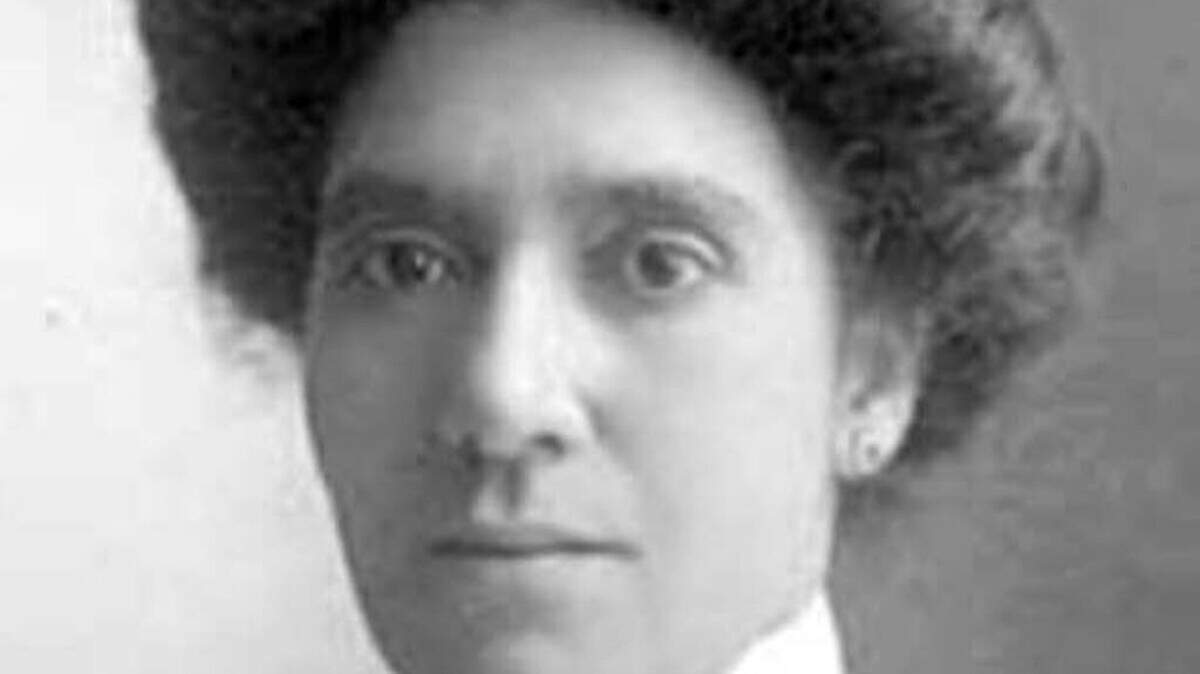
The words are as powerful and prescient now as they were back then.
“Courage is the saving grace in this tense world racial situation,” Tacoma’s Nettie Asberry told The News Tribune. “Courage of the white people who dare to show their fairness by helping us achieve positions of human dignity, and courage of those of other races who risk insults by quietly asserting their rights as human beings.”
Asberry’s remarks came during a time of stark racial discrimination and long boiling tensions across the United States, much like today. But they were made in 1961, during her 96th year, articulating a struggle she knew all too well. An article in this newspaper described Asberry as a Black woman with a doctorate in music who — among other accomplishments — founded the first chapter of the NAACP west of Kansas City. She would soon be honored for her “outstanding achievements in the field of voluntary social service” readers learned, by “some one hundred ten co-workers in the City Association of Colored Women.”
The write-up — while lengthy, and no doubt glowing for the time — was also a predictable undersell. It credited Asberry’s work with the NAACP, and the Ph.D. she earned — which, for “a colored girl … was virtually unheard-of in the reconstruction era that followed the Civil War,” the paper noted — but either omitted or sugarcoated the fierce civil rights fights she’d waged from Tacoma during her long life. Asberry’s role in helping to defeat a proposed state law against inter-racial marriage received a small paragraph, while her outspoken protest of a local showing of the racist silent film blockbuster The Birth of a Nation was nowhere to be found.
Sixty years later, a new effort to honor Asberry — and make sure her story receives the place in history it deserves — has taken on shape and urgency, in Tacoma and in the state capital of Olympia.
For more than five decades, Asberry lived in a home on South 13th Street on Hilltop. She used the large home as a classroom to teach music to her many students, but more importantly, it became ground zero for Black activism of the time.
Now, with roughly $900,000 currently included in the proposed capital budgets of both the House and the Senate, the Tacoma City Association of Colored Women’s Clubs (CWC) hopes to purchase the and restore the property, returning it to Tacoma’s Black community once and for all.
According to Marshall McClintock, a board member of Historic Tacoma — which along with the nonprofit land conservation group Forterra has been assisting with the effort — the Asberry home “was a center for the African American community, particularly through the early half of the 20th Century.”
“It’s just a critical piece of that history of the African American community in Tacoma,” McClintock said when asked about the importance of the project. “This is such a physical example or a place where these activities happened; it actually traces the development of African American politics and culture.”
Asberry was a leader in the movement to found clubs like the Tacoma CWC, and according to the nonprofit’s current president Cynthia Tucker, buying her former home — which has been a goal for several years — represents a chance to “recognize the strength of the Black community” in Tacoma.
It’s also an opportunity to unearth and celebrate Black history that’s been purposefully ignored or neglected over the years, Tucker believes. Tucker noted the Tacoma CWC plans to honor Asberry along with longtime members Dolores Silas and Freddie Mae Barnett at its annual Founders’ Day event next month.
“I’m 72, and when I was a child going to school, I didn’t hear about Black history,” Tucker said. “Our Black history was buried.”
While plans have yet to be formalized, Tucker said, the Tacoma CWC has visions of renovating Asberry’s music room, creating a Black history library and an African American museum, and creating a Hilltop community event space. Along with Tacoma CWC board president Carrol Mitchell, she cautiously noted that the home is currently owned by a Seattle-based investor, and if money for the property’s acquisition is included in the state capital budget, the purchase will need to be negotiated.
Efforts by The News Tribune to reach the home’s current owners this week were unsuccessful, but on Tuesday, both women were optimistic that a deal would be reached. They’ve been encouraged by support from Gov. Jay Inslee, the city of Tacoma and local legislators like Jake Fey, Laurie Jinkins and the recently elected T’wina Nobles, who became the state’s first Black senator in a decade after being elected last fall.
“I think we’re very close to making this happen,” Tucker said.
Nobles — who was CEO of the Tacoma Urban League before winning election and still holds the position — said that preserving the historic Asberry home is about more than a few lines and a few dollars in the state’s two-year construction budget.
It’s about formally acknowledging — and continuing to acknowledge — that Black Tacoma residents “built this community” and are “part of the fabric” of the city.
Making sure that Tacoma’s Black community owns pieces of its long history is particularly important on Hilltop, Nobles said, given the rate of gentrification in the area.
“We can’t keep playing this game of take back. It’s not fair that we have to take back what’s ours, from property, to our neighborhoods, to our communities, to our streets and the places where our family members were born and raised,” Nobles said. “Our future generations, we need them to not think we have nothing, that we own nothing. This is ours.”
For Mitchell, helping the Tacoma CWC to acquire, restore and preserve the longtime home of the group’s founder would help deliver a powerful message.
While Nettie Asberry’s story isn’t as well known as it should be — at least yet — her legacy looms large in Tacoma, Mitchell said.
“For me, it’s sort of like coming home. Going back to that house is like going back to your grandmother’s house, and recognizing yourself in it, and then being able to realize that … the things I have been able to achieve is because of the investments and sacrifices of people like Nettie J. Asberry made,” Mitchell said.
“We’re just trying to recapture that same momentum that she had during her time, and use it to raise awareness in Tacoma and Pierce County of Black history.”
This story was originally published April 16, 2021 at 5:00 AM.