Can Forterra deliver the housing it promised to Hilltop? Saga of old Rite Aid continues
Where there’s smoke there’s fire. And where there once was an abandoned Rite Aid on Tacoma’s Hilltop, there’s now reason for legitimate concern that the Seattle-based nonprofit that purchased the neglected property three years ago — with intentions of developing affordable housing for a neighborhood in desperate need of it — might not be able to deliver on the promises it made to a community accustomed to getting the short end of the stick.
Forgive me if you’ve already heard about Forterra NW’s no good, very bad month. Historically a land conservancy that only recently expanded into the development of urban affordable housing, the agency has been leveled by a string of high-profile controversies since late September.
As Daniel Beekman and David Gutman of the Seattle Times first reported, Forterra is currently embroiled in a simmering dispute with the Snoqualmie Tribe, with the tribe alleging in a Sept. 23 letter that it was misled and lied to in the process of applying for a $20 million federal grant tied to the sustainable harvest of timber from the tribe’s forest lands. Locally, that’s a big deal because the grant partnership and the timber it promised to yield have been a key part of the plan Forterra and its Strong Communities Fund have touted for the development of affordable housing at the former Rite building on Martin Luther King Jr. Way. When the Snoqualmie Tribe officially withdrew its support for the grant application, it created significant uncertainty surrounding the project.
Separately, Forterra is facing sharp criticism from roughly 80 former employees over what the ex-staffers describe as a toxic workplace environment. There are also mounting questions from local philanthropic investors who have supported the nonprofit’s Hilltop work, including the Greater Tacoma Community Foundation, about Forterra’s ability to successfully complete the Rite Aid development.
Oh, and on Oct. 21 Forterra fired its vice president, Tobias Levey, “with cause” over concerns that “he could not responsibly or effectively serve the organization’s mission,” according to the Times. Levey’s responsibilities at Forterra included helping to lead the timber and housing initiative that has been at the center of the Rite Aid development.
For Tacoma, one question is now unavoidable:
Will Hilltop actually get the project it was promised? Some, including some of the project’s biggest supporters, are understandably worried.
Forterra has hired outside attorneys to review claims made by the Snoqualmie Tribe in hopes of resolving the dispute.
The nonprofit is also reviewing Levey’s actions and the accusations made by former staffers, according to the Times.
One thing is certain: Hilltop deserves answers.
Accountability and transparency
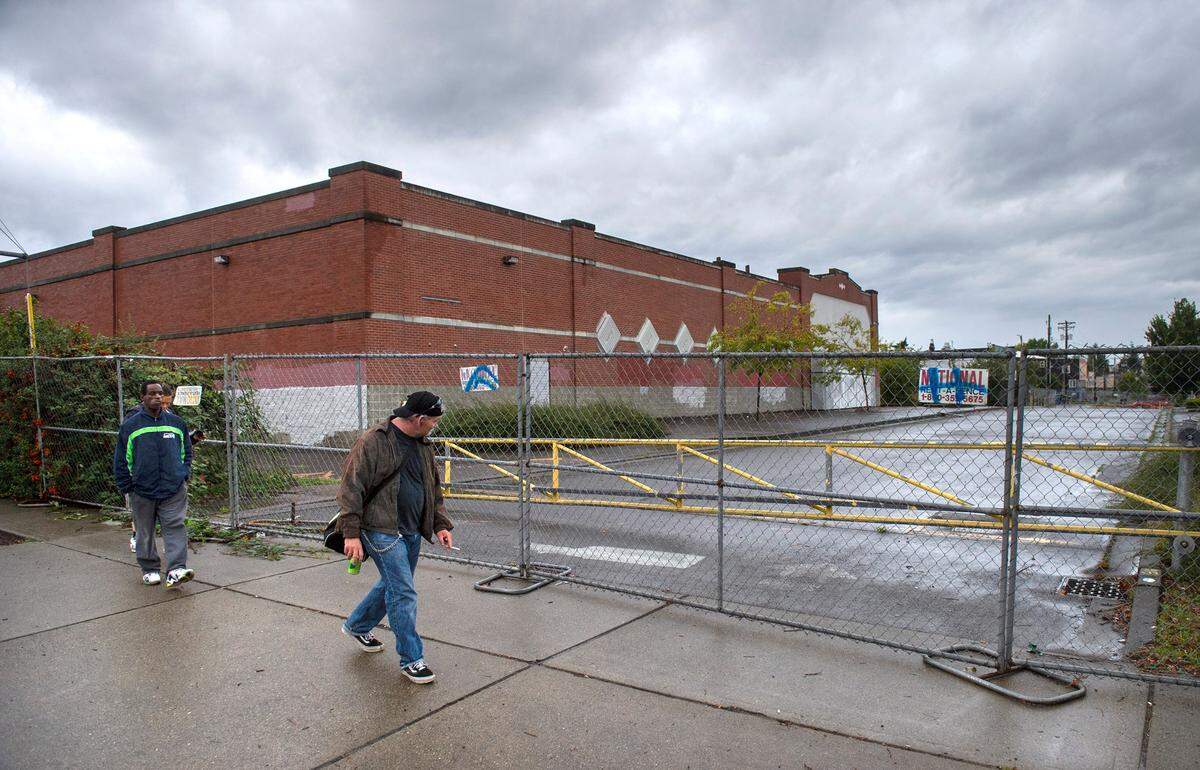
The plight of the old Hilltop Rite Aid is nothing new. That’s part of what makes the lack of construction progress at the site a sore subject.
In many ways, the former pharmacy represents a full city block of broken promises and broken trust, emblematic of decades of disinvestment and neglect on Hilltop.
The Rite Aid was supposed to be a boon for the neighborhood. Opened in 1999, then-City Councilwoman Dolores Silas heralded the store’s arrival, describing it as an anchor to future retail revitalization. By 2005, the Rite Aid had been shuttered, and though it was briefly occupied by a Save A Lot, it spent nearly a decade deserted, sucking the life out of years of efforts to develop and energize the area.
That’s the longstanding problem that Forterra swooped in to solve in September 2019 when it purchased the property for $4 million. Shortly after the acquisition was announced, Forterra’s president and CEO Michelle Connor told The News Tribune that her nonprofit would work with the neighborhood and let the people of Hilltop guide the project. By late 2020, the building had been painted and opened for community use, and plans for 300 units of affordable housing were being made. Construction was supposed to begin this year.
That has yet to happen, which is one reason local supporters have begun publicly voicing their angst.
With all the drama new surrounding Forterra, it’s created a fresh storm of local skepticism for a nonprofit without an established track record of successfully developing affordable housing.
On Oct. 18, the Greater Tacoma Community Foundation — a local philanthropic organization that has invested in Forterra’s work on Hilltop — put into terse words what some in the area were already thinking, demanding transparency from Forterra and a clear accounting of where the project stands.
The Greater Tacoma Community Foundation’s letter, which was co-signed by the Seattle Foundation, also called for Forterra’s executive team to be replaced and for its Hilltop development to be put into the hands of “developers with proven pre-construction, mixed-use experience who can deliver housing on Hilltop, for the Hilltop in an accelerated time frame.”
“I think one of the things that we do share with Forterra is an intention to see housing delivered on the Hilltop, for the Hilltop,” Greater Tacoma Community Foundation president and CEO Kathi Littmann told The News Tribune last week. “But (the project) has been pretty status quo since around March of 2020. … There’s no evidence of moving forward for design and permitting and construction. ”
“What we’re asking for is accountability by (Forterra’s) board, that the resources and the skills are available within Forterra to do the work, and for Forterra to be clear and transparent in honoring its commitment to the community and investors,” Littmann continued.
“How they go about that is their thing. But we need that to happen.”
Negotiations with new developer
Asked about the state of the project, in light of all the negative headlines of the last month, Forterra responded with a written statement to The News Tribune.
The nonprofit pledged its commitment to redevelopment through its Strong Communities Fund and a project that ultimately includes affordable housing and home-ownership opportunities for Hilltop residents.
Significantly, Forterra revealed that it’s in “confidential negotiations” with a “locally-owned developer” to take over oversight of its development effort on Hilltop. The nonprofit indicated that a new development schedule likely would result from these negotiations and that development plans might change as a result of the deal. The nonprofit did not include further details on an expected construction time line moving forward.
Forterra said its most recent plans for the property call for the development of four buildings with a total of 250-300 residential units and approximately 24,000 square feet of ground-floor commercial space. The target is approximately a 50-50 mix of rental units and owned residences, with half of the units priced affordably for people earning 60% or less of area median income, the nonprofit indicated.
While Forterra’s expected deal with a new developer could alter those plans, Forterra’s statement indicated that “the community objectives for a mixed-use development with affordable housing remain the foundation of the project.”
“Forterra has selected a developer who is now engaged in a feasibility assessment for the project. The developer will be publicly announced along with next steps once an agreement to move forward has been reached. The developer will entitle, permit, design and construct the buildings at 1105 MLK Jr. Way. Forterra and the Strong Communities Fund are now working with the developer on how we can best support them in achieving the community priorities for development,” the statement indicated.
In response to questions from The News Tribune about how Forterra’s frayed relationship with the Snoqualmie Tribe would impact development in Tacoma, the nonprofit indicated that the Hilltop project would no longer rely on wood panels produced at the Darrington Wood Innovation Center. As part of Forterra’s Forrest to Home initiative, sustainably harvested timber from forests like those owned by the Snoqualmie Tribe are envisioned to flow through the Snohomish County facility on the way to becoming cross-laminated timber modules, but according to Forterra, production in Darrington has now been delayed until at least 2025.
Finally, Forterra stressed that there is activity at the former Rite Aid building, which wasn’t the case before the 2019 purchase. The property has been opened to the public as a hub for local arts and culture, including providing a home to the Tacoma Urban Performing Arts Center.
Progress at the site has been slowed by several unexpected challenges, including the need to purchase an additional tax parcel for $240,000 and navigate the vacation of a public right-of-way which was finalized only four months ago, according to the nonprofit.
‘Hopefully Forterra will step up’
From the perspective of Brendan Nelson, former president of the Hilltop Action Coalition, the concern expressed by the Greater Tacoma Community Foundation doesn’t necessarily match the tenor of what he hears when talking to his neighbors and Hilltop residents. Through his own nonprofit, Nelson has done consulting and engagement work for Forterra on Hilltop.
Yes, Nelson said, the community wants the affordable housing it needs. But the people he’s spoken to are largely happy that the old Rite Aid building is now an active space for the arts and local gatherings, he indicated, and they’re willing to be patient with Forterra as it works to redevelop the property — at least for the time being, and as long as the feedback residents provided during the community engagement process is honored.
“I think it’s imperative that this project happens. There have been things that have been promised to the Hilltop community that have not come to fruition. And this can’t be another one of those things,” Nelson said.
“I still have some trust in Forterra, just based on my conversations and the work that I’ve been doing with them. There are some things that definitely concerned me through this process, but I do trust them,” Nelson added.
Dorian Waller, a member of Forterra’s 22-member board of directors, expressed similar sentiments. Waller is a government relations manager for King County and chairs the states African American Affairs Commission. He also hails from Tacoma, and questioned whether the doubts and criticisms included in the Greater Tacoma Community Foundation’s letter represented the true sentiments of Hilltop.
“I think outside investors are agitated,” Waller said. “When we think of community, I think we have to be clear about the distinction. Those on Hilltop, I haven’t heard anyone really complain about the project.”
“It’s taken longer, but it was always going to take longer to do this project from the get-go, mainly because we were intentional about getting not only community input but community involvement,” Waller added.
Still, there’s no dodging the obvious: Confidence in Forterra has been severely shaken by a string of errors and public black eyes, many of which Waller acknowledged are self-inflicted.
The one thing everyone seems to agree on is simple:
The only way for Forterra to pick up the pieces is to successfully complete the project it promised to Hilltop three years ago.
“I completely appreciate Forterra’s commitment to community engagement. I mean, what they did on the Hilltop was great. But part of community engagement is the ongoing delivery of your commitments,” said Littmann, who described the embattled nonprofit’s decision to bring in an experienced developer as a positive first step.
“I am firmly committed to being an advocate for our community and our investors. And if it’s worthwhile doing, it’s never easy. You’ve got to be willing to go through some bumps in the process,” Littmann added.
“I think it’s a shame that we are where we are, but we’re just gonna keep at it until we can get what we need for the community, and hopefully Forterra will step up to that.”