Walmart to eliminate plastic bags in WA soon. What to know about state’s bag restrictions
Walmart announced earlier this week that it will cease to supply plastic carryout bags at its Washington retail stores starting April 18. The move will encourage shoppers to use the retail chain’s reusable bags. The decision also fits in with the state’s ban on thin plastic retail bags.
The company’s new guidelines will affect the more than 60 Walmart stores across the state. Washington will join Vermont, Maine, New York, Connecticut, New Jersey and Colorado in the corporation’s efforts to eliminate waste and encourage shoppers to supply their own bags.
“Eliminating single-use bags is part of our effort to reduce waste at our stores and help keep Washington communities and ecosystems clean,” stated Jane Ewing, senior vice president of Walmart Sustainability in Walmart’s news release. “Our Washington customers want to be engaged on this journey, and Walmart is committed to making the sustainable choice convenient and accessible every day.”
Walmart’s delivery service will continue to utilize paper bags.
Banned bags at WA retailers
Single-use plastic bags started seeing city-wide bans in Washington municipalities starting in 2010. In the following years, dozens of local governments began to enact their own single-use plastic bans, most of which were cities in eastern Washington.
Washington state completely banned single-use carryout bags in October 2021. The ban aims to reduce contamination within recycling and compost systems, promote reuse and recycled content and support the recycled paper industry.
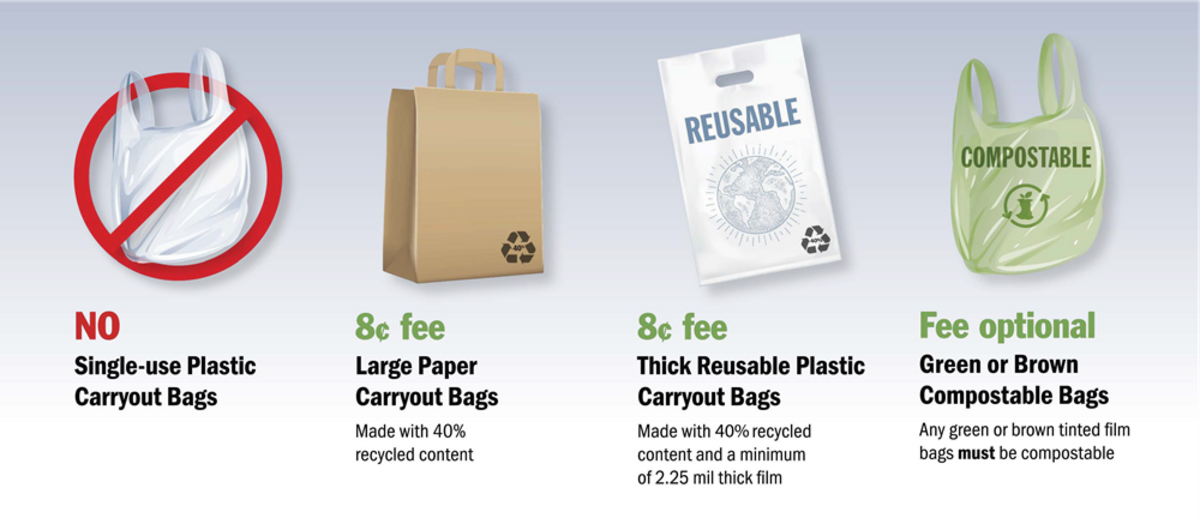
The Department of Ecology outlines what bags are banned, which ones have fees attached to them and what items are exempt:
Green or brown produce bags: These are banned because only compostable bags can be tinted green or brown.
Paper carryout bags: Paper bags must contain at least 40% post-consumer recycled content or wheat straw. Large paper bags must cost 8 cents, but a charge for small paper bags is optional. They also cannot be labeled as “biodegradable,” “degradable” or “decomposable.”
Thick reusable plastic bags: These also carry a mandatory 8-cent charge. They have to display the millimeter thickness, post-consumer recycled content percentage and the word “reusable” on the bag.
Plastic produce bag: These are exempt from the ban.
Compostable bags: The DOE doesn’t recommend using these, as many local waste facilities don’t process compost bags. In Tacoma, compost bags are considered garbage and can’t be placed in food or yard waste bins.
The goal of implementing a paper bag fee is to encourage people to think twice before going to stores and bring their own reusable bags, according to Carolyn Bowie, a waste reduction and recycling specialist with Washington’s Department of Ecology.
Bags that charge consumers don’t apply to food banks and food pantries. People receiving government food assistance, such as the Supplemental Nutrition Assistance Program, are not subject to 8-cent bag charges.
If you know a retailer that isn’t complying with the state’s bag guidelines, you can report a violation at the DOE website.
Options to dispose of plastic
If you have a pile of plastic bags, reusable or not, and want to get rid of them without contributing waste, consider these options:
Take thin plastic to a drop-off location. Many local retailers participate in collecting plastic to reduce waste and use the material in future products. Check out BagandFilmRecycling.org to find a retailer that accepts plastic bags.
- Consider using a home pick-up service like Ridwell. The service disposes of residents’ plastic bags, film and other materials for a fee.
This story was originally published March 10, 2023 at 11:34 AM.