
Pink moon, meteor shower and more in store for Washington state. Here’s when
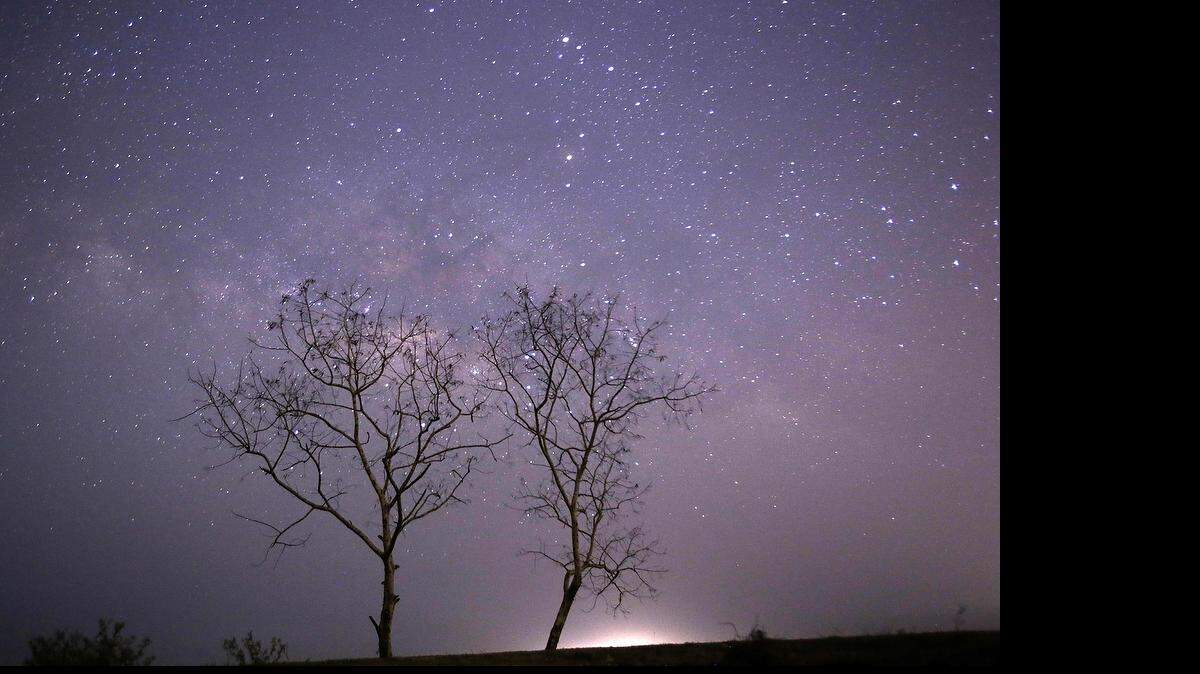
Warmer weather and clearer skies means greater skywatching opportunities in Washington state.
The Evergreen State is home to some of the best spots for stargazing in the nation, McClatchy Media previously reported.
In March, a total lunar eclipse was visible in Washington state.
What’s coming up for stargazers in April?
When is the full moon in April 2026?
The next full moon will reach its peak at 7:12 p.m. on Wednesday, April 1, according to Space.com.
“The moon will still appear full the night before and after its peak to the casual stargazer,” the astronomy website said.
Why is April’s full moon called the pink moon?
April’s full moon is known as the pink moon.
The name refers to the early bloom of moss phlox flowers in eastern North America, according to the Old Farmer’s Almanac.
Which planets will be visible in the night sky in April?
Planetary movements will make some planets visible from Earth during April.
Mercury will reach its greatest elongation — the farthest it appears from the sun — on Saturday, April 4. The planet is often too close to the sun to be visible from Earth.
During this elongation period, the planet can be seen in the eastern morning sky.
Later in the month, Mars and Saturn will appear to join Mercury. The planets can be seen in a cluster near the horizon between Thursday, April 16, and Thursday, April 23.
All of these planets will be “easier to spot for longer” in the Southern Hemisphere, according to the StarWalk astronomy app.
You may have more difficulty viewing them with the naked eye in the Northern Hemisphere.
SkyWalk said you should “start looking about 30 minutes before local sunrise,” noting that “the planets often rise late and stay low in brightening twilight.”
When is the April new moon?
The new moon will be Friday, April 17.
In the days surrounding the new moon, you may be able to see the unlit portion of the moon due to a phenomenon called “earthshine,” according to the Old Farmer’s Almanac.
Earthshine occurs when sunlight reflects off the Earth, hitting the moon and allowing visibility from the Earth.
“It gives the dark, unlit portion of the moon an eerie radiance,” the almanac said.
It may be faint, appearing like a soft glow.
According to the Old Farmer’s Almanac, only Earth’s moon is close enough for this phenomenon to occur. Nowhere else in the known universe experiences such a view.
How can I watch the Lyrid meteor shower?
One of the oldest known meteor showers occurs in April each year.
The Lyrid meteor shower, which was first observed in China in 687 BC, is known for “fast and bright meteors” with occasional fireballs, NASA said.
In good viewing conditions, you can generally see 10 to 20 meteors per hour, NASA said.
During occasional outbursts however, you can spot up to 100 meteors per hour.
The Lyrids originate from Comet Thatcher, which orbits the sun every 415.5 years, according to NASA. As the comet orbits, it leaves behind a trail of debris.
The Earth’s annual orbit through Comet Thatcher’s debris causes the meteor shower. The bright flashes seen from Earth are pieces of the debris making contact with our atmosphere, said the space agency.
In 2026, peak Lyrid meteor shower viewing will be on the night of Wednesday, April 22, according to Time and Date.
Recommended viewing times are between around midnight, the start of Thursday, April 23, and dawn.
What’s the best way to see shooting stars?
For the best view, head to a high elevation with little light pollution.
“Lie flat on your back with your feet facing east and look up, taking in as much of the sky as possible,” NASA said. “After about 30 minutes in the dark, your eyes will adapt and you will begin to see meteors.”