
Sexy or sexist? Puyallup schools aim to shed dress code labels
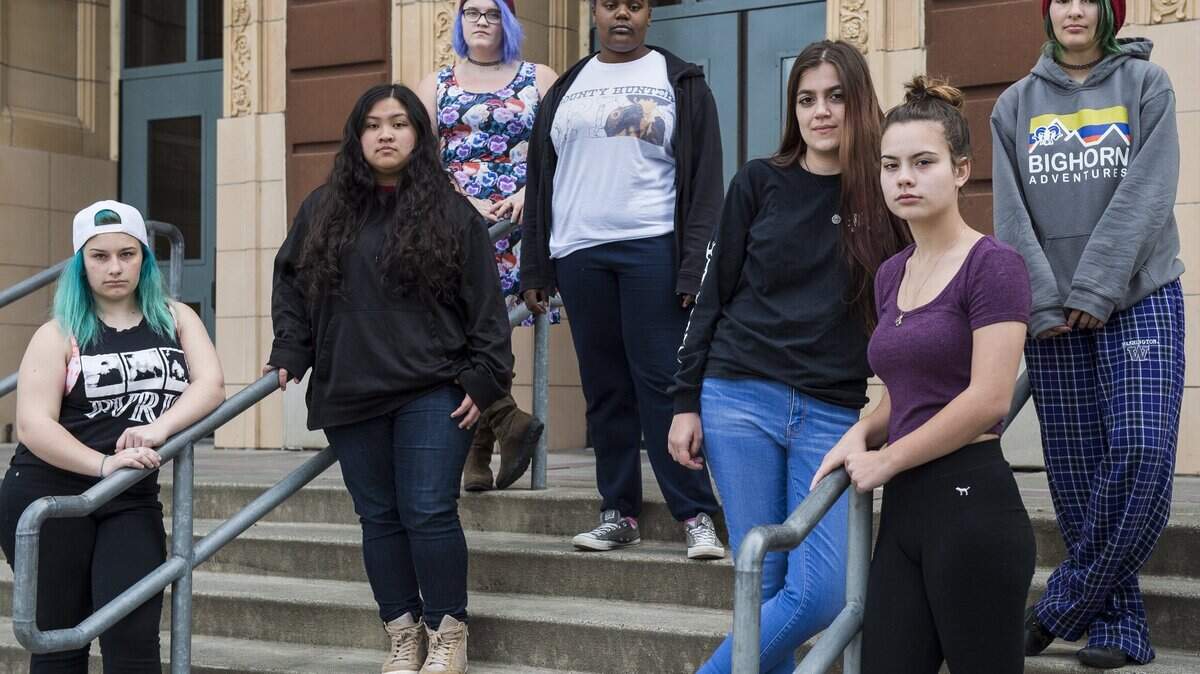
Come September, students returning to class in the Puyallup School District will no longer be prohibited from wearing a long list of clothing once considered disruptive. That includes pajamas, leggings, holes in jeans/pants and low cut, tube, one shouldered, halter, spaghetti strap, see-through and bareback tops.
Char Krause, the district’s director of student services, said the changes align with policies that promote freedom of expression.
We’re all for that, but pajamas? At school? Really?
It’s not unreasonable for school administrators to enforce dress codes; they are, after all, preparing students for life outside school walls where most employers have standards for appropriate workplace attire.
At some Tacoma elementary and middle schools, students are even required to wear uniforms as part of a long-standing district policy.
So did Puyallup go the way of frustrated parents everywhere, who, after being worn down arguing with a teen over what’s acceptable attire, finally throw up their hands and give in? Fortunately, no.
What might look like capitulation is actually a well-thought-out path toward increasing equality between male and female students, which was born out of listening to them.
In May 2017, Puyallup High students held a protest arguing the school’s gender-specific dress code was too restrictive and institutionalized bias against girls.
Viking students complained the list of dos and don’ts was much longer for female students -- an imbalance not only true for Puyallup, but in schools across the nation.
Social media has countless tales of girls being sent home or barred from school events because their clothing was “too provocative.”
Girls caught in violation of mandates like the “four finger rule – shorts no higher than four fingers above the knee” -- have been publicly called out or made to wear school-issued pants or tops.
It’s easy to see why phrases like “body-shaming” and “low self-image” accompany the consequences.
Too many school dress codes demonstrate an old way of thinking, one that says when a girl shows too much skin she could distract teenagers, mostly boys, and disrupt their education.
It tells girls their dress is somehow responsible for male behavior, and lets boys deflect responsibility for their own eyeballs or comments.
Puyallup administrators took the complaints seriously. They invited students from three high schools and a couple of middle schools to help revise the dress code.
The district’s student handbook now refers to three main reasons for intervention: when clothing causes a health or safety hazard, incites damage to school property or disrupts the educational process.
They’re the same three reasons that Tacoma Public Schools enforce, on campuses where uniforms aren’t required. Tacoma wisely allows individual schools to decide whether uniforms are a good fit, in collaboration with students, parents and staff.
Students are still subject to discipline if they take free expression too far, such as through profane, gang-related or racist writing or logos. Meanwhile, Puyallup has a fresh opportunity to talk to students about respect for themselves and others.
Whether Puyallup’s experiment works remains to be seen, but the district was smart to change its approach; instead of fighting with students over the dress code, it sought their input, like Tacoma does.
As PHS assistant principal Lorraine Hirakawa told the Puyallup Herald: “The students’ ability to advocate for change is really important and should be fostered.”
Now there’s a concept that never wears out or goes out of style.
This story was originally published July 10, 2018 at 3:00 PM.