
Here’s where Pierce County speed limits are going up, down, and why you should care
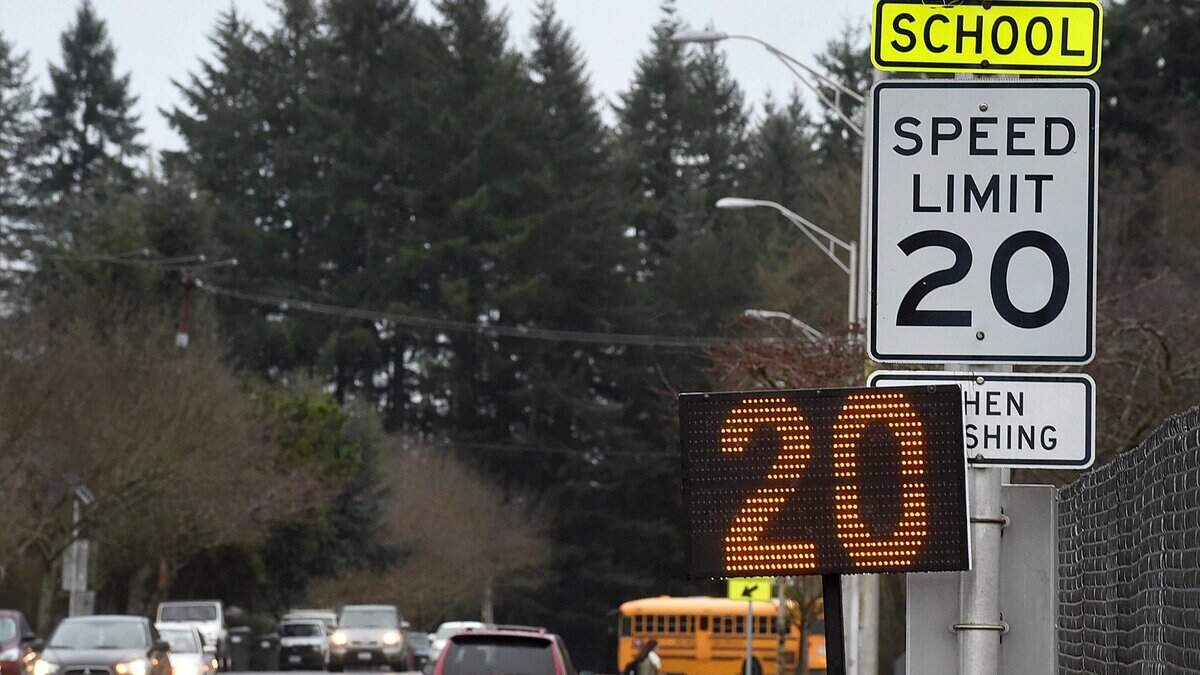
Fast cars, busy schools and vulnerable students walking on the side of the road make a bad combination. That’s why the Pierce County Council acted sensibly last week when it green-lighted a handful of new school zones where drivers will now have to slow down to 20 miles per hour.
The council approved a school zone on 52nd Street East at the request of Chief Leschi School, the tribal campus in the Puyallup Valley. It also adopted new zones on the west side of the Narrows, near Vaughn and Voyager elementary schools and Kopachuck Middle School, at the urging of the Peninsula School District.
Child-safety advocates should take note of one other speed limit reduction, even though it’s not a school zone. A section of the Key Peninsula Highway North approaching Key Center will drop from 45 to 35 mph. This hazardous stretch is where 16-year-old Kyle Stillion was killed while walking to the store last fall, struck by a driver who drifted across the narrow shoulder.
Protecting young people should be a top priority for public officials, and this package of 39 speed limit changes — 23 increases and 16 reductions — will help toward that goal, though it’s not as effective as building sidewalks.
The council approved the ordinance last week by a vote of 5 to 1. Pam Roach, R-Sumner, was the lone negative voice, saying county public works staff didn’t personally communicate to her about proposed new speed limits in District 2. (She was absent for a detailed committee presentation last month.)
We’re glad the changes went through over her objections. If anything, the county traffic engineer should be delegated more authority to create school safety zones without a council vote — in a more timely manner, free from political distractions.
The changes, which go into effect Oct. 1 — or as soon as new signs can be posted — will be the first in the county since 2010. (There are too many to list in this editorial. Click here and go to the council documents section to see the full list of changes.)
Some were prompted by elected leaders, others by the public works department’s own studies of collision data and road volumes.
Still others bubbled up from the community before eventually being vetted by traffic engineers. Examples of the county’s responsiveness to public requests include:
* Reducing the legal limit from 35 to 30 mph on 168th St. S and 168th St. E near Spanaway Lake High School. (By request of a resident.)
* Reducing speeds from 30 to 25 along four blocks of Park Avenue South in Parkland, near Pacific Lutheran University. (By request of PLU.)
The county is increasing some speed limits, too, often to bring uniformity to contiguous sections of road. In some cases, it’s catching up with arterial projects where infrastructure improvements — such as curbs, medians and turn lanes — allow driving safely at higher speeds. Such is the case in the growing area around Canyon Road in East Pierce County; motorists on 176th Street East will now be able to legally drive 40 mph, up from 35.
Given the dynamic pace of local road construction, annexations and suburban sprawl, as well as the public’s reliance on safe and smooth traffic flow, eight years is too long to wait for a systematic review of speed limits.
“We’re long overdue,” said Rory Grindley, the county’s traffic engineer. “We’d like to get on a two or three-year cycle, so this will put us back on track.”
The speed limit changes adopted last week, which properly emphasize keeping kids safe, are a good place to start.
This story was originally published August 14, 2018 at 11:40 AM.