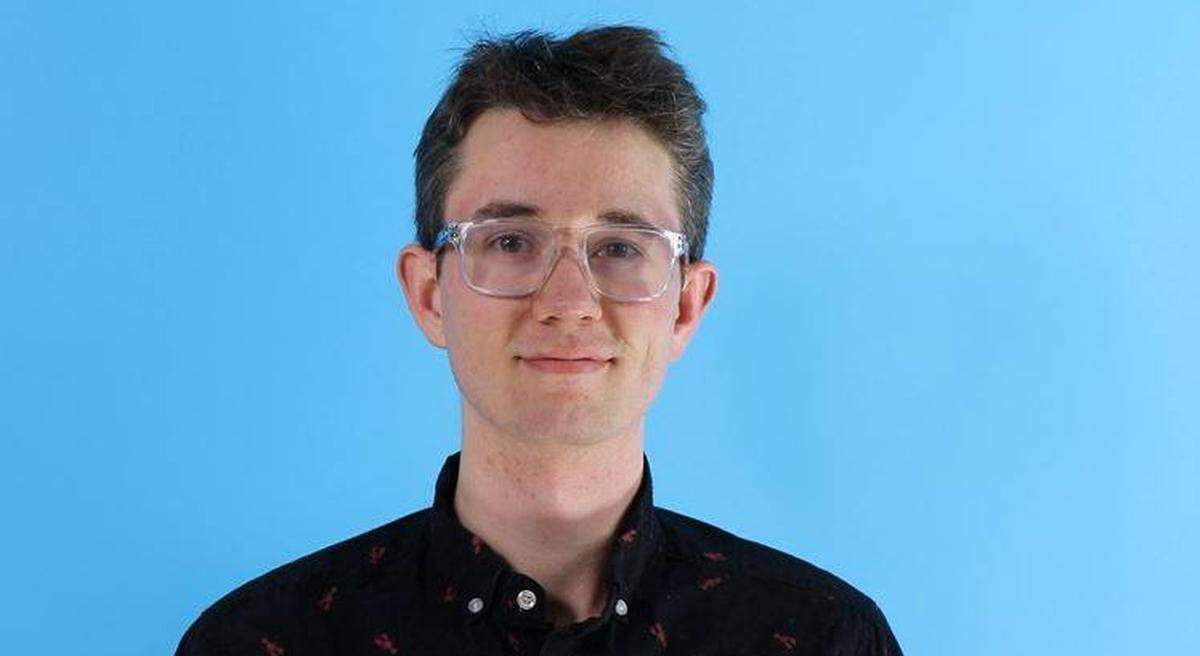
TNT Book Club interviews Rumaan Alam, who authored the club’s November selection
The TNT Book Club has selected “Leave the World Behind” for its November book of the month.
If you would like to join the discussion, email chase.hutchinson@thenewstribune.com for more information or join our Facebook group.
The novel is about two families forced together on a long weekend, meant to be a vacation, that goes terribly wrong.
The club will meet to discuss the book Dec. 4 at noon.
The book is nominated for the National Book Award for fiction, and the author Rumaan Alam spoke to The News Tribune about both the recognition as well as his writing.
This interview has been edited lightly for clarity and might contain details surrounding the plot of “Leave the World Behind.”
Q: How does it feel to have your work nominated for the National Book Award for fiction? I imagine that it is not why you set out to write, but is it a validation of the work you put into your craft?
A: It’s an honor and a great thrill, of course. But there are so many superb books that never win awards that I think you must be mindful that prizes aren’t the only form of validation. I’m delighted to see the book find a readership; that’s truly validating and a delight.
Q: This is your third novel. Where do you think it fits in with the rest of your work? As you have grown and changed, if you feel you have, how has that influenced your work?
A: I certainly hope I’ve changed — ideally grown! — in the five years since I was writing my first book and the present moment. And I certainly hope that I’ve grown stronger as a writer; perfect doesn’t exist, but practice has to have made me sharper. I think I began this book with a particular intention, to push beyond what I had done before, to try new ways of approaching plot and pacing. But in the end I can’t judge my own progress — only the reader can.
Q: How would you describe your novel? Do you think it defies easy genre categorization?
A: If it’s difficult to know where to place my book (in thriller, in horror, in literary fiction, wherever), that suggests to me that genre is mostly useful as a tool for organization. It doesn’t necessarily explain anything about the book in question. I am conscious of the way the book is toying with conventions we might recognize from the thriller or horror as we understand them. But this doesn’t necessarily account for the way the book plays with the conventions of literary fiction: middle class people, the negotiation of professional ambition and personal life, sex, shopping, parenting.
Q: What did you set out to say about family relationships and how separate families, separated by a variety of factors, engage with each other in times of crisis?
A: Family is something everyone must define for themselves. The book is looking at two different families, but could that noun apply to the group of six altogether? I think the book argues that these ties are important, maybe the most important thing we have.
Q: In a 2016 piece for LitHub, you wrote about what books are labeled as a “diverse book” and, among many things, the pressures of the publishing industry. In 2020, with your new book just published, how do you reflect on that piece and how did that industry influence the publication of this book?
A: The culture moves, but change takes time. What I’m describing in that piece is a particular pressure on writers who are people of color, or for that matter with any particular identity understood to be “different,” whatever that even means, as that implies the existence of a norm. In short, a queer writer must write about queerness, a Black writer about blackness, and so on. There’s a sense, to me, anyway, that this diminishes the art of certain writers by insisting on understanding it as veiled autobiography, or a concern only for certain communities as opposed to something for all readers. I have thus far avoided meeting the expectation that I, a gay brown person, write about being a gay brown person. That doesn’t mean that expectation doesn’t persist, and that other writers aren’t held hostage to it.
Q: With “Leave the World Behind” coming at a time of such uncertainty with us all trapped in our homes, I wanted to ask at what time in your life did you write it? What feeling and emotion fueled this work?
A: The book started taking shape at the end of 2017 and was something I idly worked on for some of 2018, but I sat down and wrote it in early 2019 — so, all before most of us had ever heard the word “coronavirus.” But I would argue that a sense of the uncanny and the strange — the feeling that reality is broken or off-kilter — has been with us for some time. I think that’s where the book came from; my feeling that the world feels off somehow.
Q: How have you been writing during the pandemic? Has your process been helped or hurt? Is there anything you are working on right now that you can share?
A: The early days of New York’s lockdown were spent just adjusting to the strange new normal; making sure the kids were keeping up with their schoolwork and happy. It was a difficult adjustment for everyone, but we have our health and our home and can’t really complain. If my own work has fallen to the wayside a bit (and it has), no big deal. At the moment, I’m teaching undergrads at Pace and Columbia, and reading books that I’m writing about as a critic, and not thinking that much about my next book. I’ve tentatively got a date with it in January, but we’ll see what happens.