‘Addicted to being feared.’ Film examines Tacoma gangs, high price they exacted in ’90s
Corey Pittman, 20, was home for summer break when he and four friends piled into a car to see a movie on May 23, 1997.
As the group pulled up to the intersection of South 15th Street and South Ridgewood Avenue on Tacoma’s Hilltop, gunfire erupted from a nearby car. Pittman’s car crashed and his friends, two of them with bullet wounds, ran for cover.
Then they realized Pittman hadn’t made it out of the car.
Pittman, a popular Lincoln High School graduate, was a sophomore at Alabama State University studying political science.
“He was a role model to some of us,” said Eric French, one of the pall bearers at Pittman’s funeral. “He lived things that are dreams to some of us.”
Pittman’s death sets the stage in the documentary film, “Since I Been Down,” out now on Apple TV, Amazon, Sundance Now and other video-on-demand services.
Using only interviews, archival footage and art, filmmaker Gilda Sheppard untangles the thick fabric that binds victims, felons, gang members, families and those that have a role in the criminal justice system. Sheppard’s camera takes viewers into Washington prisons where former Tacoma gangsters have spent the bulk of their lives.
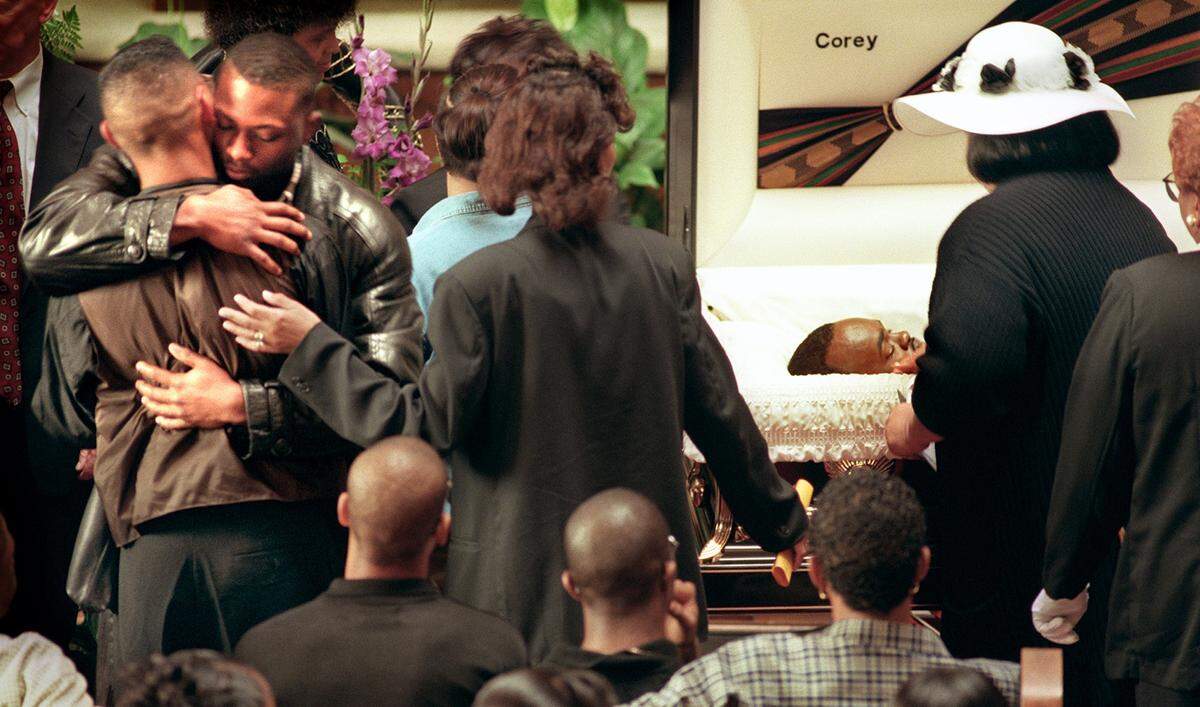
The film’s introduction juxtaposes an interview with Ma’Shana Davis, who was in the car with Pittman that night, with a former member of the gang who killed Pittman.
“She talks about her fear, the trauma,” Sheppard said this week in an interview with The News Tribune.
“I got addicted to being feared,” former gang member Billy Griffin says. The pain they caused and the price paid was deep.
“All my friends are either in prison now, forever, or dead.”
‘Since I Been Down’
The 105-minute movie, which premiered at film festivals in 2020, poses the question — what is justice? — as it pivots between the 1990s and present day.
In the late 1980s and early 1990s, gangs transplanted from California roamed Tacoma’s turf.
On that fatal night in 1997, Pittman and his friends were victims of mistaken identity. The shooters thought they were firing at rival gang members.
A 15-year-old, two 18-year-olds and two other men, 19 and 20, were arrested for the crime. Sheppard’s lens focuses on one of those 18-year-old shooters, Kimonti Carter, convicted and sentenced to life under Washington State’s “Three Strikes” law.
Sheppard’s documentary examines institutional racism, the lasting effects of red lining and the role of poverty in crime and the justice system.
“The poverty was a pool of gasoline waiting for the lit matches of gangs, drugs and prostitution,” racial justice advocate Mary Flowers says in the film. “It took an enormous toll on the youth.”
Gilda Sheppard
Until last week, Sheppard was a sociology professor at The Evergreen State College in Tacoma. “Since I Been Down” was 12 years in the making, and she’s now turned to filmmaking full time.
Although the people in her film are now middle-aged adults, their stories begin as children. By the time they reached adulthood, they were well indoctrinated into crime.

Sheppard hopes young people will be a major audience for her film. She also wants adults in key positions of influence to see it.
“We need to look at how we are teaching our children in schools,” Sheppard said. “Now we have this thing like let’s not talk about race or racism because they’re afraid of it.”
That’s a reference to the hot button issue of critical race theory.
Convicted
In 1993, Washington became the first state to initiate a “three strikes” law that gained popularity across the country. The laws, as they were variously written, institute a life sentence when a person commits a third felony.
It was an era when terms like “highly criminalized” and “super predator” came into vogue.
News media fed the atmosphere.
“Hilltop thugs must pay price,” reads one opinion piece in The News Tribune. “Teenage gang stalks Hilltop,” tops a page one news story.
Washington does not have a parole system for felons who committed their crimes after July 1, 1984.
Neither the movie nor the incarcerated men portray themselves as innocent. Some of them are guilty of Tacoma’s most heinous crimes, including the 2010 murder of Camille Love — another case of mistaken identity.
The film, shot largely on the Hilltop and in the state’s prisons, goes into depth on how the men were recruited into gangs, sometimes before puberty.
News footage shows juvenile defendants, shorter than a deputy’s shoulder, led through hallways.
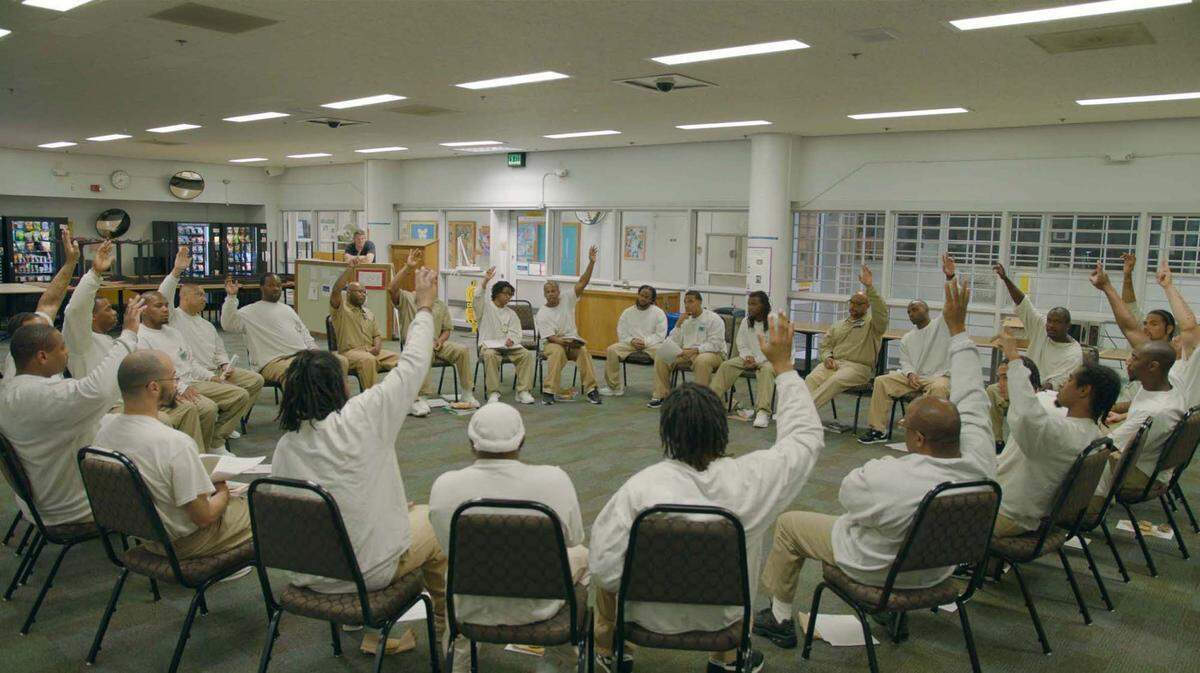
Today, Carter is involved in the Black Prisoners’ Caucus, a group which works behind bars to end discrimination, inequality and oppression in the communities from which they come.
The men often cross the prison system’s notorious racial boundaries to find common ground.
“I would never go across to a guy with swastikas and say, ‘Hey, man, there’s an opportunity for education and you can learn with me.’ Never. But I see that happening in prison,” Sheppard said.
Kimonti Carter
Carter was arrested the first time as an 11-year-old runaway when he inadvertently rode his bike into a crime scene. He was taken to juvenile hall where he met active gang members. For an impressionable youth who until then wanted to be a paperboy, the money and power from selling drugs was intoxicating.
“Some people believe that in the gang lifestyle that they were somebody,” Carter says in the film. “You were important to a particular group of people. They would rather be an important tyrant than an average citizen.”

He had just turned 18 when he killed Pittman. He was sentenced to life in prison.
In 1995, the state Legislature passed a bill that required a life sentence for anyone convicted of first degree murder during a drive-by shooting. It’s still in effect today.
“It was a clear reaction to the fear of Black and Hispanic individuals,” Carter’s attorney, Jeff Ellis, says in the film.
Transferred from the Monroe prison to Clallam Bay, Carter started a Black Prisoners’ Caucus there. It draws praise from state Department of Corrections officials.
Davis, Pittman’s friend and one of Carter’s victims, tells of the attempts she made to reach Carter after she heard Carter was improving himself.
“I’d start to write him and then I’d throw it away,” Davis says. “I did that probably six or seven times.” She gave up.
Months later, Carter finally reached out to her and asked for her forgiveness. Davis told him she can’t forget or excuse his actions. But, she forgave him.
“I have to forgive you to allow myself to move on and to heal,” she told him.
Ginny Parham
The $10 allowance Tacoma mother Ginny Parham gave her 11-year-old son, Willie Nobles, couldn’t compete with the $1,000 in cash older gang members would give him in the 1990s.
One day, her son told her he wasn’t going to school. She told him otherwise. He made a phone call. Soon, there were gang members outside her home, flashing guns.
“I felt so helpless,” Parham recounts in the film.
Nobles is one of the people interviewed in “Since I Been Down.” He was arrested at 17 for murder and sentenced to 100 years in prison.
Nobles, who grew up on Tacoma’s Eastside, was a childhood rival of Carter. In the film, they run the Black Prisoners’ Caucus at Clallam Bay.
As a boy in Tacoma, gang life had a cult-like hold on him, giving him power and prestige beyond his years.
“I used to think not gangbanging was a sign of weakness,” Nobles says.
Cops
Former Tacoma police detectives John Ringer and Barry McColeman are interviewed in the film.
Ringer displays a notebook in which detectives recorded names and photos of gang members.
“They found out we had it and they all wanted to see it,” Ringer says. “Some of them would come up and say, ‘My face isn’t in there’ and pose for a photograph.”
The gang heads, the men say, were intelligent and natural leaders.
The former detectives say they had the best job in the police department and were largely unsupervised as long as they produced results.
“I didn’t want to look at them as bad cops,” Sheppard said. “But look at the practice of policing.”
Sheppard asks the men, what is justice? The question stumps them.
“I told those two police officers that I was going to ask that question to them before they came,” Sheppard said.
Influencers
Sheppard interviewed members of Tacoma’s Black Collective in the film, including Lyle Quasim, Jim Walton and the late Harold Moss. They recount the atmosphere that made youth vulnerable to gang manipulation.
“We were shut out economically,” Quasim says.
“The underlying issues haven’t changed,” he continues. “Disparities with education, with employment with health care, with transportation, with housing.”
Drugs, gangs and violence are the result.
“Those are outcomes,” Quasim says. “Those are not inputs. The inputs are the disparities that lead to that.”
Carter says youth remain vulnerable to repeating his history.
“My reality as a young man doing life in prison will be their future if we don’t start creating better ways of dealing with our children.”
This story was originally published May 30, 2022 at 5:00 AM.