
Find Cambodian, Afghan, Senegalese and more global delights at year-old food hall
The scent of lemongrass meets the pungent heat of habaneros and jalapenos. The sizzle of goat meat hitting the flat-top harmonizes with the slice of peeling carrots, chopping onions and the back-and-forth of friendly banter.
It’s a chaotic scene — in the wondrous, semi-organized way of a working kitchen — but it’s also jovial and familial, a place where casual competition pushes the doors of opportunity open.
At Spice Bridge, a year-old global food hall in Tukwila Village, eight different restaurants operate out of this shared commercial kitchen. A retail space with four booths welcomes diners to order ashak — Afghan dumplings filled with spiced, braised leeks topped with garlic yogurt and lentils in tomato sauce — from one vendor and goat dibi, marinated with garlic and Dijon, from another.
Theary Ngeth anticipates opening a drive-thru with home-cooked Cambodian food; sisters Adama Jammeh and Oumie Sallah envision a full-service restaurant featuring their Senegalese and Gambian dishes; Liyu Yirdaw wants to take her Ethiopian-American concept to the airport.
“If it’s possible,” Yirdaw told me while stirring a wide, shallow pot of salted spinach, wilted with jalapeno, “and I believe in possibilities.”
Spice Bridge is more than just a destination for from-scratch food you won’t find anywhere else in the region — though that is the delicious result.
It is the business incubator of Food Innovation Network, a coalition of nonprofits and community groups in South King County focused on food access and entrepreneurship. FIN is itself part of Global to Local, which works with governments, schools and other entities to improve health and economic inequities, especially in immigrant and refugee communities.
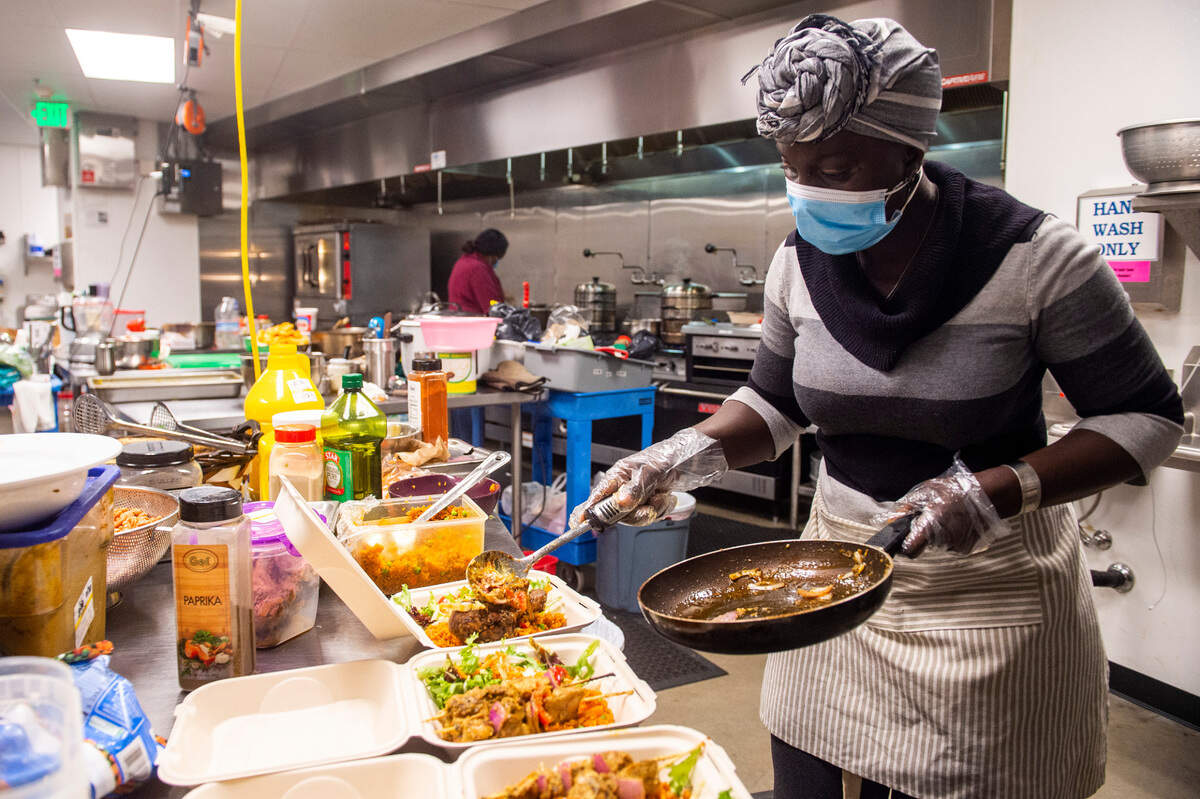
The food hall, which opened in November 2020, is proof of concept for these eateries. It acts as a bridge from good idea to full-time job while also providing a physical space to connect directly with customers.
Over the course of about 30 months, the entrepreneurs receive mentoring, enroll in business and relevant education courses, and learn the ins and outs of operating a restaurant or catering company in the United States.
Jammeh of Afella Jollof Catering lived in Georgia for eight years before moving to Washington state four years ago.
“It was hard in Georgia to find a shared kitchen,” she told me while shuffling goat skewers with a gloved hand over high heat. “We’ve been cooking throughout our whole lives, but where are we going to get the resources?”
Though not a requirement, each of the current roster at Spice Bridge is owned and operated by women.
They refer to each other as sisters, according to Kara Martin, FIN’s program director.
“They really look to one another for support,” she said. “That’s been one of the most beautiful parts of this program. We saw right away the benefits of having that cohort model, but it’s that multicultural seeing of what they have in common and breaking through that isolation that you feel as an entrepreneur, especially navigating with English as your second or third language. That you’re not alone and that others are facing it, or facing it with you.”
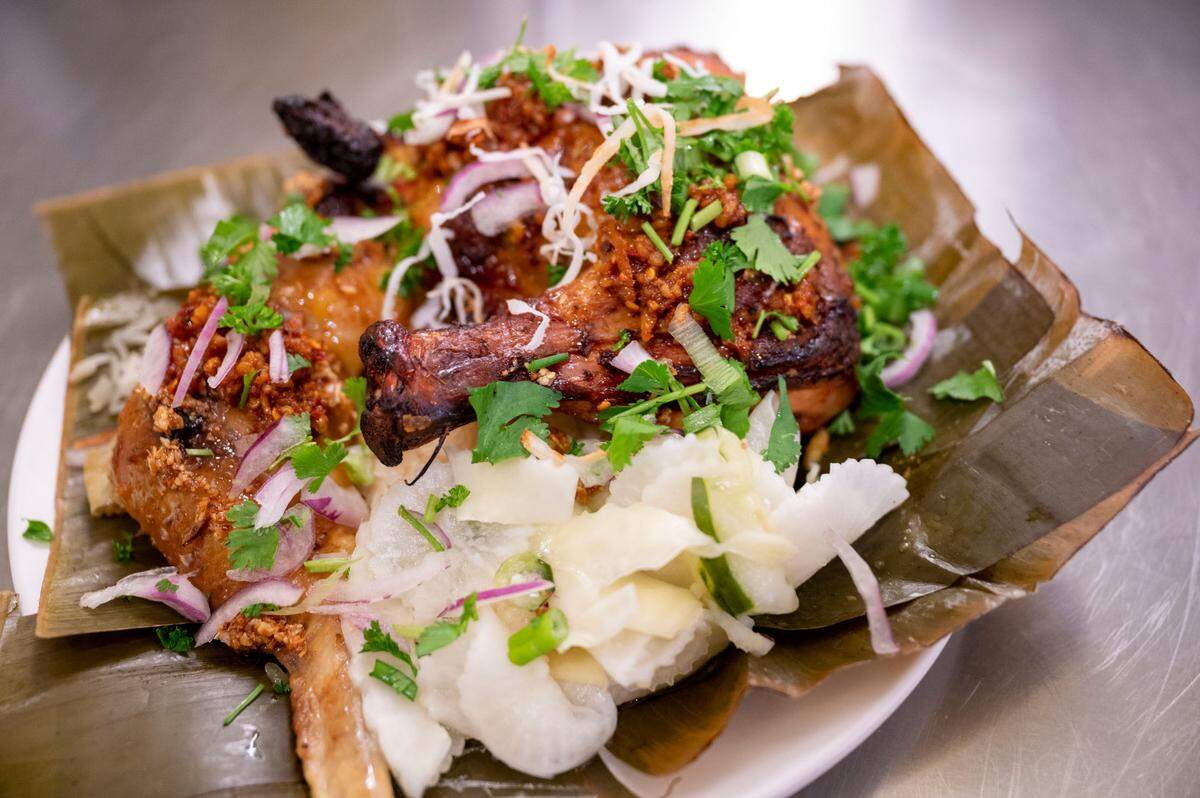
On one of my visits, I got caught up in conversation with Ngeth about her fermented chili oil, which you can buy in a jar for $13 and drizzle onto just about anything — steak, salad, rice. As she was preparing a small bonus container with fresh minced garlic and cilantro, the way she prefers it, Jammeh emerged from the kitchen. She was eager for Ngeth’s family meal, which she hoped would include her famous slabb monn bowk: whole chicken wings marinated in kroeung, an ancient Cambodian spice of lemongrass, makrut lime leaves, ginger, turmeric and galangal, pounded into a paste. The meat is then stuffed with a pickled salad of vermicelli, onions, pepper and green beans.
A RESTAURANT AS DIVERSE AS ITS COMMUNITY
For several years, FIN has managed its own farmers market, one step to ensuring that immigrant communities have access not just to healthy food in general but also to foods familiar to their culture.
Through surveys and a feasibility study, said Martin, they discovered that despite great interest in starting a food business, there were barriers, from financial — high rents, cost of equipment — to practical, from a lack of familiarity with Western permitting processes to a shortage of affordable commercial kitchen space.
The group had been sub-leasing a small shared kitchen, but that model was inherently limiting, and it lacked a customer-facing component.
“So it’s really hard to get that visibility and the branding, to really kind of be there for your customer on a regular basis,” said Martin. “That’s why this space includes that food hall component.”
The City of Tukwila approached FIN with the idea, an anchor to the Tukwila Village development that includes SHAG, a senior housing nonprofit.
“They wanted to see it be reflective of the community,” said Martin.
Though under 10 square miles with about 20,000 residents, Tukwila is one of the most diverse cities in the country, one where a majority of the population speaks a language other than English at home, according to Census Bureau data, including notable numbers for Spanish or Spanish Creole, African languages, Vietnamese and Tagalog. About 40 percent of residents were born outside the U.S., and students in Tukwila Public School District speak more than 80 languages.
“How do you find a restaurant that reflects the community in that way?” asked Martin.
Spice Bridge is unique not only in its diversity of cuisine, culture and tiny stature but also for its nonprofit and incubator model. Most food halls are for-profit, massive in square footage and backed by big developers or restaurateurs.
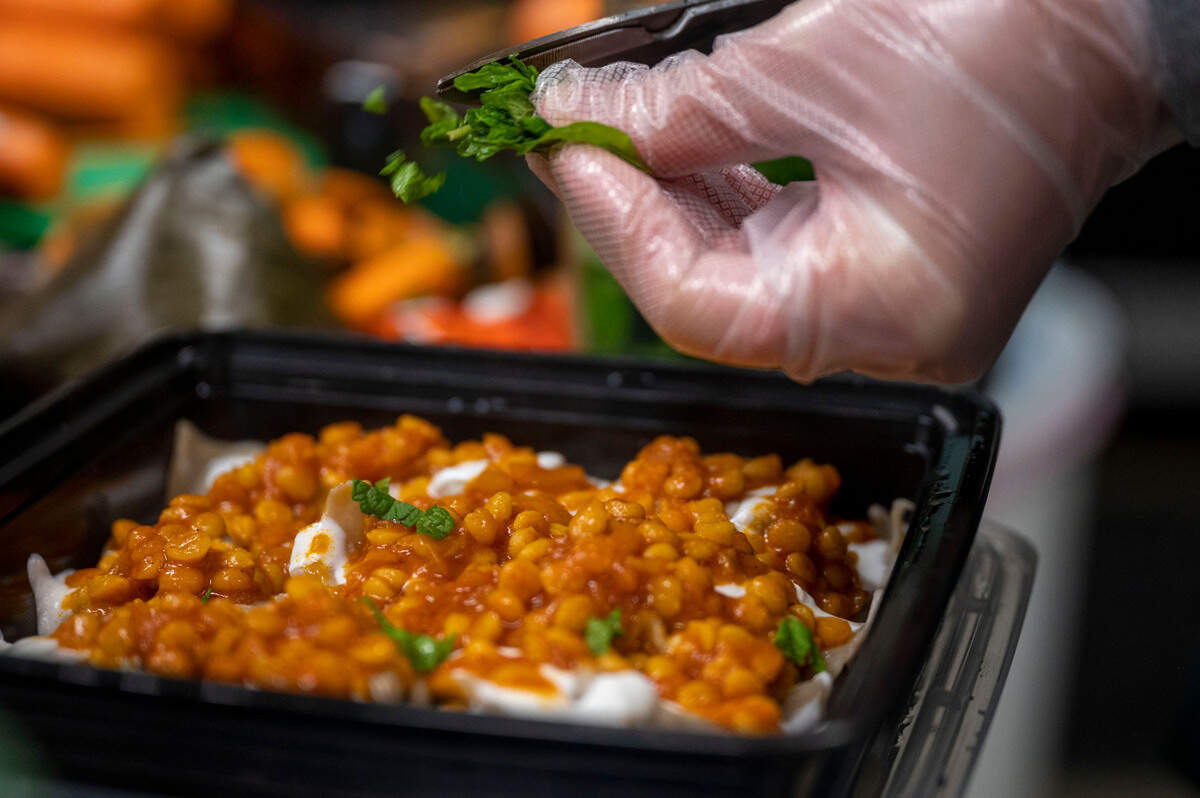
I was struck by just how acutely I felt like I was walking into a little, independently owned restaurant — only here, you have several incredible choices, and you are simultaneously supporting the business from growing beyond the confines of the hall’s four walls.
That already has happened for one Spice Bridge graduate, Seatango Foods. Monica Di Bartolomeo and her husband Ariel Firpo served their Argentinian empanadas and pastries at Spice Bridge for a few months before opening their own brick-and-mortar cafe in Seattle last July.
Tenants sign a lease like they would anywhere, explained Martin, and having that track record helped Seatango show a prospective landlord that they had a viable concept. Lilian Ryland, the chef-owner of Naija Buka, has already outgrown the food hall kitchen, she said.
Every day is different at Spice Bridge, as the vendors rotate on set schedules. Because so much of the food is cooked to order, prepare to wait a few minutes and trust that the wait will be worth it. Though most everything can be packed for takeout, if you can dine on-site, do. You’ll hear the working kitchen in full swing.
“Wait, Theary, you’re using goat?” asked Nasrin Noori, who regularly cooks goat for Jazze’s.
On this particular Thursday, Ngeth had used goat meat for a “sour and savory” stew, a fish broth base accented, of course, by kroeung.
“This is my salt, my sugar, my black pepper,” she said.
Jammeh chimed in: “That is why we say: There is no best chef.”
Then they laughed.
WHAT TO EAT AT SPICE BRIDGE
Afella Jollof Catering
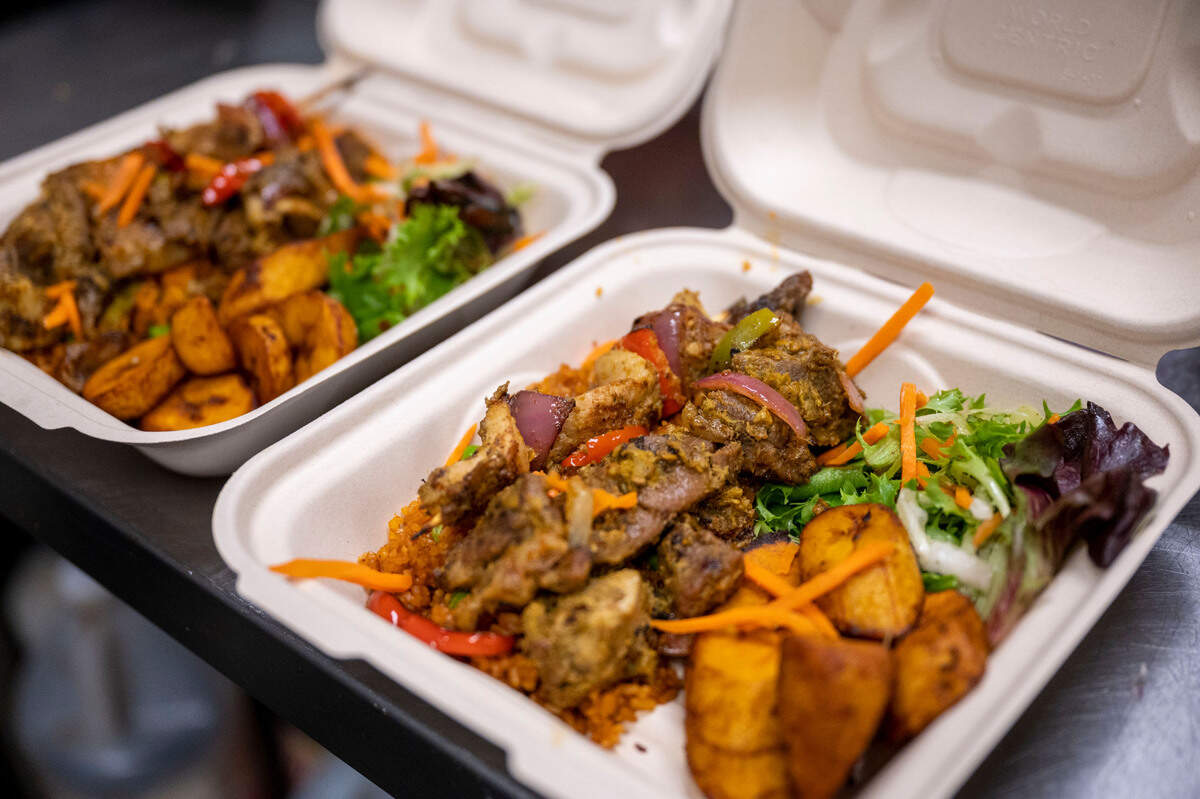
Sisters Adama Jammeh and Oumie Sallah share Senegambian food, including chicken or fish yassa, samosas and the essential jollof rice, sauteed with onions, garlic, pepper, tomatoes and diced carrots. Ask for extra nokoss, a Senegalese pepper paste here made with jalapenos, habaneros, ginger and Dijon. It’s an earthy, sinus-clearing spice. afellajollof.square.site
Jazze’s
Nasrin Noori, whose father ran Afghan restaurants around Seattle for many years and whose brother still does, focuses on organic ingredients in her fusion cuisine, epitomized by her pulled lamb sandwich with yogurt and cabbage. Order ashak, the traditional Afghan leek-filled dumpling, topped with minced meat or lentils to keep it vegetarian, and boulanee, a flatbread filled with seasonal vegetables. facebook.com/Jazzesfusion
Monique’s Hot Kitchen
Monica Wachira began cooking as a toddler and went on to work in catering and restaurants. Her Kenyan cuisine also focuses on whole, organic ingredients, which she transforms into classic dishes such as beef pilau rice, samosas and goat matoke with fried green bananas and potatoes, kidney beans, ginger, garlic and carrots. Add a cup of her signature masala chai. moniqueshotkitchen.com
Moyo Kitchen
Mwana Moyo shares her Tanzanian heritage and Batulo Nuh her Somali-Kenyan upbringing at Moyo, blending traits from all three cuisines with spices — tamarind masala, cumin, cloves — imported from Zanzibar. Try the salmon in coconut sauce or samaki nusu, spiced tilapia fried and then baked, served with pilau rice or chapati, an unleavened flatbread like roti. Add a fresh juice and maandazi doughnut. moyokitchen.square.site
Taste of Congo
Caroline Musitu is one of the original businesses to enter FIN’s incubator program. In her home country, she worked for her mother’s catering business, experience she brings to what is likely the only Congolese restaurant in Washington. Try the beef stew accented with nutmeg, kwanga (cassava fermented and steamed in banana leaves), and a homemade hibiscus juice infused with mango, pineapple, papaya and kiwi. tasteofcongo.square.site
Theary Cambodian Foods
While Americans have become accustomed to other Southeast Asian cuisines, Theary Ngeth wants to sustain the traditions of her Cambodian homecooking. Try the lemongrass stuffed chicken and sizzling steak (tirk prohok) steamed in banana leaves, and take home an order of spicy Khmer jerky and jar of MaTaess Cha, that awesome chili oil paste. theary-cambodian-foods.square.site
Wengay’s Kitchen
Krizia Cherece strives to incorporate the diversity of the Philippines archipelago in her traditional cooking, from pancit to bicol, creamy coconut-milk chicken. Her lumpiang sariwa are similar to the lumpia you might know but not fried, wrapped instead in a fresh crepe, served with savory peanut sauce. You probably shouldn’t leave without an ube ensaymada, a homemade brioche bun packed with ube jam and topped with grated cheddar. wengayskitchen.com
Wuha
Liyu Yirdaw, raised in Ethiopia’s capital city Addis Ababa, cooked with her mother and later attended culinary school. Her specialties include beef or vegetarian chickpea injera, veggie-stuffed jalapenos, and baklava, to which she adds both walnuts and pistachios and a hint of citrus. You can opt for nut- or dairy-free, the latter sweetened with coconut butter. “It’s not a secret, but the secret is how you make it,” she joked. wuhacuisine.square.site
A few FIN incubator businesses don’t showcase at Spice Bridge but offer catering, meal services or packaged foods, including:
▪ Chef Jalissa Culinary Creations: Southern comfort food with global flair, chefjalissa.com
▪ Mama Tila: tamales, tacos and more traditional Mexican, mama-tila-catering.square.site
▪ Naija Buka: Nigerian seasonings, sauces, spice blends and meal kits, naijabukaseattle.com,
▪ SoozVeen: Mediterranean catering with a Kurdish-Iraqi focus, facebook.com/SoozVeencatering
SPICE BRIDGE FOOD HALL
▪ 14200 Tukwila International Blvd., Tukwila, 206-582-1915, spicebridge.org
▪ Details: global, nonprofit food hall; most dishes $5-$20; order on-site or ahead online from each vendor
▪ Family & Party Platters: 5-10 dishes from each of the four daily vendors in one package; family serves 8-10 and party 15-20, generously; pre-order one week ahead at spicebridgeonline.square.site, $125-$250
This story was originally published December 9, 2021 at 12:43 PM.