
From Turkish coffee to the best mini dumplings, your new favorite brunch is in Auburn
Is there anything more beautiful than a plate of petite dumplings, hand-rolled and pinched, enfolding spiced beef and onions, a warm sauce of tomato, a flourish of garlic and yogurt, a sprig of cilantro and dusting of sumac?
In the case of these manti, available at a wonderful new Turkish restaurant in Auburn, they taste as beautiful as they appear.
Each pop bursts with flavor, so much so that you are likely to clear the plate one by one, perhaps with the assistance of a companion who declares, “I could eat 100!”
Customers have been streaming into Lezzet Brunch, tucked into the ground floor of Seasons Apartments in northeast Auburn, since it opened last summer for a respite from the world and a plate of these homemade dumplings, among other recipes inspired by the Gulaliyeva family’s Ahiska Turkish heritage.
Sofiya Gulaliyeva joined her aunt, Rosa Gulaliyeva, to open their first restaurant, an idea planted four years ago. The elder Gulaliyeva is a cook by nature, and her niece has worked in restaurants, mostly Middle Eastern she said, for more than a decade. That experience, combined with a meticulous taste for detail, arrives in the form of Lezzet, a term that translates simply to “flavor” in Turkish.
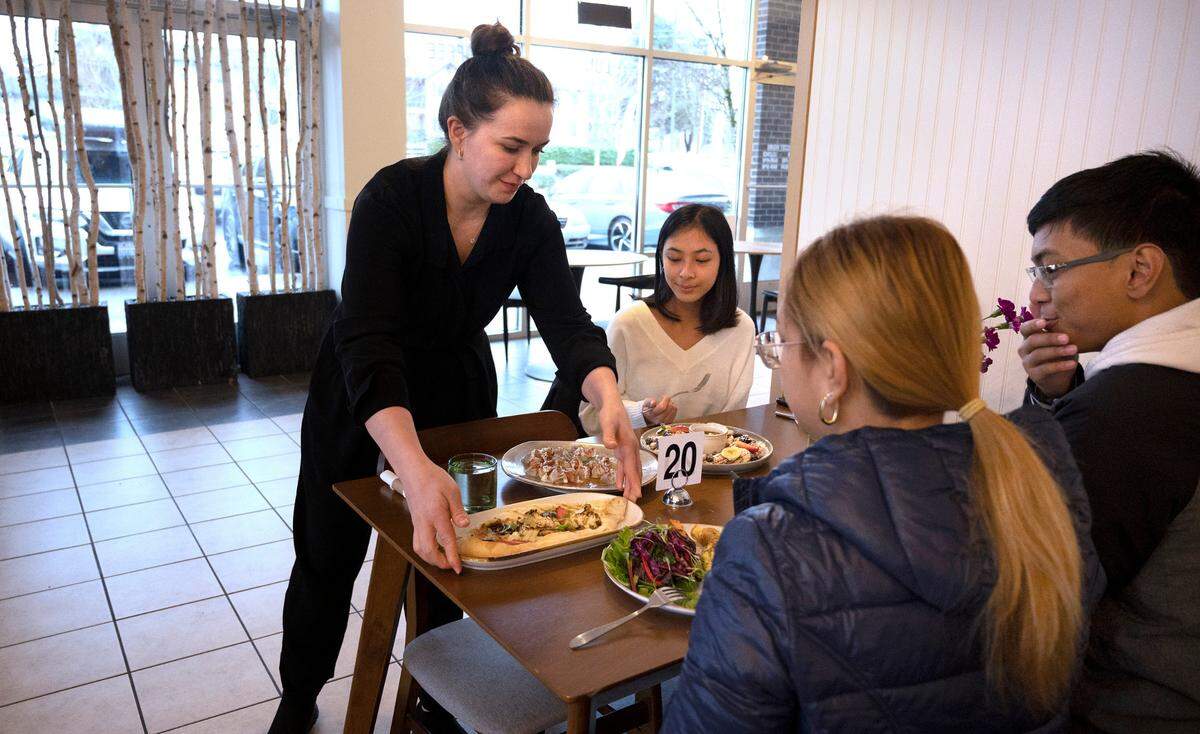
Though the restaurant self-describes as such, the daytime-only menu takes cues from more than Turkey, for complicated reasons.
The Gulaliyeva family’s roots are in Ahiska, in present-day Georgia near the Turkish border. They came to the United States 17 years ago as refugees, fleeing decades of persecution of Ahiska Turks that began in the 1940s in Stalin’s U.S.S.R. and, in the late 1980s, forced tens of thousands from Uzbekistan to Krasnador in southwestern Russia. An estimated 17,000 Ahiska Turks living in this region between Ukraine and Georgia were granted refugee status to America in 2004. Many ended up in the Midwest; the Gulaliyevas landed in the South Sound.
Lezzet’s manti are mostly Georgian, explained the younger Gulaliyeva, but in truth they would be much smaller than the ones you’ll devour here. In size, Lezzet’s are more like the Russian pelmeni, and in how they are served, they resemble the Turkish style.
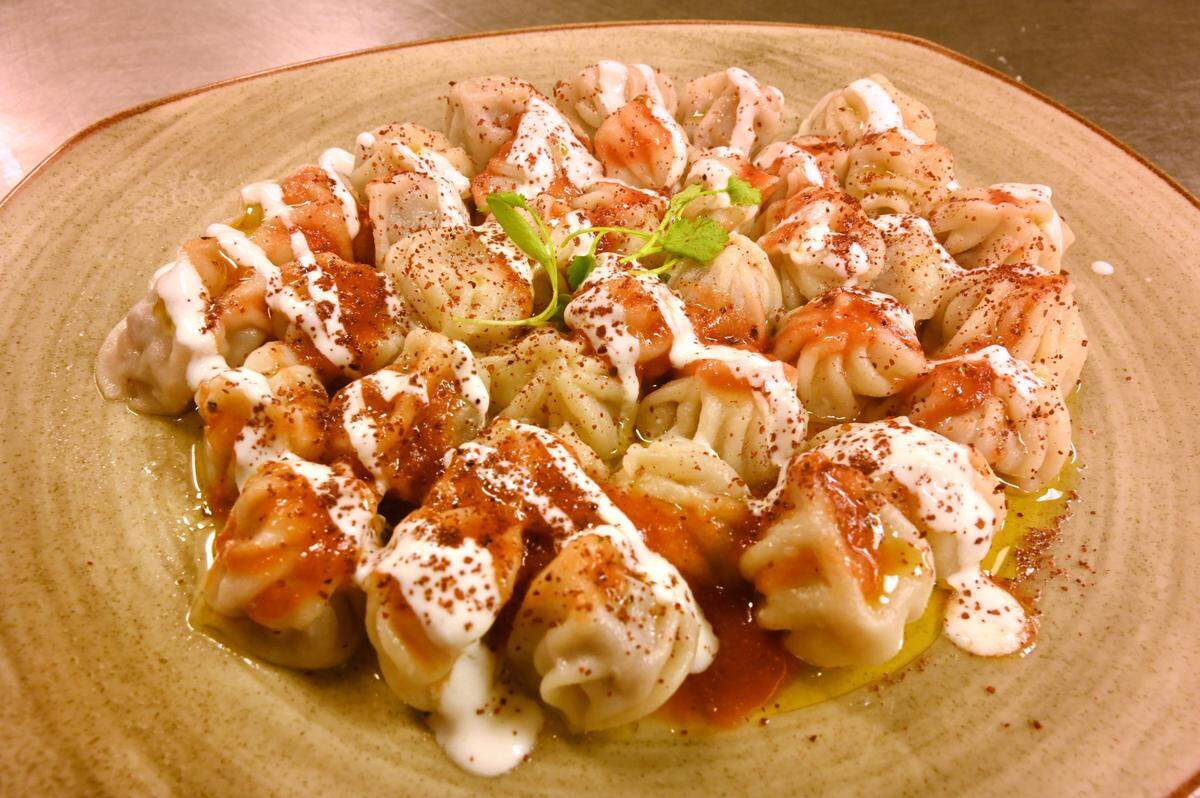
Be still my heart, drenched in this tomato sauce.
When I asked Rosa Gulaliyeva, holding a small pot of her magic, what else was going on, she smiled wryly. Butter? I asked. Salt? Yes, she agreed, adding only that there were also “spices.”
A small kitchen staff rolls each manti by hand, cutting rounds hardly two inches in diameter, filling with seasoned beef or tangy Turkish cheese, and pinching to seal the contents. They do this almost 4,000 times a week, spreading the work over three days to cover at least 20 sheet trays with 200 manti, which they freeze and poach to order.
At home, said Sofiya Gulaliyeva, she makes manti with her daughter. Every family keeps a stash in the freezer.
“It’s like we’re cooking at home,” said Sofiya Gulaliyeva, whose father had encouraged her to open a restaurant. “It has to be beautiful.”
At Lezzet, plates arrive artfully arranged such that I wondered if she were a food stylist by night.
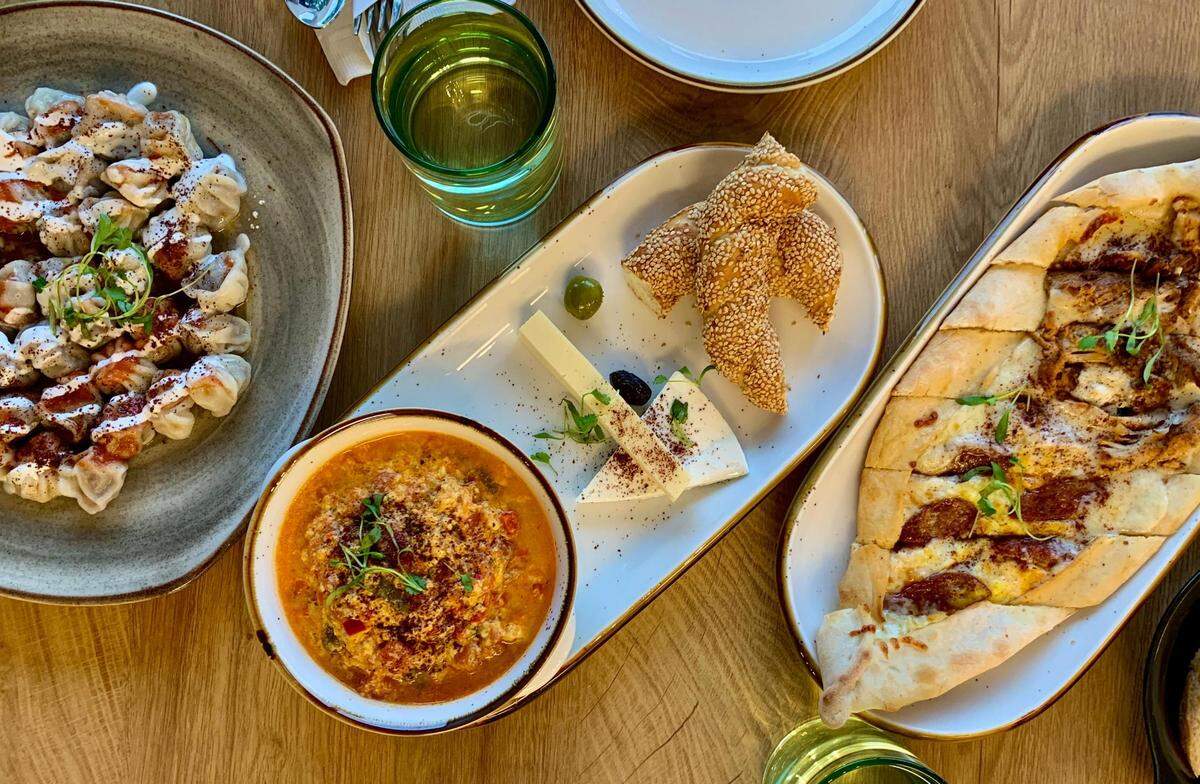
On a Saturday morning before the holidays, the restaurant was buzzing with contented diners sipping strong Turkish coffee (for the bitter-averse, order with sugar) and tearing homemade simit, a ubiquitous Turkish street snack. Doused in sesame seeds, this bread looks all-crunch but yields a stunning fluffy interior that soaks gainfully into the house menemen, an all-day Turkish staple of scrambled eggs with a warm stew of tomatoes, bell peppers and onions.
Served with olives, a slice of feta and gruyere, it was this dish that Gulaliyeva most desired to find, but couldn’t, at restaurants in the South Sound.
She also longed for kahvalti tabagi — a.k.a. the breakfast plate — with veggies (tomato, cucumber, spinach and broccoli borek), cheeses (havarti, feta, panela), jams, olives, a hard-boiled egg and a basket of simit. Sometimes translated to “before the coffee,” this morning board makes a fine starter for the table, as does a pide, a boat-shaped, yeasted flatbread baked with cheese and chicken or sucuk (fermented cured sausage). Similar to the Georgian khachapuri, it’s not unlike pizza, but like the other made-in-house-with-love breads at Lezzet, it’s dreamy and shareable, sliced into long rectangles.
You might be tempted by the mini pancakes or the gluten-free waffles adorned with berries and cream, and you would not be wrong to order them. But you must remember the manti.
LEZZET BRUNCH
▪ 12722 SE 312th St., Suite H, Auburn, 253-281-4949, brunchauburn.com
▪ Wednesday-Sunday 8 a.m.-4 p.m. (5 p.m. on weekends, closed Tuesdays)
▪ Details: Turkish coffee, breakfast and lunch with handmade bread and dumplings; most dishes $9-$15
▪ Recommended: beef manti, grilled chicken pita, menemen, kahvalti tabagi, Turkish coffee and sütlaç (rice pudding)
This story was originally published January 19, 2023 at 10:00 AM.