
They’re a tasty fair treat, but we bet you didn’t know these things about Fisher Scones
The Fisher family, of Fisher Scones fame, was not originally in the business of making Scottish biscuits, split and lathered with butter and jam. Their industry was, first and foremost, flour.
For at least 55 years, the recipe, widely shared a year after the scones’ debut in 1915, contained raisins.
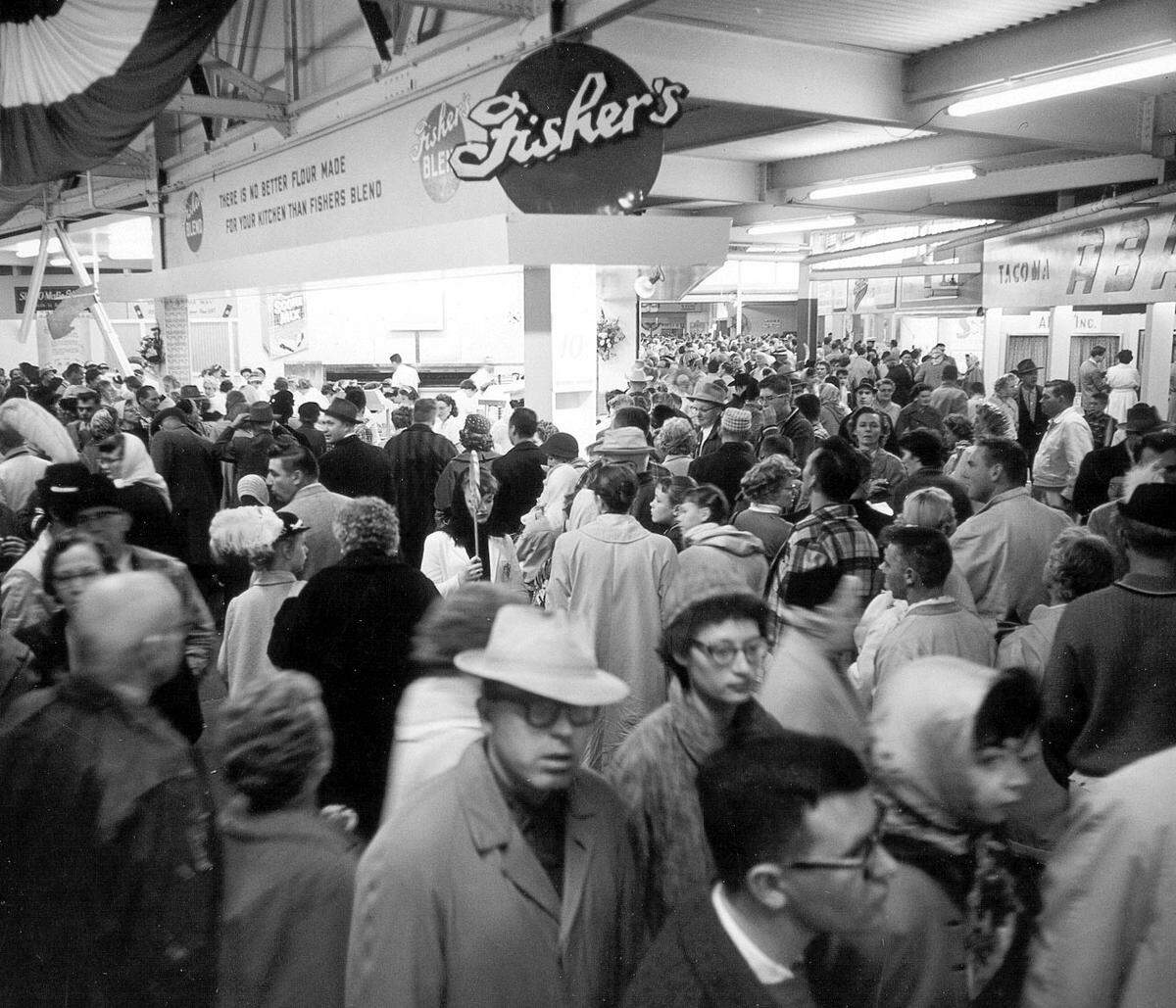
Their colloquial name waffled between “hot biscuits” and “the Scotch scones,” as writer Laura Ingalls Wilder described them after her first taste at the Panama-Pacific Exposition in San Francisco, “handed over the counter as fast as four girls can do it — and the counter is surrounded by a surging mob all day long.”
These are just a few of many tales to discover in a new book from The History Press, “Washington’s Fisher Scones: An Iconic Northwest Treat Since 1911” by local author Jim Erickson.

Through archives, newspaper clippings and interviews with relatives of the Fisher family and mid-century recipe developers, Erickson chronicles the humble pastry’s history and its indelible legacy on the Pacific Northwest.
As a retired journalist (he moved to Lakewood in 1968 and was hired by The News Tribune the following year), Erickson is particularly well-suited to have tracked down old images of the scones’ trajectory to fame and of the Fishers’ lesser-celebrated foundation as a prominent flour producer.
After leaving the news business in 1986, he worked for the now-defunct state Energy Department and the Office of Superintendent of Public Instruction (OSPI) for two decades, eventually earning a master’s at age 59. He became a substitute teacher in the Sumner School District for 17 years. Every summer — except the first one, when he decided the smoke and scents of the barbecue stand weren’t for him — he baked off thousands of scones at the Washington State Fair for Conifer Specialties, now the parent company of Fisher Scones and its retail boxed mixes. His son Keith, who helped with research for the book, worked alongside him as a “shaper,” mixing the dough and forming into its quintessential triangle.
Over breakfast in June, he recounted his favorite scone-making memory, which he also highlights in the book.
On a lunch break during a busy shift at the South Building at the fair, a woman in the crowd came out of nowhere and grabbed him by the collar.
“She says, ‘I just had to smell your shirt!’” he recalled. “So, I let her smell my shirt.”
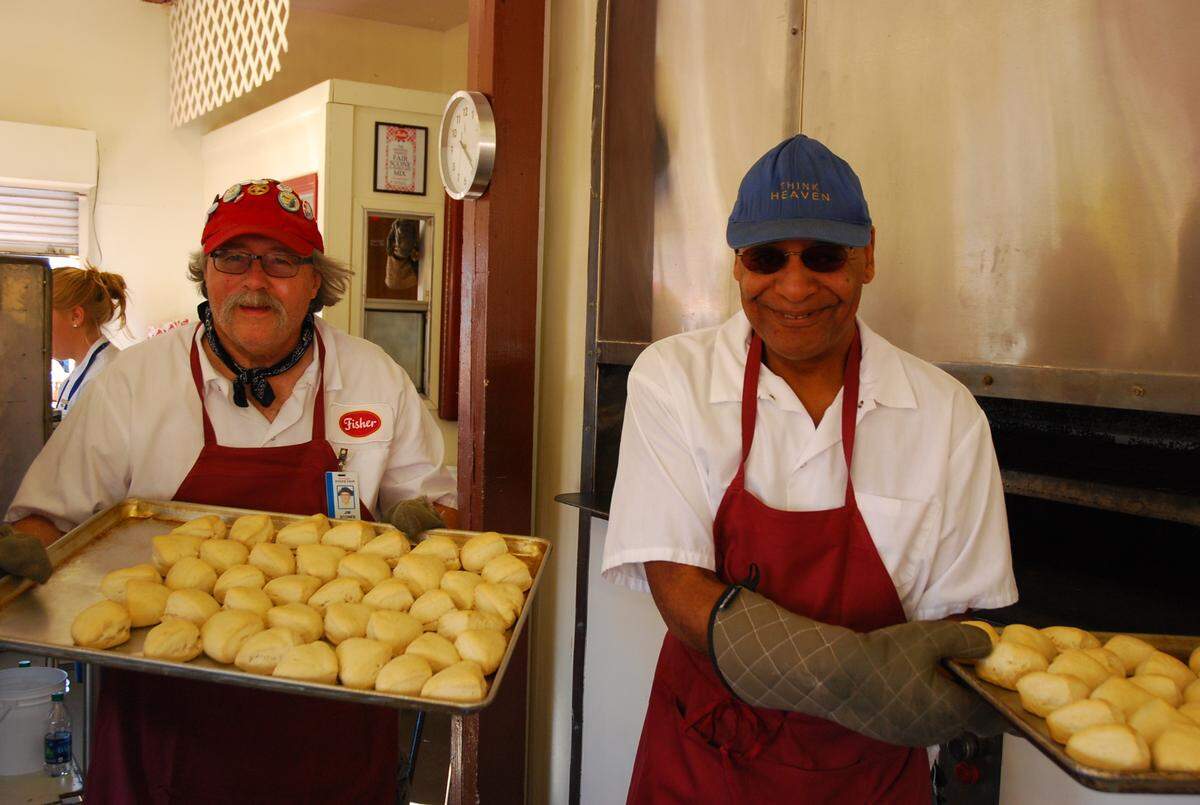
The scone, it seems, holds that power.
“How long will the scones last?” posited Erickson. “I don’t know. As long as the fairs are around!”
THINK YOU KNOW FISHER SCONES?
“Washington’s Fisher Scones” travels back to the namesake family’s home in 19th-century Scotland. From there, Erickson outlines how Fisher father-and-son journeyed from the Midwest to the Seattle area, and how a flour mill nurtured multiple generations of “sconeheads.”
Here are some other fun facts you might not have known about Fisher Scones, as culled from the book:
Fisher was really in the flour business
After amassing a modest fortune in various lumber and flour enterprises, O.W. Fisher and his son O.D. Fisher established their Fisher Flouring Mills in 1910 on Seattle’s man-made Harbor Island. At one point, it was considered the largest mill west of Minneapolis.
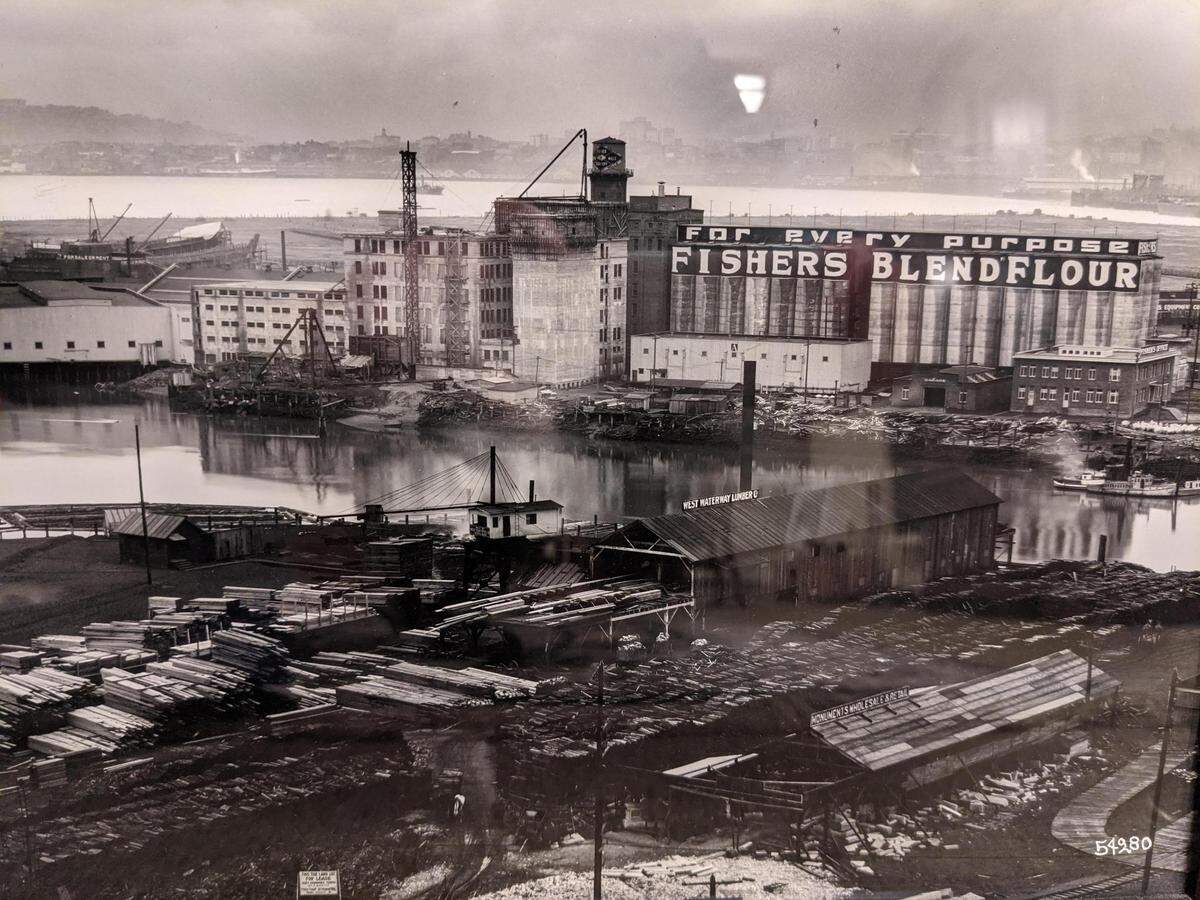
Five years later, in an effort to promote their special “blend” flour of hard and soft wheat for commercial and home baking, they employed a Black man named Newton Coleman as spokesperson. Coleman became “most widely known in the Pacific Northwest,” according to a brief Seattle Star obituary cited in the book, as he traveled around the region baking scones. Erickson said he found little other record of Coleman, but through his own research learned he is buried at Seattle’s Lakeview Cemetery.
Everybody knew the recipe
The original recipe, widely shared starting in 1916, contained raisins — a choice perhaps anathema today but at the time typical of their inspiration. The version served at county fairs for much of the 20th century remained dotted with the controversial dried grapes until the 1970s, estimated Erickson.
Wait, is it actually a biscuit?
That the Fishers were Scottish explains the whole biscuit-versus-scone question — sort of, said Erickson. Biscuits are flaky and round (or square-ish); scones are usually triangular and lumpy with knobs of butter and dried fruit. The author purposely tried to avoid the term “biscuit” unless referencing others’ mention. “A biscuit is round,” he explained. “I tried to minimize that deliberately.”
Jam maker connected scones to Fair
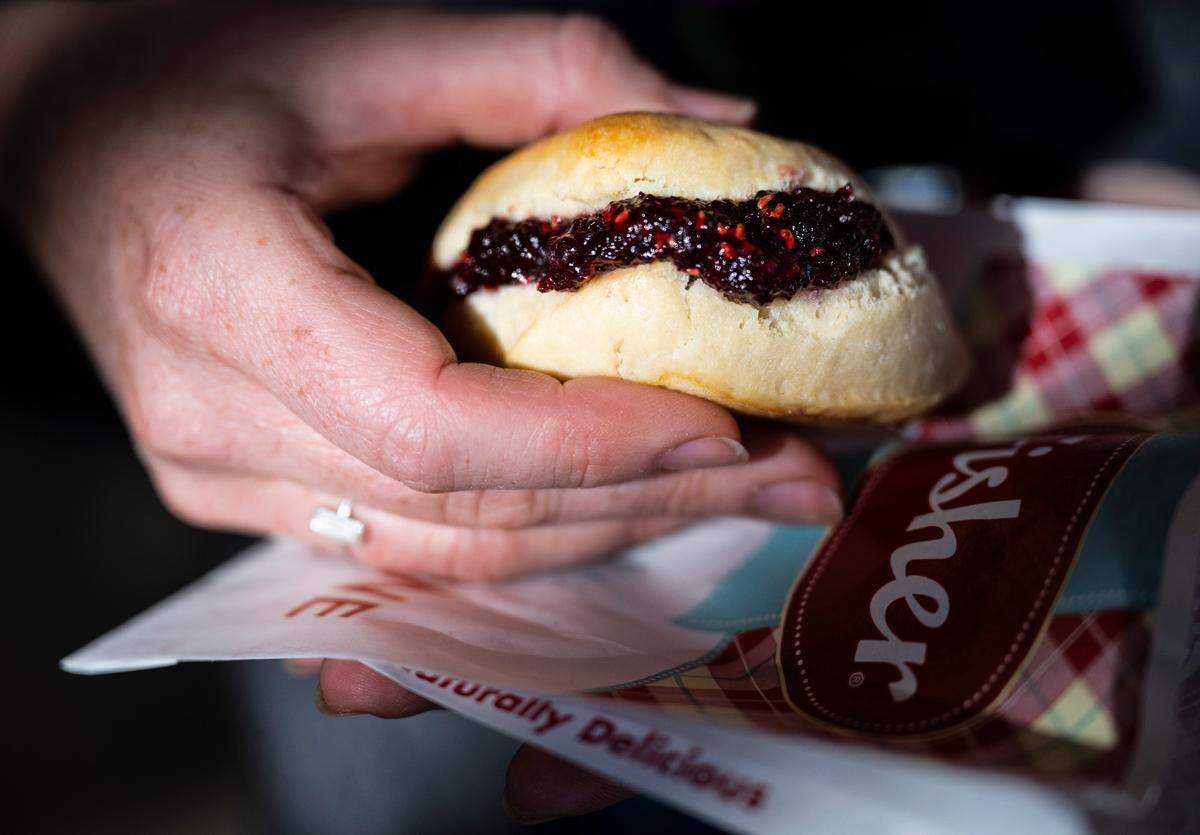
Scotch scones are traditionally served with clotted cream, which is similar to butter, but Fisher Scones were buttered and jammed — always raspberry — from their advent. We have William H. Paulhamus to thank for bringing the pastries to the Puyallup Fair: The proprietor of Paul’s Jams, based in Puyallup-Sumner, also discovered them at the 1915 San Francisco exposition.
They used to be cheaper, probably bigger
When they debuted, the scones cost five cents apiece. Today they go for $3, or $15 for a half-dozen and $28 for a baker’s dozen. Phelps Fisher, the great-grandson of O.W. Fisher and a longtime KOMO News executive who Erickson said was surprisingly hard to track down, admits that the fair scones have likely shrunk by about 20 percent.
‘Scone wagons’ harken back to 1919
Fisher spun off the scone business in the 1970s after its flour and other brands, including an instant cereal called ZOOM detailed in the book, was sold to Continental Mills. Conifer Specialties introduced its mobile “scone wagon” in 2016. “If you can’t come to the Fair, the Fair will come to you,” said Keith Erickson. It has been so wildly popular that the company added a second wagon this year. Both rove around the region, parking in grocery store lots, at festivals and, every Tuesday, outside the Fairgrounds in Puyallup. (Check Facebook for upcoming events.)
Yet these aren’t actually the first food trucks for Fisher: In 1919, Coleman traveled to fairs throughout Washington, Oregon and Idaho on a Dodge truck equipped with an electric oven that could attach to “any power line in America so Fisher scones and biscuits could be prepared wherever it went.”
Fisher scones still best from the source
As Erickson writes in the book’s final chapter, “Surviving: 21st Century Scone Thoughts,” the reason for the scones’ enduring place in local culture lies in their familiarity over many generations: “These scones occupy a place in the psyche.”
I asked him a question that was nagging me, even post-read, not having grown up here. Why, after all these years, do people still flock to the Fair and now to the scone wagons, waiting in long lines, if they can just buy the boxed mix and make them at home year-round?
“Because people often say, ‘What? I’ve tried this at home. It’s not the same.’ We ask, ‘Well, how do you mix it?’ They usually say by hand,” he replied. “That’s the first problem. We have this cauldron — it takes about eight minutes. If you don’t get it right from the beginning, it won’t work.”
He also insisted that the scone can only be served one way, as in, jam-side up: “The customer needs to see that the scone is smiling at them.”
Meet the author
▪ Signing Event (with more scones!): June 30, 2 p.m. at Barnes & Noble, 5711 Main St. SW, Lakewood; preorder by phone or online to reserve your spot and guarantee a copy of the book.
This story was originally published June 22, 2023 at 5:30 AM.