
Why did Buddy’s Chicken and Waffles wait months for city to approve a plumbing permit?
In between frying chicken and baking waffles under a tent on the sidewalk in the Lincoln District, Buddy Brown opened an email from the City of Tacoma and felt the weight of years.
He had jumped through hoop after hoop to open Buddy’s Chicken and Waffles, sinking thousands of dollars into a downtown location that didn’t work out and renting a commissary kitchen before finding an old soul-food restaurant at 3709 S. G St. Two months earlier, he filed a permit application for the last bit of plumbing work with the help of Jeff Johnson, a licensed plumber whose family-owned Spartan Plumbing had previously worked with the city on other restaurants.
The proposal involved moving a sink and re-configuring the flow of wastewater through a grease trap already installed under the floor.
Without that update — needed to meet the city’s requirements for restaurants to capture fats, oils and grease, or FOGs for short, in a specialized machine — Buddy’s Chicken and Waffles cannot open. But without the permit, the work could not be done.
The city’s latest email confounded Brown.
“Are you working with a licensed plumber?” it asked.
“It’s not like the trouble is how I’m going to afford this work,” Brown told The News Tribune in a March 21 phone call. “The work is a very small job — we’re just waiting for permission to do the job.”
He filed the permit application just after the New Year. He then spent weeks exchanging emails and phone calls with the city’s Environmental Services Department. In February, he hired a sewer-mapping company he ultimately didn’t need. After being told in early March that the permit would be approved “by the end of the week,” days passed and he was still waiting for signatures.
He finally received the permit March 25, but the delay left Brown feeling deflated after what has spiraled into a three-year journey to opening his brick-and-mortar restaurant.
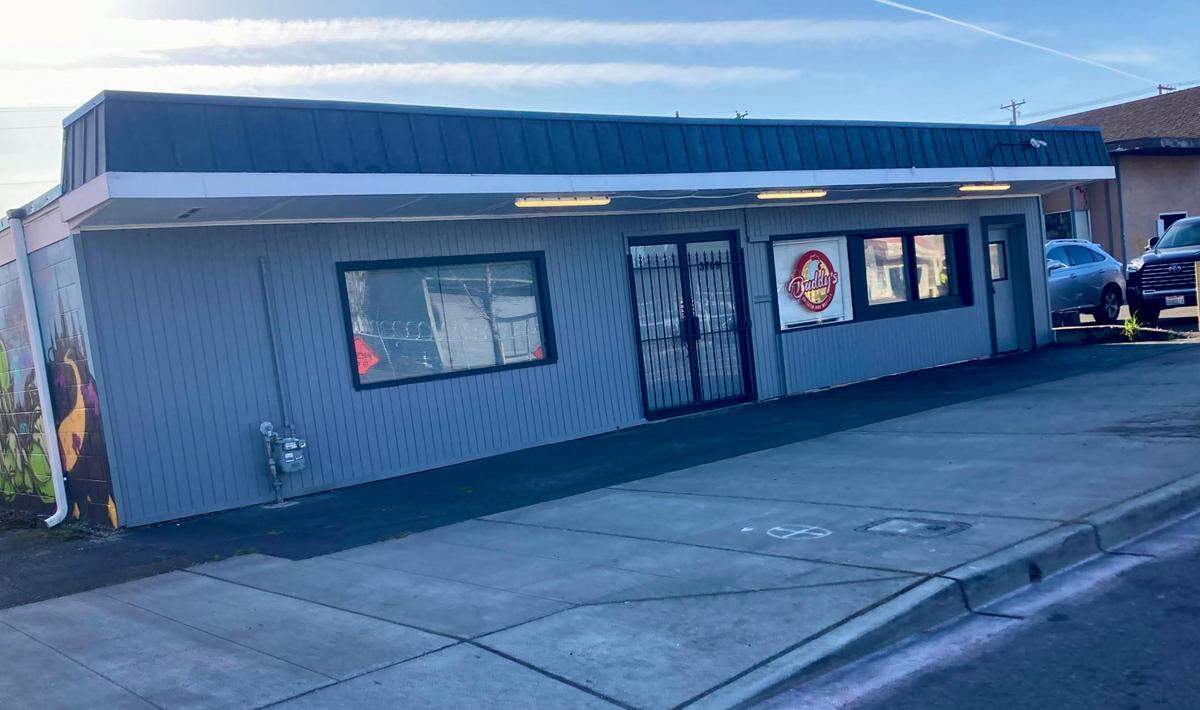
Though he has been working to update the former Uncle Thurm’s space since June 2023, he has been wooing customers to pick up boxes of chicken and waffles since 2021 from a shared kitchen in South Tacoma. A previous attempt on a space near the Theater District collapsed after he learned that the building’s dated electrical system could not handle his menu.
Along the way, he has been vocal about progress and setbacks on Instagram, where he has more than 13,000 followers.
In December, he shared that the city wanted him to replace the grease traps in the floor because they could not see a label showing the make, model and capacity and did not have any record of a cleaning regimen. Resolving that issue took time, too. Brown has agreed to replace them within a year of opening if he wants to add delivery through third-party services like DoorDash.
After the latest pitfall, on March 21 he shared again, tagging the city and the mayor and asking others to speak out: “I fear if I don’t do what I’m about to do right now, we might not be able to ever open the restaurant, and that’s not an option for me. We put in way too much time, way too much money to now not be able to open this restaurant.”
Dozens of his peers poured into the comments, sharing their experiences with what they feel is a system that rewards corporations with deep pockets and exerts unnecessary stress and costs on small businesses without adequate support from city departments.
IS TWO MONTHS NORMAL?
Joel Rasmussen, a plumbing engineer in the building department, admitted that 10-plus weeks was more than the typical waiting period for what is theoretically a straightforward permit. When the city received Brown’s application, he told The News Tribune in a phone call, the hand-drawn diagram was missing important details — namely, the exact path wastewater would take as it exited a sink.
While hand-drawn diagrams are common, he said “it wasn’t clear” at the time that Brown was working with a licensed plumber.
Shawn Madison, who oversees the city’s FOG program, added that it’s difficult to determine if a building’s pipes, hidden behind walls, are flowing where they should — including through a grease trap that’s in the floor — without original plumbing drawings. One way to map out the system is through a sewer scope, which sends a tiny camera down the drain, or by finding out where dyed water ends up.
After visiting the site in early February, Madison allowed Brown to continue without taking that step. Yet in early March, the permit had yet to arrive, and then Rasmussen emailed again asking more questions, including whether a licensed plumber was involved.
It’s those few weeks that have most troubled the restaurateur, who contends nothing changed between that site visit and March 25.
“It got kicked back for missing documents, then kicked back again because the drawing didn’t show everything,” said Madison, who also said he was unaware of Spartan Plumbing’s connection.
“I can tell you that I’m sure he feels frustrated,” he told The News Tribune in a phone call. “He basically came into a site that was in really, really poor condition. The people prior to them probably should not have been open. He’s been left mopping up some of that.”
He and Rasmussen both stressed that small business owners often face a “steep learning curve trying to figure out what to put together — then you’ve got to put it together.”
Johnson, Brown’s plumber, told The News Tribune he was also discouraged by the lack of “clear communication in a timely manner” throughout the permitting process for the Buddy’s Chicken and Waffles project.
“It’s hard on all of us. There are so many plumbing outfits that do things unpermitted. We’re trying to do it the right way, on the books. Now I understand why others don’t,” he said. “When they change the plans, we have to change our bid. The owner says I only have this much. We all lose, and they just go, ‘Too bad.’”
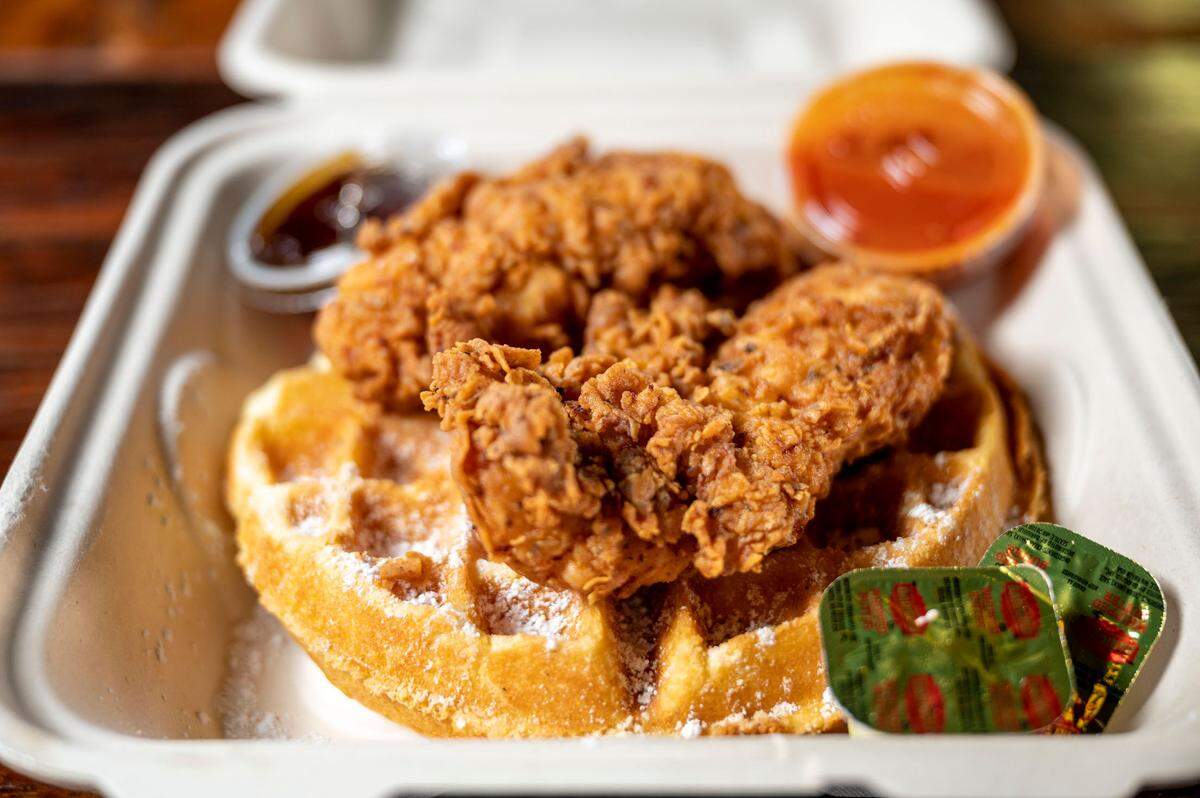
PERMITTING CAN BE ‘COMPLEX,’ CITY SAYS
Asked about the delay in Buddy’s approval, city spokesperson Linda Robson told The News Tribune that “there were significant delays in completing the review because permitting staff found the original application in January was missing some important technical information about the project, and the review could not proceed without it.”
Philip Kao, manager of the city’s permit services division, or PSD, echoed Rasmussen and Madison’s sentiment that the process is complicated, and hiring a professional to manage these kinds of projects might, in the long run, save entrepreneurs time and money.
“We understand that most small business owners wear many hats and perform a multitude of jobs to get their business off the ground,” he wrote in a statement. “But we also realize that permitting can be very complex and technical, and many of our small business owners aren’t familiar with our process.”
He pointed to a tip sheet for opening a restaurant in the city permit portal and said the city’s Planning and Development Services team offers free consultations to navigate finding a properly zoned and equipped location.
“Our team works with owners to help them navigate through the permitting process and will, in some cases, go out to their business location to have them show us firsthand what they are trying to do,” he said. “Our goal is to make their permitting experience as quick and easy as possible so they can open their storefront.”
The almost three months Brown waited for approval “is a long time for something that should be this simple,” according to Madison. “What would’ve helped him immensely is if he had an advocate that understood the permitting process or a designer who understood the permitting process.”
WILL BUDDY’S BE ABLE TO OPEN SOON?
Despite receiving conditional approval from the Tacoma-Pierce County Health Department just before Christmas, Buddy’s Chicken and Waffles remains in limbo. Instead of opening in mid-February as anticipated, he has twice requested $434 temporary three-week permits to serve from the sidewalk tent.
Equipped with just two waffle irons and a single deep-fryer, he and his team can only handle so much volume. Using this setup March 20-24, said Brown, they still managed to double their last highest sales week. Had he been able to serve from the full kitchen inside the restaurant, he estimates they would have managed at least $250,000 in sales in the past four to six weeks.
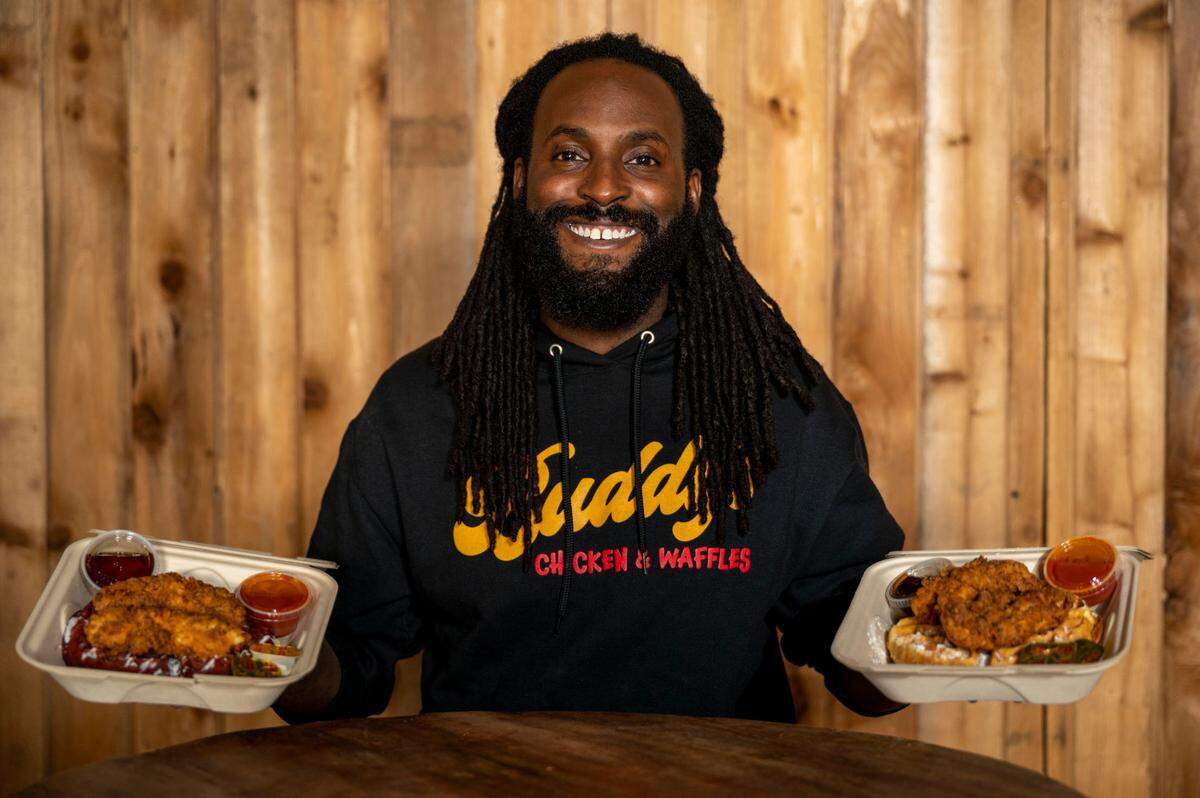
“I know that number would be even higher if we were in full operation,” he said.
With the plumbing permit finally in hand, Johnson will get to work. Then Brown will need approval from Madison and Rasmussen, followed by a final sign-off from the health department.
“I moved here without a plan to open a restaurant,” said the Baltimore native who joined family in Tacoma in 2020. “Once that light bulb went off, I knew there was nothing or anything that could take me off that path. I saw a vision for this thing, but I know tons of people who would have thrown in the towel.”
This story was originally published April 3, 2024 at 10:07 AM.