
Restaurant service charges rub Tacomans the wrong way. Should we get over it?
A slate of one-star reviews, some from people who admitted they had never even dined at the restaurant, said it all: Customers were not pleased about the service charge. Some seemed viscerally angry about it.
“The reason for the terrible review is that this place adds a 20% service charge. I will never dine at a restaurant that has a service fee, especially 20%!”
“Stop with the BS additional fees!”
“They are now charging customers a 20% service fee on ALL checks. Tips should be earned based on merit. We don’t reward businesses like this.”
Many also didn’t seem to understand it.
“You must add tip on top of the service charge.”
“If you’re charging the 20%, fine, give it to the staff.”
“20% charge going back to corporate.”
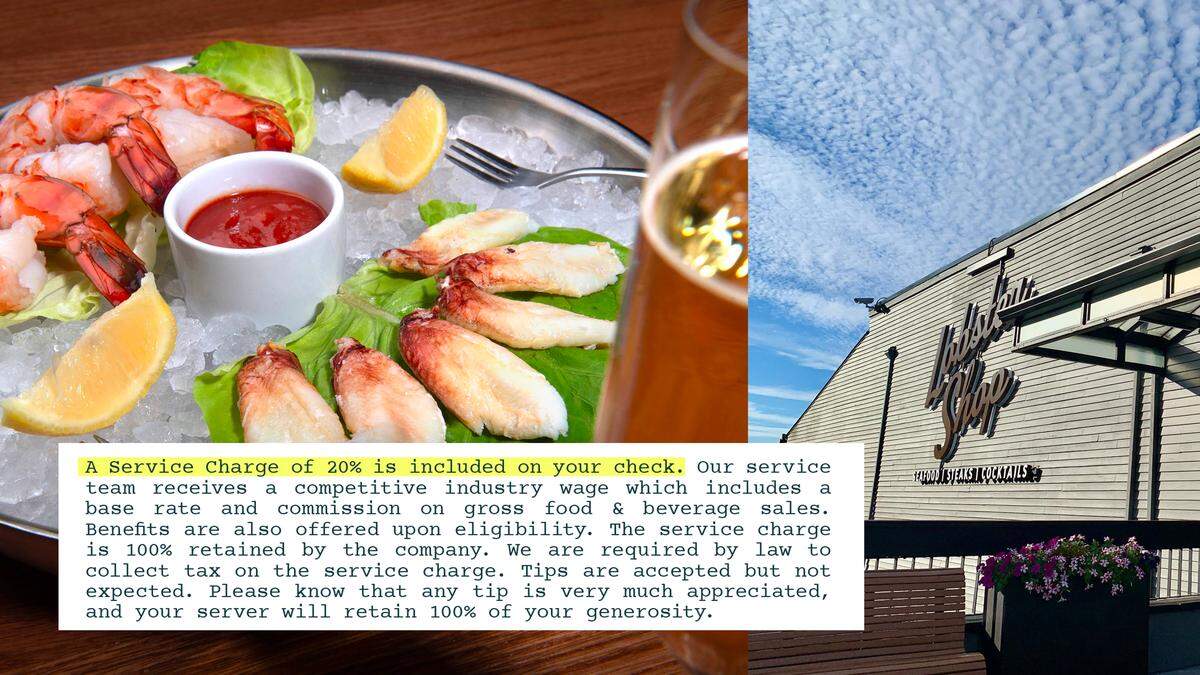
This service charge should not have been a surprise to anyone sitting down at Lobster Shop since it reopened after a $4 million renovation on Tacoma’s waterfront in 2023. The website homepage linked to a comprehensive FAQ. At the restaurant, signs abounded, from the lobby to the bathroom hallway. The same text was clearly typed on the menu and circled on the bill. Servers pointed emphatically to it as they dropped the tab.
No, you don’t need to leave an additional gratuity. Yes, we are fairly compensated. Have questions? Just ask. Have more questions? The manager is happy to engage.
Those precautions failed to quell enough customers’ concerns and confusion. Or maybe the staff just got tired of trying to explain a complex policy topic at the end of a meal.
In April, Lobster Shop reverted to America’s “traditional tipping model.”
“We’ve been thinking about it for a while,” CEO Jim Rowe said about the reversal in a phone call at the time. Speaking carefully about the service charge they had attempted for 18 months, he added, “It’s a model that is, I would say, not fully understood.”
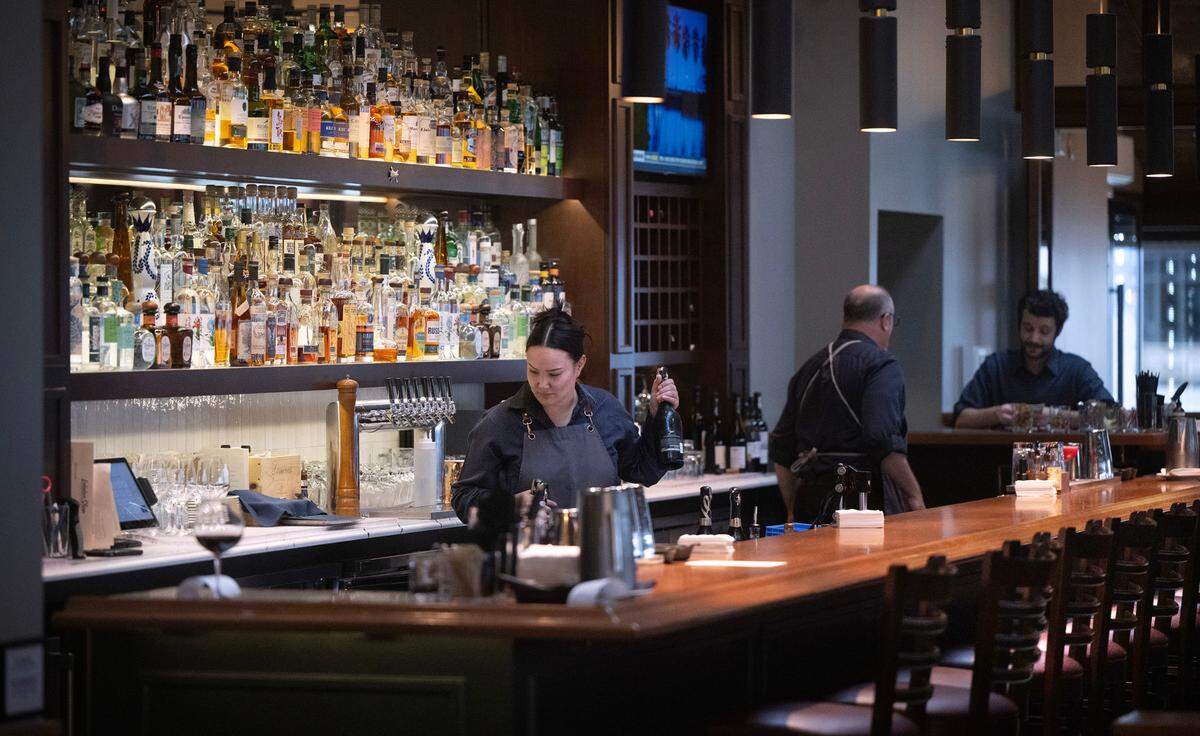
E3 also operates Elliott’s Oyster House and The Metropolitan Grill in Seattle, both of which had already adopted a service charge. It made sense to follow suit in Tacoma, but Lobster Shop faced an uphill battle. It joined just three restaurants — El Gaucho, Primo Grill and Field Bar — that have a 20% fee, which in Washington state is usually intended to replace the usual tip. Corbeau opened in 2024 with one intact.
“We’ve gotten really good feedback on what we’re doing from a dining experience standpoint,” said Rowe in an interview, “but our conclusion is that the traditional tipping model — that’s just what people prefer.”
What is a service charge?
At its most basic, a service charge is what it says it is: a charge for the service — in this case, the service of dining out. You’re paying for the convenience and pleasure of having other humans cook and serve your food, dote on you and clean up after you. A car shop charges for parts and labor; the labor is the service. You don’t get to tell the mechanic what he’s worth. Why should you have the right to determine a server’s value?
Autum Achord began her hospitality career at a local snack shack. Last year, she moved with much of the staff at The Table to Corbeau in the Proctor District. A 20% service charge works for their tight-knit crew of about a dozen workers, she said, all of whom have a decade-plus of industry experience.
“You grind to get there. It’s your career,” she elaborated in an interview. As others have, she characterized the auto-charge as a professionalization tool. “It allows people who care about the industry to be a part of it and actually survive.”
Washington state defines a service charge as “a separately designated amount collected by employers from customers that is for services provided by employees” or that customers “might reasonably believe” supports such services. They can be labeled on receipts with terms like service charge, delivery charge or gratuity, according to Washington’s minimum wage and labor standards law. They are not relegated to restaurants, but the industry — one predicated on service — is the outlier that relies on tipping, so it’s where these fees commonly appear.
In the past decade, the service charge has emerged as a potential antidote to an industry strangled by thin margins and artificially deflated consumer costs. To reflect the true cost of dining out, chefs told Montana State University economists in 2024, menu prices would need to be up to 30% higher than they are.
Proponents believe the fee-based approach can, at long last, nurture a fair, sustainable restaurant workplace. It’s the industry taking control of its own destiny, as opposed to letting customers decide how much an employee of a private business should be paid, while also leveling an historically uneven playing field where women and people of color have been shown to earn less than their white male counterparts, and kitchen staff are often underpaid for hot, demanding work that requires far more skill and experience than America tends to value.
Washington is perhaps a prime setting for this reckoning because of the unusual way it already manages tipped work. It’s one of the only states that formally regulates service charges and one of just seven, including Montana and Alaska, that has banned the subminimum wage, where tips from the customer backfill what employer paychecks omit. The federal “tipped” wage of $2.13 an hour — still the baseline in 15 states and Puerto Rico — has not changed since 1991. Some states have modestly increased their subminimums, such as to $6.75 in South Dakota, $9 in Illinois and $11.70 in Arizona. In the Evergreen State, every employer, in every industry, must pay every employee at least the state (or local, if higher) minimum.
As that figure has risen alongside costs for just about everything else, more restaurants have adopted fees ranging from a tip-replacement service charge of 18-22% to modest surcharges, usually 3-5%. The recalibration, employers say, supports better wages for all as well as health care (federally required for businesses with more than 50 employees), retirement plans and paid time off — rare benefits for an industry that employs around 15% of the U.S. workforce. A much smaller cohort has opted instead for a “tip-free, service charge-free” structure: higher menu prices that, in theory, garner enough revenue to pay people fairly, offer benefits and turn a profit.
A changing industry
Despite the occasional clamoring for “the price you see is the price you pay,” that all-encompassing tactic has so far been a nonstarter for most consumers.
Franco d’Amico has worked in the industry for 30 years — in Washington, Hawaii, Utah and Nevada. He started as a dishwasher and grew into serving, bartending and managing. The subject of tipping and the “systemic inequality that defined the civil war between front and back-of-the-house in our industry since forever has been constant,” he wrote in an email.
Tip-pooling has helped ease that tension, but any shared gratuity system “is reliant on the idea that everyone is pulling their weight on every shift,” he said. Top-grossing servers don’t want to subsidize lower-performing colleagues. “It can only work and improve morale if everyone feels supported and respected.”
Guests, meanwhile, lean toward “outrage” when they see any kind of surcharge, continued D’Amico. They almost seem angrier if the bill offers an explanation.
“There are a lot of service models out there,” he said. “Let’s face it: Guests aren’t always clear about when and how much to tip.”
The patchwork of fees and disparate regulations have exhausted diners, as The New York Times’ Priya Krishna reported in 2023, but a growing number of restaurant owners have argued the vibe-check is essential for the industry’s survival.
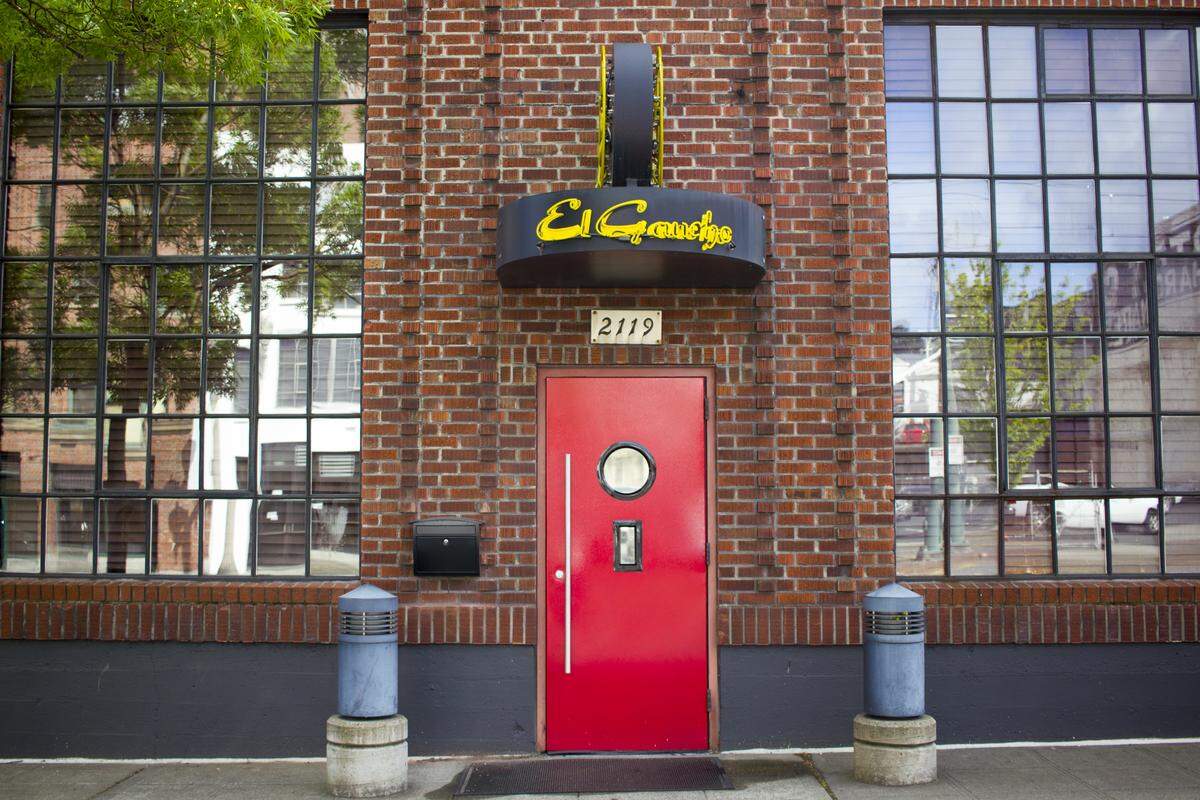
“If you keep running your business the same way you’re doing it, it’s coming to a head,” said Chad McKay, CEO of Fire and Vine Hospitality, parent company to fine-dining steakhouse, El Gaucho. They adopted a service charge about a decade ago. “One hundred years of restaurant history we had to dump because the whole industry is changing.”
How are service charges regulated in WA?
At Lobster Shop, Rowe said guests were most often flustered by this language: “The company retains 100% of the service charge.”
Washington’s service-charge law is “fundamentally a disclosure law,” explained Ellicott Dandy, an attorney at Frank Freed Subit and Thomas. The Seattle firm has secured millions of dollars for workers in several class-action lawsuits alleging misused service charges and break-time infractions, including a $2.4 million settlement in a high-profile case against Tom Douglas Restaurants. Those and similar cases “showed this is a real law and a real requirement, and it can be enforced,” said Dandy.
Effective since 2015 and clarified by the Department of Labor and Industries in 2019, the law serves two purposes, she said: “One is to protect the workers, because when somebody sees the service charge on the bill, they are likely to assume it’s in place of a tip. That’s fine if all of it is going to the person who served you, but if it’s not, then the person serving you might not be getting additional compensation. Two is consumer protection: ‘I want to know where it’s going.’ We’ve seen this anecdotally — that customers have felt sort of misled.”
Adding to consumer confusion: In some states, service charges aren’t necessarily intended to replace a traditional tip, and employers have more freedom over the distribution of service charge funds.
Washington’s law is strict in that employers cannot use the fee to meet minimum-wage requirements, nor can it be used to cover other costs unless explicitly disclosed. They must specify where it goes. Often, though, that back-end calculation is too complicated to put on a menu, which is why some restaurants have defaulted to the “company retains 100%” language. Staff might receive different percentages based on seniority, experience, sales and other pay barometers that would be normal in most professions.
Per the law, employers must withhold taxes from both tips and service charges. Under the recently signed federal budget bill, workers will be able to deduct up to $25,000 in tipped income on their federal tax returns but only for tax years 2025-2028. Because service charges are not tips, they would not be eligible for that deduction.
Primo Grill has used a service charge since 2015 (initially 18%, now 20%). Their receipts do not include an extra tip line. Co-owner Seth Rose, who bought the 25-year-old Sixth Avenue restaurant from founders Charlie McManus and Jacqueline Kennedy in January, had considered reviewing the fee with his team. In July, he told The News Tribune that because the fee is “vital” to their benefits, staff has indicated that the minor, short-lived tax break is not worth losing their healthcare and 401k.
According to Dandy, “Gray areas are kind of the result of entities trying to find a way around it, to be blunt. You can find ways to make it complicated, but I think the [state] requirement itself is pretty simple and clear. The challenges are less legal than economic. Restaurants notoriously operate on thin margins. It’s a really tough business, and everybody’s looking for a way to cut costs and cut overhead.”
‘Is this your tip?’
The tide is high in cities like Seattle, where a provision that let small businesses pay tipped staff a lower wage, which peaked at $17.25 in 2024, expired in January. Now every employer must pay at least $20.76 an hour, which has compelled many restaurants to embrace the service charge, as Seattle Met’s Naomi Tomky reported in June. Websites for some of the city’s most sought-after reservations are packed with detailed explanations of why they went this route and how the money is distributed, occasionally with expected wage ranges for each position.
Often these pages add this nuance: “Gratuities are not expected,” but any left are split by hourly employees and “never” salaried managers, as Musang, a celebrated Filipino restaurant in Beacon Hill, explains.
Tacoma, of course, is not Seattle, or San Francisco, or Chicago, but it is in Washington where the 2025 minimum wage is $16.66. This spring, a ”worker’s bill of rights” garnered enough signatures to make the local ballot. Tacoma voters could consider the measure, which would raise the minimum for businesses with more than 500 employees to $20 an hour and 16-500 employees to $18, in a coming election.
Rowe pointed to increased minimum wages as one reason for the “pretty significant shift toward models like service charges and commissions.”
“It’s just becoming more and more common in areas that have high minimum wages without some sort of consideration for tipped credit,” he said, but “until the model becomes the industry norm — at least at nicer, full-service restaurants — there will always be some level of pushback.”
At Corbeau, customers are occasionally flummoxed but rarely recalcitrant, according to Achord.
“Frequently people will say, ‘Is this your tip?’ They want to know where their money is going, which makes sense, and that their servers are being taken care of,” she said. She usually responds with a line akin to: “My tip is included in that cost.”

They now also circle and star the service charge line on the receipt. When Achord senses that the customer might appreciate a more direct tact, she will also verbalize it, returning power to the payer. “You have to be able to read people,” she said.
A majority of Lobster Shop customers paid their bill and the service charge without pause, but occasionally the questions would reach an impasse and staff would remove the fee, said Rowe. They found that those customers usually left a 20% tip anyway. But tips, unlike service charges, are limited to the people who receive them.
That’s where things get sticky.
Routinely removing the fee would have been “unsustainable,” said Rowe.
He acknowledged “the whole dynamic of, ‘Do I need to leave more?’ Our take is no. We use a peer-commission model; our teams are well-compensated,” he said. “If people aren’t satisfied in their work, that will show up at the table. Bad food happens: The steak’s overcooked, timing is off, whatever — hopefully not often. Bad service, on the other hand: You can always save a dining experience with good service.”
Service charges have faced criticism for a lack of transparency — that such fees line employer pockets and don’t fulfill their promise of prioritizing workers — although tip misappropriation and other wage-law violations in restaurants have been commonplace, if underreported, for decades.
Critics also argue that automatic gratuity disincentivizes good service.
McKay refuted that point with El Gaucho’s booming private dining business. Even before the full-on switch, these events incurred a 22% fee and accounted for one-third of their business. Why would people keep coming back if the experience stinks?
“This whole idea that if you’re guaranteed money, you’re not going to take care of us” ignores the fundamental mission of hospitality, said McKay. “They expect us to deliver. If we don’t, we don’t have their business.”
Is a service-charged future inevitable?
As El Gaucho was building its model in the mid-2010s, a series of class-action lawsuits alleging improper tip-pooling in New York and Massachusetts prompted some restaurant owners, including McKay, to re-evaluate that common practice. At a business that pays a subminimum wage, where permitted, only customer-facing workers — but not cooks, dishwashers or managers — can share tips.
Then Danny Meyer’s influential Union Square Hospitality Group, behind James Beard-winning Gramercy Tavern and two-Michelin-starred The Modern in New York City among others, eliminated tipping and raised menu prices to accommodate a new compensation model. The industry went ham, the public berserk. Think pieces filled the pages of financial, food-centric and mainstream media.
The pandemic changed the calculus yet again. In the summer of 2020, when Meyer’s restaurants reopened, they did so with traditional tipping in place.
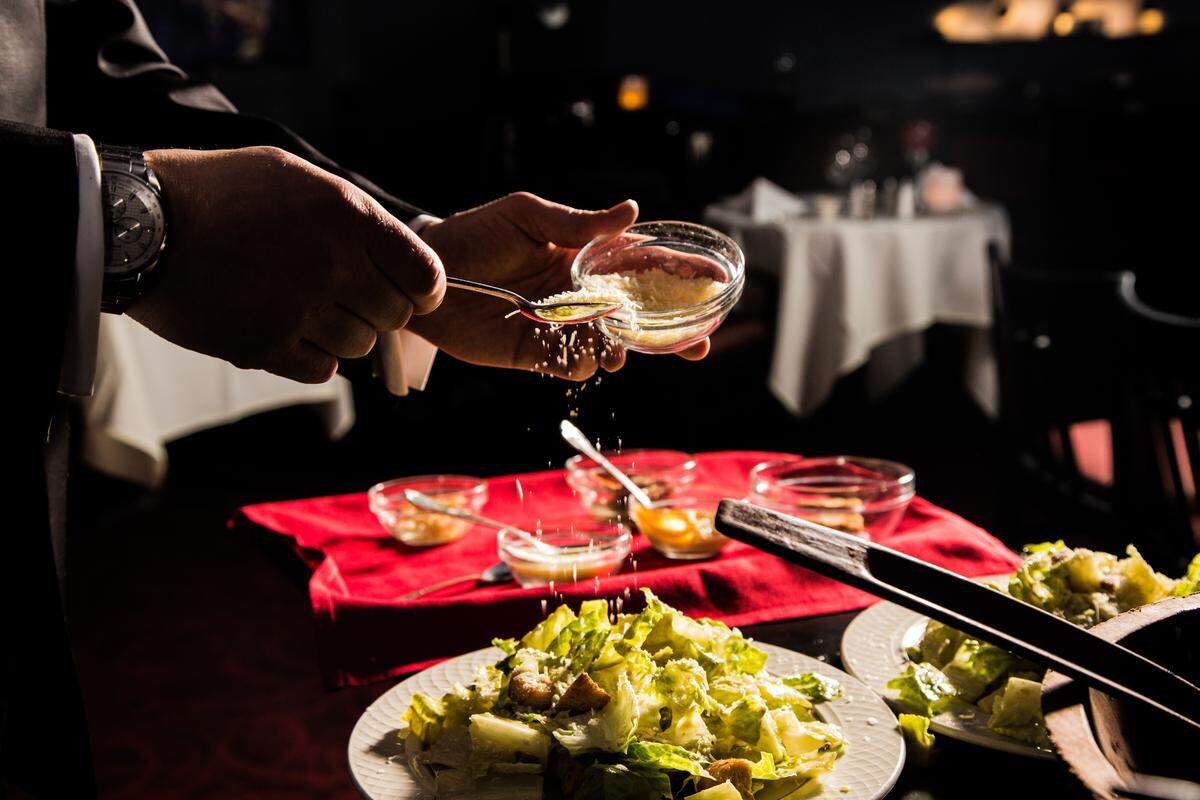
Where restaurants have failed in their pursuit of service charges or gratuity-included pricing, for McKay, owners “went to war with their servers.”
What he means is that servers, usually the highest-paid, took a pay cut.
“It’s a skill. It’s a profession,” he said. “You have to do it with them, not to them. People want to be involved. This is how they make their living. They deserve to be brought along in that process.”
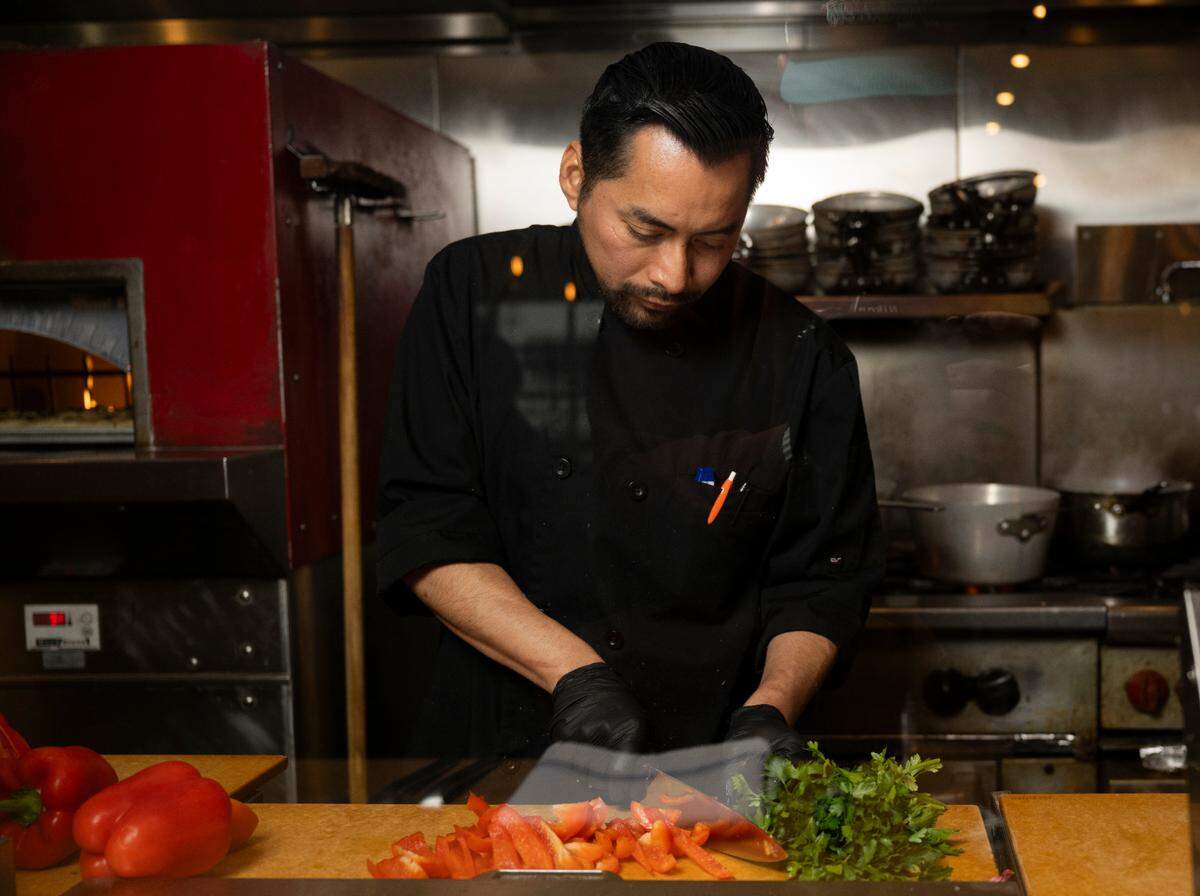
Much of the pro-service charge rhetoric, he added, has focused on improving wages for back-of-house staff, including cooks and dishwashers. In addition to staff involvement, he attributed El Gaucho’s success to past practice for kitchen workers, who “already” earned fair wages, he said. Bussers, for instance, start around $25 an hour instead of an unpredictable “minimum wage plus tips” subject to customer whims and seasonal slowdowns.
Following months of research and consultation with staff — some of whom had worked with the company for decades — and culminating in a four-month trial at a Seattle El Gaucho, by 2017 all Fire and Vine restaurants had adopted a 20% service charge.
Servers had two big requests, according to McKay: to retain a tip line for “above and beyond” hospitality and to receive a flat percentage of their tables’ fees, as opposed to pooling the total and then re-distributing it through a complicated back-end calculation.
In other words, said McKay, “Whatever they get, they earn. If they make $100 an hour that’s ‘cause they earned it. I didn’t pay them that — that [the service charge] just happens to be the conduit.”
Yes, customers complained and some still do, but Fire and Vine has never once removed the charge, which as Rowe noted can be a slippery slope.
If something else truly upended the experience, they would remove the dish or comp the bill, “But we don’t remove the service charge just because somebody complained. I am burning the bridge and there’s no coming back,” said McKay. “You publicly take some stuff — you get some online trolls. Like, who cares? They’re not even our guests.”
D’Amico, the industry veteran, agreed: It won’t work if you’re not honest with the people who make the magic happen.
“Hold yourself to a high standard of transparency with tip distribution,” he said. “It’ll save headaches, turnover, and keep lawyers away.”
He also advised his peers, whether on the floor or in the kitchen, to advocate for themselves no matter what kind of system their employer uses.
“Respectfully demand a print-out of the tip-out policy, formula, percentages,” he said. “You have an obligation to educate yourself and to be informed as part of the team.”
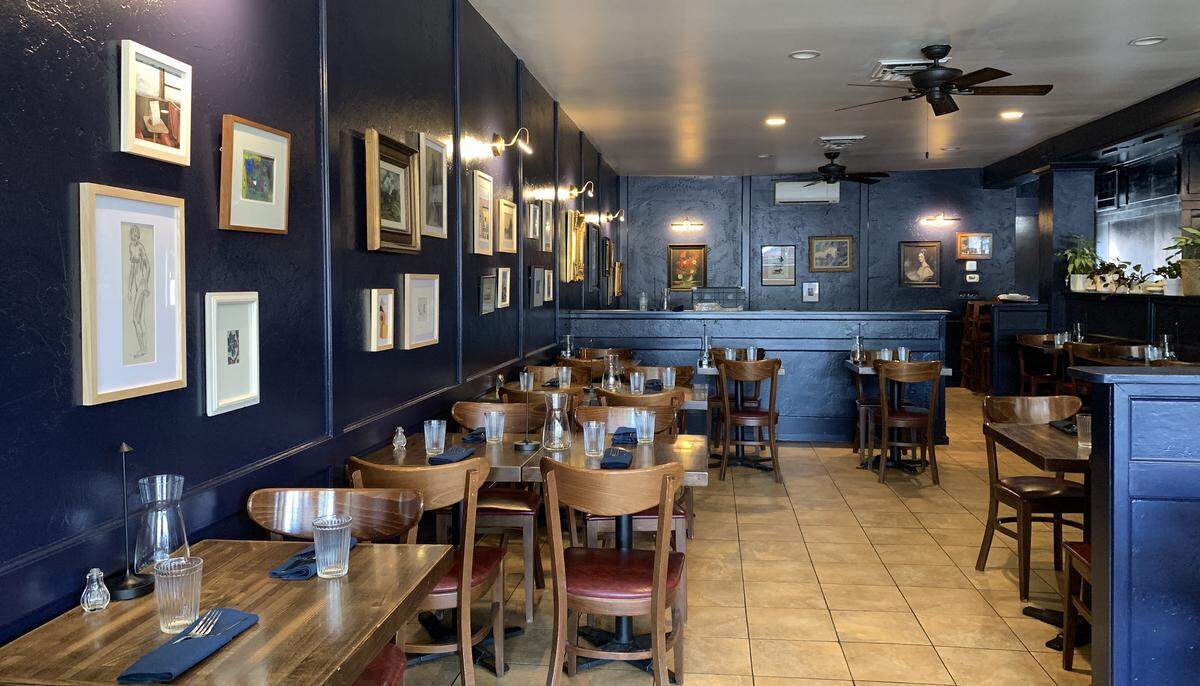
Of course, not every restaurant is created equal, and most aren’t high-rollers like El Gaucho. Small, family-run neighborhood joints, casual dining spots from the local pub to a corporate-backed chain, diners or daytime destinations might never be able to get away with service charges or higher menu prices.
“My heart goes out to everyone,” said McKay. “That world is in deep, deep trouble.”
Achord, who was raised in Tacoma, believes the model depends on the restaurant. After years of climbing up the industry ladder, she appreciates the service charge for the parity and consistency it can offer workers: The Saturday shift pays the same “rate” as the slow Monday night.
“We don’t have to fight for the ‘good days’ or feel like we’re missing out on money,” she said.
But she understands why Tacoma might be reticent to jump headfirst into the service-charge deep-end. The city is “so drastically different” than it was even a decade ago. “It’s a growing city, and that’s the reality of it.”
For the full-service, high-caliber subsector, in any city, service charges might be the only path to a sustainable future — barring a wild overhaul of compensation and benefit laws at the federal level in tandem with a complete rewiring of the American psyche.
“We have one of the highest minimum wages in the country, and I just don’t care,” said McKay. “Our model takes care of it, and our team makes great money. Wouldn’t it be fun to leave it behind?”
This story was originally published August 28, 2025 at 5:00 AM.