
Tacoma restaurant shut down after years of failing to pay thousands in state taxes
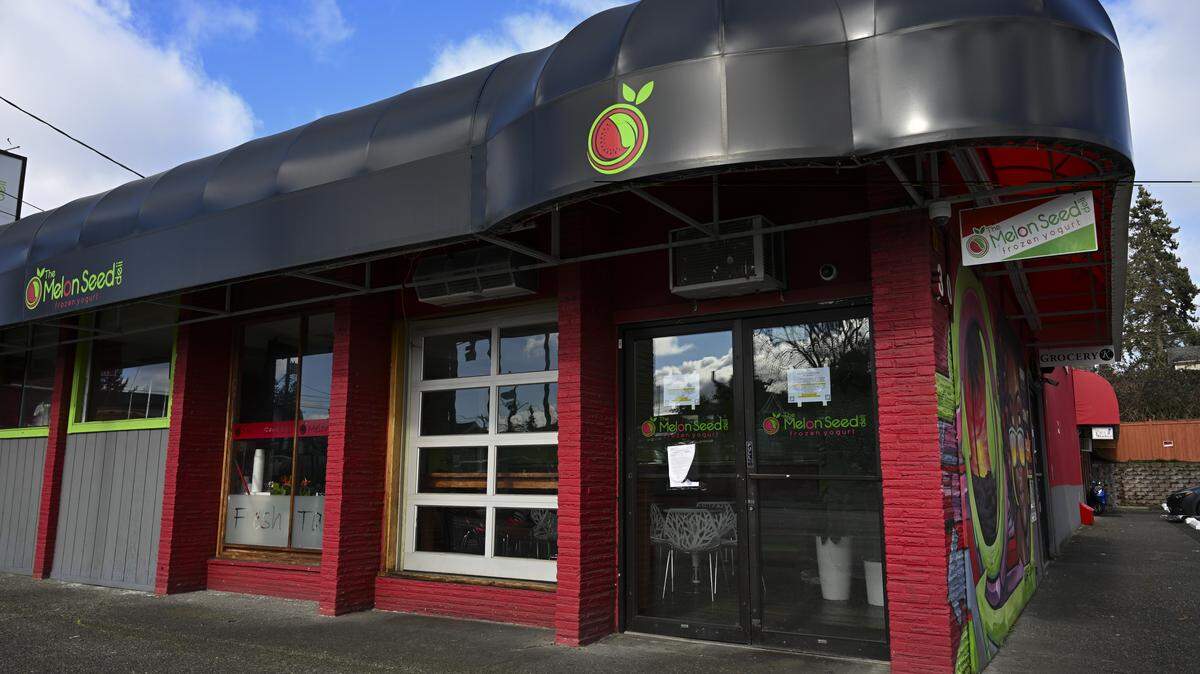
Financial troubles began years before Melon Seed Deli turned to Instagram on Feb. 17, pleading for public support to “raise just over $30,000 to hit a Department of Revenue deadline.”
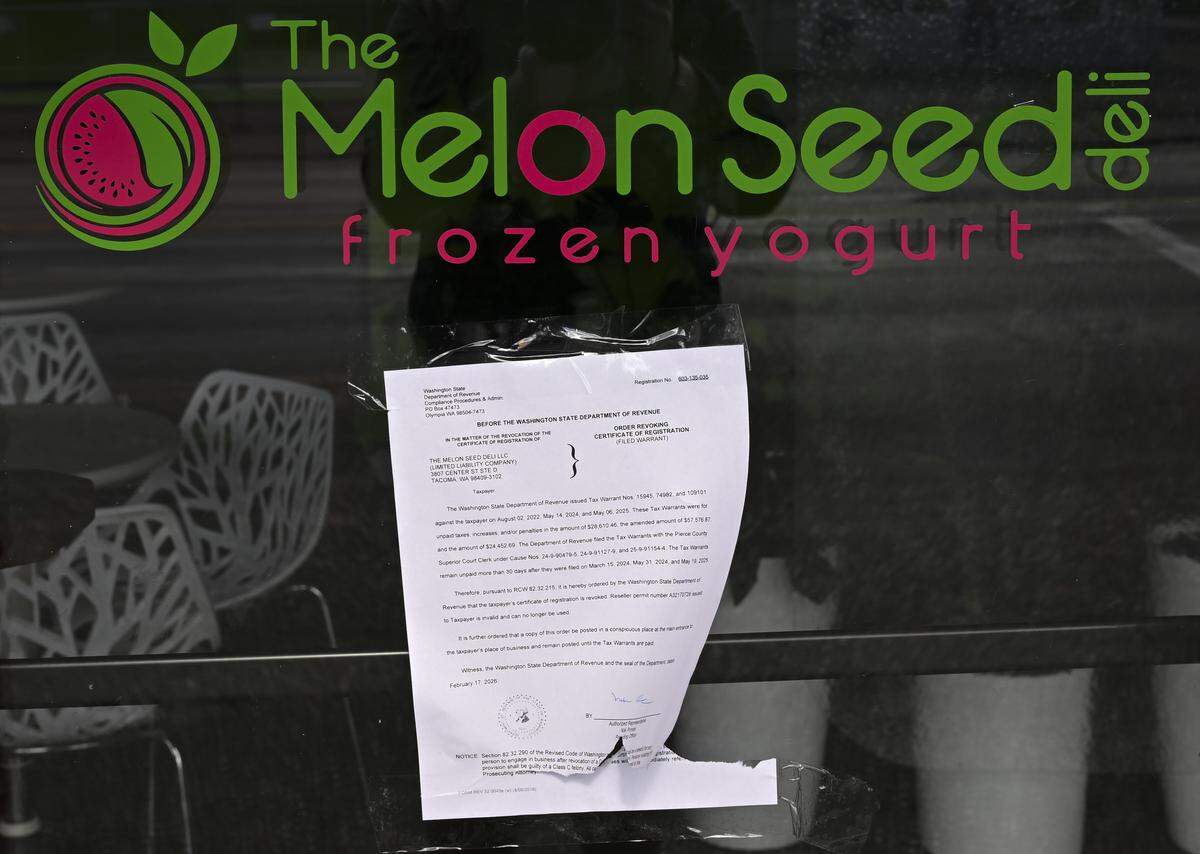
The Tacoma restaurant, located at 3807 Center St., Suite D, has been closed since Feb. 18, when DOR posted a sign to the front door officially revoking its reseller permit. To reopen, owners Tashia Page and Mario “Mac” Charles must pay off the six-figure debt listed on the revocation order, which does not include any future interest or penalties, and provide a cash bond, calculated from six months of liability. Then they could apply for a new business license.
Melon Seed, which has served slider sandwiches and frozen yogurt from a small shopping plaza on Center Street since 2013, owes Washington state nearly $111,000 in taxes, including fees and interest. DOR has filed three tax warrants against the business since 2022 in the Superior Court of Pierce County, all of which remain open and unpaid. A review of Melon Seed’s account with the Secretary of State also shows a pattern of missing annual filing deadlines, leading to extra paperwork, and the business has failed to pay property taxes on time of around $415 to $550 per year since at least 2020, according to county records.
In a Feb. 24 phone call, Page and Charles did not deny the debts, admitting they have also faced headwinds with the Internal Revenue Service in recent years and the occasional fine from the Tacoma-Pierce County Health Department.
“It’s a very nasty cycle to get caught up in,” said Page. “It’s definitely a learning experience and lesson when you get into business, is to never fall behind on your taxes.”
A spokesperson for the agency declined to answer specific questions about Melon Seed’s closure, citing taxpayer confidentiality, and directed The News Tribune to the publicly available warrants.
In general, Mikhail Carpenter said by email, revocations are “rare” and only used “as a last resort.”
The state takes several steps before even issuing a warrant, including “a lot of communication” between the business owners and a designated agent. The goal, he said, is to develop a reasonable payment plan that allows the taxpayer to meet its financial obligations to the state while the business continues to operate. If debt lingers, state law requires that DOR move to the courts, when the legal clock starts ticking.
“License revocation is the last option available when a business or taxpayer has failed to come into voluntary compliance,” said Carpenter. “If a business is not open it makes settling the balance harder, so it is not a decision that is made lightly and only made when a taxpayer has demonstrated a consistent pattern of noncompliance.”
Page and Charles, who are known in the Tacoma community for their positive nature and affable service as much as the sweet and savory offerings at the cafe, said they have not been eschewing payments entirely but have struggled to pay off past bills, especially as the totals ballooned with penalties. Referring to the Covid-19 pandemic, Charles added that they “fell behind, like other businesses, a while back, and it kind of snowballed.” He was also the primary caretaker for his brother who died in 2021, which they said complicated operations at Melon Seed and caused some administrative tasks to slip through the cracks.
‘Almost impossible to catch back up’
Their financial headaches predate the pandemic.
The couple said they handled all of the books themselves until around 2020, when they hired a professional accountant. They had put themselves on a quarterly tax return schedule with the state, which proved to be a fateful bargain as the bills were larger and, when they didn’t or couldn’t pay, the fees and interest hit harder and grew faster. (DOR assesses a 9% penalty on the total amount due for missing a payment deadline, another 19% for missing it again a month later, and 29% after two months.)
“We are a restaurant that makes food,” Page told The News Tribune in a phone call. “All of our cashflow goes into the purchase of product, payroll, overhead, expenses. So with those penalties accruing like that, it makes it almost impossible to catch back up.”
Their case was assigned to a DOR agent amid the pandemic, they said. As they navigated a death in the family and then in 2022 a break-in, they tried to find a new accountant and never formalized a payment plan with the state, they said.
According to court records, DOR filed its first warrant against Melon Seed Deli in January 2014, just nine months after Page and Charles, then with three young kids, opened the cafe. The $2,400 balance was resolved that May.
It appears that several years passed before the couple faced additional legal proceedings. A September 2022 warrant for about $1,000, filed in Pierce County Superior Court by the Department of Labor and Industries, was satisfied less than two months later. They kept falling behind.
In April 2023, LNI filed a warrant for another $1,000 in unpaid taxes. That one settled in August, but by October they faced a warrant for $378 that they resolved in January 2024. Soon after, LNI filed a new warrant for $1,375, which was “satisfied” before the end of the month, court records show.
The timing matters because the state can only begin a formal revocation process “after warrants have been filed for greater than 30 days and the taxpayer isn’t able to get in good standing with the department,” explained Carpenter, the DOR spokesperson.
Melon Seed Deli would have received a notice of a hearing. Page and Charles claimed the notice might have never reached them, as mail at the shopping plaza sometimes gets mixed up among the units, and they “didn’t get the notice in time to appeal the situation.”
DOR can approve waivers to delinquent or late-return penalties “because of circumstances beyond the taxpayer’s control,” but lacking the funds, being unaware of a due date or not receiving the return in the mail are “generally not” reasons for an exception.
Melon Seed has big tax hill to climb
Meanwhile, Melon Seed was struggling to pay its property taxes through their lease on Suite D, valued at $25,000. Pierce County records available online date back only to 2020. Melon Seed’s account lists late payments for each of the last six years. They paid off those bills in batches, public records show.
By 2024, Melon Seed was falling deeper into the red.
DOR filed a warrant that March for “unpaid taxes, increases and/or penalties” of around $28,610, according to the revocation letter and court documents. About three months later, on May 31, 2024, DOR filed another warrant for around $57,600. Last May, a third warrant was filed against the business for nearly $24,500.
To emerge, Page and Charles will have to pay at least $110,640.02, the total amount owed at the time of revocation.
The couple realized they might lose their license around Feb. 17, when Charles posted a video on Instagram and launched a GoFundMe with a goal of $40,000. (As of Feb. 25, it has a little more than $14,300.) He described the crowdfunding idea as a last-chance effort to narrowly miss a full shutdown.
“We were under the impression we had a few more days to come up with a lump sum of money,” he told The News Tribune in a phone call.
Word spread on local social media. With a few thousand dollars donated in the first few hours, they “got super excited” and rushed to prepare for a busy week. Melon Seed’s license was pulled the next day.
Citing taxpayer confidentiality, Carpenter at DOR could not say if Melon Seed had not remitted sales tax to the state or never collected it at all. Restaurants are typically subject to business and occupancy taxes as well as sales tax. The latter is collected directly from customers and “held in trust” by businesses before it must be turned over to the state, said Carpenter.
“At no point is that money the taxpayer’s,” he wrote. “When businesses fail to remit lawfully collected sales tax they are not failing to pay from their own funds, they are technically taking the public’s money in addition to the funds they collect on the transaction.”
At Melon Seed, Page and Charles said their tax debt stemmed in part from falling behind in the first place while trying to keep the power on and their few employees paid. They also often worked at the restaurant; it was their main source of income, they said.
“You have to put that money there first. It just kind of becomes a juggling act,” said Page. “It just breaks down to a cashflow issue of trying to catch up.”
While discussing with DOR, they said they have been speaking with other small business owners in the area as well as “other people in the city who have reached out just to offer advice.”
In a video posted to the Melon Seed Instagram page a week after the closure, Charles said they were “taking accountability” for their tax debt. They hope to return, but “we don’t know what the plan is exactly,” added Page in a phone call. “It’s literally one day at a time.”
This story was originally published February 26, 2026 at 6:00 AM.