
Here’s why our food writer always stashes Almond Roca in her suitcase
Before moving to Tacoma, I was familiar with the name “Almond Roca” but had never experienced the “buttercrunch” candy. Buying a pink and gold tin was among the first things I did upon arrival. It didn’t hurt that it was December, when tins are stacked high seemingly everywhere you turn. ‘Twas a no-brainer gift to stash in my suitcase — an immediate emblem of my new home.
Ever since, I have made a pitstop at the little angular hut outside the Tacoma factory before skipping town to visit friends or family. A pouch of Roca for you. A tin of Roca for you. A bag of poorly wrapped seconds in a nondescript bag for me!

I have tried each of the Roca flavors now, including the elusive macadamia and the dark-horse mocha. This week, I learned that Brown & Haley, one of a dwindling cohort of family-owned and operated candy companies in the U.S., had subsisted for a century mostly without changing a thing: toffee, milk chocolate, almonds, gold foil.
The business founded by Harry Brown and J.C. Haley in 1912, which moved to 110 E. 26th St. six years later, actually got its start with the chocolate-fondant candy now known as Mountain Bars. Today, the Tacoma facility produces these bulbous treats in the original vanilla, cherry and peanut butter flavors, and later this year, hazelnut will join the lineup for a limited time.
Maybe these bars were once a real delight, but I’d rather be eating a Roca!
A new way of making the old Almond Roca
On a recent tour, marketing director Kathi Rennaker showed off the company’s shiny new toffee-making equipment.
The process begins with bulky, 50-pound blocks of Darigold salted butter, plopped into a churner that warms it up until it’s golden. The liquid mixes with sugar and “a very small amount of palm oil,” a recipe adjustment that has irked some old-timers and environmentalists but is a fairly common additive in modern-day candymaking. It scurries through a series of pipes and tanks, heating to 203 degrees Fahrenheit within 90 seconds — a process that previously took 15 to 30 minutes in traditional steel kettles, seven of which still line the perimeter of the next room.
“In kettles, you run the risk of burning,” said Rennaker. “This can’t burn.”
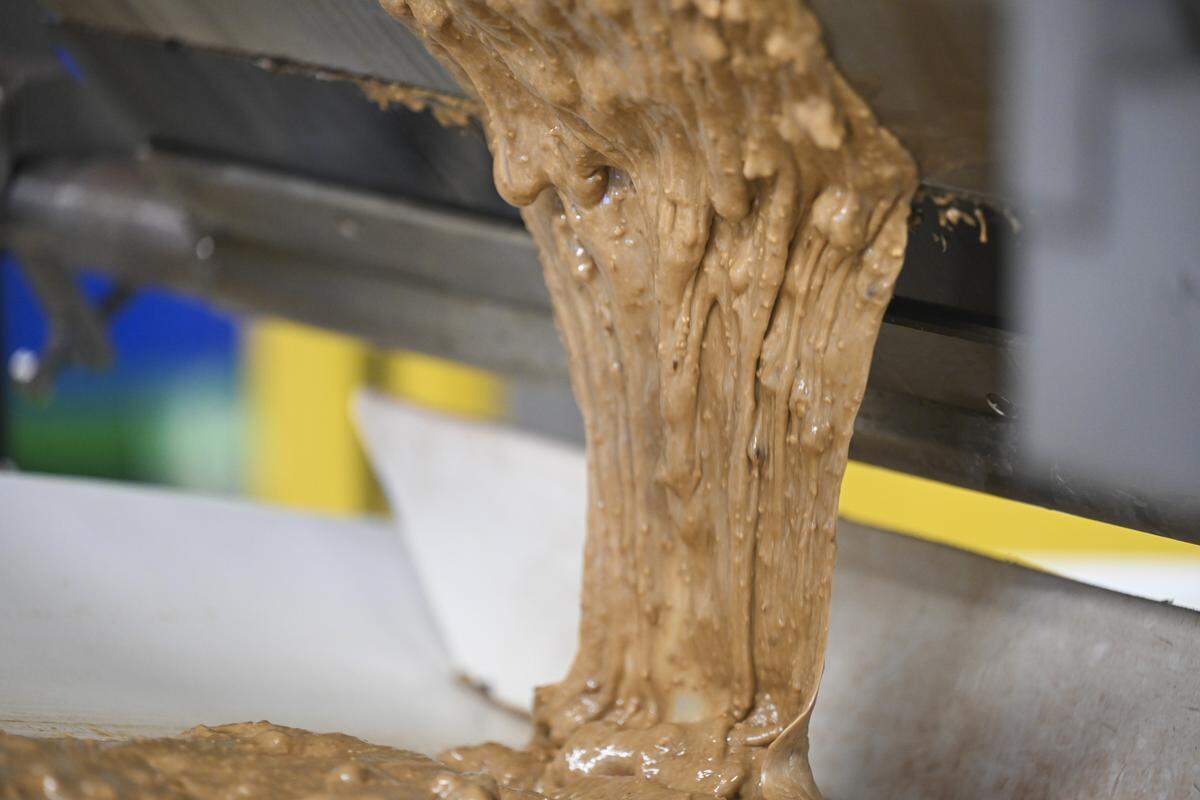
The toffee rolls through giant wheels, forming a blanket of sorts, the viscosity changing from thin and silky to thick and sticky before being piped into long ribbons, then trimmed into the recognizable log shape. That part is all visible to eyes on the production floor. Then the logs slide under the cover of several steel cooling chambers, before emerging on the other end ready for their chocolate dive and almond sprinkle (originally sourced from Spain, inspiring the candy’s name, but now exclusively grown in California, said Rennaker).
Can you tell the difference between a Roca from pre-2024, when the kettles were still in use, and 2026 as production has shifted entirely to this state-of-the-art machinery? I’m not sure, but I was absolutely delighted to bite into a warm-off-the-line toffee log not yet enrobed in chocolate. Roca’s toffee really does differ from all other toffees. It snaps but it’s soft. It’s a mini revelation.
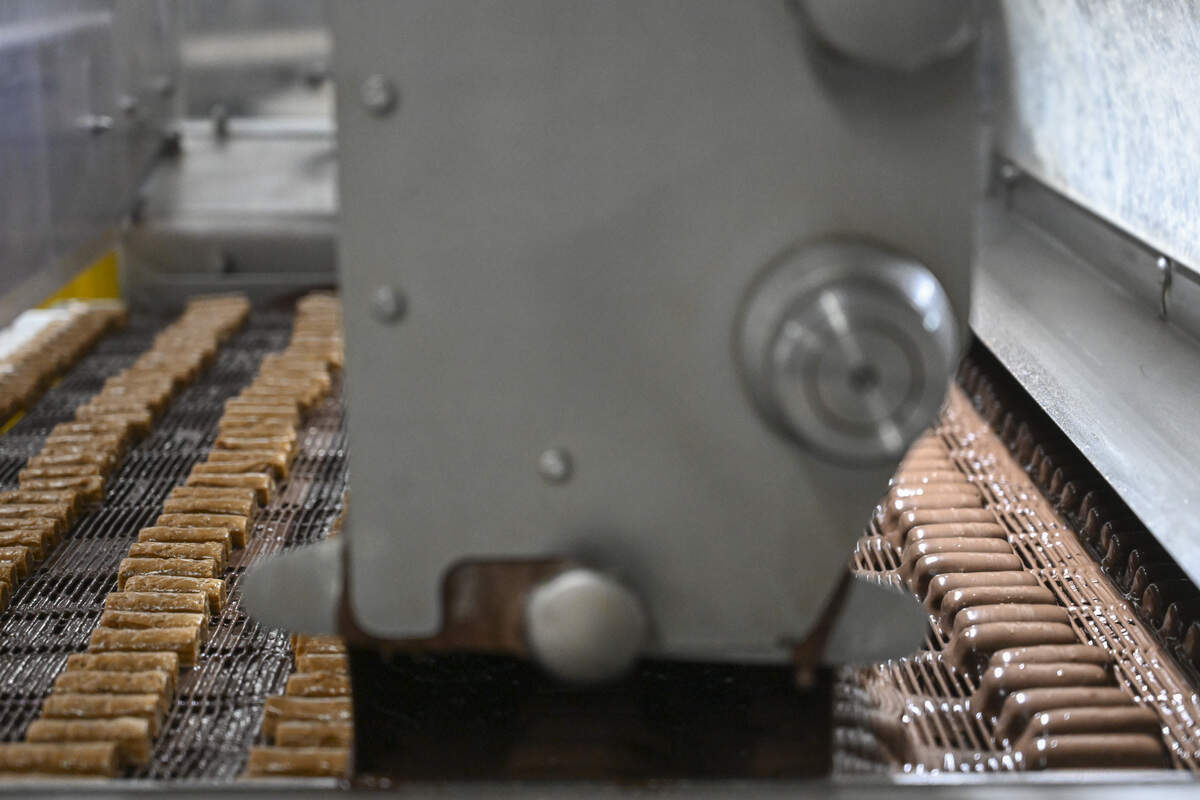
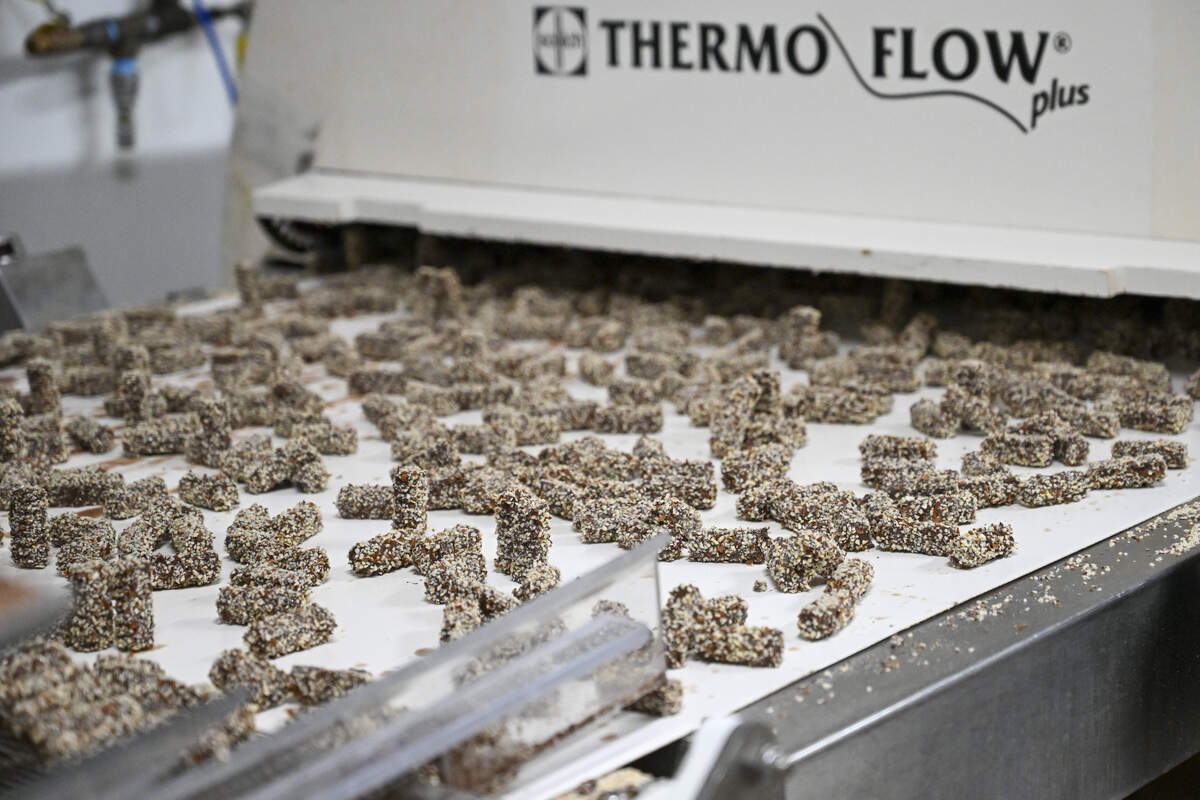
After a secondary almond dusting and shake-off for good measure, the Rocas are wrapped in their signature gold foil — at a stunning pace of up to 430 pieces per minute, times eight machines. In yesteryear, the factory managed around 4,000 total pieces “on a good day,” said Rennaker. Now it can churn out up to 4 million.
New flavors of Roca for Tacoma & beyond
So yes, things have changed for Almond Roca since their invention in 1923. Even as a non-Tacoma native, though, the candy of today tastes as I imagine it did then.
The second-ever flavor emerged only in the early 2000s through a partnership with Starbucks. That Mocha Roca, which added cashews and is now sold elsewhere including at the hut, led to the wide release of Cashew Roca in 2004. “There are other wonderful nuts,” Pierson Clair, the company’s CEO at the time, told Associated Press.
Some flavors have come and gone — R.I.P. to the honey-roasted peanut and the seasonal peppermint, lost due to hyperseasonality and cost, according to Rennaker. As a Peppermint Patty obsessive, I adored the latter and was distressed to learn of its demise this week in the Brown & Haley conference room. But I recently scooped a nondescript seconds bag of the Macadamia Roca, which happens, said Rennaker, but it’s otherwise hard to find stateside as it’s mostly sold in a big batch to stores in Hawaii. There’s also Sea Salt Caramel, Extra Dark with a 72% cacao coating, and later this year a limited run of Pistachio (thanks in no small part to the über-trendy Dubai chocolate trend), not to mention a host of newer products like Roca Thins and nut-free Roca chocolate bars (made by another manufacturer).
Several of my colleagues, both relatively new and a couple years in, had yet to try the iconic Tacoma candy until this week. To this younger cohort, the branding felt dated, as did the notion of toffee in general. Not your grandma’s Werther’s! A snap of the Dark Chocolate Roca changed their minds (also my personal favorite).
It’s hard to believe that Brown & Haley took so long to diversify the lineup. While other candy companies spent the 20th century pursuing “innovations” and “fun size” bars to shrink the serving size, Tacoma’s chocolate factory hung its hat on a small square of crinkled gold foil. And the tin? It travels well.
Where to try Almond Roca in desserts around Tacoma
- In the fall and winter, Medzo Gelato (612 Tacoma Ave. S) churns pans of Grit City Gold, a signature flavor the owners developed when they opened in Tacoma in 2023.
- Shake Shake Shake (124 N. Tacoma Ave.) swirls Almond Roca into the Tiger milkshake with chocolate and caramel syrups
- Ross Dress For Less (2931 S. 38th St., Tacoma; 4102 S. Meridian, Puyallup) has become a big client, with value packs and a new licensed product: mini Almond Roca cookies.
This story was originally published April 13, 2026 at 6:00 AM.