
Sometimes restaurants have to die. It’s OK to let Knapp’s go, Tacoma
Knapp’s lived a long life — 88 years to be precise. Just like losing a loved one to naturally occurring causes, it’s OK to accept the inevitable. It’s normal. It’s necessary. We all have our own lives to live.
I will probably take some heat from old-time Tacomans for making this case, as I’m not native to the area, and I don’t have family ties to Knapp’s or memories at all, really, save for the first time I tried the lounge in the middle of a rainy Saturday afternoon, in which I felt like a fish out of water because it seemed like everyone else had been hanging out there since 1991. But I know restaurants, and throwback restaurants (and bars, for that matter) like Knapp’s have been dying for decades.
Many will point to taxes or the minimum wage or the politics of a progressive state, but why do other restaurants exist? There are three main drivers to the struggles of a place like Knapp’s, at least in its current form: a real estate industry that squeezes out independent operators, a commodified and consolidated food supply, and a diverse population with diverse tastes and myriad ways to satiate them and only so much money to spend.
Can a Knapp’s survive in modern America?
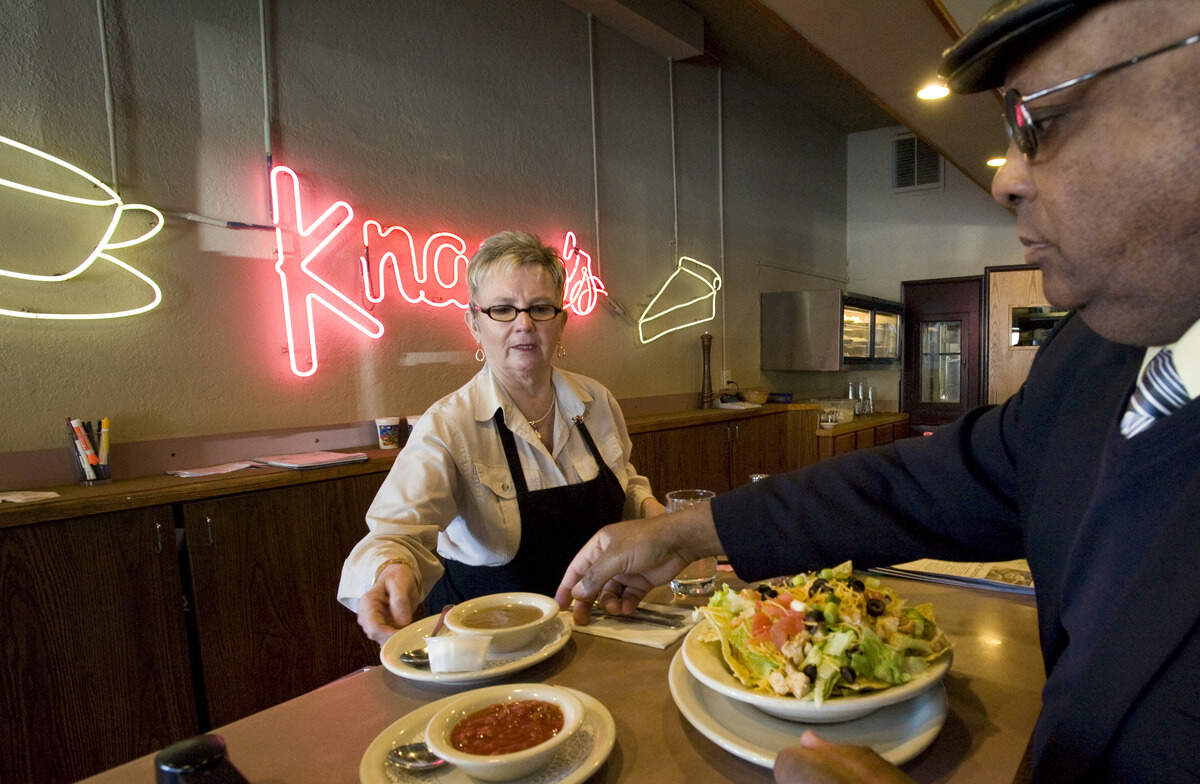
The world was different in 1938, when Ned and Corinne Knapp opened their little delicatessen in Tacoma’s North End. They held onto it for decades, developing a reputation for lard-crust fruit pies made from scratch, hot coffee and homey dinner plates, eventually overflowing to the adjacent storefronts. By the ‘60s it was in new hands: Ski and Helen Sulkowsky added the evening personality of Knappsack Lounge, where smokers and drinkers began sticking like spilled wine at all hours of the day. A third owner, Donna Lomis, took the reins in 1983, according to The News Tribune archives; she sold it a few years before her death in 2005 to the Tweten family, whose company, Sound Restaurant Family, ran it until just last year. Now, unless another party is inclined to salvation, it appears to have finally met its demise after about nine months with a green restaurateur who saw value in the history of a locally iconic brand.
Significantly for the success of a business in an incredibly tough industry, Lomis, the third owner, had also owned the 1920s-era brick building on Proctor Street that spans half a block. In fact, she was documented in this paper’s pages in the 1990s as raising rents on tenants — among them Proctor evangelist Bill Evans, who at the time ran an antique mall in the building and had just introduced a restaurant called Old House Cafe. Lomis thought there were too many restaurants in Proctor in 1993, that parking was tight, costs were high and sales were down.
Sound familiar?
Lomis also sold the building in 2002 for $1.2 million to Gamble Building LLC, affiliated with brokers at Kidder-Matthews, including Todd Clarke and Drew Frame, and Timothy Tweten, the father of Sound Restaurant Family’s owners, brothers Dan and Jonathan Tweten. It’s the last-documented sale on Pierce County property records.
The restaurant group, which had quelled rumors of a closure or sale in 2024 before finding a taker in Billy Brewer, did not respond to a request for comment on Knapp’s closure. When I reached Clarke by phone last week, I asked for details on the building ownership and he replied flatly that it was owned by Gamble Building LLC.
A different broker for Kidder was associated with the LLC that, according to records, purchased 15-29 N. Tacoma Ave. for $2.35 million in an estate sale in March 2023 — just a few months before Harvester, another previous Tweten-owned diner, closed after more than 90 years in the Stadium District. Tax records show the release of a buyer’s agreement from March 2023 with Timothy Tweten’s name on it.
In October 2024, that property sold again for $4 million to a different developer as The News Tribune reported.
Stick with me here.
The Twetens’ Sound Family Restaurant Group still counts several retro diners in its portfolio: The Poodle Dog in Fife, Burs in Lakewood and Hob Nob in Tacoma. Each of those properties, according to county records, was purchased in the early 2000s and is still owned by Lortim Enterprises, an LLC connected to the Tweten family.
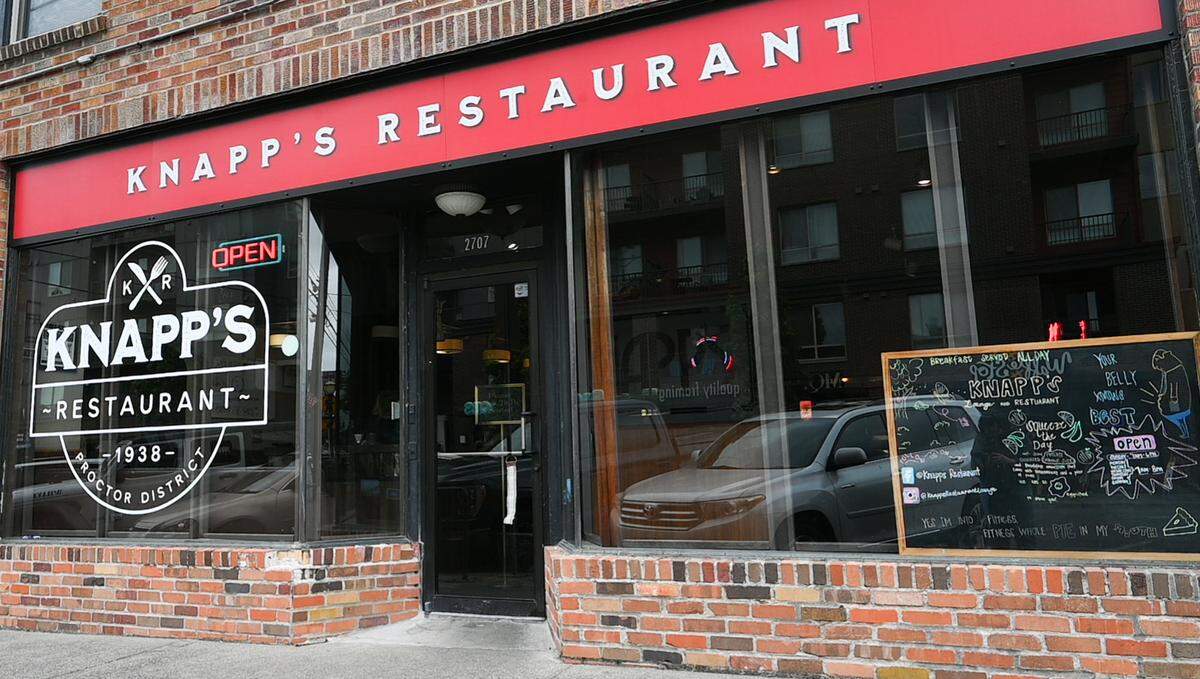
Brewer, who bought the business and brand of Knapp’s last August, did not also buy 2701-2709 N. Proctor Ave. And in this America, while not owning the property on which your restaurant or bar sits is unusual, it is one of the most underappreciated reasons for the industry’s ongoing headaches.
I don’t know what he was paying in rent, but I can’t imagine it would be described as a steal.
Knapp’s needs reinvention, not continuation
As Brewer acknowledged in a phone call last week, as news of the closure spread, Knapp’s was a big space. He also posited that cutting it up would be complicated because the kitchen kind of connects to each sub-unit.
Size and layout were not Knapp’s only challenges, though.
In 1991, a TNT columnist wrote that “only the prices have changed” — to a whopping $5.25 for a half-pound burger — but also mentioned a core of elderly clientele that compelled painfully under-seasoned food. In 1996, a review mused that “cigarette smoke goes with Knapp’s like ham with eggs” as grisly regulars kept lighting up even after the managers had proudly announced they were removing the ashtrays.
Not much ink seems to have been spilled on the place since then, save for “where to find pie” and “Thanksgiving turkey” type roundups.
I get the allure of retro diners as much as the next gal (I’m not that young!) and love that many around here have alcoholic alter-egos. But “casual family dining” has suffered everywhere because we expect such haunts to serve large portions of decent food for low prices, and that promise has become almost impossible to fulfill.
Brewer, who didn’t have restaurant experience before buying Knapp’s, was working within the confines of a thing that already existed. Of systems already in place. Of a food-supply chain that has become overly reliant on convenience and price over quality and taste, which will only worsen if Sysco, the country’s largest foodservice provider, gobbles up Restaurant Depot, essentially a Costco for restaurants, for $29 billion. (This a decade after Sysco tried and failed to acquire U.S. Foods, which in 2020 bought Smart Foodservice, another restaurant supply store.)
Knapp’s is an idea that needs reinvention, not continuation.
As a society we dine out more than we ever have — even though recent surveys show a dip due to a volatile economic reality and depressing forecast. There are also more types of restaurants than ever, serving up more cuisines and service styles and price-points than ever, in every city, including Tacoma. Maybe the couple who would swing by for a lazy Sunday morning lunch is saving up for a steak-frites with Washington-raised beef at Corbeau instead. The family in need of an early dinner might grab a pizza and ice cream at Point Ruston. The solo diner could have a sandwich and craft beer at Peaks & Pints or bánh mì at Toast Mi.
The reason people have loved a place like Knapp’s, where egg scrambles reached nearly $20 in 2026, was never really about the food.
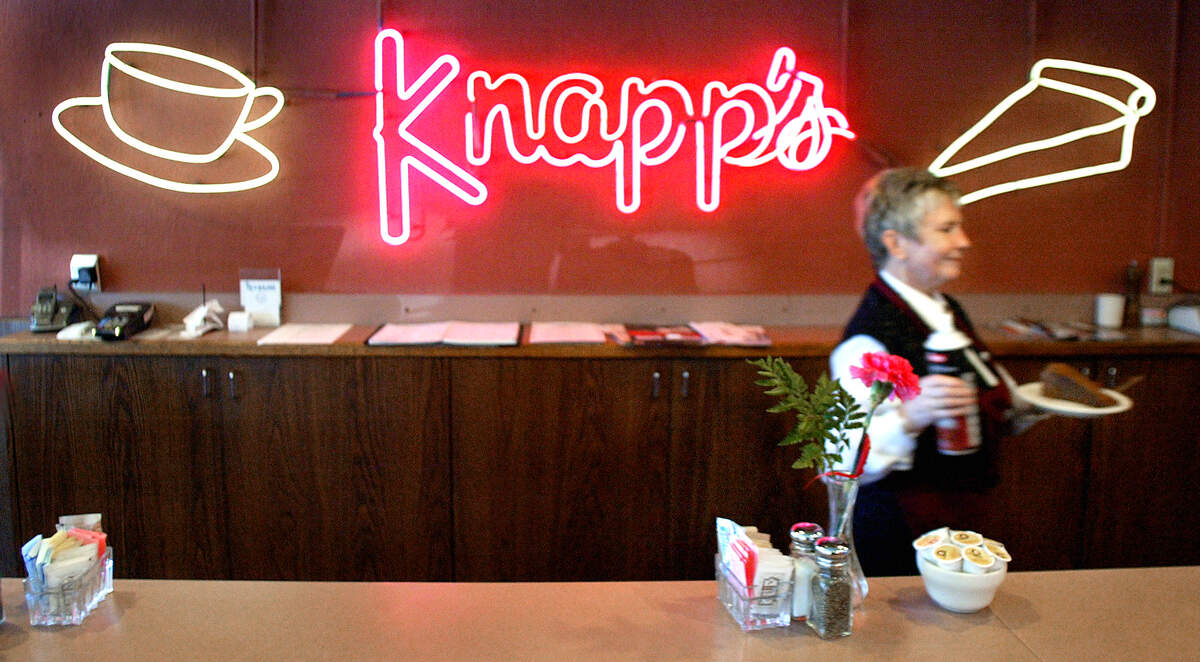
On local social media threads contemplating the closure, comments described the sustenance as fine or even bad over the years — long before Brewer entered the picture. The bar was perhaps the icon here, but to thrive it needs its own identity. Knapp’s, in other words, was running on memories, but memories don’t keep the lights on.
When I spoke with Brewer last week on the phone, I coaxed him into a mystical conversation about those feelings because it’s what interests me most about Tacoma’s infatuation with Knapp’s — and, to be completely candid, other places like it, even if not nearly as old. At the end of the day, a restaurant almost always closes because more money is going out than is coming in.
“Just talking about rising costs and inflation is a little played out,” said Brewer. “I mean, it is the story. But there is a bigger story around nostalgia and its true cost, and what people are willing to hand over to that. It kind of feels reductionist to take it down to nostalgia because there are people that show up every day. There are people that have worked there for 30 years. It’s more of maybe entire lives built within it. But from the outside, once you get away from everybody that’s inside, that factor of ‘everybody has a Knapp’s story, everybody has a feeling that gets invoked by it,’ what’s that worth to people? And is that enough to run a business?”
Diners aren’t entirely dead — one of the hottest new restaurants in Los Angeles is a diner — but the days of serviceable fare and simple hospitality keeping an old or new restaurant afloat surely are. Knapp’s was probably quite nice for a long while, but it costs money to keep it alive — maybe at least $600,000, according to a Facebook post trying to rally to “save it.” Why not take that money and create a bar and restaurant built for the Tacoma of today?
The News Tribune’s archives and staff writer Debbie Cockrell contributed to this report.