
Supervalu, superservice
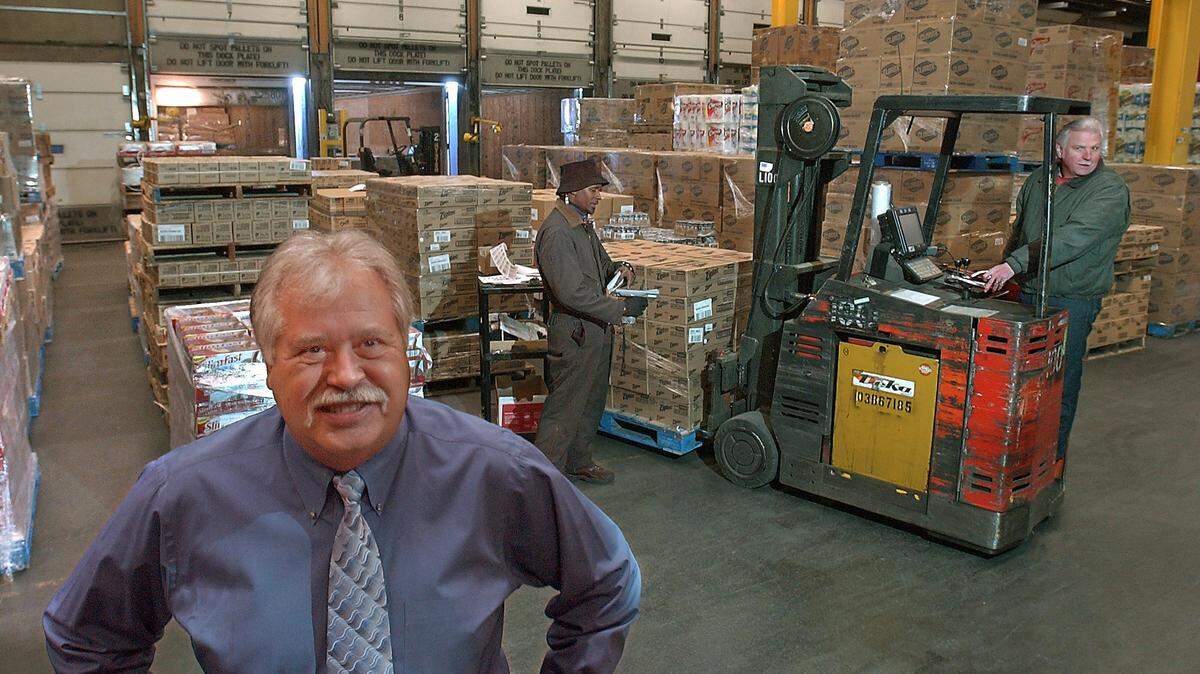
Supervalu’s Tacoma-based Northwest Region had a rough year in 2004.
For nearly 20 years, the mega-supplier of grocery stores and military commissaries had supplied grocer Haggen Inc., which operates Top Food stores in the South Sound. But Haggen decided last summer to get its stock from Associated Grocers Inc.
That meant the loss of more than 200 jobs and other company consolidations that knocked Supervalu out of its spot as Pierce County’s 40th-largest employer.
But business has stabilized at the regional headquarters just off the east shore of Tacoma’s Thea Foss Waterway. The company still provides 230 family-wage jobs. Inside its warehouse, the company installed a new voice-recognition network so forklift drivers, wearing headphones, can talk to a computer, which efficiently guides them up and down the rows to pack loads of grocery stock for specific customer orders.
Leading the operations is Larry Langsweirdt, regional president.
He knows something about groceries. His parents owned a supermarket in Minnesota where Larry, as a 5-year-old, started filling sacks with potatoes. He’s spent the last 26 years working his way through the ranks at Supervalu, transferring to Tacoma in 1998 as vice president of marketing. When previous regional president Mike Jackson was promoted to Supervalu’s Minneapolis headquarters in 1999, Langsweirdt assumed the presidency.
Langsweirdt talked with The News Tribune about Supervalu’s business, past and future.
What’s the Supervalu history in this location?
It dates back to West Coast Grocery, which has been involved in the Tacoma community (since the 1890s). Supervalu bought West Coast in the 1980s.
Through the last 20 years or so, there’s been a number of changes within the industry. We have positioned ourselves so that we feel not only do we have a good history, but we also have a good future in the region.
You made big news for losing the Haggen contract. What rationale for that change did Haggen give you?
I would prefer not to spend a lot of time on customers moving back and forth. We lose business, we get business.
This was a big account. I don’t mean to minimize it. But really, I look at that as history. . . . From time to time, customers shift their business from one wholesaler to another. It’s pretty common within the industry that there’s a shift of business. We always leave our customers on a good note. We always take care of them until the last day that we ship to them.
On the flip side, I’ve experienced occasions where I’ve gotten many of those customers back. We think we service our customers better than anyone else.
Who are your big customers now?
Our present customer base is IGA stores. Within our region, we have approximately 80 independent operators under one IGA banner. We are the largest supplier to commissaries at 44 military bases across the Northwest, Alaska and the Far East. We service bases in Guam, Japan, Korea and Okinawa, all through the Port of Tacoma.
Do you have any other facilities in the region, or does everything move in and out of here?
We have a frozen-food facility in Auburn. We have distribution centers in Spokane and Billings (Mont.). With Alaska, Wyoming, Idaho, Montana, Oregon, Washington and the Far East, we have one of the largest geographic areas of grocery supply.
What’s the long-term prospect for Supervalu here?
With our present base of business and the potential for new business, we feel our long-term prospects in Tacoma are very good. The base grocery business is relatively stable. There has been a considerable amount of competition from alternate formats, i.e. Wal-Mart Supercenters. There’s increased square footage, and everybody competes for their share of the sales dollar. There are a number of successful independent operators that compete very well against the large box stores. We have developed advertising programs and marketing programs to help the independent operator.
What kinds of products go through your warehouse?
From here we ship meat, dairy, frozen, grocery. We have a regional general merchandise and health and beauty care facility in Spokane that services the Northwest.
You used to supply grocery stores with produce from here too, but sold your produce building recently to another Tacoma produce wholesaler, Colonial Fruit & Produce. Why?
We worked an alliance with United Salad. They are distributing produce for us as a subcontractor. We’ve sold two buildings. By setting up our regional warehouse in Spokane and moving 5,000 to 6,000 items over there, we were able to put all our product under this roof.
What kind of role does Supervalu play locally as a community contributor?
We are very active in the food bank network system. . . . Our employees also (have) been very active with United Way, the Festival of Trees, March of Dimes walk and other causes.
Your company generates a significant amount of truck traffic. The Port of Tacoma and the City of Tacoma are debating about who should pay for the wear and tear and upkeep of Tideflats streets. What’s your take on the condition of the roads your trucks use and who should take care of them?
It is very important to us to have good roads to move product. It’s also important to us not to be tied up on the road with traffic. We supported a gas tax to alleviate traffic problems. Even though it would cost our company money, we feel that it’s very important to have a good network with good accessibility to the freeways.
This story was originally published February 21, 2005 at 12:00 PM.