‘This isn’t a lounge.’ Gig Harbor’s Revive Drip expands on mobile IV work with clinic
For the nurses who joined forces to create an independent IV infusion clinic in Gig Harbor, it’s all about providing the best possible service, no matter the location.
Revive Drip, tucked into Gig Harbor Business Park just down from the Original Pancake House on Soundview Drive, offers both mobile and at-home services for those seeking supportive infusions for an array of issues, such as easing symptoms of or help recover from medical treatments. Others seek rehydration or vitamin/supplement infusions.
The business was founded by Heather Pounds, advanced registered nurse practitioner and Revive Drip’s medical director, and registered nurses Olivia Mariettakes-Reed (director of nursing) and Laura Ude (head of operations).
The three at one time worked in the emergency room at MultiCare’s Tacoma General Hospital.
Their business markets itself as offering “IV hydration and vitamin wellness.”
Mariettakes-Reed and Ude met with The News Tribune on April 8 at their business to discuss what they offer and how Revive Drip came into existence.
Revive Drip initially provided an off-ramp for them in 2020 from the hectic “burnout” world of nursing with its mobile service, as Mariettakes-Reed described. The brick-and-mortar clinic version in Gig Harbor launched in October 2023.
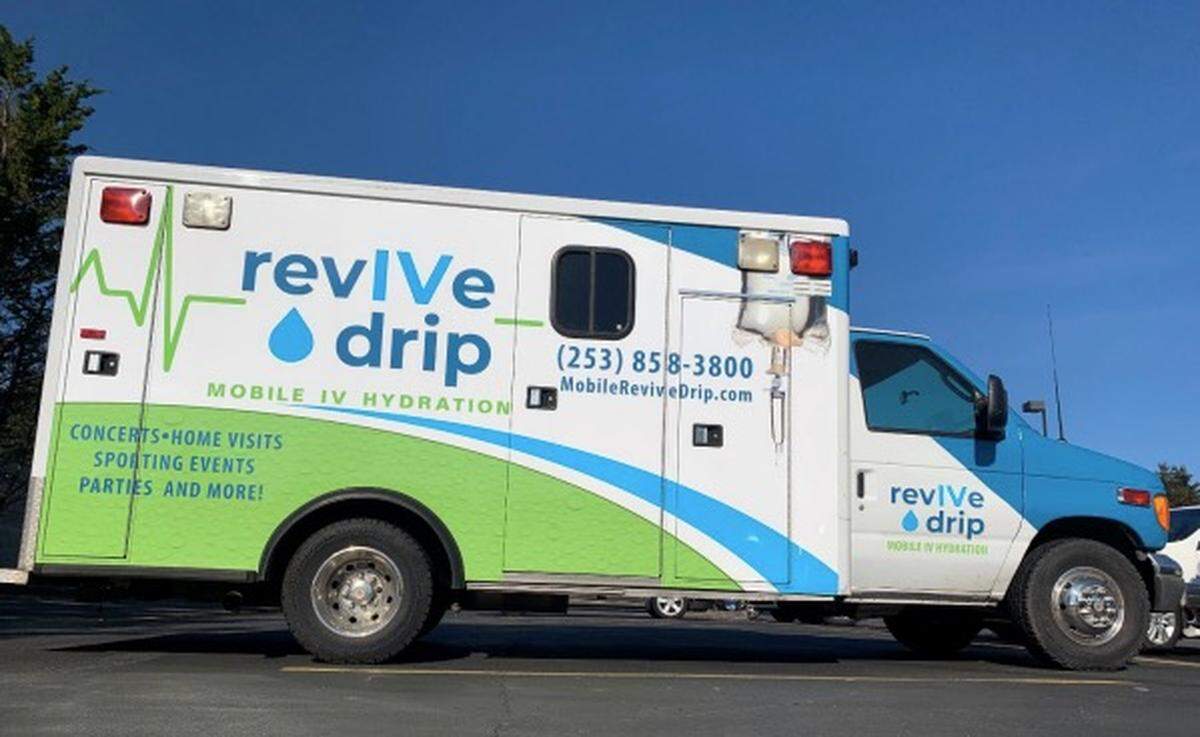
The idea for the business came “after years of going to Sunland, which is a small vacation community at the bottom of the Gorge,” Mariettakes-Reed recalled. “And we would go over there in the summer — Laura’s parents own a home there — and we would see revelers come and be disabled from drinking and dehydration. And Laura kept saying, ‘You know, we should do this as a business.’”
“Because we were emergency room nurses, we really understood the value of providing just fluids,” Mariettakes-Reed added.
The pandemic brought new emphasis to in-home treatment.
People “were told to stay away from the emergency rooms,” Ude said. “Our business model aligned with the needs of the community. We were mobile so we came to them. We were nurses, so we were doing clinical assessments in people’s homes who were afraid or told not to go out.”
The internet and word-of-mouth led to more customers as they learned of the mobile service.
“We treated a lot of COVID patients in their homes. Our home infusions have really grown since COVID,” Ude said.
The business administers an estimated 130 infusions a month, split between home and clinic sessions. The event team is separate from that count, with festivals around the summer holidays providing ample work.
“We like being out and about. We like meeting people where they’re at,” Ude said.
She described settings they routinely work, such as concert sites and other outdoor events/festivals that bring large crowds, a large component of their practice.
“We are vendors with Live Nation,” Ude explained, “and then some of the campgrounds allow us access. People call us and we get to have access to their people.”
Concerts at the Gorge Amphitheater in Grant County — specifically attendees — have been a mainstay of work.
“Yesterday, I got that Red Hot Chili Peppers play May 31,” Ude said, “and I got three people at one of the campgrounds who asked, ‘Will you be there?’
“And the answer is yes, in some capacity,” she said. “Last summer in that time frame we did about 850 (infusion) bags.”
“We’ve been around a few summers now,” Mariettakes-Reed added. “People know this and they know to reach out and contact us. They make appointments now, which is great, before the season.”
Ude was recently at a motocross event in Odessa, Washington.
“With four-to six thousand people, they’re all isolated in Odessa. And the shenanigans are high. And they understand the value of keeping it going,” she said.
“But while I was doing that, in here, they were taking care of POTS (Postural Orthostatic Tachycardia Syndrome) patients, and fatigue patients and doing iron infusions ...,” she added.
Growing industry
Home infusion services and infusion centers (outside the spectrum of chemotherapy sites), operating under the wellness or alternative health care umbrella, have grown in recent years as the pandemic took a heavy toll on medical providers.
Dublin-based Research and Markets, a marketing analysis firm, said in an October 2023 report, “The expanding global Intravenous (IV) Hydration Therapy market, currently valued at $3.04 billion, is forecast to experience a surge in demand, anticipating reaching $4.49 billion by 2028.”
Other estimates put the value of the industry closer to $15 billion.
Factors attributed to the industry growth, according to Research and Markets’ report, include “surge” in surgical procedures and patients seeking IV hydration therapy, the health-and-wellness industry growth overall and “aging population requirements.” That was defined as, “A growing elderly demographic reliant on IV hydration therapy for managing age-related health issues has propelled market advancement.”
Amid this growth, accounts also have emerged of injuries sustained at so-called “medical spas,” which have been the subject of federal warnings, including issues surrounding the compounding of drug products.
Facilities fall under the authority of each state, requiring doctors or other medical professionals on staff. A representative for Tacoma-Pierce County Health Department told The News Tribune that such sites fall under the state’s Department of Health purview.
Frank Ameduri, media representative for the state DOH, said in response to questions via email, “These types of IV drip clinics or spas do not need a facilities license from DOH, and we do not inspect them.”
He noted, “However, any individual provider who provides treatments that break the skin, like IV treatments, must be licensed.”
Ameduri added that he was “not aware of complaints related to any of these drip clinics at this time.”
The compounding issue was a driving factor at getting the Gig Harbor location going, Ude noted.
“We were solely mobile up until that point,” Ude said. But as state and national regulations came more into play, “we could feel that we were going to need a physical location for compounding,” she added.
“Compounding” is the term used for the process of combining, mixing or altering ingredients to make medication specific to a single patient.
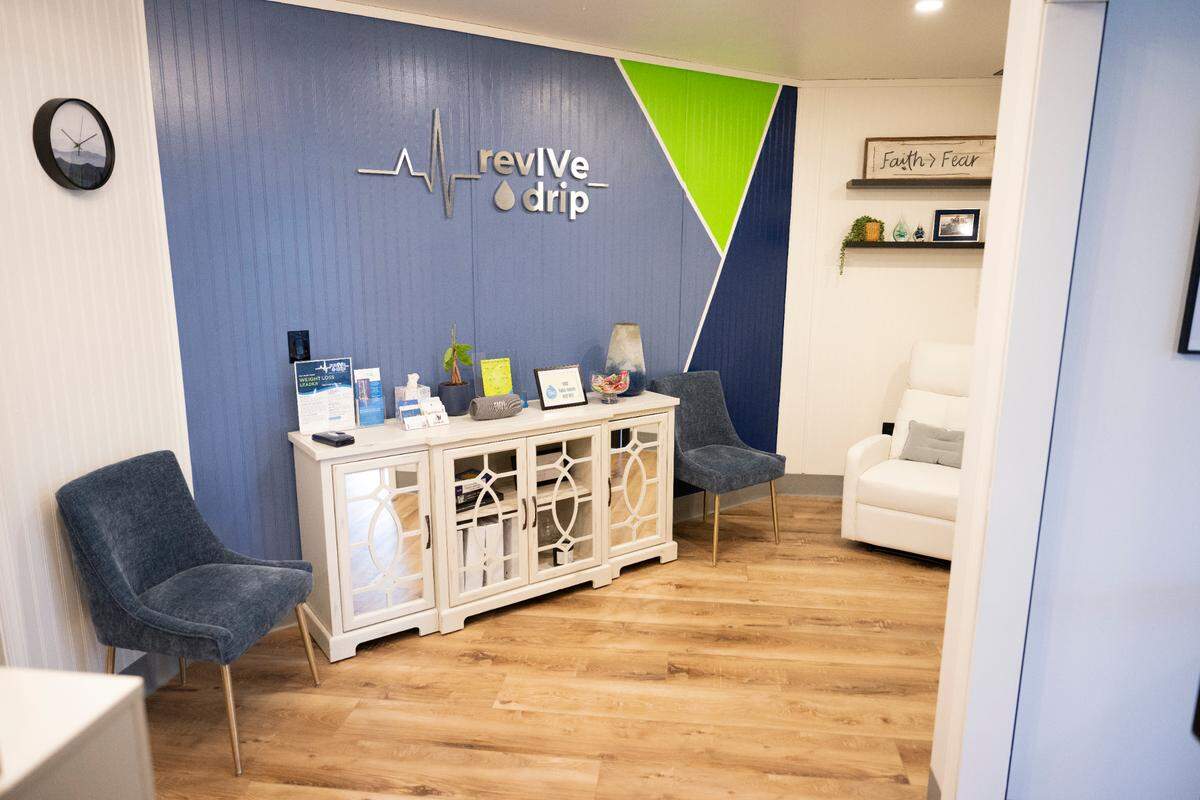
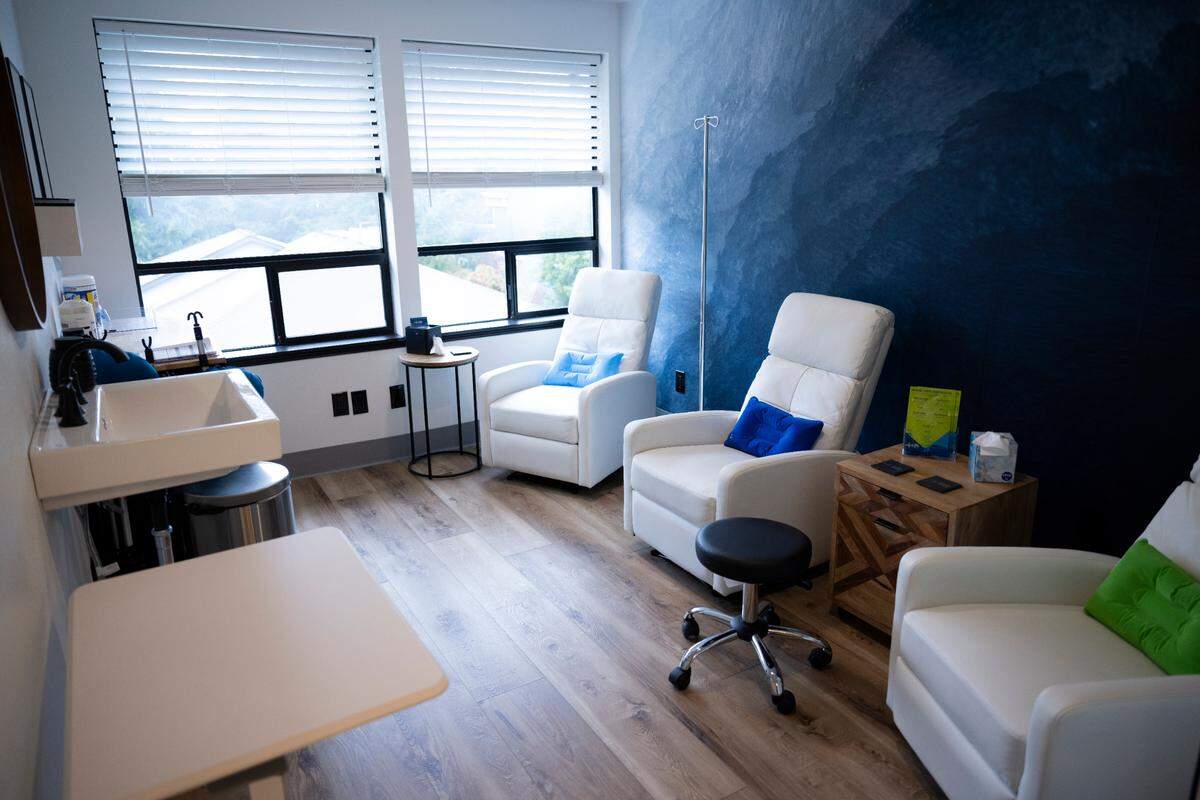
A room in Revive Drip’s office is dedicated for that work.
“It’s a sterile work environment. Typically you are gowned, masked, gloved when working in there,” Mariettakes-Reed said.
The Revive Drip nurses emphasized that their site is not a “spa,” nor is it a franchise. The two pointed to their long-held and generational ties to the local community and statewide. These connections, they contend, set the business apart from other competing sites in the area, as well as their own skill sets as licensed medical professionals.
For example, a section of their website is devoted to “tough stick” patients, those with small veins who find it difficult to be able to offer an easy vein to access when presented with blood draws or IVs.
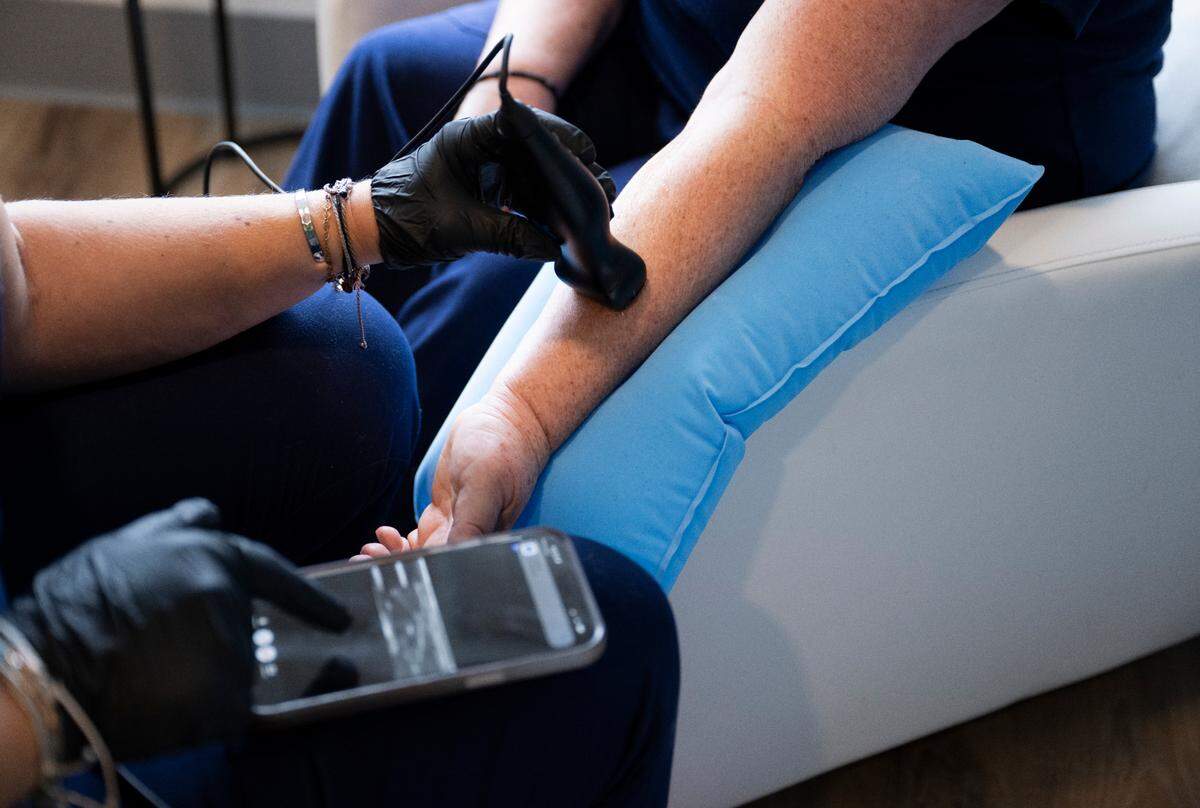
Revive Drip offers “3 Vascular Access RNs who follow the most up-to-date practice from the Infusion Nurses Society (INS),” according to its site.
They also make use of ultrasound via a phone app to locate the best veins for access.
“This isn’t a lounge. We don’t posture like that and this isn’t an IV bar. We’re just a clinical space,” Ude said.
“When (customers) walk through the door, I can share for at least five high-quality stories of people that we have added value to their life,” Ude said. “When you walk into a franchise, you don’t get that.”
For more information
▪ Office site: 5800 Soundview Drive Building B Suite 201-202, Gig Harbor
▪ Phone: (253) 858-3800 (call or text)
▪ Email: contactus@mobilerevivedrip.com
▪ Payments: Services are self-pay, no insurance.
This story was originally published April 10, 2024 at 5:30 AM.