Tacoma council tackles displacement, boosts ownership incentive with MFTE update
AI-generated summary reviewed by our newsroom.
- Council amends MFTE to steer developers toward rent‑restricted 12‑ and 20‑year options.
- New rules ban 8‑year MFTE in two displacement‑risk tracts.
- Council adds owner‑occupied requirement for 4–19 unit MFTE condos in 8-year version to boost ownership.
Tacoma City Council has approved modifications to the multifamily property-tax exemption program for developers, including new rules on usage of the version that historically hasn’t included an affordability component.
While use of the all-market-rate tax break version for new projects has declined over the years, the city hopes more developers move toward the MFTE versions that do require a percentage of rent-restricted units.
The new requirements are the result of a three-year review cycle the city has for the program to see what can be improved since the last round of changes in 2021.
The 2021 modifications at the time were touted by council members as big steps to bring the city more in line with state housing policies and support the city’s Home in Tacoma program.
This time, council member John Hines has noted in council and committee meetings that they are taking a more cautious approach.
Hines, who is also a candidate in the November Tacoma mayoral race against former council member Anders Ibsen, led the MFTE discussions in 2021 and the latest round in the Government Performance and Finance Committee.
“In our conversations with some of the development community ... one of the clear things they said is (that) this is probably not the time to make major changes to our MFTE code, especially with some of the uncertainty at the national levels,” he said at the council study session Sept. 30. “The committee was really a little bit more limited in our changes, with the commitment to come back in three years as things may change.”
What’s changing
The city offers three options for multifamily housing developers: an 8-year all-market rate version and 12- and 20-year versions, which require a percentage of units to be rent-restricted, or what the programs call “affordable.” The property owner does not pay property taxes on the residential construction/improvements at the site of four or more units for the designated number of years but still pays tax on the land and any nonresidential improvements, such as a commercial portion of a mixed-use building.
The 8-year MFTE received its fair share of revisions on its market-rate development model to increasingly point more builders toward the versions that require a percentage of rent-restricted units..
The latest changes, as outlined by a summary provided by the city to The News Tribune in response to questions, include:
- Projects with fewer than 20 units must be built exclusively for home ownership. Those units must be sold to households at or below 150% of Pierce County AMI and the purchaser must occupy the unit as their primary residence.
- Projects with 20 or more units may be built as rental or home-ownership units. There is no occupancy requirement or AMI requirement for projects over 20 units.
- No 8-year MFTE projects are allowed in census tracts 613 and 614, (roughly west and south of Tacoma General Hospital’s campus, respectively), “due to high risk of displacement,” according to the city’s action memorandum. The action cites the city’s Anti-Displacement Strategy, affirmed and adopted in 2024, which noted areas of high risk.
The additional rule for the 8-year, 4-to-19 unit development provision was presented by council member Sandesh Sadalge at the Sept. 30 council study session, and received further refinement following council debate.
Sadalge noted at the Oct. 7 study session that the tax break would go to the buyer. “It may increase the supply of housing for purchase,” he added. “And purchased housing leads to home equity and potential generational wealth. So that’s the public good that I’m trying to incentivize.”
He also noted the requirement was also “in line with state policy that’s trying to encourage smaller condo developments.”
The other MFTE changes approved at Tuesday evening’s council meeting, as outlined in materials accompanying Tuesday’s agenda, include:
- Allow households to continue to qualify as low-income or moderate-income for the purposes of the MFTE unless the household’s income exceeds 90 percent of Pierce County AMI. The goal is to prevent those who receive pay increases from being tossed from affordable units.
- New requirement that for properties applying for an MFTE extension, the affordable units must rent for at least 10 percent less than the market rate units to meet affordable housing needs.
- Expand Community and Economic Development Department’s efforts “to share and centralize outreach resources for property owners and community members to help get renters into MFTE units quickly.”
- Review the MFTE program again in 2028 including “efforts to evaluate pathways for expanding unit size to better accommodate families.”
The latest MFTE changes are set to take effect in about a month.
Previous MFTE modifications
The changes are the second round of modifications to the program in recent years. In 2021, council approved changes that included removing the 8-year option from “very high” opportunity growth areas (Proctor and Point Ruston) based on the city’s Equity Index. Other changes then included expanding the geographic area for financial incentives in new projects that provided affordable units, and lowering the threshold from 80 percent area median income to 70 percent AMI applied to rents for affordable housing units, among other modifications.
The 8-year version has repeatedly come under fire over the years as rents have increased, particularly when at least two projects in the past backed out of the 12-year model and switched to the 8.
Changes in 2021 allow for developers to add extensions to their MFTE if rent-restricted units are added or maintained at a property.
Most recently, the owner LLC behind Stadium Apartments, 102 N. G St. has sought an extension for its original 8-year MFTE issued in 2016 to switch to a 12-year MFTE, which will regulate the rent for 35 units at the 172-unit site.
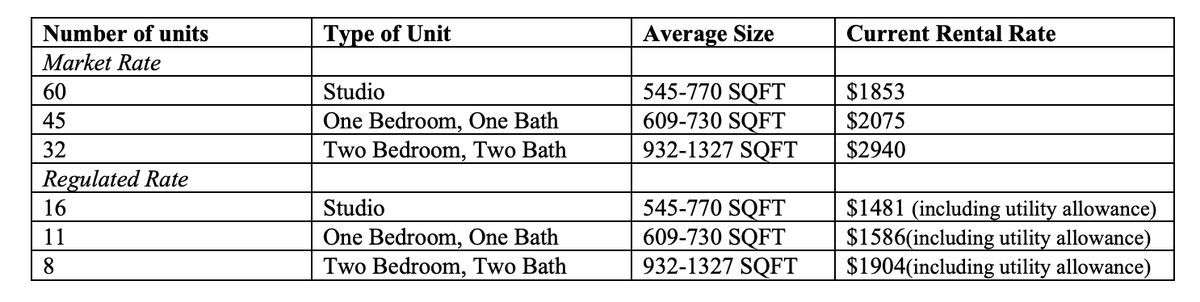
The Stadium Apartments MFTE extension measure is on the next council agenda, according to the city’s online file of council legislation.
Previous reporting from The News Tribune contributed to this report.