
The Northwest economy is humming along. Is it time to start worrying?
Washington’s economy keeps adding jobs, and the unemployment rate keeps bumping along at historic lows. Interest rates remain low. Oil and gasoline prices keep resisting efforts to push them higher. Inflation is quiet.
Ain’t economic life grand as we enter the second half of 2018? Skittles and beer, lollipops and roses, a bowl of cherries, a jolly holiday, things are going great and they’re only getting better. What me, worry?
Ah, but worry is what we pundits do well. So we’ll do our best Eeyore imitation (feel free to read this column in his voice) and attempt to come up with what’s wrong — or could be — with this economic picture:
▪ If we want to know when the party’s over around here, we’ll need to know when the concurrent robust cycles for aerospace and tech sputter out or collapse.
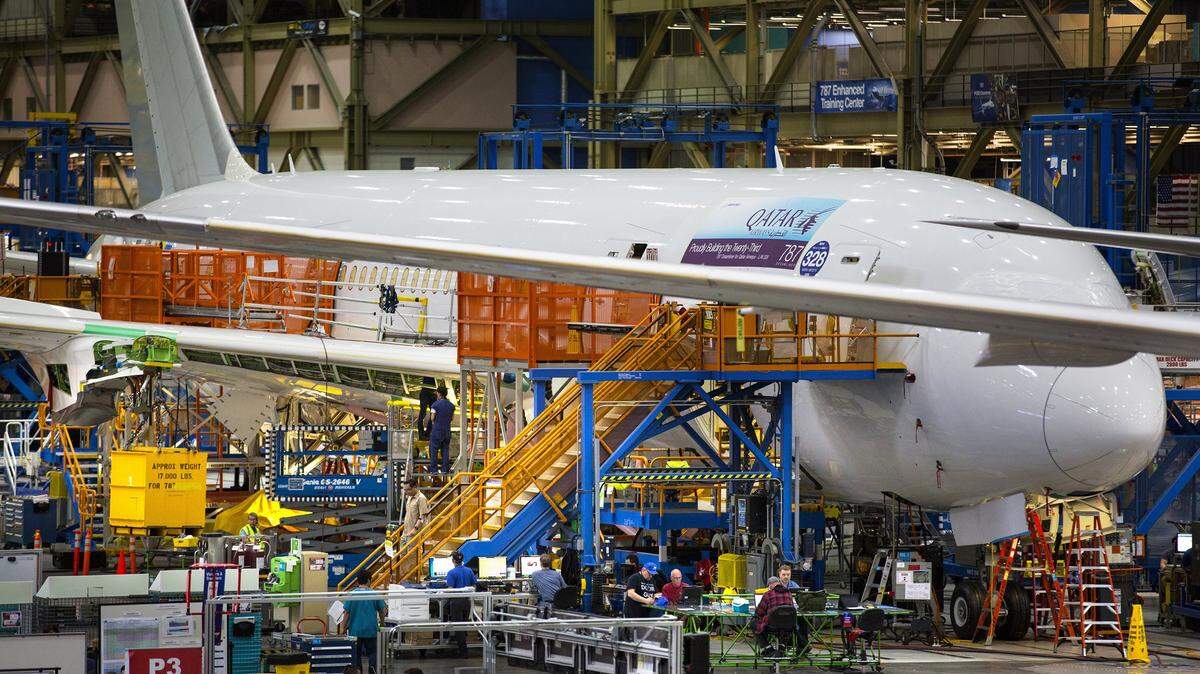
Right away, we see we’re in trouble in our quest to cast clouds over the sunshine-and-rainbows scenario. Boeing has a backlog of 4,597 planes just in the Renton-based 737 program alone, and it’s likely to add to its total with announcements at the Farnborough Air Show this month.
Orders can be canceled, airlines come and go, competitors compete (and the space is getting more crowded) and production rates are increased and cut, but it would take a major, global economic slump to erase that backlog.
All right, here’s something. If Boeing announces it’s going ahead with the new middle-of-the-market plane (between the 737 and the 777/787), as it’s expected to do this year, then we can revive all the fretting about Boeing’s long-term commitment to building planes in the Puget Sound region. We’ve got a lot of experience at that.
▪ Tech was the other sector, along with aerospace, that got through the last recession relatively unscathed, and it has only gained strength since. Of course that growth has led to ceaseless whining in Seattle about having too much of it and envy everywhere else that would like to carve a piece off it.
Tech has had contraction periods before — we still fondly remember the dot-com bust — and no tech boom is immune from hype-fueled growth and hype-inflated valuations. For the time being, though, the current tech wave doesn’t seem reliant on one hot fad, technology, product or company. Even Microsoft has a renewed sense of energy. Spending on tech, especially in the business sector with its adoption of robotics, 3D printing and the Industrial Internet of Things, is likely to increase, not decrease.
Saying “this time it’s different” is always dangerous, but one thing that really is different for tech this time is that in the dot-com boom, everyone could see that things had reached silliness levels well before the implosion. If there are warning signs this time, they’re well obscured.
▪ A trade war with China or Europe or Canada and Mexico, or basically with everyone, could have devastating consequences in places like Washington — at least that’s what the pro-trade faction tells us. Maybe they’re right. But setting aside the political realities that some sectors do win trade wars (it just depends who you’re fighting with, and what over), the trade issue is too volatile to predict with any degree of confidence.
The administration’s trade policies have a lifespan of hours, used as bargaining cudgels before they’re revised, reversed, replaced or forgotten. We’ll leave to others to conjecture whether this approach is strategic or evidence of chaos and not knowing what the desired outcome is. Yes, this could end nastily — or it could drag on forever with no real change from the status quo. Presidential administrations come and go; disputes such as softwood lumber or Boeing-Airbus become permanent features of the trade landscape.
▪ Housing construction and finance were the epicenter of the Great Recession. We hope banks have gotten smarter about lending since then, but we won’t know for sure until the next downturn hits. The one encouraging sign is that the present growth cycle is not resting so heavily on housing (housing starts are still running below long-run national averages).
For this region, the big issue with housing is affordability. That issue has major economic implications to businesses, consumers and communities, but posing a threat to continued regional growth is not one of them. If it were, Manhattan, San Francisco, Boston, Los Angeles and the other Washington would have stagnated years ago.
Hmm, this exercise in finding threats to the economy doesn’t seem to be working out well. We could kvetch about increasing taxes (just wait until you see the November ballot), or government competence (if Seattle, for example, has so much trouble managing in good times, imagine how lost it will be in a recession) or the continued disparity between urban and small-city and rural areas of the state. But are any of those of such magnitude as to wreck the regional economy in the next six months?
No they aren’t. But don’t worry, fellow pessimists and gloom mongers. Never underestimate the ability of the news and the economy to come up with the unexpected and the unpredicted. Things looked pretty good in 2006. They didn’t stay that way.
This story was originally published June 30, 2018 at 8:00 AM.