
Columbia Bank’s shown staying power. Can it hang around another 25 years?
If you were making book in 1993 on what banks in Washington would still be around 25 years later, much less as large players in the market, you might not have picked a little-known bank that had just moved its base of operations from Longview to Tacoma.
In 1993, Washington banking had moved well beyond the introduction of interstate banking to a wave of consolidation. KeyCorp had just completed its purchase of Tacoma-based Puget Sound Bank. The year before, Bank of America (parent of what was then Seafirst) bought Security Pacific (which had acquired Rainier) in a megadeal.
Everyone who hadn’t done a deal was rumored to be looking for one. With the big banks gobbling up whoever was available to add deposits, branches and market share, the Washington banking industry was rapidly moving to a structure resembling a weightlifting barbell — a lot of giant institutions at one end, a collection of very small shops at the other, and not a lot between.
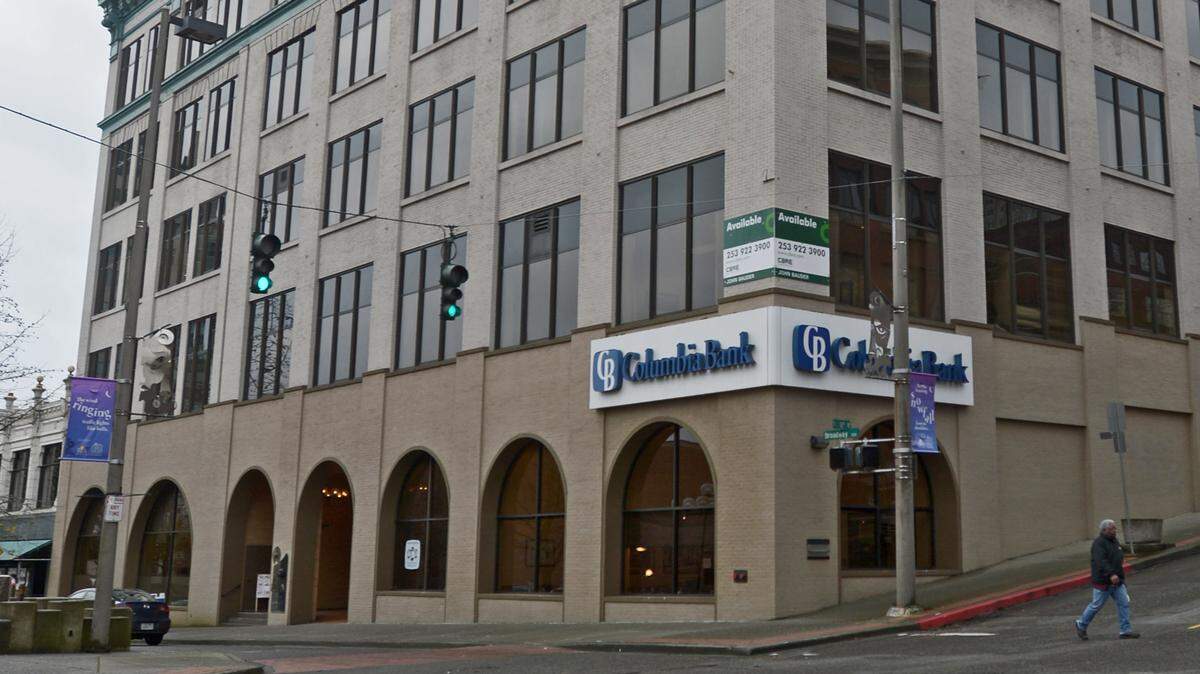
There wasn’t much reason to expect that a modest operation like Columbia Bank would escape the fate of so many others, eventually being picked off by one of the majors. But 25 years later, here is Columbia Bank, with 155 branches in three states, $12.6 billion in assets and more than 2,000 employees.
This trip down memory lane is prompted by Columbia Bank’s announcement of community donations to commemorate its 25th anniversary. Actually, it’s sorta, kinda the bank’s 25th anniversary, because Columbia’s history is a bit tangled and complicated, with multiple dates (according to a Security and Exchange Commission 10-K form for 1996) from which to pick a starting point.
Was it 1988, when Columbia Banking System was formed for the acquisition of a small savings bank? Was it 1990, when an investment group headed by Arne Espe acquired interest in a federally-chartered bank in Longview? Was it actually 1993, a year that saw an initial public offering of stock, a corporate reorganization and the creation of a state-chartered bank by the name of Columbia, and the move to Tacoma? Or was it 1994, when …
Never mind.
Round-number anniversaries aren’t meaningful in themselves anyway; more important is where a company wound up after those 25 years, and how it got there. Columbia Bank’s strategy was born of the industry’s tumult at the time of its founding and was clearly spelled out in that 1996 SEC filing.
“Management believes the ongoing consolidation among financial institutions in Washington has created significant gaps in the ability of large banks operating in Washington to serve certain customers, particularly the company’s target customer base of small and medium-sized businesses, professionals and other individuals,” the document says. “The business strategy of the company is to provide its customers with the financial sophistication and breadth of products of a regional bank while retaining the appeal and service level of a community bank.”
Formulating a strategy is one thing; successfully executing it is another, as demonstrated by another round-number anniversary involving a local financial institution — it’ll be 10 years next month since the demise of Washington Mutual.
The strategies had some differences — WaMu wanted to be a coast-to-coast consumer banking company — but there were some common elements, with growth a goal and acquisitions a component of achieving that growth.
Columbia’s not-so-secret sauce was the local experience and connections of its executives and bankers to recruit customers who felt cut adrift by constant churn at bigger banks (“I keep having to train a new banker” was a common lament among business owners at the time).
Whether it was under Espe and Bill Phillip, the latter with more than 40 years at Puget Sound Bank, or later Melanie Dressel, Columbia grew more slowly than it might have with a strategy of opening branches as fast as possible and doing as many deals as possible. But unlike those chasing a “grab as much growth as possible,” it’s still around.
In the process, it and a handful of other banks — Umpqua, Banner, Heritage (which this year acquired a small bank named Puget Sound) and Timberland among them — are filling that middle-of-the-market segment left vacant with the acquisition of the original Puget Sound Bank and its peers.
That Columbia is still around to celebrate an anniversary is a good thing for Tacoma, which benefits from having a large-ish publicly traded bank headquartered here, in everything from employment to civic involvement of its executives. The prospects for keeping Columbia are a lot brighter than 25 years ago. The big banks aren’t throwing bags of money at any institution with a “For Sale” sign on the lawn.
So long as Columbia and its investors see greater value in remaining independent, and as long as there’s still a place for a middle-market regionally based bank, Columbia will be around to mark more anniversaries — from whatever date and for however many years it chooses to count.
This story was originally published August 25, 2018 at 8:00 AM.