
What Amazon’s abandoning New York says about incentives ... and what it doesn’t
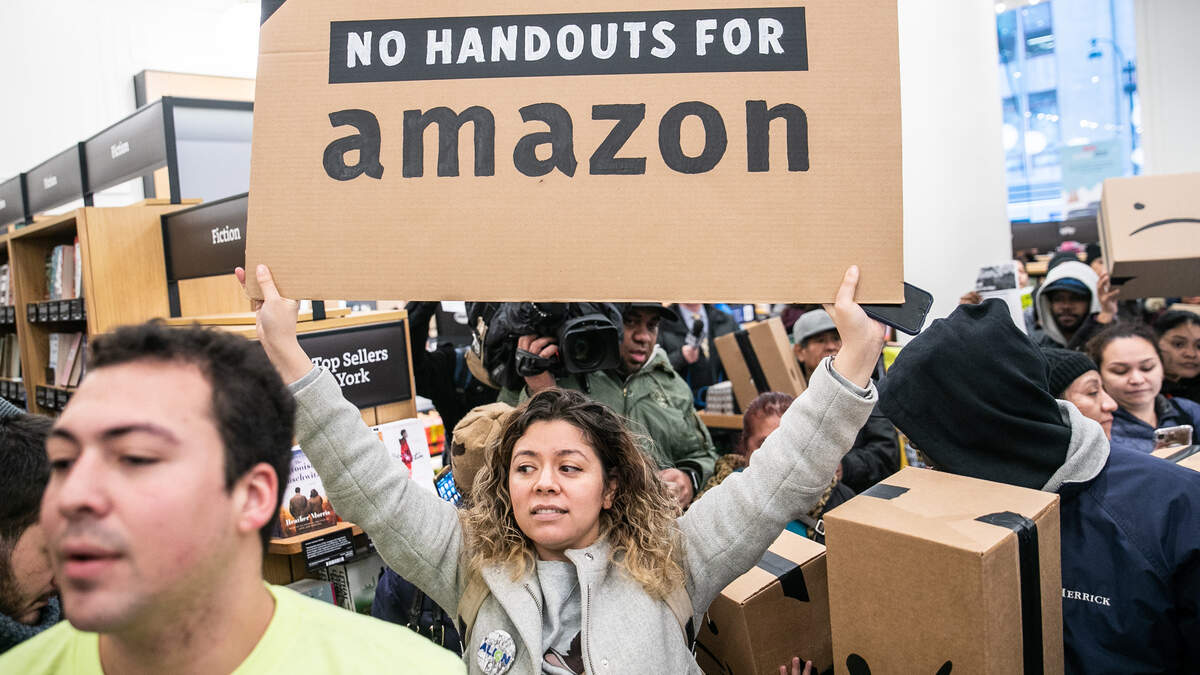
Some further thoughts on the Amazon-New York imbroglio — we’d say final thoughts, but as we’ll see, this one ain’t going away anytime soon:
▪ Whatever else is said about who won or lost or What It All Means, remember this —Amazon will be just fine without New York. New York will be just fine without Amazon.
▪ New York was a weird pick for HQ2, at least to judge by the selection criteria set forth initially by Amazon. If the idea was to pick a town generating a lot of young tech talent and which would be an attractive and reasonably affordable place to live, New York wouldn’t make the grade. The universities there aren’t known as tech hubs, and even at the salaries Amazon said it would be paying, New York is about as pricey a place to live as it gets.
If academics were all that mattered, Boston would have been a runaway winner. If academic resources combined with nice places to live were what counted, Amazon could have gone with Raleigh, Pittsburgh or Austin. This is just a wild guess, but there must be more than a few college grads not clamoring to be stuffed into New York (or Silicon Valley, for that matter), who are perfectly comfortable staying close to home.
Northern Virginia is no tech-academic hub either, but it makes up for that deficiency in one key way — proximity to government power and money.
▪ Those claiming victory over Amazon are exulting that now they can spend the $3 billion in subsidies on their own priorities.
Well, um, no. Not exactly.
This confusion arises from a lack of understanding about the types of and differences between breaks, credits, deferrals, abatements, subsidies, infrastructure and facilities deals and incentives used in economic development.
Amazon wasn’t getting a check for $3 billion from the city and state of New York. The verbiage in the original press release isn’t clear, but there is mention of a direct $325 million grant “based on the square footage of buildings occupied in the next 10 years.”
Amazon’s opponents and critics are right on that point. It doesn’t need or deserve getting cash from the city or state.
But much of the total package’s value was to come from reductions on taxes owed should it hit certain employment targets. That’s money that doesn’t exist now and won’t exist now that Amazon isn’t building HQ2 in New York. Chasing away Amazon didn’t free up billions to spend on other things.
▪ Are cities, states and regions wrong to offer those kinds of breaks? There’s the nub of the debate. The free-market purists argue (with considerable philosophical merit) that business should make it or fail on its own and that government should not be picking winners or losers, especially at the expense of those not getting freebies. Business, naturally, will take whatever it can get for free.
In between those polar opposites is a mushy middle tinged by varying measures of optimism rationalization and realism — everybody does it, some regions really need the help and properly structured incentives can generate far in excess of what they “cost” (that was New York’s argument, anyway).
▪ If regions and states are wrong to offer economic-development deals, then this region and state are among the worst offenders. Charts of the biggest incentive packages in U.S. history include several entrants for Boeing and Washington state.
If you haven’t had enough of the debate over subsidies and incentives generally and to Boeing specifically, you’re in luck. When Boeing gets around to making a decision on its middle-of-the-market plane, and a 737 successor after that, the competition for those projects will be fierce. The rejection of Amazon by New York has emboldened some politicians to proclaim the end of any handouts to business. We’ll see how that brave talk holds up when Boeing starts dropping hints about placing its next plane project in South Carolina or another state with few qualms about writing lavish incentive deals.
▪ Here’s a news item that illustrates the points that the structure of incentives matters more than their size, and that no matter how generous, they won’t help a company with fundamental problems in its business. General Electric, which moved its headquarters from Connecticut to Boston, is downsizing its plans for an 800-employees campus; instead of building its own office tower, it will be leasing space sufficient to house 250 employees. It is also handing back to the state of Massachusetts $87 million in incentives it had received.
Benchmark-based incentives have been a hot topic every time Boeing projects have been debated; expect to hear plenty of mentions of both Amazon and GE when it’s time to discuss the 797.
This story was originally published February 23, 2019 at 8:00 AM.