
The future of Tacoma’s Click network is unclear as giants Netflix and Disney + battle
How’s your entertainment/communications/information budget looking these days?
Maybe you don’t think of that as a line item in the household budget, the way you do mortgage or rent, groceries, utilities and car expenses.
Perhaps you should. Between what you’re spending for an internet connection, cell phone service, a landline phone (for you few souls who still have one), cable TV, music and video streaming services, newspaper and magazine subscriptions (print or digital), it’s a sizable chunk of change, and a much more significant part of personal finances than it was for individuals and families a few decades ago.
And there are big shifts coming within that budget, as two recent stores — one national, one local — illustrate.
The big national story is Disney’s launch of its own video streaming service, called Disney +, encompassing its own extensive back catalog of titles as well as such franchises as Star Wars, Pixar and Marvel. A higher-price service includes Hulu and ESPN.
Disney’s splash is already sending out ripples across the video-streaming waters.
Disney has been pulling many of its titles off rival services like Netflix. Disney movies have also disappeared from Hoopla, the movie streaming service offered by public library systems including Tacoma (Pierce County dropped it due to increasing costs).
Disney’s move isn’t touching off a restructuring of its industry, it’s merely continuing a trend that has been at full throttle for several years. With Netflix and Amazon and television networks and YouTube and a host of other providers offering paid-subscription streaming services, Americans are going through as revolutionary a change in what video content they consumed and how and when they consumed it as they did when they moved from over-the-air broadcasts to cable, and then added VCRs and DVD players.
The loser in that revolution is the traditional cable model (a category into which we’re lumping satellite services), which is hemorrhaging market share and customers. The research firm Kagan (a unit of S&P) reported this month that “traditional multichannel subscribers” (cable, telco and direct-broadcast satellite) fell by nearly 1.9 million in the third quarter, eclipsing the previous record for losses, set in the second quarter. For the last 12 months, the category has lost more than 5.8 million subscribers, a 6.4 percent year-over-year drop.
The cable industry has only itself to blame.
Its adamant refusal to offer a la carte services, in which customers picked and paid for only the channels they actually wanted and watched, motivated them to seek more affordable alternatives; the emergence of content aggregators like Netflix that made binge-watching possible gave them those alternatives; and improvements in broadband technology that allowed them to stream shows without frustrating hiccups made those alternatives viable choices.
But don’t weep too heartily for the cable companies.
Netflix, Disney +, et al, have no way to get into your house on their own.
They need a high-speed, high-capacity connection to your home, which the cable companies just happen to have. If consumers are going to consume more of their video content via internet-based services, rather than through a channel-aggregation service like the traditional cable model, fine, they’ll pivot to being predominately broadband providers and let someone else deal with the hassles of negotiations and fees for carrying various channels.
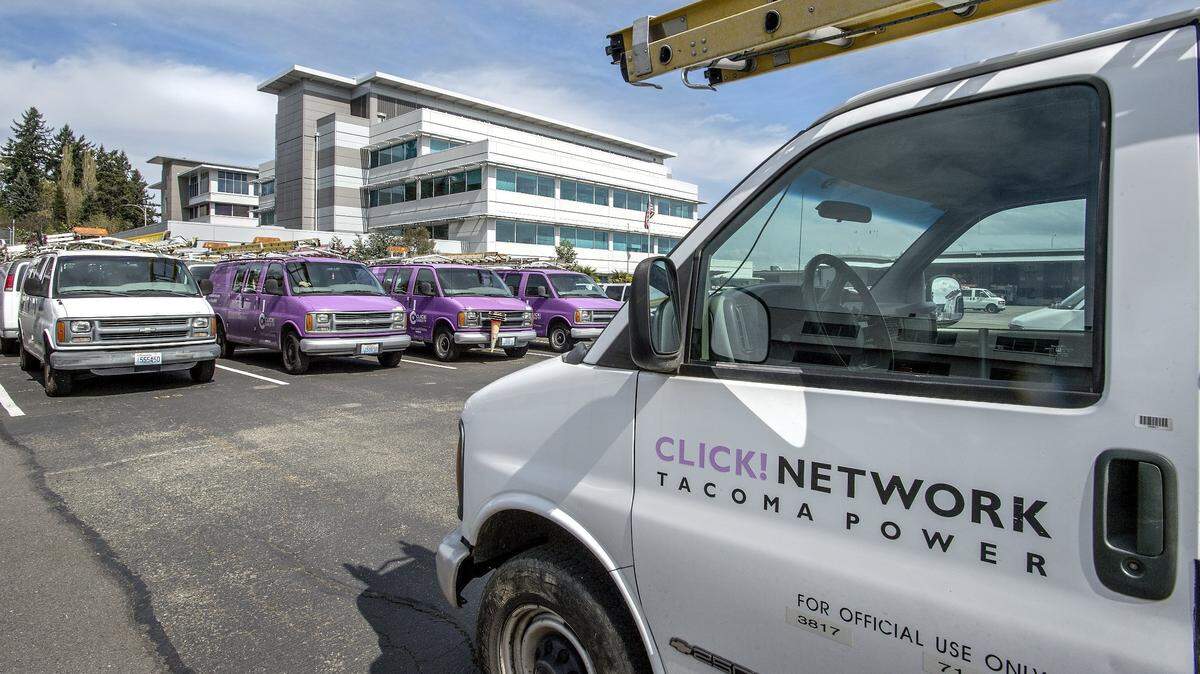
It’s that context of background and trend that helps explain the other recent significant story, Tacoma City Council’s approval of an agreement with Rainier Connect to offer video and broadband service over the city’s Click network. The city says the “retail cable TV and wholesale internet service has not been a financially viable enterprise for the City of Tacoma for several years.” Now it’s up to Rainier Connect to figure out what model works financially.
That brings us back to the matter of your household budget for entertainment/communications/information.
To function in today’s society, an internet connection is close to a necessity, not quite to the level of water, electricity or natural gas, but certainly not a luxury. Entertainment, however, is most decidedly in the category of discretionary spending. Just as few customers in the era of the cable TV box and the satellite dish ordered the full menu of channels and all the add-ons, so, too, are few consumers in the broadband video era likely to purchase every service available.
That means a shakeout is coming, and the ones most likely to get shaken into irrelevance are the smaller players that don’t have a distribution arrangement with one of the big players.
Even among those big players there’s going to be some pushing and shoving for market share. Household budgets are not limitless (and prices are likely to head in just one direction); only the wealthiest will sign up for Netflix, Amazon, Disney and Apple. Those large well-established brands will still have to battle it out with pricing and promotion, exclusive original content and libraries of older movies and TV shows.
Things are sure different from the days when home video consumption meant whatever you could pull in with the rabbit-ears antenna on top of the set. Today’s viewer enjoys the luxury of being able to access a near-limitless abundance of movies, TV, concerts, sporting events and other educational and entertainment programming.
But luxury and abundance are not free, and as consumers sift through the pitches and offers and assess their own financial status, they’ll have to ask themselves just how much that wealth of content is worth to them.