
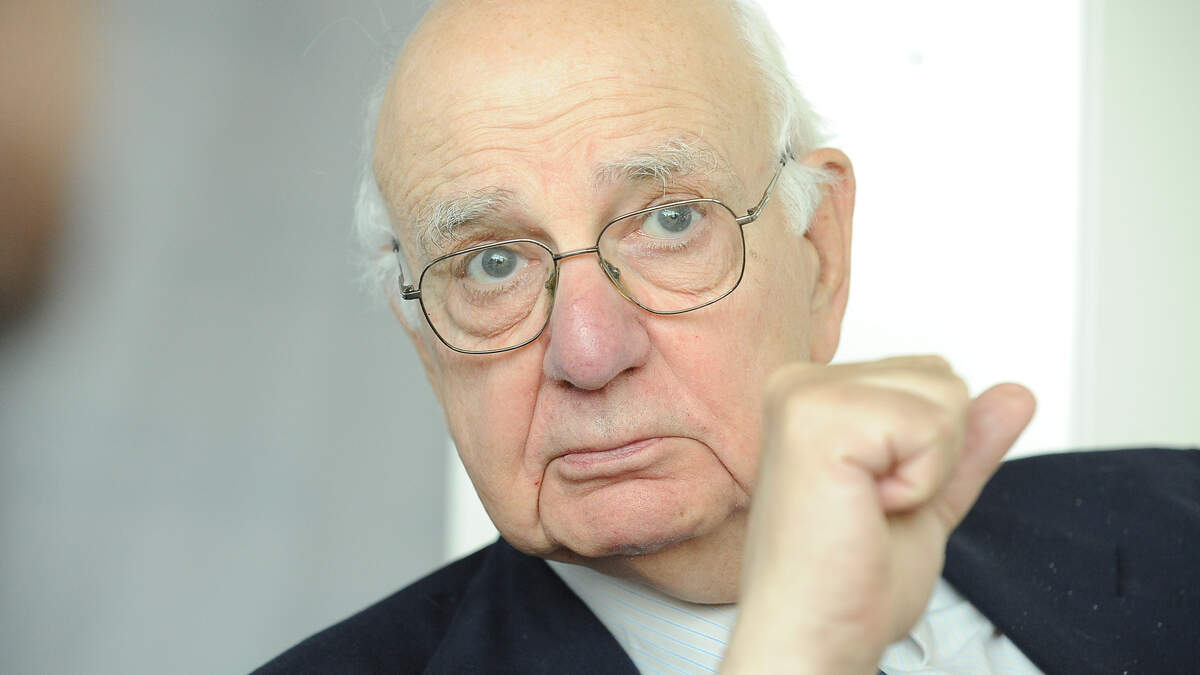
Inflation’s not really a worry today thanks to late Fed chairman Paul Volcker
Yes it’s our end-of-the-year inventory clearance sale on business and economic topics. We’re offering some great deals on remaining 2019 issues, so we can make room for the 2020 models. So hurry on in. These won’t last:
▪ On the list of economic worries young Americans have today — student debt, job insecurity, housing prices, recession — inflation and interest rates rarely show up.
Switch the calendar from 2019 to 1979, though, and those two topics would dominate the discussion. The country was mired in a condition known as stagflation — little growth but high inflation — and gripped with pessimism about its long-term future (a decade like the ‘70s will do that to you).
The man most credited with breaking inflation was then-Federal Reserve chairman Paul Volcker, who died last week. Volcker attacked inflation with interest rates and monetary-supply policy. Mortgage interest rates reached the high teens, and the economy lurched into recession, but half a decade later inflation appeared to be tamed, interest rates were falling and the economy was growing.
It’s easy to oversimplify stories like the American economic upheaval of the late ‘70s and early ‘80s, and a lot of the messy complicating details (in this case the rise and collapse of oil prices) tend to get obscured or ignored. What is most apparent about the Volcker saga is how dramatically the agenda of issues can change. Inflation and interest rates were huge, maybe the most important issues of the 1980 elections. They’ll get nary a mention in 2020.
▪ Following up on last week’s musings about the dearth of publicly traded companies in the South Sound region, a reader makes the important point that there’s a correlation between the number of companies and patent filings. “The obvious — and too-simple — logic: invent something, build a company around it, go public to grow.” Pierce County doesn’t have much of a base of patent-holders, he adds. “Looking for the root cause, I speculate it’s our lack of a research university.”
True, and what’s worse is that the presence of a research facility is the catalyst and engine of a self-perpetuating machine. The research institution turns out ideas and entrepreneurs to turn them into products and companies, which in turn spin out more ideas and people to commercialize them, and on the cycle goes. The Seattle region benefits from having a full portfolio of research entities (not just the UW) and multiple generations of companies that have begat still more companies. Its political morass notwithstanding, the city appears poised to continue that cycle.
Replicating that in Tacoma and Pierce County will be tough without entities like the UW, Microsoft, Amazon, Paccar, the various Paul Allen ventures and an entire ecosystem that churns out the makings of more companies. Short of having such an institution miraculously drop into its civic lap, the community will have to slowly, arduously nurture the creation of companies capable of forming that base — and then somehow hold on to those it does.
▪ More shakeup in the crowded — maybe too crowded — and highly competitive regional grocery market. Good Food Holdings, the parent of Seattle-based Metropolitan Market and two upscale California chains, is purchasing New Seasons Market, a Portland grocery chain with stores in Washington.
As part of the deal, Metropolitan will take over the New Seasons store on Mercer Island. New Seasons also will close a store in the Ballard neighborhood of Seattle and won’t open a planned store in Seattle’s Central District.
At first gulp that wouldn’t seem to be a transaction with much local implication. Just wait. All the players are circling one another, staking out positions in markets where they’re not, and Tacoma and Pierce County are among those where many of those chains aren’t present or have minimal presence.
Metropolitan Market, for example, has just one store in the local market, in Proctor. Under the new ownership structure, it’s to be Good Food Holdings’ exclusive regional brand. If it’s looking to grow, it might have an eye on the South Sound.
PCC, meanwhile, has ventured as far south as Burien. That leaves a lot of real estate into which to expand. But in the natural/organic foods sector and the cooperative model, Central Co-op is already here, with a Tacoma store that opened earlier in 2019.
Whole Foods has one local outlet, in University Place. Its parent, Amazon, has a huge fascination with the grocery business, trying multiple approaches to build market share.
At some point we’ll see some of those test this market. And it’s not as though the established, middle-of-the-market players from Fred Meyer to Safeway are going to wait around to see what everyone does.
Here’s one other interesting aspect of all this market churning. We tend to think of the grocery business as both local and national — we have our favorite local outlets of what are national chains. But the business is gaining an international flavor as well. Good Food Holdings is owned by a South Korean company, Emart, which acquired it about a year ago. Trader Joe’s is owned by the German family that also owns Aldi, the discount chain making a huge expansion across the U.S.
Thin margins, high capital, real estate and labor costs, too many competitors chasing the same dollars — there are lots of reasons why businesses might be wary of the grocery business. But everybody’s got to eat, and as long as they do, it’s a market too large and tempting for companies to ignore. The local food shopper can expect to see no shortage of companies trying to snare more of their food budget, and if those lures come in the form of lower prices and better quality, more power to those consumers for reaping the benefits of that competition.