
Competition, not just COVID-19, eroding business at Tacoma and Seattle ports
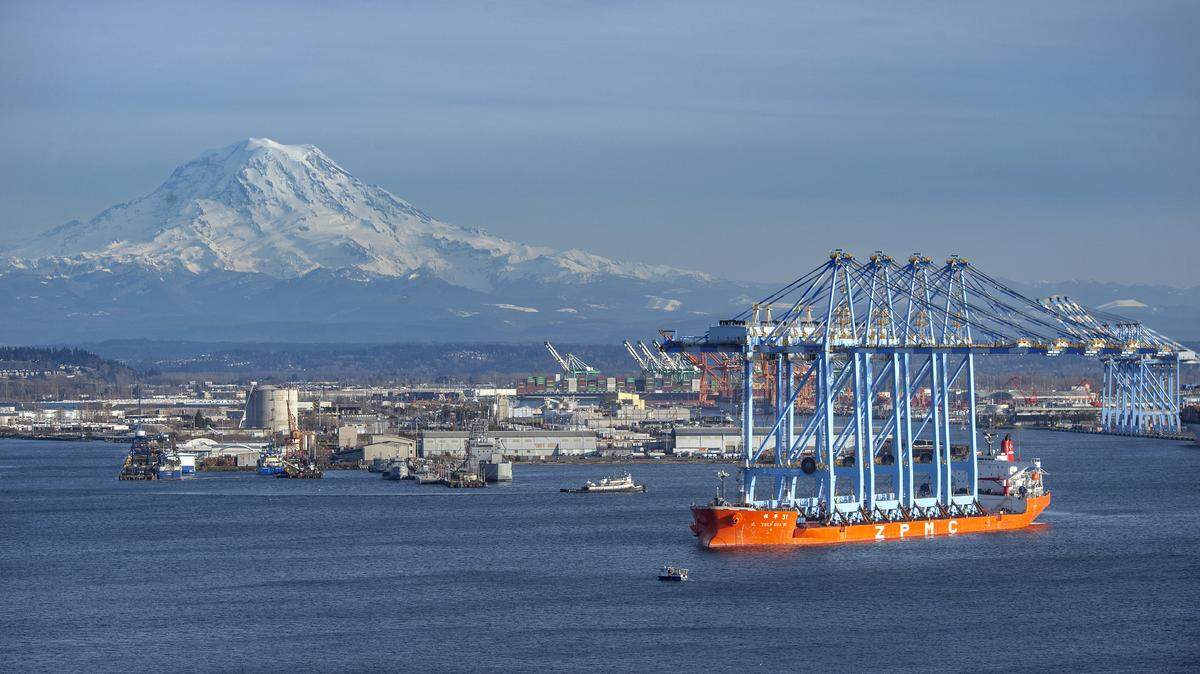
Remember those happy carefree days of long ago — like last year — before the arrival of the coronavirus? Whatever did we worry about back then?
Actually, we worried about a lot of things, things that didn’t go away just because COVID-19 showed up and we forgot about them while spending our time fixated on more recent, bigger problems. A few of them have even managed to elbow their way back into the limelight.
Case in point: the competitive position of West Coast ports, including Tacoma and Seattle, and their future.
For several years warnings have been sounded, including in this column, that a combination of the expansion of the Panama Canal, allowing bigger container ships to reach Atlantic and Gulf ports and increase competition from the Canadian West Coast ports of Vancouver and Prince Rupert, threatened to take cargo volumes and market share away from American West Coast ports.
This summer, several maritime organizations are renewing their warnings that without some changes that erosion of market share will continue.
The latest development is the release of a study conducted by Mercator International, a Kirkland-based global transportation consultancy, for the Pacific Maritime Association, which represents shipping lines and terminal operators.
More than 45 percent of the U.S. West Coast’s intact (i.e. not local but moved directly from ship to rail) import-container traffic “is at risk of diversion to B.C. ports over the balance of this decade, due to continuing route cost disadvantages, and considering planned long-term infrastructure improvements in those two ports,” the Mercator study says.
Mercator said U.S. West Coast ports are particularly vulnerable for traffic headed into the Chicago and Memphis markets “because of their direct connection to the British Columbia ports by the two primary Canadian railroads. For intact intermodal cargo, the British Columbia ports have significant route cost advantages as high as $600 per container over U.S. West Coast ports. This cost advantage is due to significantly lower rail rates charged by the Canadian railroads, as well as lower terminal costs to move the containers from ships to trains. The Canadian ports’ cost advantage is even greater due to surcharges imposed at U.S. gateways, including the Harbor Maintenance Fee applied to carriers at West Coast ports and a transit fee for cargo in Southern California to access the Alameda Corridor.”
That follows on a letter sent by the Pacific Merchant Shipping Association and other trade groups to California Gov. Gavin Newsom and other politicians in that state, asking for help in cutting costs and retaining market share. In particular the association asked that California “re-examine the state and regional regulations that are creating a disincentive to use California gateways,” including environmental rules that are “backfiring and encouraging more greenhouse gas emissions by sending more business to ports that are far behind California’s climate program.”
The association did its own study on container shipping market share, released in June, which warned that “in Washington State, loss of intermodal import cargo threatens the ability of growers and manufacturers to access foreign markets for their products. Because port call costs, including rail, pilotage, the Harbor Maintenance Tax, and others are more competitive in Canada, bringing market share back to the Pacific Northwest is a steep hill to climb.”
That’s not the only competitive headache the Puget Sound ports face. In its current issue, Trains magazine reports that shippers are taking advantage of direct access to East Coast ports, either through the Panama Canal or the Suez, to reach markets east of the Mississippi. The story cites one study predicting that the majority of containerized cargo from Asia will arrive at East Coast ports by 2024.
Container volumes constitute a tricky data set from which to draw conclusions. Economic conditions, trade policy disputes, fuel costs, labor disruptions either at the ports or on the rails, even weather, can skew the numbers. A hugely disruptive force like the pandemic makes forecasting even tougher. The Northwest Seaport Alliance says total overall container volumes for the year through July were down 18.2 percent from the same period of 2019.
But the trend line over time and excluding the influence of COVID-19 is real, as are the consequences for the Puget Sound region if it continues.
It’s not just a matter of concern for those who have direct employment in the global supply chain. The ports’ financial performance also affects what taxpayers pay to subsidize their operations. Long-term container volume trends affect commercial real estate markets; if you’re not handling as much cargo, especially the stuff that gets unloaded, repacked and sent on to domestic destinations, then you don’t need as much warehouse/distribution space.
Public officials love to talk about the region’s ports and their economic significance, but this isn’t a piece of that story they will be eager to confront. The demand from ports for more infrastructure spending to counter what Canadian, Gulf and East Coast ports have been spending comes at a time when everyone is asking for a handout. Those who have staked political platform on environmental and climate-change planks will be resistant to calls for relaxing regulations. Labor unions don’t want to see their jobs go away, but they’ll also be suspicious of efforts to reduce wages and benefits using port competitiveness as an excuse.
Indeed, they could just pledge to keep monitoring and studying the problem in the hopes that a solution magically materializes to stem the erosion of the West Coast port traffic. Contrary to the popular saying, hope is a strategy. It’s just not a very reliable one.