
Bill Virgin: Drones for your deliveries? Probably not
The modern American freight logistics network is really something of a marvel. It moves raw materials to the producers, refiners and processors, then on to the distributors and retailers, efficiently and expeditiously, largely without notice. It’s far more noteworthy when the system doesn’t work than when it does. Shortages, an unfortunate feature of everyday life in some countries and economies, are largely unknown here.
With a system like that, you’d think there wouldn’t be much to quibble about, much less try to fix. And yet there is one nagging issue that continues to bug business to the point they’re willing to spend considerable time, attention, money and effort to study and develop even the most seemingly outlandish solutions.
It’s the “last mile” problem.
For all the efficiencies of the logistics network, there’s still the little matter of getting that product to the consumer. For years businesses didn’t consider that a problem. If consumers wanted a product right now they could haul themselves to the store and get it. Or they could resort to catalogs and mail order and wait for the mail carrier to deliver it.
The system has been refined over the years, especially with the latter option. The emergence of alternative delivery services such as FedEx has reduced the wait time from weeks to days, sometimes to a single day.
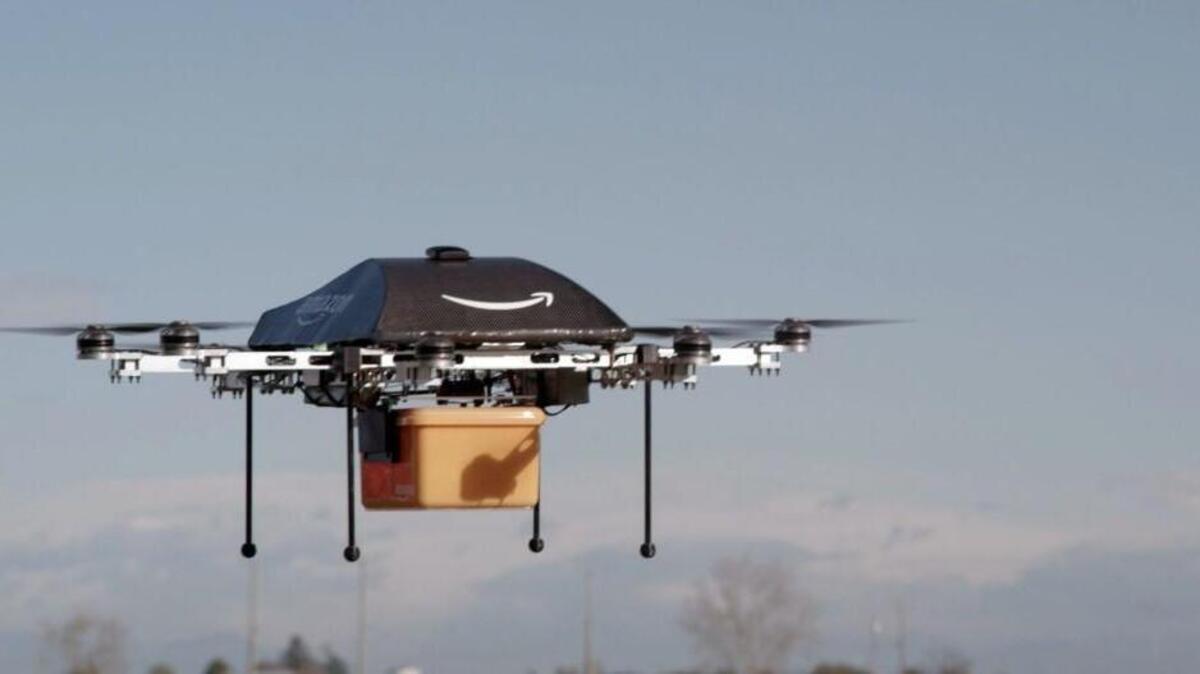
Apparently that’s not good enough. Retailers want to expand the types of goods they deliver to consumers (such as groceries), they want to shorten the delivery time (down to hours) and they want to do it with new technologies that cut out the human element while also avoiding ground-level snarls (using drones).
This week that officially launches the holiday shopping season is a good time to think about implications of the trend. Not that you need to — capital investment and regulatory changes needed guarantee that you won’t see the shift this year, or next year, or maybe not next decade. You’ll still be getting stuff the same way as last year and last decade — by covering the last mile yourself, or having someone in a truck bring it to you.
Retailers, however, are thinking about it, seriously. Amazon has been testing drones in the state. Walmart, like Amazon, has applied to the Federal Aviation Administration for permission to do outdoor testing, according to news reports. Google says it could have a package-delivery-by-drone service by 2017. Even pizza chain Domino’s has played with the idea.
Drones are a remarkable technology, and we’re in the earliest days of seeing how that technology can be put to work. BNSF Railway has announced a test project with Insitu, a Boeing subsidiary based in Bingen near White Salmon, to use drones to inspect miles of track in remote locations.
But in the case of consumer package delivery, drone technology looks like a solution in search of a problem, and an impractical and expensive solution at that. Aside from airspace congestion with all those drones flying around and the hazards they pose, is the public really clamoring for delivery within minutes for most of the stuff they buy, and is it willing to pay for a pricey way to accomplish that? A pizza? Sure, that you want now. A shirt you just ordered online? Eh, you can wait a day or two. Drone delivery may cut out the driver (and the tip for the pizza delivery driver) but someone’s still going to get paid for flying that aircraft, even if they’re on the ground rather than in a cockpit.
Here’s a prediction I’m willing to make — delivery drones will prove to be too expensive and cumbersome to be practical for the consumer market, where small quantities have to be delivered to thousands of locations.
Here’s another: There’s a different market for an application of a related but slightly different technology — autonomous (driver-free) vehicles used by business to move materials, parts and products to production, distribution and retail locations.
As you sit in your car some morning on the Interstate 5 parking lot, take a look at all the commercial trucks accompanying you, each with a driver also idled in traffic. Now imagine many of those vehicles operating on programmed delivery routes, without the meter running for a driver. Imagine those driverless vehicles operating at night, when highways are less clogged.
If autonomous vehicles are going to be a real thing, business is likely to be the biggest and earliest adopter for serving other businesses. They’ve got the money and scale to do it, moving large quantities over limited routes, a far more efficient model than consumer delivery. It may even turn out that aerial drones work well in some business applications.
That still leaves you, the consumer, with the issue of how you take physical possession of the things you’ve purchased. Most likely you’ll be dealing with it the way you have for years — unless you’re willing to turn the driveways of your neighborhood into the equivalent of the runways of Sea-Tac Airport on the day before Thanksgiving.
Bill Virgin is editor and publisher of Washington Manufacturing Alert and Pacific Northwest Rail News. He can be reached at bill.virgin@yahoo.com.
This story was originally published November 21, 2015 at 4:16 AM with the headline "Bill Virgin: Drones for your deliveries? Probably not."