Tacoma home prices, rents keep climbing as city seeks more housing alternatives
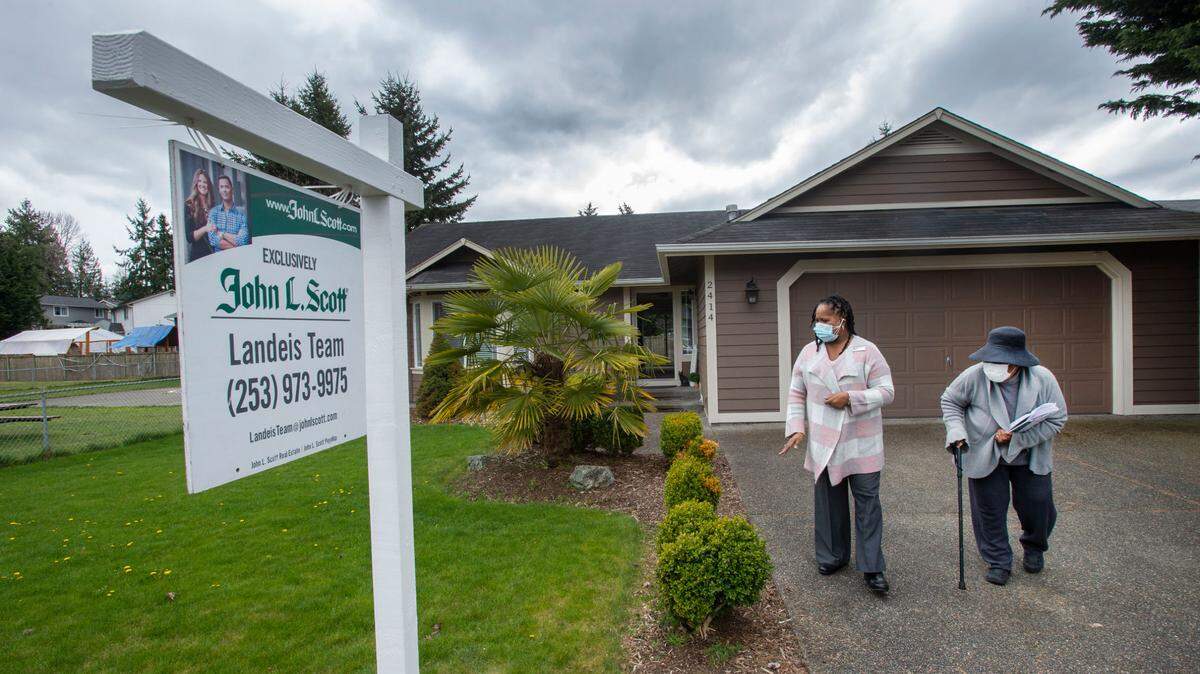
As Tacoma considers changing its single-family zoning to allow for more kinds of development, it’s worth considering how home prices have skyrocketed.
The proposed Home in Tacoma project, now facing public scrutiny before City Council action in June, would replace the current single-family zoning with new designations to allow more types of housing to boost supply of the “missing middle” of housing stock — housing that falls between single-family dwellings and multifamily mid-scale or higher density buildings.
Missing middle could include duplexes, triplexes, fourplexes, cottage homes and more.
For now, single-family dwellings dominate land use, and inventory for that remains low for those looking to buy.
Pierce County last year saw the biggest single-year increase for single-family median home prices since 2005, at more than 17 percent, according to data provided to The News Tribune recently from John L. Scott Real Estate and drawn from Northwest Multiple Listing Service figures.
The county since 2005 has seen increases annually except for 2008-2009, and 2011.
Within Tacoma, double-digit percentage increases in median home prices since 2018 have been widespread, including Browns Point (47.48 percent), Southeast Tacoma (42.75 percent) and South Tacoma (35.50 percent), as well as Central Tacoma (35.85 percent).
Rents in Tacoma have increased markedly, too.
Year-over-year rent growth in Tacoma is at 6.5 percent, according to Apartment List data, compared with 2.3 percent last year, with median rents at $1,117 for a one-bedroom apartment and $1,465 for a two-bedroom.
Apartment List’s April rent report, released March 29, showed rents in Tacoma rising 1.5 percent month-over-month, compared with 1.1 percent nationally. That growth ranked No. 14 among the nation’s 100 largest cities.
At the same time, the report notes that Seattle saw a 19 percent year-over-year decline in its rental rates, the third largest drop in the nation.
The rent data tracking firm points to the ripple effects of the pandemic, including loss of jobs and/or people relocating.
“These sudden changes to budgets and preferences led to a convergence in rental prices across the U.S. — the most expensive markets saw rents fall rapidly while a number of more affordable midsize cities experienced accelerating rent growth,” according to its national rent report.
According to a separate analysis from Apartment List, the Seattle metro (including Tacoma as defined in the U.S. Census designation) showed the fifth largest segment among 100 largest U.S. metros of work-from-home jobs at 38.7 percent among jobs in the area, with median income of $81,000. That compared with $44,000 median income for the metro’s non-remote-friendly workforce.
Also, 9.8 percent of Seattle workers were “fully untethered,” meaning not tied to home ownership or family obligations, with median income at $62,000.
Tacoma’s affordability pressures ramped up in recent years as more people flocked from Seattle to Tacoma looking for a break in home prices.
More recently, housing marketed specifically for those priced out of Seattle has taken shape, including a new development of rental homes in Gig Harbor.
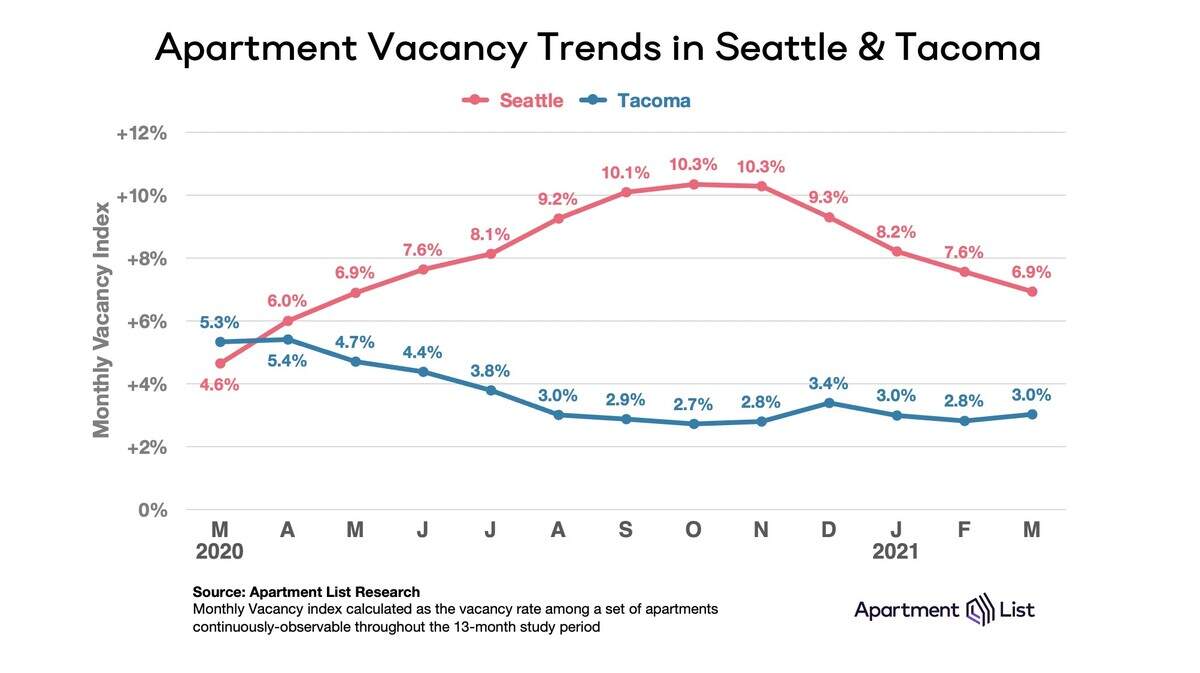
Rental availability has tightened, too.
Rob Warnock, senior research associate with Apartment List, told The News Tribune via email in response to questions about vacancy rates, “In Seattle, vacancies rose steadily throughout 2020 but have since come down quite a bit.
“This lines up nicely (and inversely) with rent prices, which fell dramatically until the new year, and have since started to rebound. That said, year-over-year, Seattle rent prices remain down 19 percent, while the vacancy index remains 2.3 percentage points higher.”
He said in Tacoma, it’s the opposite story:
“Tacoma’s vacancy rate shrunk during the pandemic and accelerated pre-existing rent growth. As of this month, year-over-year rent change now stands at +6.5 percent.”
He added, “Seattle & Tacoma are consistent with a broader trend we saw in 2020 in many large West Coast markets: Rents falling in core expensive cities while continuing to rise in surrounding, relatively-affordable cities.”
Stories of affordability woes among homebuyers in Tacoma are common.
Jen Russell, a broker associate with the John L. Scott Tacoma-University Place office, told The News Tribune in a recent interview that it’s not unusual for clients to have to make upwards of eight different offers on homes, with sales locally going $30,000-$50,000 over list price.
“Every listing is a multiple bid,” she noted. “If you don’t go and run out to see it the first weekend, it’s not going to be there.”
“It’s great for sellers,” she added. “People are waiving inspections. It’s just ridiculous.
“If you’re a first-time home buyer who doesn’t have a down payment, or your own closing costs, then you’re just not even in contention.”
Real estate company Redfin placed Tacoma at the top of markets in the country for its speed of home sales in January, the same distinction it held the previous January, before COVID.
Half of all homes for sale in Tacoma went pending in just seven days in January, down from 23 days a year earlier, according to Redfin’s data.
A critically low amount of inventory is keeping sales at “frenzy” levels, a situation the area has been stuck in since the housing comeback after the housing market collapse in the 2000s.
A recent report from the Urban Land Institute Terwilliger Center, a nonprofit research and education organization, released a series of affordability reports as it pertained to the pandemic, particularly to illustrate what workers who’d been working on the frontline throughout could afford.
Among the work groups it used as examples: nurses, delivery and long-haul truck drivers, and those who worked in retail or service industries.
Of those, it determined that “no single-income household with the occupations in the data set could afford all housing types in all regions in the Index data set. Only a geriatric nurse could afford each housing type in more than half of all regions. For all other occupations at the median wage, ownership of a median-priced home (without cost burden) is out of reach in the vast majority of or all regions.”
It also looked at which markets provided “a range of housing choices attainable to the regional workforce, with an intentional focus on issues related to racial, socioeconomic, and intraregional disparities and inequities.”
It listed the Seattle-Tacoma-Bellevue market among just nine metros in the nation struggling with affordability in housing but “perform comparatively well on most equity measures.”
This story was originally published April 4, 2021 at 5:00 AM.