
‘In harm’s way.’ Tri-Cities agricultural workers bearing heavy COVID-19 burden
Victoria Chavez walked the half mile on Memorial Day from her desk at an affordable housing complex for agricultural laborers to a Pasco hospital emergency room.
The 44-year-old mother had been experiencing some stomach issues and a rash. But over the weekend, her symptoms worsened.
“I felt that I was almost dying. I’ve never had problems breathing (before),” she said. “When I had to cough, it almost didn’t want to stop. I had to gasp for air.”
At the hospital, doctors told her she likely had COVID-19, which lab results later confirmed. Chavez’s symptoms weren’t severe enough to keep her in the hospital, so they sent her home to quarantine.
For five weeks, she was dehydrated, feverish, and alone. The simplest chores suddenly seemed impossible.
“I was like, oh no, I’m not getting in the shower — I’m going to end up in there dead and naked,” she said. Sorting clothes caused her heart rate to spike. “It just feels like your (head is) going to explode.”
Chavez is one of 7,400 Benton and Franklin County residents who have experienced a confirmed case of COVID-19 in the past five months. While the pandemic has affected the life of every American, Chavez knows firsthand that the coronavirus is not an equal-opportunity infection.
At the national, state, and county levels, the disease has disproportionately affected people of color, many of whom carry out essential duties, often without the necessary protections to keep them safe.
In Washington state, 43% of people who have tested positive are Hispanic, despite being 13% of the state’s residents.
Nowhere is the disparity more clear than in the state’s predominantly-Hispanic agricultural communities — the population Chavez serves at Sea Mar La Posada in the Tri-Cities.
In Benton and Franklin counties, Hispanic residents account for 33% of the population, but 45% of its coronavirus cases where race and ethnicity have been reported.
“We know with almost every health-related phenomenon, unfortunately our communities of color are always disproportionately affected,” said Dr. Amy Person, health officer for the bicounty health district.
The reasons for such health disparities are complex, but Dr. Person stressed that the increased risk of coronavirus in these populations is not tied to “inborn” traits. It’s linked to the social determinants of health — the particular conditions in which a person lives and works, which is shaped by things like wealth, education and racial discrimination.
People of color are more likely to struggle to access adequate healthcare, exercise opportunities and nutritious foods, said Jim Davis, CEO of Tri-Cities Community Health, a network of local clinics that serves low-income patients.
They’re less likely to be insured, and more likely to have no paid sick leave.
“It is not a level playing field,” Davis said.
Agricultural work in particular is designed for efficiency and seasonality — not public health.
Many seasonal workers live in close proximity in work camps, often sleeping in bunk beds. They travel to work together in tightly packed buses. And many agricultural laborers move around, following the harvest and potentially spreading COVID unknowingly as they go.
Once they’re at work, food processing workers often spend their days side-by-side on an assembly line. In the fields, laborers may work a quarter-mile away from the nearest hand-washing stations and portable toilets.
“This is going to be an area with a lot of cases,” Dr. Person said.
‘Essential workers’
In March, Gov. Jay Inslee announced that agricultural laborers were “essential workers.” But the governor did not release an agricultural safety plan for the industry until May 28, and those rules didn’t go into effect until June 3.
Companies are now required to provide employees with a clean mask and more hand-washing stations and ensure there is social distancing.
Even so, essential workers and labor organizers in Benton and Franklin counties say these rules have been difficult to enforce, and some employers are not always meeting these basic safety requirements.
“The fact (that companies) say they’re going to do this, doesn’t mean they’re actually going to do it — or they’re not going to make sure workers are protected at the highest level,” said Jerry Garcia, vice president for educational services at Sea Mar Community Health Centers, a Seattle-based organization that owns Sea Mar La Posada.
In early June, suspecting a COVID outbreak at the Pasco complex, Sea Mar partnered with Tri-Cities Community Health to test about 143 residents and staff. The team identified 23 positive cases, all of whom were told to quarantine.
After the Sea Mar residents’ test results arrived, the Benton Franklin Health District conducted contact tracing, which aims to chart the path of a virus through the community by identifying every person with whom an infected individual interacted.
Based on that information, SeaMar concluded the outbreak “most likely originated” at residents’ work sites in processing plants and in the fields, Garcia said.
COVID fears
Elíodora Rojas De Moran, 73, was one of the La Posada residents diagnosed with COVID.
She thinks she got it in the community kitchen at La Posada, where dozens of agricultural laborers pass through day and night. At the time, she recalls some people were still not consistently wearing masks.
Rojas De Moran considered her symptoms mild. She experienced body aches and chills. But her fear of COVID — and the thought that she might infect her 79-year-old husband, Lucas Moran-Lulo, who tested negative — made her depression worse.
“I was shaking when I was told that I had it,” she said in Spanish.
Rojas De Moran cried frequently in quarantine. To keep themselves occupied, the couple colored, read and did crossword and jigsaw puzzles.
Even though they’re free to move around again, Rojas De Moran said she’s scared to go out to the grocery store.
Moran-Lulo, who comes to Pasco each year for seasonal employment at a packaging plant, said he hasn’t reported to work due to his wife’s fear of infection.
“We sleep with a mask, day and night,” she said.
Now they aren’t sure if they will be able to return home to Mexico in the fall as planned, fearing he will be infected with COVID during their travels.
Testing data
Even at job sites that take masks, social distancing and other safety precautions seriously, workers say they have suffered from a lack of transparency around the rate of COVID-19 transmission in their workplace, leaving them unable to assess their own risk.
They say the absence of information creates anxiety and encourages rumors to spread. But few companies have pursued widespread, on-site testing of their workforce.
The Benton Franklin Health District has not created a comprehensive list of on-site testing at agricultural businesses in the area.
Dr. Person admitted “one of the challenges we’re still dealing with is, there’s still some reluctance within facilities (to conducting testing).”
Early on in the pandemic, the agency released some information on outbreaks at individual facilities, such as nursing homes and the Tyson meat packaging plant near Pasco, where three employees died of complications from COVID-19.
About 12 percent, or more than 145 people, tested positive and the plant had to shut down for cleaning and to install more safety barriers.
But the negative effects of disclosing the outbreaks publicly “outweighed the positive effects,” said Kathleen Clary-Cooke, a public information officer for the bicounty health district. “Facilities didn’t want to work with us. They didn’t want to increase testing, because they didn’t want to end up on our list. It was counterproductive.”
The Herald asked about four companies linked to workers who commented for this story. Of those facilities, the health district said only one had conducted on-site tests: Gourmet Trading, a California-based company that packages asparagus in Pasco.
On June 9 and 10, Gourmet Trading tested 146 people. Results showed that 16 were positive and two were inconclusive. Combined with data from contact tracing and off-site tests employees did on their own, the company was linked to 43 positive cases, say health officials.
Early in the pandemic, Tri-Cities Community Health was unable to offer on-site testing to workplaces because it lacked the necessary resources, Davis said.
In March and April, COVID specimen collection kits and rapid analyzers weren’t available east of the Cascades because of the strain of the initial outbreak in King County. But the nonprofit clinic has since helped three Tri-Cities facilities, including Sea Mar La Posada, with on-site testing.
On July 8, Grimmway Farms, another California-based company that processes baby carrots in Pasco, conducted on-site tests with Tri-Cities Community Health. Of the 199 Grimmway Farms employees tested, 10 were positive for COVID-19.
Gourmet Trading and Grimmway Farms did not respond to the Tri-City Herald’s requests to talk about the issue.
On-site testing
Sean Gilbert, of Gilbert Orchards, which has farms or facilities in Grant, Yakima and Benton Counties, said he instituted social distancing and safety measures long before state law required it.
But Gilbert Farms, which was also linked to workers who commented for this story, has not conducted on-site testing at any of its worksites. Instead, the company has encouraged employees to seek testing if they have symptoms or a reason to believe they’ve been exposed.
Yakima Health District offered to conduct on-site testing at Gilbert Farm sites in Yakima County in May, but Gilbert said the health district’s plan made him uncomfortable.
“The way that they walked me through their offer, was that they would have the National Guard come to our facility” and test everyone, he said.
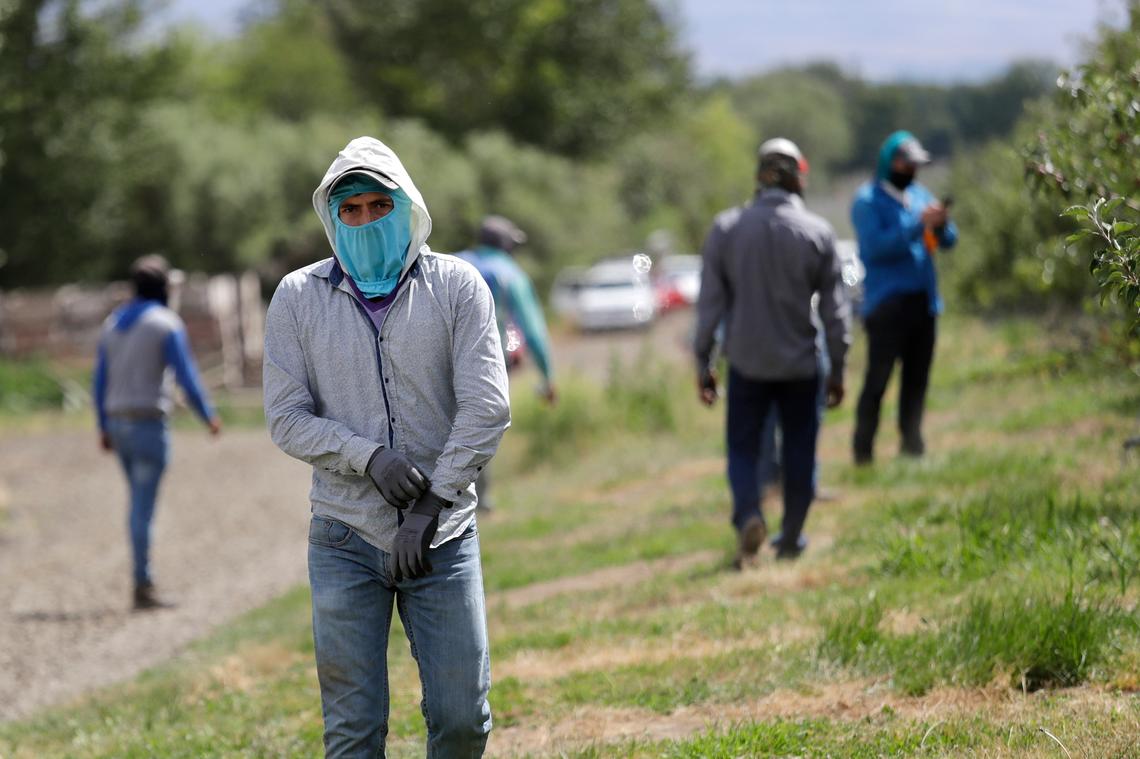
A spokesperson for the Yakima Health District said that, at the time, the National Guard was the only organization that could provide large-scale, on-site COVID testing. Now, the health district works with local healthcare providers to conduct such tests.
“It just seemed like a really tense process,” Gilbert said of the National Guard plan, and he worried it would scare employees.
To Gilbert’s knowledge, neither Adams county nor Benton-Franklin health departments have contacted his company about on-site testing, and he has not reached out to them.
Unpaid sick leave
For workers, a positive COVID test can have serious implications not just for their health, but for their finances.
“If you don’t work, you don’t get paid. And if you don’t get paid, you don’t feed your family,” said Erik Nicholson, vice president of the labor union United Farm Workers. “It’s that easy.”
In Washington state, employees earn a minimum of one hour of paid sick leave for every 40 hours they work. But most workers, especially seasonal laborers, can’t earn enough to cover a two-week quarantine or a prolonged sickness.
Just last week, Inslee announced a $3 million fund to reimburse food producers who have to take sick leave and are not covered by the federal Families First Coronavirus Response Act. The new program goes into effect Tuesday, Aug. 18.
Ana Cruz, 40, of Prosser has worked in Washington’s dairies, orchards and now a potato processing plant.
She has not contracted COVID, but worries it could happen at any time. At work, she’s found social distancing difficult to maintain. While she’s diligent about her mask wearing — she changes her covering regularly throughout the day — she doesn’t know if it will be enough.
“I have a boy with asthma, and that’s my biggest fear — that if he gets it, it could be very, very serious,” she said in Spanish.
But Cruz also worries for her own health: she has diabetes, which could make the already serious infection worse.
“It makes me think about what will happen to my children if I die,” she said.
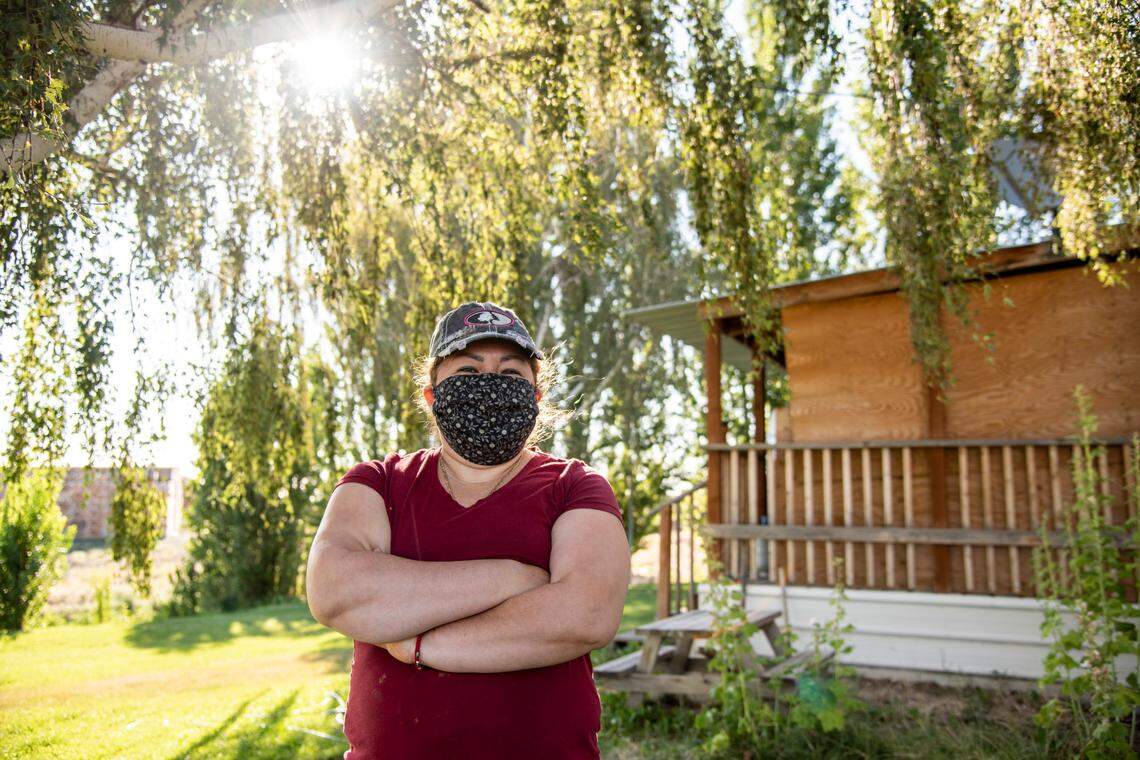
She said she trusts her husband to raise their children in Prosser, but she has children back in Mexico, whom she hasn’t seen in more than 15 years.
“My hope is that we’ll see each other while we’re still alive, and not that the next time they’ll see me is in a coffin, or my ashes in a box,” she said.
Lingering health effects
Francísco Casares, 60, survived a COVID-19 infection — but the financial repercussions linger.
Casares, a Sea Mar La Posada resident, was diagnosed with COVID in May. At first, Casares — fatigued, feverish, and wracked by chills — quietly quarantined in his room. But his symptoms got worse.
“I couldn’t breathe, so I had to call 911,” he said in Spanish.
In the hospital, Casares spent two days on oxygen. When he didn’t improve, doctors decided to put him into a medically-induced coma and intubate him.
For five or six days — Casares can’t remember — a ventilator did his breathing for him. In all, he spent 24 days in the hospital and 21 days in a rehabilitation facility, where he had to learn to walk again.
“It’s been a lot of hard work,” he said. “I still don’t feel good.”
Casares is determined to get back to his job in the orchards, which his doctor estimates he will be able to do in another month.
But being out of work “has affected me quite a bit, because I have no money for anything,” he said. “With the last check I got, I paid the rent here when I came back (from the hospital), and that’s it.”
Even when he can earn money again, he faces serious physical challenges. Right now, he can’t walk for extended periods of time, especially if he has to go uphill.
“When it’s hot outside, I feel weak,” he said. That could be a problem, as his job requires him to be out in the fields.
Even for those who have survived the worst of the COVID and returned to work, their challenges continue.
Chavez, the Sea Mar La Posada staff member, still has trouble breathing. She also has cognitive side effects from the infection.
“I’m having issues with my brain,” she said, crying. “It makes me sad, because it’s interfering with my job.” She feels tired more easily and has to take extra time to double-check her accounting.
While harvests will wind down in November, Garcia, the Sea Mar vice president, said the issues these workers face will persist.
“Right now, there is no end in sight, unless there’s a vaccine in the near future,” he said. “So our agricultural workers will be in harm’s way, until we find new ways to plant, harvest, and package food.”
Societal disparities
Essential workers and labor activists are trying to make the most of the attention on their causes, including better paid sick leave and more widespread testing.
But public health officials say in addition to addressing the urgent COVID crisis, Benton and Franklin county residents must also address structural issues, such as persistent wealth inequality and healthcare disparities, that have allowed the coronavirus to have such an outsized impact on communities of color.
“Unless we do that sometimes painful work in trying to dismantle those structures, we just will continue to see generations moving forward that will not be in a place as healthy as they can be,” Dr. Person said.
“And I think, in this country, that is a crime. We are a country with sufficient resources that everybody should be able to have the opportunity to achieve their best health.”
This story was originally published August 17, 2020 at 5:00 AM with the headline "‘In harm’s way.’ Tri-Cities agricultural workers bearing heavy COVID-19 burden."