Q&A with Chen: Pierce County health director discusses plateau in cases, protests & more
Pierce County may be on the cusp of a plateau, even if it is at 90 to 100 cases a day.
While Dr. Anthony Chen, the director of health at the Tacoma-Pierce County Health Department, isn’t thrilled about that number, he is glad the daily case count isn’t continuing to rise. He is optimistic about last week’s leveling of cases after a rapid growth of positive cases starting in June, rivaling the early days of the pandemic.
“That was pretty scary just to see it, every day, that average is going up and up and up. I never thought I’ll be happy to see us plateau at 90 to 100,” he said in an interview. “We’re sitting right around 93 or 94, so that if it maintains for the next few days at that level then we’re on a plateau.”
Pierce County’s 14-day case rate per 100,000 as of Monday is 130.4. The state’s target for counties in Phase 2 is 25 cases per 100,000 over 14 days.
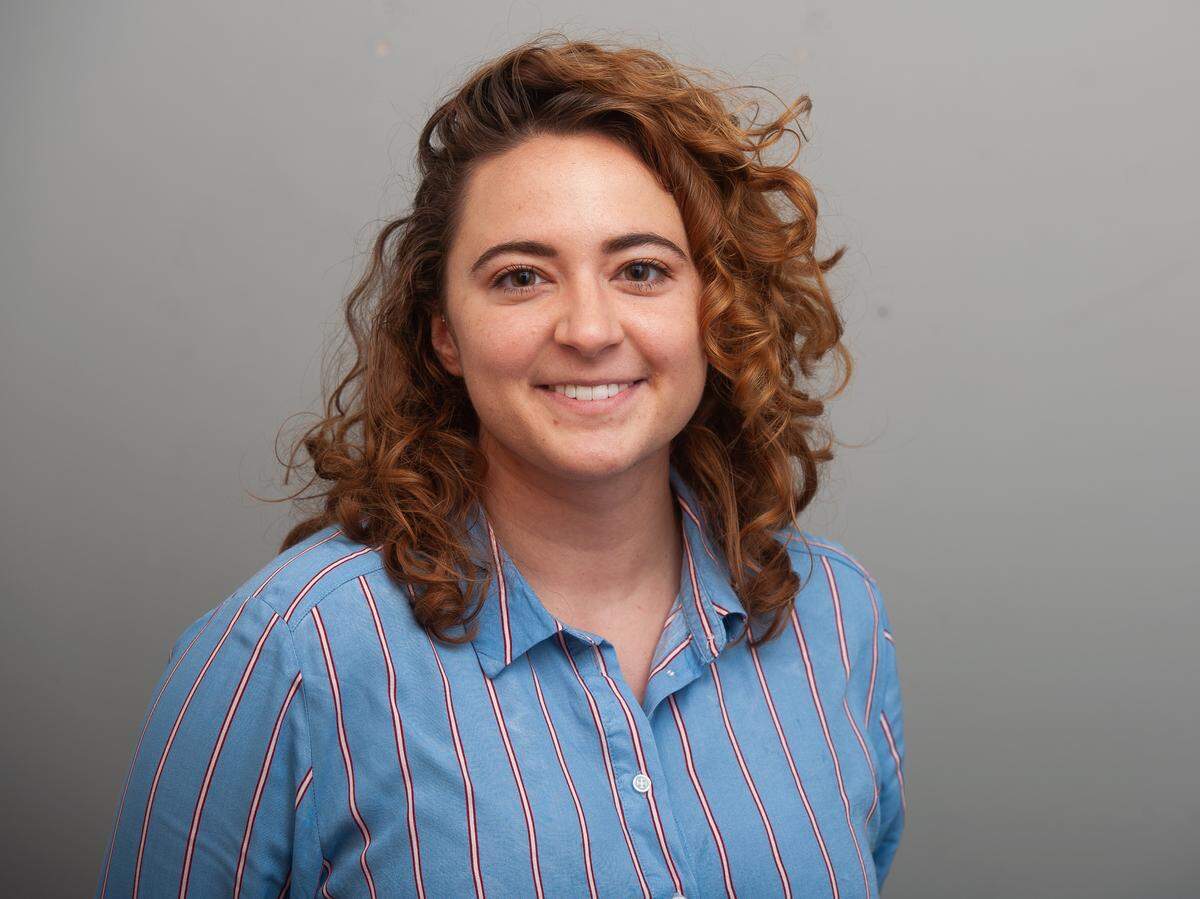
The News Tribune asked Dr. Chen questions on Aug. 7 about protests impacting COVID-19 case counts, trusting testing numbers, receiving personal threats, and the Northwest Detention Center.
Responses have been edited for length.
Protests
What has been learned about the political gatherings, like the Trump Tulsa rally and Black Lives Matter protests in terms of COVID-19. Has there been an increase in cases?
So this has been really interesting. I mean we know that in general, part of the reason we’re seeing the significant rise in cases since we went to Phase 2 is that people are gathering more. I think all of us have been out on the park or places and we’ve seen groups of people, and sometimes they’re physically distant, sometimes they’re not, sometimes they’re wearing masks, sometimes they’re not.
On the one hand, we were very supportive of the community’s ability to express their frustration and anger and to push for change, you know with the demonstrations and protests about police brutality, Black Lives Matter. And, of course, we were concerned that that might have led to an outbreak.
It turns out it really was not the case. We maybe had a few people that we identified who were positive, as we do the case investigation contact tracing. Maybe a few people identified that they had been at a protest, but really did not see a big bump in cases from that we did.
They’re all held outdoors, which was great, right, because outdoors is better than indoors, you know, that there’s more air circulation. So with those we did not see a significant bump in cases and when I talk with neighboring local health jurisdictions, very much the same experience that they have.
Now with rallies. We have not so far seen anything here. Nationwide, we have seen situations where they were. I think one that was very much in the news was the rally in Tulsa, Oklahoma, where the public health authorities just said no, our case rates are high you really shouldn’t be doing that. Well, we know that the people on the ground setting up for the rally somehow got sick. We know that Secret Service members who were there, providing security, some of them got sick. There’s some question about Herman Cain. He attended there, he got sick and died. Of course we’re not going to be able to prove where he got that from, but he was there and was within the timeframe where he could have been infected there.
I mean, what was going on there that was different, well first off it was indoors. It was an area where there were surging cases in the community.
(Some members of the advance team and some Secret Service members tested positive for the virus, according to media reports at the time of the rally.)
Pierce County’s response
Has the county gotten its money’s worth out of the isolation site at Hosmer Street and how many people are there right now?
Right, so the temporary care center on Hosmer has been a great asset for us. We really want to make sure that everyone has the option to isolate or quarantine in a safe place and in a supportive setting. The center has served about 80 to 85 guests since it’s been open.
There are some challenges with using it. For example, we’re still trying to work out how we might be able to manage people who have significant medical problems. We’ve had to work out some alternative arrangements for people who have behavioral health issues … either mental health or substance abuse issues, but it has been a great asset. We’re also looking at other ways that we can support people to be able to isolate and quarantine at home.
The importance of the temporary care center is that there are some people … maybe they live in a setting where there are other people, and they don’t feel safe, getting them possibly sick, or maybe they do have a home but … whoever they are living with can’t be really spending the time to help them. So it is very important that we have a facility like the temporary care center. But the whole strategy of testing, isolating and quarantining is such an important part of our public health response.
Do your case investigators run into much opposition from people they’ve tried to reach?
As we’ve gotten to these large numbers, I think one of the challenges we’ve had is not everyone answers their phone and not everyone answers their email.
People need to understand that we’re not going to post their name somewhere, we’re not going to embarrass them in front of the public. We need information; we need their cooperation. We were talking with one of our racial-ethnic communities who have been widely impacted, and there were concerns within their community, because some people have gotten sick and when they’ve gone back to work, they felt like they were being discriminated against. They’re getting less hours and people are treating them differently.
When people call, people do need to answer the phone. Then we need to follow up with you. It’s not like we’re trying to bug you, but we really do need to know. Are you able to stay home? If you’re in quarantine for 14 days. That’s hard.
We need to know if you are feeling tension with that because you’re worried that someone needs to go take care of your mother. Or if you’re out of groceries, you need to go buy groceries and you’re trying to decide whether you should stay home or should you sneak out. Because we can help you with that.
I think that’s part of our concern. We have seen some drop off on our response rates. I don’t know how much of that is just due to the sheer volume. Of course I worry that it’s people getting scared of answering phone calls or they don’t understand what we’re doing. So we’re working the best we can to overcome that. I would say that’s kind of the big challenge for us right now.
Testing
Some say that the testing numbers that come back as positive cases don’t matter, because some are false results, or because whatever the total number reported is inaccurate, in their view. What do you say to the naysayers?
It’s frustrating to me that people are creating all kinds of negative narratives, either out of denial or because they subscribe to certain political positions.
Testing, when you can do it, is an extremely valuable tool. Especially now that we know that a lot of people can be asymptomatic for COVID-19. I mean if you didn’t have a test what you would be doing is waiting for people to get sick or die.
Is any test perfect? No. However, we should use the best tools we have, and currently the best tools that we’re using are the PCR tests that we currently have.
Does more testing mean more positive results?
The increase in numbers is not just because we’re testing more.
If you’re concerned about that aspect, let’s look at the positivity rate. Our positivity rate rate has increased, which tells us it is not just testing more. I mean, it should be scary to the public, because not only have we greatly increased our testing, but the percentages that are positive, have gone up significantly. We’re running like 7, 8 percent. Back a few months ago, we were running about two percent.
So that should be scary to people that we’re testing more, and we’re having more positives. And then I hear some naysayers who say well but your hospitalization deaths haven’t gone up.
If our deaths are going up, we have failed. I mean that, that is not the point. First of all it is a lagging indicator, people don’t get sick one day and die the next day. People get sick, then they get worse, and if it’s bad enough, they end up in the hospital. We know that, especially with COVID-19 some of these people are having to stay in the hospital for weeks if not months, sometimes in the ICU for that period of time. And then they might die.
The biggest surge in cases we’re seeing are the young people, the 20-year-olds.
If we’re seeing more young people, of course we’re gonna see not as many deaths as if we got an outbreak in a nursing home. The problem, though, is if the 20-year-olds get sick, they’re going to spread it to other people. And we’re already starting to see more outbreaks again in long-term care facilities. We’re seeing cases in businesses; it’s because when the level of infection in a community increases, it doesn’t matter who you are, if you go out you’re at risk.
Has there been an outbreak at the Northwest Detention Center?
I know that there are people in the community who are very concerned about Northwest Detention Center for various reasons.
Tacoma Pierce County Health Department has no jurisdiction over the Northwest Detention Center. It’s a federal facility, their public health and their healthcare is managed by the National Public Health Service. They do consult with us. If there are cases, they let us know. They let us know what they’re doing. They also work directly with the (state) Department of Health. … We have had conversations with them. They do have plans and they’re in consultation with the federal authorities, and they have plans they have access to testing.
They did do some mass testing, which really did not turn up on hardly anything.
I’m not gonna speak for them, that is for them to communicate, but they are doing what we feel is their job. They’ve got the procedures in place. They’re doing all the other things we’re expecting of businesses and hospitals and everyone else. I know that there’s a lot of suspicion about them but from a public health standpoint, they seem to be doing what they need to do.
Responding to readers’ questions
What do you say to people who say the virus is flu-like?
In some ways the virus is flu-like. The symptoms that you get with mild COVID-19 disease are very much like the symptoms of the flu. However, there are many ways where COVID-19 is not like the flu.
We are learning all kinds of really weird and interesting things around COVID-19 disease. The auto-immune responses it is creating, the blood clots its creating, are zero percent like the flu in that way. The autoimmune syndromes that young children are developing — which are like Kawasaki’s disease — absolutely nothing like the flu.
Normally by April, flu season is gone in the Northwest. We got complacent. We thought it was going to act like that so the technical term is seasonality. We thought it was going to show seasonality. We had a peak in April, it continued past the flu peak. I mean flu was basically gone and things were coming down and we all thought: Wow, it might be seasonal. Hallelujah. Guess what, we were wrong.
In less than two weeks, we just started shooting up. It is not like the flu like that, it is not seasonal. The drugs we use against the flu don’t work against COVID-19. The complications we get in COVID-19 are nothing like what we get with the flu.
What may get some people confused too as we talk about things will get worse in flu season this fall. Yes, the other viruses show significant seasonality. And we expect, October, November, like every year, the flu, the rhinoviruses, the cold viruses, all the other viruses will come roaring back. And they will look similar to COVID-19. It’s going to be fever, sneezing, coughing. What will happen then is we will have a big task on our hands trying to help people understand. Do they have one of the other viruses or do they have COVID-19? It’s going to potentially overwhelm our system as sick people are seeking out care.
If everyone does everything they need to do, we can have less colds, we will have less flu, and hopefully we will have less COVID-19.
Threats
Have there been any local threats made to you or any questions of your safety as a result of the health department’s response to the pandemic?
You know I get hate mail. And I get trolled on social media. It’s unpleasant. But at the same time, I actually get more positive comments. You know, of course I’m getting hate mail saying I’m killing kids by not letting them go back to school. But I’m getting a ton of emails saying thank you … because they are worried about their kids. And we’re all worried about their kids and it’s unfortunate.
I think it is outrageous that the very people who are working hard to protect the community are getting vilified, you know, this is just so unfortunate and as I said, we can turn it around. Look at Yakima. Everyone got on board when they realized they had the highest case rates in the whole West Coast. There was no question. And everyone put on their face masks and they all said we need to support public health.
I don’t know what the analogy is … you’re threatening the messenger. These are the people who are saving you, and my staff are working seven days a week. It is a little bit slower now than it was in April, but it is stressful. And there’s nothing else that’s going to save the community from this pandemic except for public health. There’s no cure. There’s no vaccine. You’ve got to have public health there. And that’s what our role is and normally we’re not in the spotlight. We are now. So the good news is people are starting to understand what we do. The bad news is we also become scapegoats for people’s frustrations, and that is just not right. … Public health are the people who are standing between us and chaos.
What do you say to people who say we need to loosen restrictions because they are losing their livelihoods, their homes?
We are worried about that. We absolutely understand that people need to have jobs. People need to have a roof over their heads. Businesses need to be open, we need to have a vibrant community we need kids to be in in-person learning at some point when it is safe. We know all those things need to happen. You want businesses to reopen to how they were before? We’ve got to control this virus. You want kids to be back in school and in-person learning? We’ve got to control the virus. Whatever it is you want to be able to go back to: movie theaters, go back to church at full capacity, go to concerts in the Tacoma Dome. Whatever it is you want, we’ve got to control the virus.
Since mid-June, we have seen what happens when we don’t control the virus. Everything that we had controlled in the spring, we have lost our grip on that. We need people to get back to it.
This story was originally published August 11, 2020 at 5:45 AM.