
Despite being free and in-person, Pierce County school meals stuck with pandemic ills
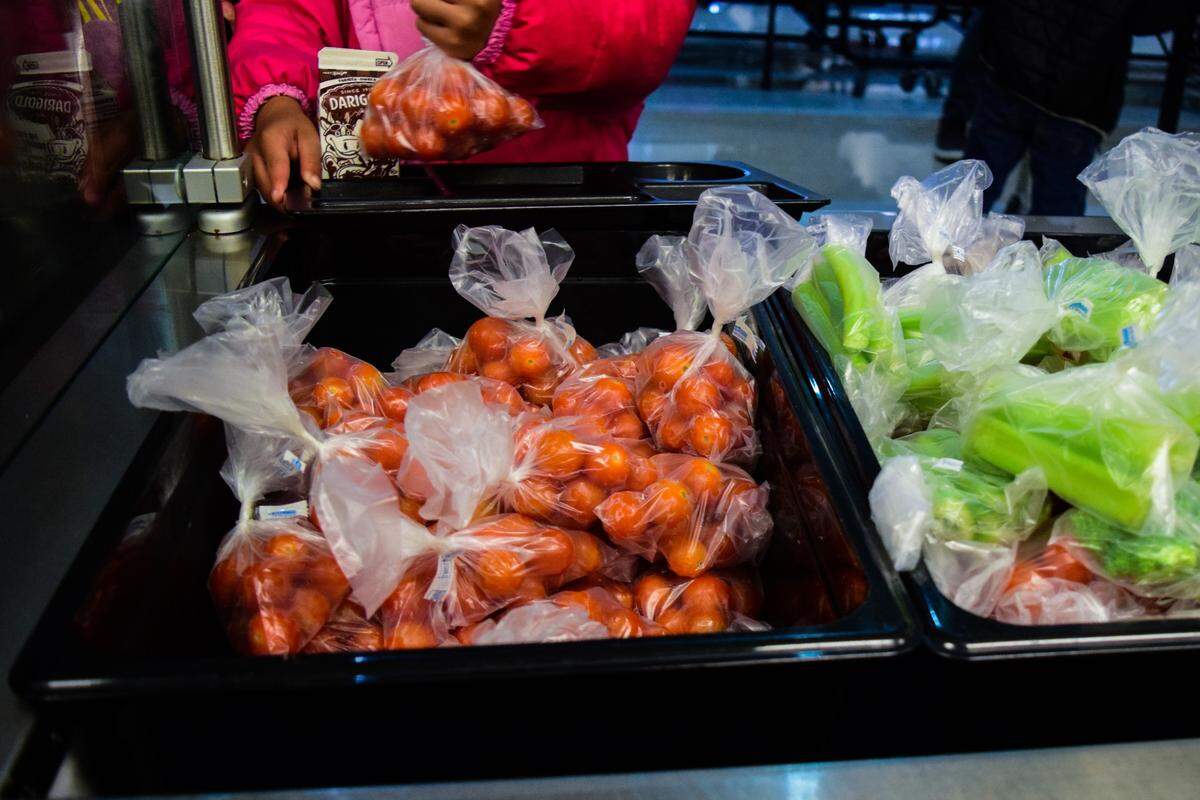
On one of her first days back at Blix Elementary this school year, a second-grader received applesauce and a slice of bread with a slice of cheese for lunch.
At the Tacoma School of the Arts, a sophomore recounted to her mother a meal of milk, applesauce, cheese and “some dry carrots.”
“I was so appalled at what they called lunch that I’ve been making my kids lunches every day,” said the SOTA parent, Dessa Jarmon. Her daughter said the day-two option seemed to be an improvement: a chicken and rice dish. “But I didn’t want to risk a repeat of day one.”
It was free, thanks to federal pandemic funding from the U.S. Department of Agriculture that extended the universal free lunch program to all students at qualifying schools — not just those that meet the income requirements. But some kids (and their parents) were so underwhelmed by the offerings that they have since been packing their own, even if it means spending money they don’t need to spend and time they might not have to spare after nearly two years of jumbled remote and hybrid learning.
School districts across Pierce County — and the nation — say they are grappling with a trifecta of pandemic challenges.
Like restaurants, they are reporting late, short or entirely skipped deliveries from wholesalers, whose own suppliers have run out of items as basic as spaghetti and ground pepper. They are understaffed while COVID-19 safety protocols require extra care, and they are discovering the repercussions of the hastened switch to virtual learning last year and the necessity of grab-and-go meals that followed.
“We thought we were coming out of COVID,” said Paul Harris, operations manager for Tacoma Public Schools, who stressed they have “backup plans to the backup plans” and that kids are still getting fed. “We want to communicate with all the parents out there that our original plans and what our plans have to be now are two different things.”
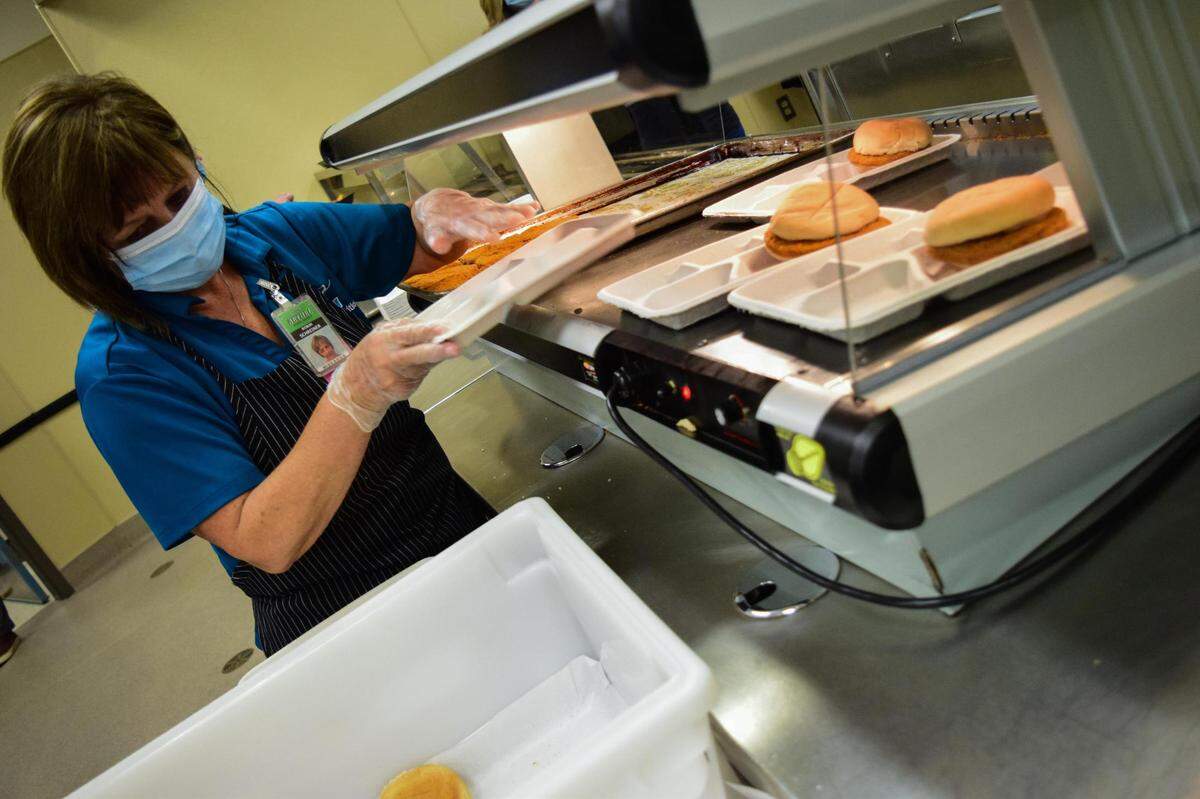
TPS typically posts menus every month, but only in October did they start showing up online but not more than a few days in advance. A recent breakfast included a strawberry Pop-Tart, apple juice, sour watermelon-flavored raisins and 1 percent milk or nonfat chocolate milk. For lunch, mains have been limited to items such as a chicken burger, corn dog or ham and cheese sandwich, plus fruit or vegetable and milk.
In February 2020, example menus often featured cooked dishes such as teriyaki chicken and vegetarian chalupas. In junior and high schools, said director of strategic planning Alicia Lawver, service included multiple stations — deli or sandwich bars, for instance.
A RAPID MEAL SHIFT, LINGERING EFFECTS
Projections to vendors are submitted “months in advance,” Harris told The News Tribune in early October, and the projection — even last year — was that kids would be back in school, eating traditional meals such as spaghetti and meatballs in the cafeteria five days a week.
Vendors, though, transitioned rather quickly in the spring and summer of 2020 to provide pre-packaged foods to make grab-and-go meals more viable for schools trying to feed students who might not have access to breakfast and lunch during virtual learning. A year-and-a-half later, that sudden switch is haunting districts like TPS, where meals cooked in-house remain a pre-pandemic memory and something of a post-COVID fantasy.
“We are unfortunately providing a lot of the same meals as we were during the seriousness of the pandemic,” said Harris, projecting the district would be able to add one or two cooked meals back into the rotation in coming weeks. “Now we can’t get out of it because that’s what most of the vendors have available right now. We’re trying to get away from it, but it’s a little harder for us to just change over when we need 26,000 to 30,000 meals a day.”
He said he has fielded numerous calls from concerned parents who hear about other districts offering this or that, but the size of TPS and its school-by-school model complicate the reality.
As the largest district in the county, each of the 56 K-12 schools requires independent deliveries and staff to prepare meals on-site. That site-by-site model is standard in the U.S., but it’s not the only way: Districts including the 150,000-student Dallas Independent in Texas down to the 3,000-student Kalispell Public Schools in Montana have built central kitchens, which require upfront expenses for space and equipment but can lower overall costs by allowing for bulk from-scratch cooking and an internal distribution network.
South of Tacoma at Bethel School District, which serves more than 20,000 students at 32 schools, voters approved the funding for a centralized kitchen in 2006. It opened in 2016, and in 2020 became an unexpected savior, according to nutrition director Leeda Beha.
“Having this facility, we have been able to create an operational model to create whatever COVID has kind of thrown at us,” she told The News Tribune.
With delivery drivers also in short supply, having a single receiving warehouse with a massive freezer and cooler has been “a huge positive.” If an item is missing, she said, they can substitute from their own stash.
In normal times it also means increased efficiency and volume, allowing for homemade dishes like mac and cheese or turkey gravy and up to 300 meals per labor hour, she estimated, compared to a few dozen in individual kitchens. That kind of cooking has been limited this year due to supplies and staffing, as well as COVID requirements to limit time spent in congregate areas.
At elementary schools, only kindergarten and first-graders are eating in the cafeteria, while others return to their classrooms. At the high school level, the tables have been removed to accommodate spaced-out chairs with QR codes students scan for contact tracing.
Peninsula School District, which serves Gig Harbor and parts of Kitsap County, said it was aware of supply chain issues but was continuing to serve hot meals. Its supplier Sodexo had “anticipated the shortages and planned accordingly to avoid gaps in service,” said spokesperson Aimee Gordon.
MORE EYES ON SCHOOL LUNCH & BREAKFAST
Parents who spoke with The News Tribune empathize with these challenges but feel more could be done to improve the situation — which in many cases they realize was already undesirable.
“The food quality is poor!!!” said Valeria Alston, a Bethel parent, by email. “I will say the staff are no longer making excuses and they do try to accommodate the best they can, but how do you accommodate with nothing?”
She has three students in the district: one at Camas Prairie Elementary and two at Cedarcrest Middle School, plus two nieces at Spanaway High School. This year, her children have taken to keeping snacks in their lockers. Sometimes there is only one lunch option, she said, and allergies or a perceived lack of quality has turned them off.
Another Bethel elementary and middle school parent, Linda Pease, said her kids have described food as mostly processed and sometimes unappetizing. She worries especially for parents whose children rely on school meals because they can’t afford or don’t have access to alternatives.
Per the Healthy Hunger-Free Kids Act of 2010, meals must satisfy five food components (grain, fruit, vegetable, protein and fluid milk) with daily and weekly minimums, such as varying the vegetables. The vegetable can’t always be potatoes, for instance; certain days must offer legumes like peas and beans or greens like kale or lettuce.
Meeting these metrics has been difficult for schools during the pandemic. The USDA has granted waivers so schools that receive funding for the current universal free meal program will be reimbursed, apples or not.
At Spanaway High School in the Bethel district, the salad bar is back; sliced apples are often the fruit of the day; entrees typically include six or seven choices, according to a kitchen manager Sonja Wood, but right now they’re lucky if they have three. On a recent Wednesday, that meant prefabbed but heated on-site cheese lasagna, pizza and chicken patty sandwiches.
It’s a matter of “picking where we put our labor,” said Beha. The high school kitchen is short two employees, and district-wide there are 34 openings compared to a dozen at this time in 2019.
In Tacoma, Geoff Zolotarev, a Hilltop Heritage Middle School parent, said he has never found school food to be satisfactory and lamented corporate influence that has led to cheaper, more processed food in the supply chain.
His kids make their own lunches at home, but once a week he lets them off the hook. Asked if they look forward to, say, pizza day, he replied: “Yeah, of course kids want to eat nothing but crap. Plus they don’t want to have to make their lunches.”
WHEN WILL SCHOOL MEAL LIMITS END?
TPS strives to “give everyone in the district the same thing every day,” said Harris, the operations manager. Pre-pandemic, that was possible if imperfect, but a global crisis has highlighted problems in the system.
“The unfortunate thing is, due to so many things, there are literally thousands of items that are no longer available to us,” he said. If an item had 50 styles listed in the past, “Now they’re down to like five.”
Occasionally a smaller wholesaler or even Costco will offer hamburger buns, for example, but they can only supply enough for a handful of schools.
From talking with other people in the business of school nutrition, Harris said districts “up and down I-5” are in a similar pickle.
Though the situation is incrementally improving — October has been better than September, he said — the end of this challenging road remains “100 percent up in the air.”
That the meals are free for the students and covered for the districts has left some parents befuddled and nutrition service staff disappointed.
Beha, referencing an analogy shared at a nationwide school nutrition group meetup, likened it to school meals reaching the Superbowl with a litany of injured players and incessant penalties.
“This year has been even more difficult than the beginning of the pandemic,” she said. “Initially most of the things we had control over. Now everybody’s stretched so thin and there’s so many balls in the air, we’re all just really trying to take one step at a time.”
One unexpected upside has been breakfast: Participation has skyrocketed, increasing 75 percent overall at Bethel. Previously, Tacoma elementary schools served about 18 percent of students in the mornings, said Harris; now more than half participate in free breakfast.
This story was originally published October 22, 2021 at 5:00 AM.