
Sea turtle nest relocated at Myrtle Beach State Park
About two months into sea turtle nesting season, it’s likely South Carolina beachgoers could see turtle tracks or even stumble upon a nest.
That’s how it went for David Holmes, who was one of 26 people who participated in the Sea Turtle Patrol at Myrtle Beach State Park late last month and saw a nest while strolling the beach.
The program allows turtle lovers to patrol the beach with a ranger to check for new nests on the beach, according to Holmes.
Anna Wilson, a park ranger, said in an email to The Sun News the nest they found was relocated due to its proximity to a lifeguard box, which might cause it to get stepped on.
“We would rather not relocate sea turtle’s nests on the par, but sometimes they nest in areas below the tide where the eggs could get washed out or sit in water for too long,” she said in an email.
Although finding nests is the main purpose of the patrol, it doesn’t always happen.
However, participants can also enjoy a walk on the beach during the sunrise, pick up trash and fill in holes, which helps sea turtles, according to the South Carolina state parks website.
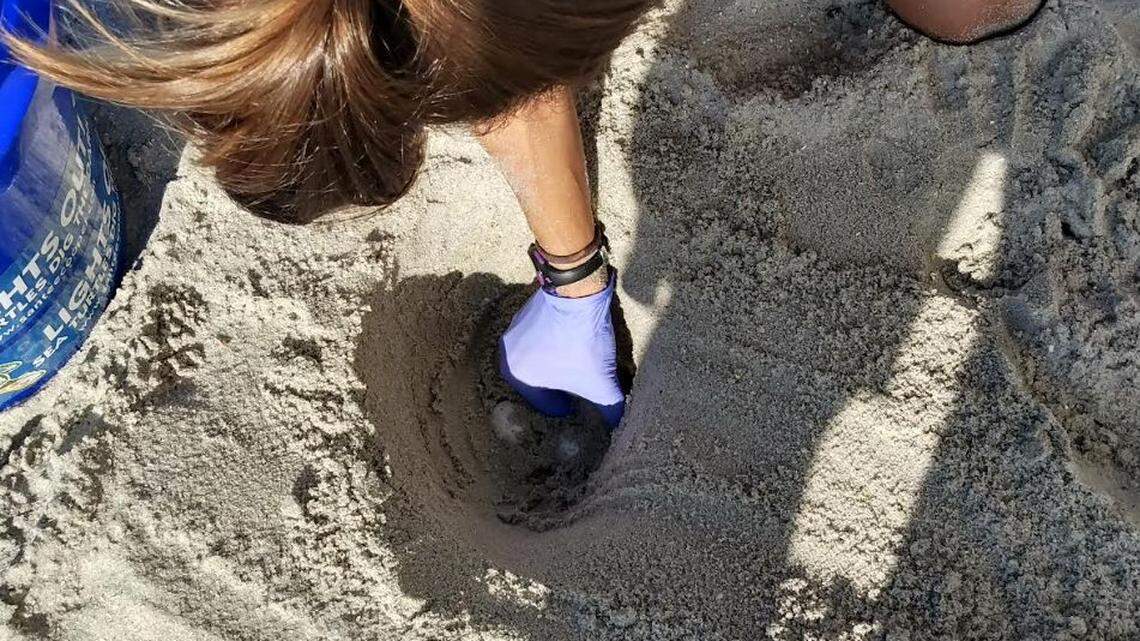
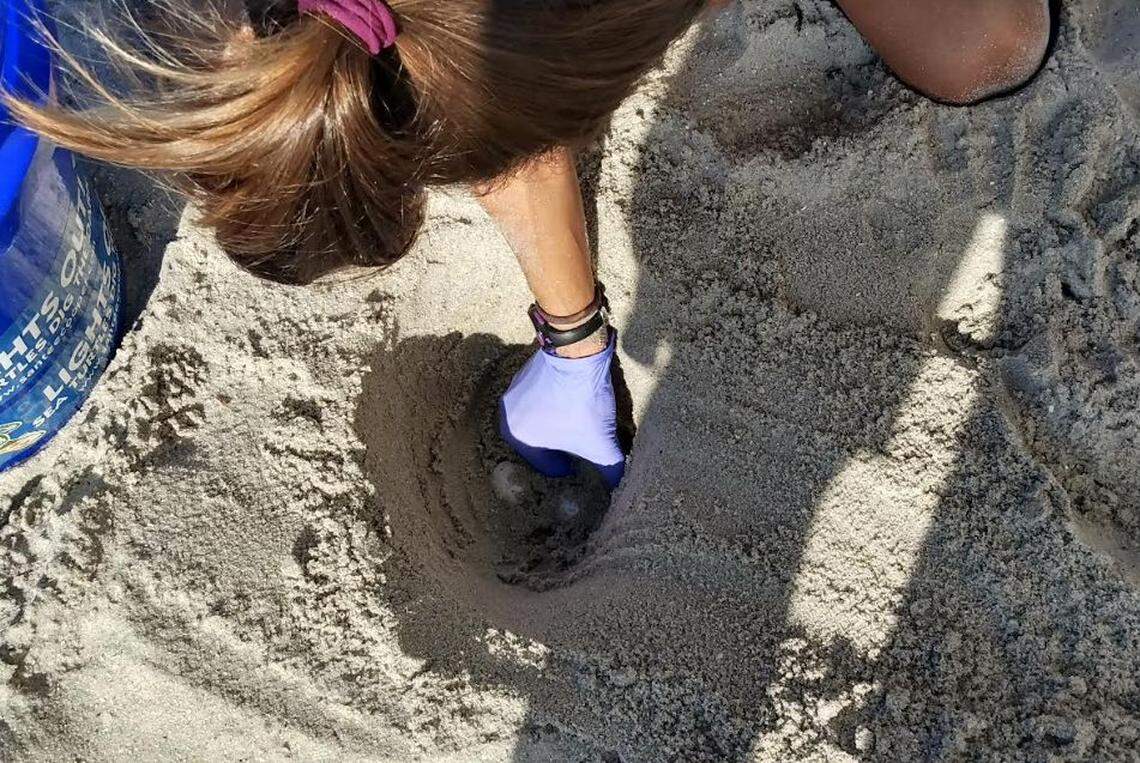
Holmes, who is originally from Georgia but has lived in Myrtle Beach for four years, was able to watch volunteers relocate a loggerhead nest that had appeared overnight. The loggerhead laid her eggs a few hours before sunrise, he said in an email to The Sun News.
“The sea turtle tracks told the rangers that she came in from the ocean in the early hours of the morning,” Holmes said in an email. “It showed tracks to the nest and tracks leading away from the nest.”
Loggerheads, which are the most common of the sea turtles to nest in the southeastern United States, were selected as the official South Carolina state reptile in 1988, according to the S.C. Department of Natural Resources. An average of 3,378 loggerhead nests have been laid each year over the last 10 years in the state, according to the natural resources department.
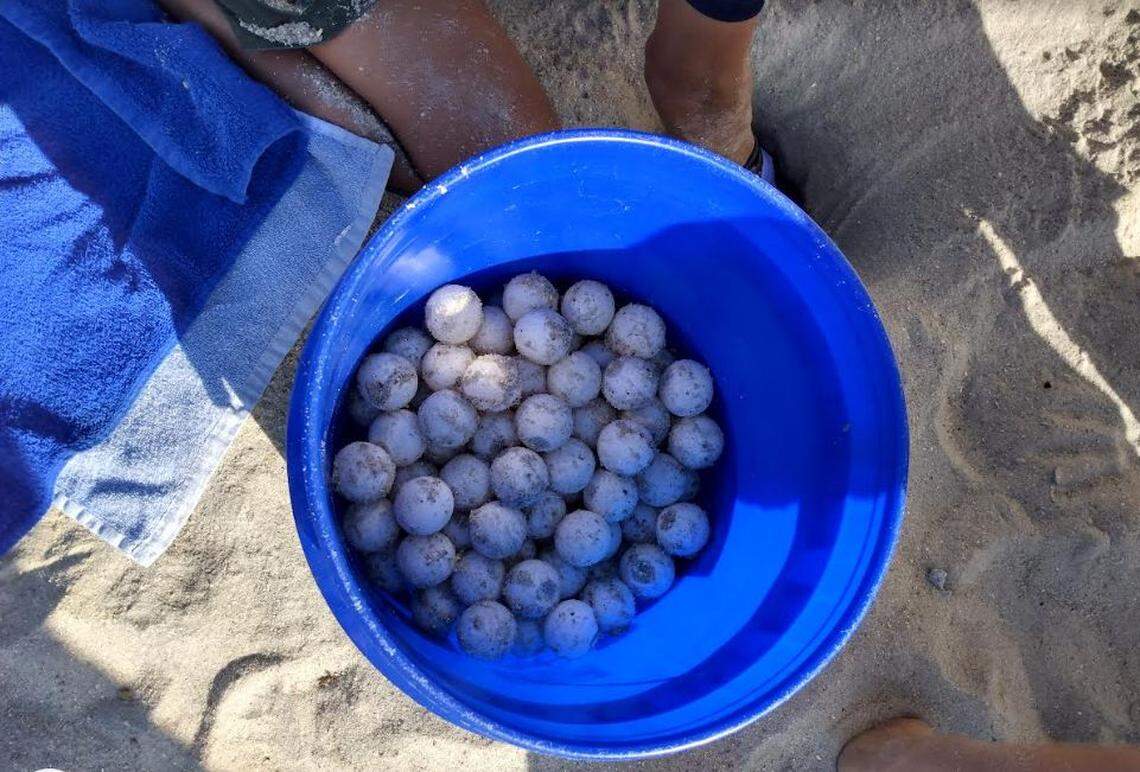
There were a total of 153 eggs counted in the nest that was moved, Holmes said. The nest measured about 28 inches deep and was shaped like a gourd, he said.
The college professor shared his experience on Twitter, saying that volunteers used scallop shells to dig the new nest because the shells’ shape is similar to sea turtle flippers.
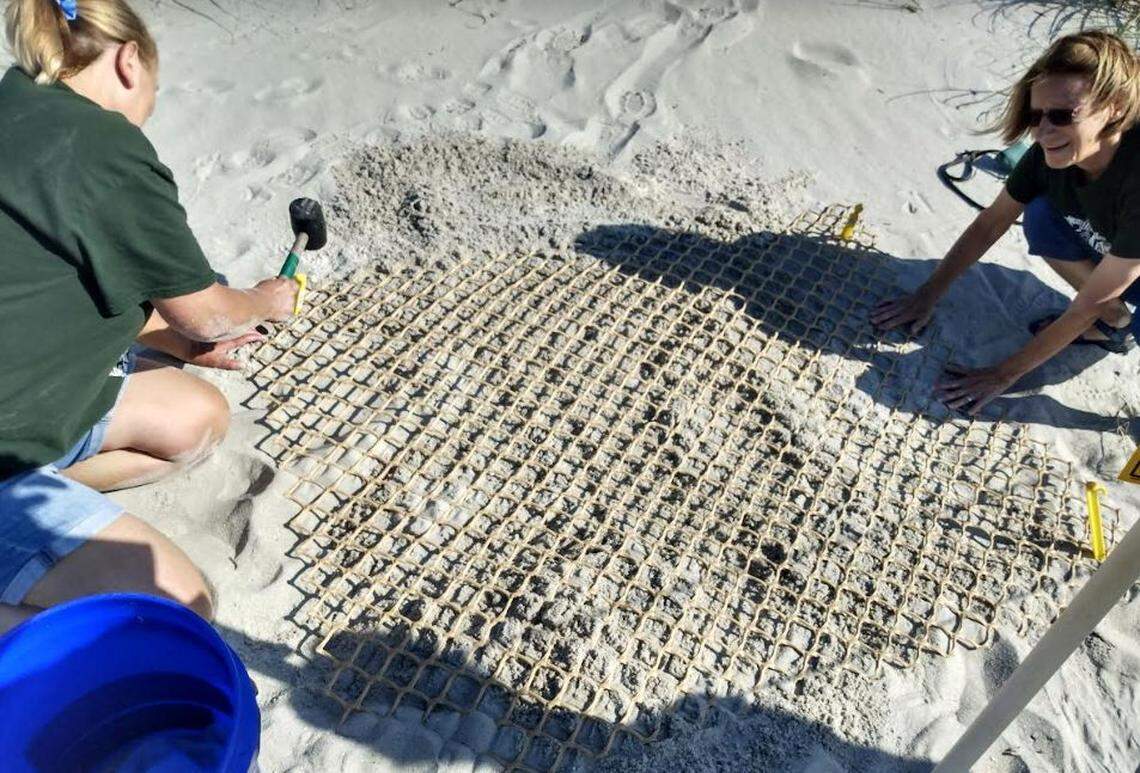
After the nest was dug, Holmes said sand was put over the eggs along with plastic mesh, so the nest won’t be disturbed by animals.
Wilson said they refer to turtle crawls as a turtle scene investigation.
“I compare it to a crime scene. If people come across a turtle crawl, we would like for them to enjoy observing it, but to not disturb it,” she said of people who find nests on the beach. “They can also call the local sea turtle team or beach patrol to report it if they think no one knows about it.”
As of now, the state park has two nests, Wilson said. She added that 15 nests have been relocated in Myrtle Beach and Horry County.
“We have been doing the Friday morning public sea turtle patrol since at least 2009 and only once have we had a sea turtle still nesting on morning patrol,” she said. “It was our one and only green sea turtle to ever nest at the park!”
This story was originally published July 3, 2022 at 8:52 AM with the headline "Sea turtle nest relocated at Myrtle Beach State Park."