Smoke-choked skies the ‘new normal.’ What are Tacoma and Pierce County doing to prepare?
The Puget Sound region spent much of last summer cloaked in a haze of wildfire smoke that caused record-breaking unhealthy air conditions and increased smoke-exposure intakes at hospitals.
This year could be worse.
“We recognize smoke events are going to be the new normal,” said Megan Snow, a spokeswoman for the city of Tacoma.
While raising awareness to reduce residents’ exposure to smoke has been a priority for Tacoma and Pierce County, neither government nor the county’s joint health department have allocated funds this year to meet ventilation recommendations at community centers, homeless shelters and lower-income households.
The Tacoma-Pierce County Health Department said such work is unfunded and that federal, state and grant funding has been slow to catch up with the new normal.
Most county buildings and Tacoma House Authority properties use air filters below the public health department’s recommendations for wildfire season.
Tacoma officials said they have “not discussed or planned any changes” to the current air filter schedule in public buildings in anticipation of the smoke.
“If the need arises, becomes an issue, the city would definitely adapt … to provide the best environment possible,” said Justin Davis, facilities division manager for Tacoma Public Works.
Meanwhile, Seattle unveiled a new pilot program this year that will install enhanced indoor filtration systems in five public facilities and retrofit older buildings for cleaner indoor air.
Janet Runbeck, a certified nurse and lecturer at University of Washington in Tacoma, said when disaster strikes, like wildfire smoke exposure, those who are the most vulnerable, like the disabled, the homeless, the elderly, those with economic instability or medical fragility, are the most at risk. She said not enough is being done to ensure their safety.
“It’s terrible,’ Runbeck said. “The areas that are more susceptible to damage from disaster have higher rates of heart attacks, pneumonia, COPD, asthma.”
Like smoking a handful of cigarettes
Pierce County saw 15 days of elevated air pollution levels in both 2017 and 2018, the Puget Sound Clean Air Agency reports. For the first time during wildfire season, Pierce County experienced “very unhealthy” air contamination for hours at a time last year, according to the Tacoma-Pierce County Health Department.
On Aug. 23, 2018, the Puget Sound’s air was comparable to that of industrial cities in China, India and Pakistan, said Phil Swartzendruber, an air quality scientist with The Puget Sound Clean Air Agency.
The Air Quality Index measures how contaminated the air is by pollutant particles. Seattle area’s average sits around 33, and levels up to 100 AQI are considered acceptable. Monitors read over 173 last August.
Breathing in unhealthy air conditions is like smoking a handful of cigarettes, the agency’s air quality scientist said.
“The worse the air, it’s like smoking more cigarettes in a day,” Swartzendruber said.
Before 2017, Puget Sound counties rarely, if ever, saw unhealthy air pollution levels, Swartzendruber said. Pierce County had three unhealthy days in 2017 and four in 2018.
Last year, Tacoma’s school athletic practices were moved inside. Some planes at the Seattle-Tacoma International Airport were grounded due to low visibility. Hospitals reported significant increases in the number of patients citing smoke exposure as the reason for their visit, the Washington Department of Health said.
As air quality worsened across most of Washington last August, the state health department noted an increased number of respiratory-related complaints, like shortness of breath, wheezing, coughing and asthma.
The National Climate Assessment deemed that as climate change affects seasons’ precipitation levels and temperature, the air quality — and in turn human health — will worsen.
More frequent and severe wildfires would “further diminish air quality, increase incidences of respiratory illness from exposure to wildfire smoke, impair visibility and disrupt outdoor recreational activities,” according to the latest National Climate Assessment.
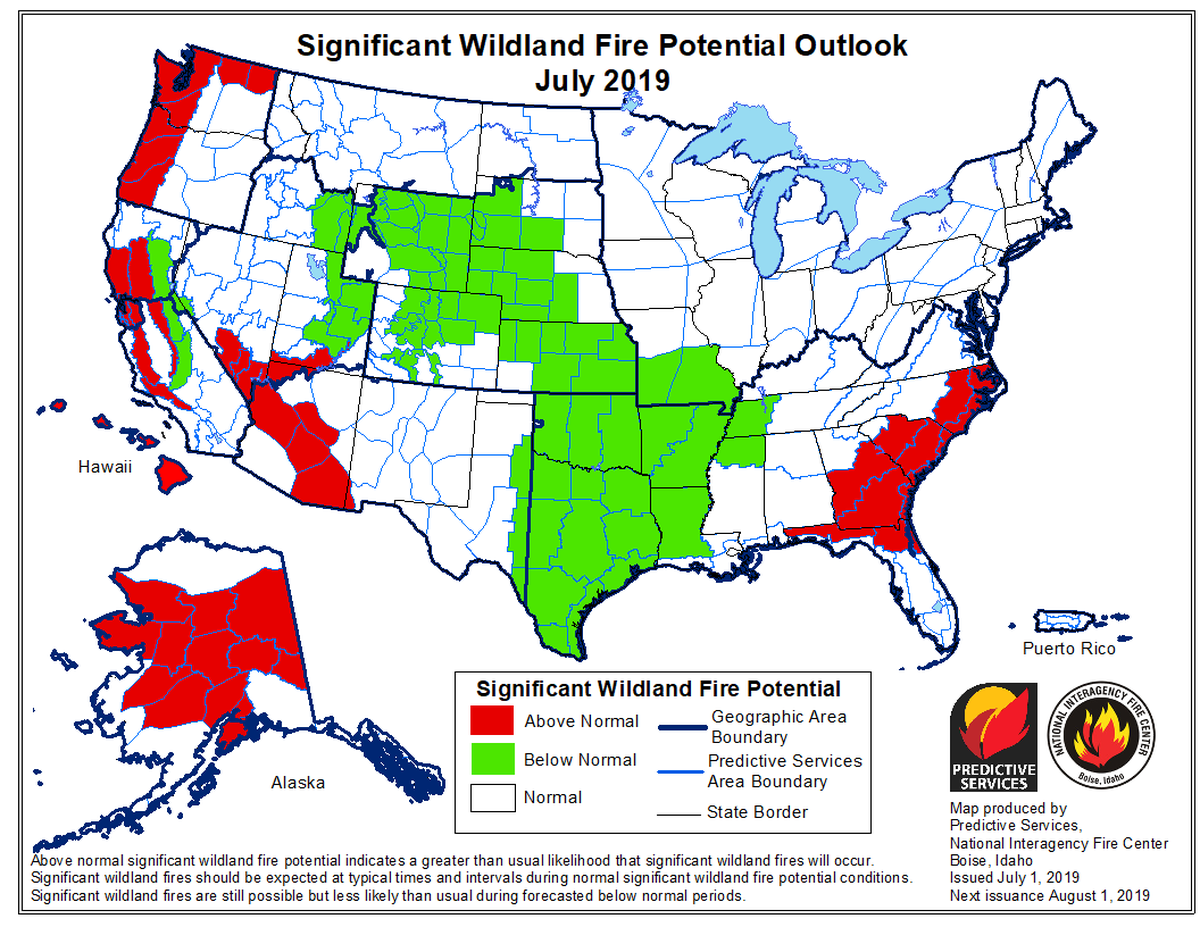
This year, the Puget Sound region could see more than just forest fire smoke billowing from Canada, California and Eastern Washington. With a dry season, Western Washington has a greater chance for local fires than in recent years, said Judy Olsen, environmental health specialist with the Tacoma-Pierce County Health Department.
Moderate to severe drought west of the Cascades causes concern for potential wildfires, the National Interagency Fire Center said.
Preparations for the inevitable
In June, Tacoma joined more than 12 cities, counties and government agencies in Smoke Ready Communities Awareness Day to prepare residents for wildfire smoke season.
For the first time, the city dedicated a page on its website for air quality resources and tips to stay safe.
But no funds have been budgeted to install new air filtration systems in city facilities.
“During last year’s wildfire events, Facilities Management was not aware of any requests or concerns being expressed from building occupants that would have caused them to investigate options,” city spokesman Stacy Ellifrit wrote to The News Tribune.
Instead, the city is encouraging people to seek air-conditioned public spaces or make do-it-yourself box fan air filters. The city also provided a list of air filters certified by the California Air Resources Board.
Vulnerable populations
Pierce County has high-end HEPA filters in the new jail, spokeswoman Catalinich said. She said she was not aware of any newly installed air filtration systems in county buildings.
The public health department recommends a minimum of Merv 13 filters to filter out the tiny smoke particles. County buildings and the 12 properties owned by the Tacoma Housing Authority have Merv 8 air filters.
Two senior centers, the Lighthouse Activity Center on Fawcett Avenue and Beacon Activity Center off South 13th Street, are too dated to have air filtration systems, said Kristine Kim, Korean Women’s Association program manager for the centers.
The city of Tacoma provided the senior centers particle respirator disposable masks, but Olsen with the health department said a mask is not your first line of defense. They are difficult to breathe in, and anyone considering a mask should consult a doctor first.
When asked if the city has a plan to accommodate the homeless during smoke season, Snow said there’s not one, but pointed out the city’s Stability Site is air conditioned. There are 89 people living on the site with a 51-person wait-list as of July.
With 8,630 people experiencing homelessness in Pierce County, according to state Department of Commerce data, the county has left it up to homeless shelters to provide safeguards against smoke exposure. The local health department provides information for homeless shelters, nonprofits and community organizations on proper ventilation, but not much else.
“We are working with community partners on whether or not they can provide that filtration we talked about,” Olsen said, but the health department only provides consultation.
Noah Baskett is a spokesman for Tacoma Rescue Mission.
“Due to the large amount of foot traffic that we receive at all four of our facilities, our facility staff at the Tacoma Rescue Mission changes all air filters once per month,” Baskett told The News Tribune.
Seattle took its preparedness a step further, announcing a pilot project that allocates money to install upgraded indoor filtration systems in five free and open public facilities this year.
“As wildfires become more prevalent in our region and smoke from wildfires becomes a growing concern, we are doing everything we can ensure that our communities are prepared,” Seattle Mayor Jenny Durkan said in a statement.
She suggested the community centers could shelter those who “don’t have other safe places to go,” The Seattle Times reports.
The program also will seal air leaks and install devices to curb smoke from entering the buildings.
For those seeking to avoid the smoke this summer, Pierce County governments suggest finding local cooling centers. Cooling centers are public spots where air-conditioning is readily available in extreme heat, but they do not have air purification requirements that would reduce smoke exposure, according to the Center for Disease Control.
Pierce County libraries and Tacoma public libraries are designated cooling centers.
“During wildfire season, our facilities are designated cooling stations for patrons to escape the sun, heat and poor air quality,” Tacoma library director Kate Larsen said. “We will change our air filters and adjust our HVAC system in order to create as comfortable an environment as possible during normal library hours of operation this summer.”
Tips to stay safe
Once the smoke arrives, the local health department recommends residents create a “clean room” where the vents are equipped with filters of MERV-13 grade or higher. The room should include fans, sealed windows and be free of odors like fragrances, vape and cigarette smoke.
To stay safe during severe smoke:
▪ Avoid outdoor activities when the air looks or smells smoky.
▪ Drink lots of fluids.
▪ Make a plan with a doctor if you have asthma or allergies. Those most at risk include young children, senior citizens, pregnant women and those with respiratory or cardiac conditions.
▪ Stock up on food, medication and other items to limit time outdoors.
▪ Use an indoor air cleaner or filter fan.
▪ Use a mask labeled N95 or N100 as a last resort; disposable surgical masks are largely ineffective.
To monitor air quality, check out pscleanair.org.
This story was originally published July 2, 2019 at 5:37 PM.