She was let go after 40 years at PLU. Was the cause a music lesson — or union organizing?
A senior lecturer dismissed by Pacific Lutheran University administration after teaching an independent lesson to a student says her situation spotlights a national problem with the treatment of non-tenured faculty.
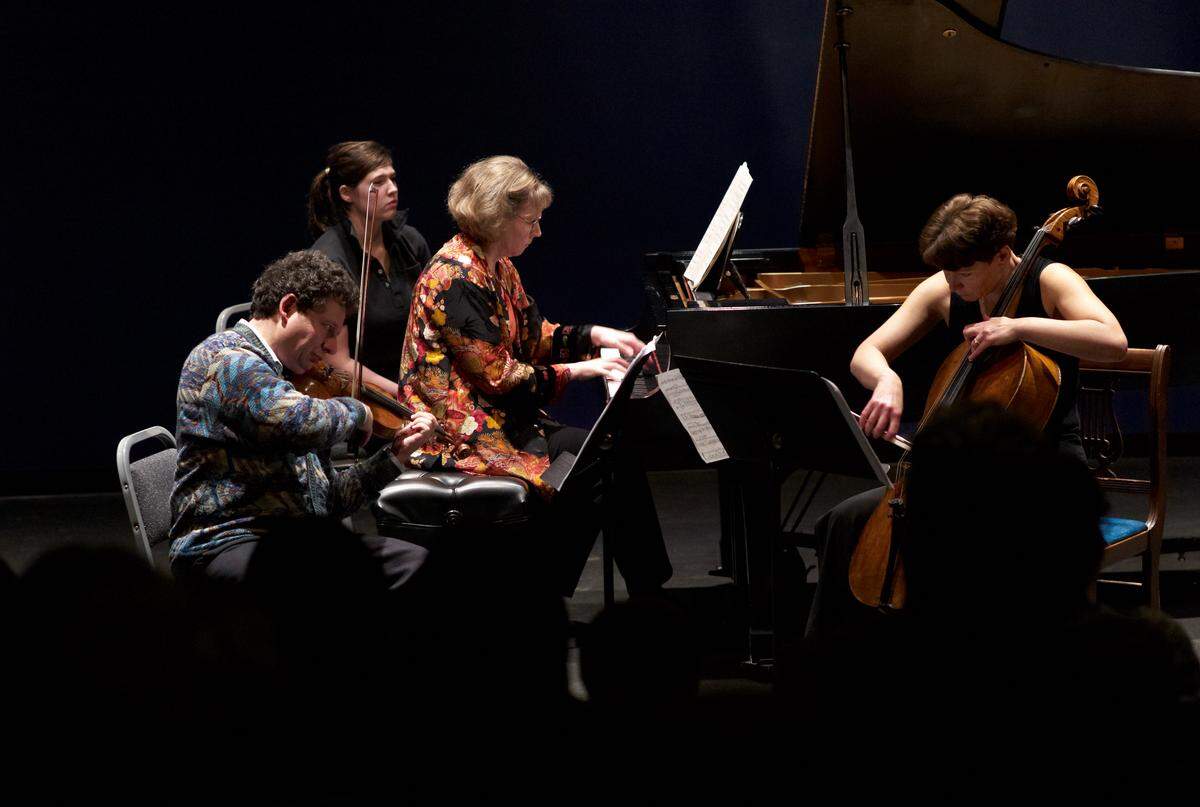
Jane Harty, a 40-year music educator at PLU, said she was fired in 2018 after the university discovered a student tried to pay her for an independent piano lesson.
PLU administration said the action was against policy, despite Harty returning the money for the private lesson.
Harty and others feel the university administration failed to provide just cause in her dismissal and jumped on the chance to fire her for other reasons, including her past advocacy for the rights of contingent faculty — full-time or part-time faculty not on the tenure track — and an effort to unionize.
The American of Association of University Professors (AAUP) released a report in January after a months-long investigation into Harty’s case. It found the university fired Harty and “acted in bad faith” when dismissing her.
“With respect to academic freedom, the nature of the misconduct in which Dr. Harty engaged and the summary nature of the administrative action lead to the inference that the real reasons for her dismissal may have stemmed from long-standing displeasure with Dr. Harty’s activities in defending her rights and the rights of others,” the report stated.
The university maintains that’s not true. In response to the draft report of AAUP’s findings in November, PLU administration said there is “no evidence of retaliation” and that the report “grossly misstates the record.”
“Dr. Harty’s dismissal from the university followed our formal faculty governance process,” Lace Smith, associate vice president in marketing and communications for PLU, wrote in an email last week. “Many of the assertions and opinions expressed in the report are factually incorrect. Because this is a personnel matter, it is PLU’s policy to decline discussion of details.”
AAUP is a nonprofit organization of professors and academics founded in 1915 with chapters at more than 500 accredited colleges and universities across the country. Its mission is to advance academic freedom and define the values and standards for higher education.
AAUP is known to censure universities that breach principles of academic freedom and tenure. A censure list on AAUP’s website shows 58 universities have been censured, including Brigham Young University in Utah and Spalding University in Kentucky. Those schools also are private and have religious affiliations.
PLU could become the 59th censured university. AAUP is set to vote in June on whether to censure the university in response to Harty’s case.
“It’s very likely PLU is going to be censured — that’s in process now,” Harty said in an interview with The News Tribune. “If it results in change at PLU, maybe it should (happen) because faculty isn’t treated very well.”
Harty added that professors close to home and across the country have been reaching out to support her, saying it’s not uncommon for non-tenured faculty to lack places to turn when advocating for their rights.
“It’s not just happening to me,” she said.
The dismissal
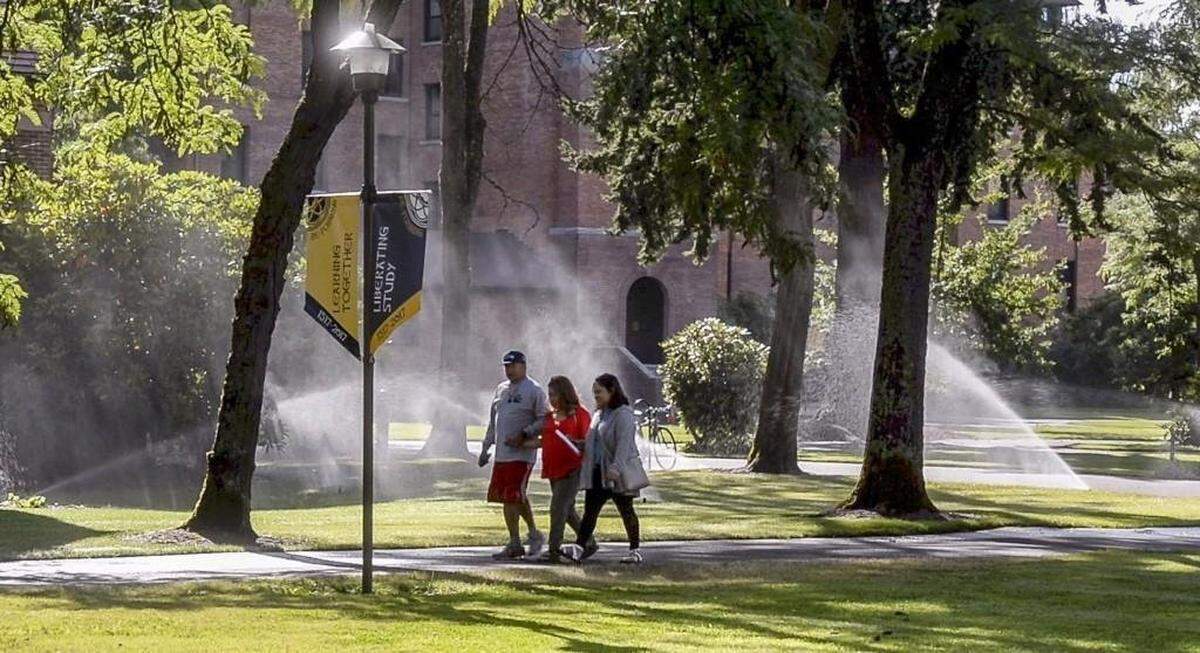
PLU, located south of Tacoma in Parkland, serves about 3,000 students with 223 full-time and 121 part-time faculty members, according to AAUP.
Harty was first hired at PLU as a part-time faculty member in 1978. She holds an MFA in piano performance from the University of Minnesota and a Doctor of Musical Arts in keyboard studies and arts criticism from the University of Southern California.
Harty has taught both piano classes and private studio lessons during her years at PLU. Toward the end, she was teaching at .5 full-time equivalent (FTE).
Her 40 years of work at PLU came to a close in 2018.
The cause of Harty’s dismissal, as documented by the AAUP report, started in spring 2018 when a student contacted Harty for a lesson in collaborative piano, an area of study not provided by PLU.
After being denied an independent study course through the university, Harty and the student arranged for private instruction independent of the university in fall 2018.
In September 2018, the PLU music department chair reported through email that faculty cannot take “under the table” payment from students, sharing concerns of an appearance of “undercutting the university,” according to the AAUP report.
Around the same time, Harty emailed the student an invoice for the instruction, which was forwarded to her parents. When her parents inquired about the bill to the Office of Student Services, staff there contacted the music department.
Harty was sent a $420 check for the lesson but returned the money, concerned about potentially violating the directive from the department.
In October 2018, Harty said, she was told by human resources that she’d undermined the university and only returned the check because she’d been “caught.”
“It felt like an ambush,” said Kirsten Christensen, professor of German at PLU who helped Harty through her dismissal. “She was treated terribly that day.”
Christensen said the matter was “immediately escalated to HR,” which would never have happened with a tenured faculty member like herself. The administration should have held discussions with Harty before calling a dismissal hearing, per the faculty handbook, she said.
In November 2018, Harty was put on unpaid leave and told her contract would not be renewed.
Harty reached out to AAUP about her case. It launched an investigation, prompting the university to provide Harty a dismissal hearing in May 2019. It ultimately was determined she violated a directive from the department chair, according to the AAUP report.
At the time she agreed to the independent lesson with her student, Harty said the directive did not exist — there was no policy against outside classes. Harty added that it wasn’t unheard of for other faculty members to do the same thing — especially part-time faculty, who often have outside careers to get by. Harty, in addition to teaching at PLU, works at Music Northwest in Seattle and has an independent studio.
“It was a new policy that was sent out by email,” she said.
When asked if PLU typically allows professors to have jobs outside their classes, Smith replied that there is a policy on “Standards of Personal Conduct” in the faculty handbook: “Employees shall not engage in outside activities which consume so much time and energy as to interfere with obligations to the university or which bring discredit or disrespect to the university.”
A group of professors reached out to The News Tribune on behalf of the members of the faculty peer committee in March, following the publication of this story, stating in a letter that Harty’s unionization campaign did not influence the committee’s decision. Instead, they saw a “violation of our faculty conduct expectations and based our recommendation on the independent facts and evidence.”
The letter continued: “There is a clear separation between faculty governance and the administration. Our committee was not influenced by the administration in our decision — this was a faculty recommendation. We have a strong governance system that empowers faculty in creating PLU educational policy, and we will continue to rely on that strength when it comes to making a variety of decisions across campus. PLU values as its highest priority excellence in teaching. Mentoring, supporting — and protecting — our students is our calling as educators.”
The letter was signed by A. Choi, R. Kaufman, R. Mergenthal and H. Papadopoulos, Ph.D. faculty members at PLU.
Even though Harty received a dismissal hearing, Christensen said it was retroactive and the university didn’t follow due process for Harty from the start.
Three of Harty’s colleagues, including Christensen, wrote a letter to the PLU Board of Regents defending Harty prior to the dismissal hearing.
“She is and has been an excellent teacher ... To end her career over a single infraction, without adequate due process — which the Dismissal Hearing Committee itself acknowledged — is in opposition both to AAUP standards and to the spirit of this university,” stated the letter. “AAUP standards stipulate that standards for dismissal of a contingent faculty member must be the same as for those of a tenured or tenure-track member.
“Would a tenured colleague with (40) years of service to the university (or even far fewer years) have been dismissed over this incident? Would a tenured colleague have been denied conversations with her immediate supervisors?”
Troy Storfjell, a professor of Nordic Studies at PLU, also signed the letter defending Harty.
“Choosing to terminate Harty for what was only a minor infraction seemed very out of proportion,” he said.
Faculty rights
AAUP’s report suggested there was more to Harty’s dismissal — particularly, her past advocacy for faculty rights.
Those who know Harty say she’s the type to stand up for herself and other faculty, even if that means “rocking the boat” with administration.
“This is a person of real substance — a person who stands up for what she believes in,” said Don Eron, senior instructor for writing and rhetoric at the University of Colorado, Boulder, who became acquainted with Harty through AAUP.
In 2012, Harty became a leader in the effort to organize a union of contingent faculty through Service Employees International Union (SEIU).
Contingent faculty sought to organize because of irregular working conditions and the lack of uniformity in pay and benefits, they told The News Tribune in 2013.
The effort launched a legal battle between SEIU and PLU administration, with PLU arguing that as a religiously affiliated institution it wasn’t covered by labor laws that enabled a union representation election.
In 2014, a National Labor Unions Board ruled that PLU contingent faculty could unionize, arguing they did not perform a religious function. An election to unionize was held but the proposal rejected when the results were read in 2015.
“This election is a step in our long, ongoing journey to improve working lives for faculty and quality of education for students,” Harty was quoted as saying in 2015.
SEIU eventually withdrew its petition to unionize, wanting “a fresh start to its organizing campaign and to avoid further legal expenses and delays.” PLU faculty is not unionized, but Harty said the desire to do so is still there.
Harty feels her past advocacy might have contributed to her dismissal, as the AAUP report pointed out.
“I guess I was a thorn,” she told The News Tribune.
National response
Nationally, the number of part-time faculty in higher education is higher than it used to be, according to Joerg Tiede, senior program officer and researcher for AAUP. Unionizing is also on the rise.
Fewer tenured positions has led to a feeling of a lack of security in higher education.
“In higher education, it is a critical issue because we touch the future — we are the teachers in the classroom with all these people, and we have to inspire them and teach them how to think, and it’s incredibly hard to do this job when you’re working multiple jobs and trying to make ends meet,” said Caprice Lawless, an English professor at Front Range Community College in Colorado and committee chair at AAUP.
Harty’s case is an example of that, Lawless said.
“Once again, here’s a case where higher education, instead of recognizing their valuable assets, (treats them) as disposable,” she said.
It’s not uncommon for professors on part-time contracts with universities to be informed that they’re not coming back next year, no matter how long they’ve been at the institution, Tiede said.
“What makes Jane’s case unusual,” Tiede said, “is that they actually fired her. They didn’t simply say, ‘You’re not coming back this year.’ They said, ‘Because of something that you did, we’re not allowing you to teach next semester, and when that semester is up, you’re not coming back.’ If you fire them, you have to give them a proper hearing — and that was the crux of the matter.
“Dismissing someone like this after 40 years seems particularly egregious.”
Other professors who saw Harty’s case through AAUP agreed.
Erlene Grise-Owens was also dismissed from her position at Spalding University in Kentucky in 2016 after she criticized the administration there. AAUP investigated and determined that she was dismissed without academic due process and censured Spalding. When she read Harty’s case, it felt similar.
“I went in and skimmed the report and my thought was: Deja vu,” Grise-Owens told The News Tribune. “The reason given for her to be (dismissed) was so thinly veiled it was ridiculous.”
AAUP will vote whether to censure PLU at an annual meeting later this year. Censuring PLU will not change how the university operates but could impact whether prospective faculty choose to accept positions there.
“This report provided by AAUP is devastating. It highlights a failed process,” Storfjell said. “It concerns me that the university doesn’t appear more concerned ...That ought to be taken seriously.”
Christensen said she referred to the AAUP’s censure list before applying to jobs in the past.
“It could impact PLU’s ability to recruit faculty because even though it’s about the case of a single faculty member, it speaks to a climate of an institute,” she said. “... I don’t know if it would keep students from coming, but I imagine students care about how their faculty is treated.”
Harty hopes to return to work at PLU at some point. She misses her students.
“My ultimate hope would be that I get my job back and be able to teach again,” she said.
This story was originally published February 28, 2020 at 5:00 AM.