Pierce council to consider tax increase to fund behavioral health services, revamp Medicaid
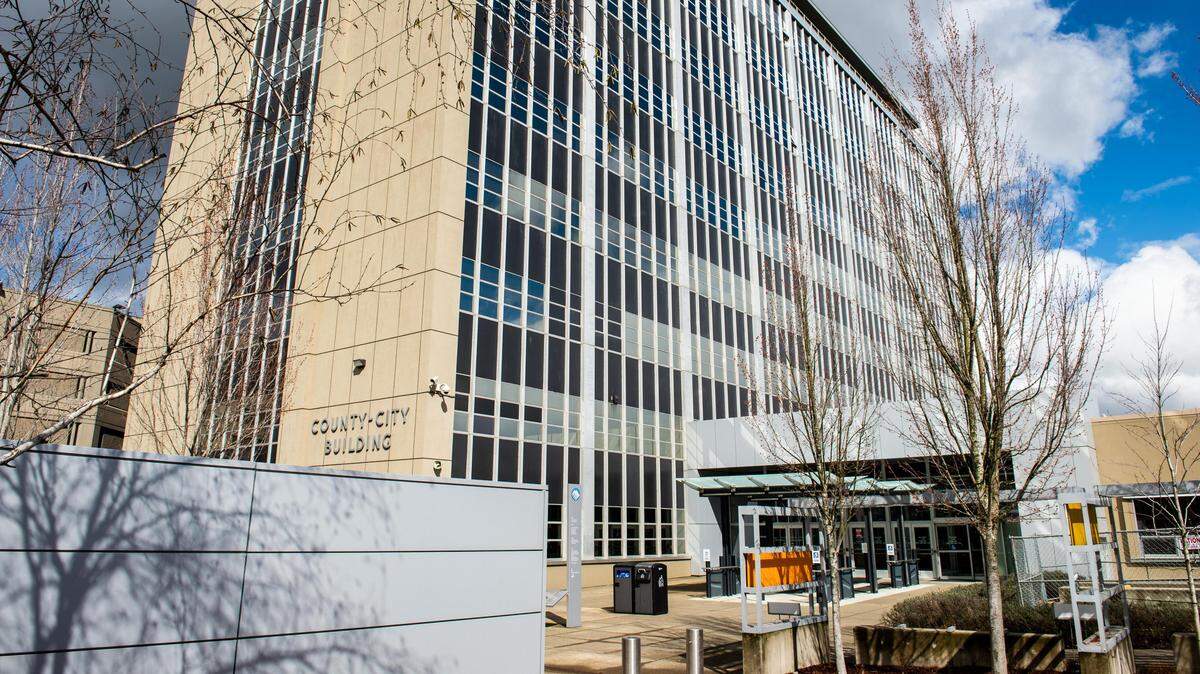
A Pierce County Council vote Tuesday to increase taxes could bring funding to behavioral health services and change the entire local Medicaid system.
Vice Chair Dave Morell (R-Lake Tapps) has co-sponsored a bill with Democratic council members Connie Ladenburg of Tacoma and Derek Young of Gig Harbor to increase sales tax by one-tenth of 1 percent to provide behavioral health services.
Because the ordinance is a tax hike, it requires a “supermajority” to pass, or five of the seven votes.
The vote comes nine months after Morell asked to table the sales tax increase until a plan for the funding was created.
The two-pronged bill would use the projected $12 million a year from the sales tax increase for behavioral health education, early intervention and prevention.
The bill outlines how the initial year of tax revenue would be allocated:
Mobile Crisis Intervention Response Team, $1,045,000
Intensive services for youth, $1,565,000
Expanded behavioral health services in underserved school districts, $1,565,000
Crisis services for adults, $1,565,000
Assisted outpatient treatment, $525,000
Recovery housing assistance, $2,085,000
Behavioral health services for veterans, $525,000
Criminal justice diversion services, $3,125,000
In addition to a spending plan, the bill would send a letter to the state to ask to restructure the Medicaid system in Pierce County.
Advocates of the restructuring say a so-called “Accountable Care Organization” would allow a percentage of Medicaid dollars to remain in Pierce County, rather than return to insurance companies.
“It saves money, because we end up managing the dollars instead of a Managed Care Organization,” Morell said. “It removes the middle man and allow us to keep the profits local and not send it back to corporate headquarters.”
There are more than 230,000 Medicaid recipients in Pierce County and five managed care organizations,” which act as insurance companies for Medicaid. When a recipient visits a provider, each managed care plan has a fixed reimbursement rate for different services.
Alisha Fehrenbacher is the CEO of Elevate Health, FACHE, CEO and President OnePierce Community Resiliency Fund. She has been a proponent of the accountable care organization model. Fehrenbacher said some providers are not covered by some managed care organizations.
“These providers, not only do they not always have contracts with a managed care organization, they also have to do billing five different ways and utilization reviews five different ways,” she told The News Tribune on Dec. 18.
“It causes extra burden. It causes complexity in the system. It causes gaps in care. It causes issues with access, and it causes basically a breakdown in the infrastructure of our region.”
Under an accountable care organization, contracts with managed care organizations would be renegotiated and local partners would get to decide how dollars would be spent. Pierce County would oversee a board of local health care service providers, hospitals and community partners to determine how to reallocate funds.
“They have to share their profits with us,” Fehrenbacher said. “Instead of you getting a profit margin of 3 percent on all Medicaid spent in our region, we want them to give back 1.5 percent to our region, so we can invest it in infrastructure, workforce, social service supports, prevention and education.”
The Washington State Health Care Authority has to sign off before the county organization can be created. If approved, Pierce County would be the first in the state with such a program.
The county estimates savings could reach as much as $1 billion dollars over the next 10 years. Fehrenbacher said savings would come from a streamlined system and more investment in prevention.
Oregon recently implemented a similar Medicaid structure. A September report showed increases in services:
The number of children in foster care who received timely mental, physical and dental health assessments improved by more than 200 percent since 2014. Overall smoking declined by about 9 percent. The overall state performance showed 1.1 percent improvement from the prior year in the rate of patients with mental illnesses using emergency departments.
The News Tribune reached out to the five managed care organizations for comment: United Healthcare, Molina, Coordinated Care and Amerigroup did not respond to requests for comment. Attempts to reach Community Health Plan of Washington were unsuccessful.
County Council member Pam Roach (R-Puyallup) said she is not on board with the tax said it is “embarrassing” that some Republicans are.
“This is coming at a time when many don’t have a job. This is not a time to be raising taxes,” she told The News Tribune. “At a time when many businesses are closed, it is not a time to be raising taxes.”
This is the second push in four years to pass a behavioral health tax. In 2016, the council fell a vote shy in the eleventh hour.
In 2005, the state granted counties the authority to increase sales tax for new mental health, chemical dependency, or therapeutic court services. The tax can only be approved by elected officials, not by voters at the ballot box.
Of Washington’s 39 counties, 24 have passed a one-tenth of 1 percent tax increase for behavioral health services.
A 2018 Pierce County Behavioral Health System Study report concluded there were significant behavioral health-related needs across the county and gaps between the need and available resources.
This story was originally published December 22, 2020 at 5:10 AM.