Senator who took tough votes in Olympia, could do a standing slam dunk, dies at 78
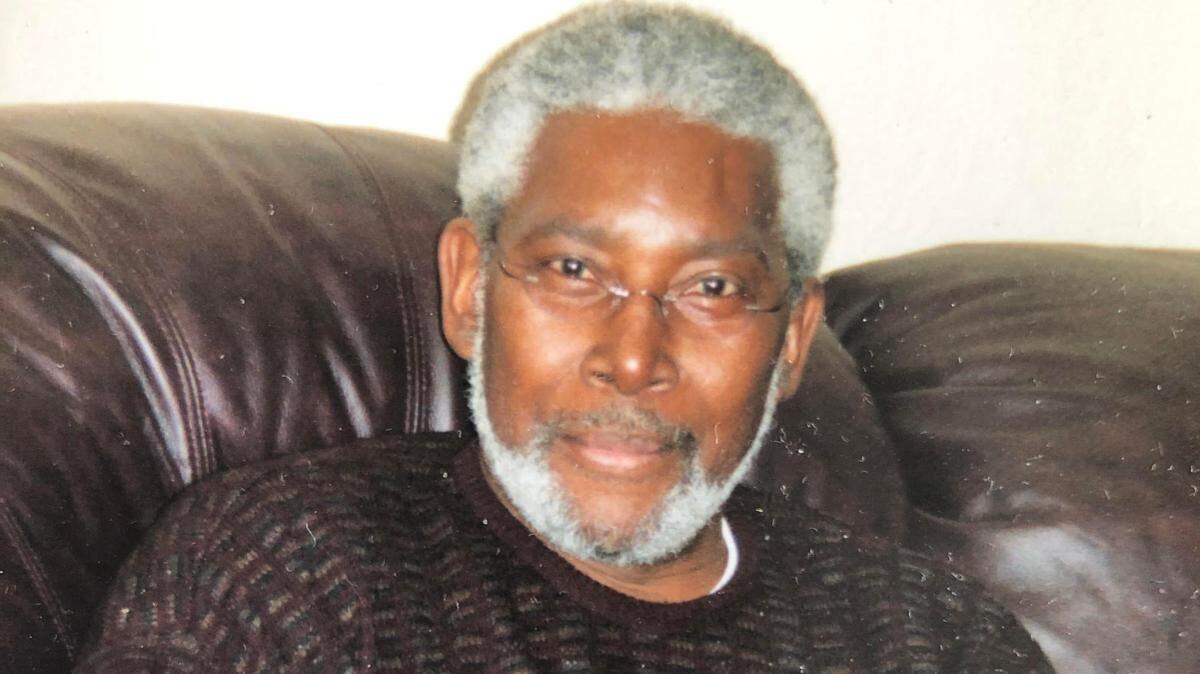
When Karen Smitherman’s husband told her he thought he was going to run, she thought he meant around the block.
Bill Smitherman meant he was running for the state House of Representatives against a two-term Republican incumbent to represent voters in Pierce and Kitsap counties.
“Nobody thought he could win, and he did,” she said.
Smitherman, who passed away this month, was elected to represent the 26th Legislative District in 1982. The Democrat served two terms in the House and one in the Senate — which was one of several chapters in a career of public service that had profound effects on the region.
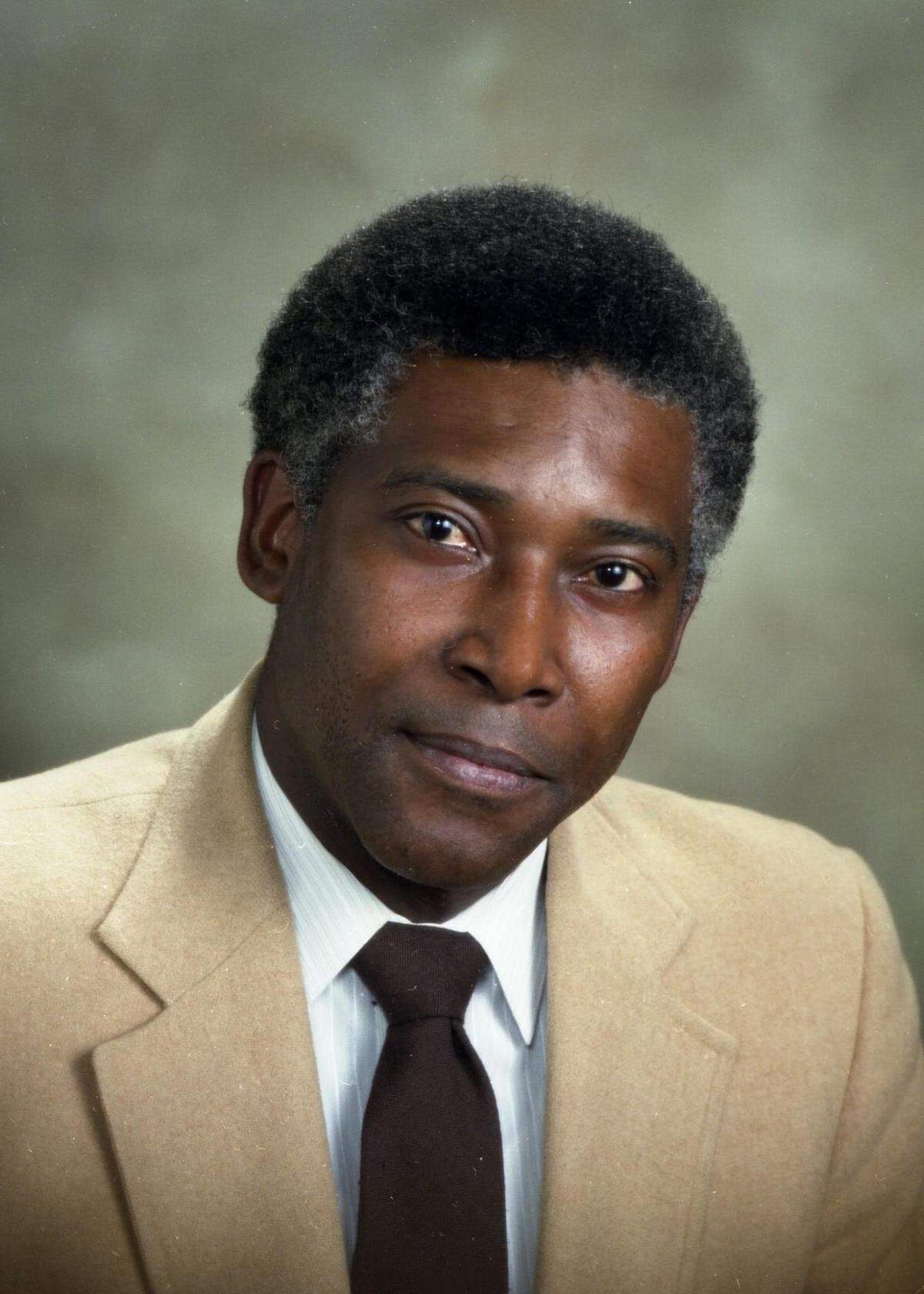
Smitherman was the first African American legislator to represent the district, which included Gig Harbor, the West End of Tacoma, the Key Peninsula and out to Gorst.
In Olympia, he helped pass legislation to create the Tacoma branch campus of the University of Washington and investigated water quality issues in Puget Sound, among other things. He also worked as an educator and was deeply involved in community development for the city of Tacoma, helping to establish the system of neighborhood councils.
The 78-year-old died Nov. 3. He was diagnosed a year ago with squamous cell carcinoma of the left vocal cord, which metastasized to his lungs and liver, his wife said.
She said he “was a wonderful husband, a great dad, a very special teacher and professor,” who encouraged students to reach their potential.
Wayne Ehlers, speaker of the House when Smitherman started in Olympia, remembered him as someone who campaigned hard, won a tough race and wasn’t afraid to take difficult votes once elected.
“It was a very difficult district to win,” Ehlers said. “... Bill was a very, very good candidate.”
He was a good speaker, knew the issues and stood up for what he believed in, Ehlers said.
“He took tough votes,” the former speaker said. “He was willing to vote for budget and taxes when it was necessary to do so, in a very tough district.”
Smitherman felt he could explain to his constituents why those votes were necessary, Ehlers said.
He said Smitherman was interested in higher education and education in general, among other issues.
Ehlers was out of the Legislature when Smitherman helped pass the UW Tacoma legislation, but he said he knows it was a hard sell to convince lawmakers from other parts of the state to support it. They wanted the branch campus in their own regions.
Smitherman helped convince them about the need for the facility in his district.
“It was certainly an important thing for Tacoma and Pierce County to have it there,” Ehlers said.
Smitherman had good constituent relations and cared about those he represented but didn’t agonize over what each vote meant for his reelection, as some lawmakers did.
“In other words, he wasn’t a problem, which I had enough of those,” Ehlers said with a laugh. “... He wasn’t one of the people I had to worry about.”

‘Doorbelled like crazy’
Smitherman held “Breakfast with Bill” events in Gig Harbor and Port Orchard each month to explain to constituents what he was thinking and get feedback in a casual setting.
During that difficult ‘82 campaign, Karen Smitherman remembers they did 12 mailings to 22,000 households in nine days.
“He doorbelled like crazy, and that was the key,” she said. “That was key. And he enjoyed meeting the constituents and listening to their concerns.”
She also remembers U.S. Senator Henry “Scoop” Jackson coming to town to do a business walk with Smitherman, and a photo in the Peninsula Gateway at the time. She said Jackson was a moderate Democrat, and that his visit might have been instrumental in Smitherman’s campaign, garnering some Republican votes.
“He worked his tail off, let me tell you,” she said about her husband.
As a lawmaker, she said: “He worked both sides of the aisle, which is rather unique today.”
She remembers he worked on legislation concerning the environment and water quality, economic development, job training and retraining, welfare reform and that he fought for labor, among other things.
Peers in the Legislature were stunned at the way he’d read a bill overnight and completely understand it before it came before his committee.
“His capability of grasping and understanding issues was phenomenal,” she said.
Smitherman was one of few people of color in the Legislature.
“When you face racism, when you face difficulty because of your race, I mean, there were some really good pieces of legislation that he had taken away from him, but that’s politics, right?” his wife said. “He was able to share those difficulties and listen.”
She said he graduated from Langston University and Clover Park High School and that education was very important to his family.
After graduation from Langston, he worked at West Seattle High School, where he taught sociology and anthropology, coached track, and developed a special program with the University of Washington to help kids facing adverse childhood experiences.
“Then he came down to become a professor at the University of Puget Sound,” she said, where he taught race relations and the politics of Black power.
Then he worked in community development for the city of Tacoma, where he helped establish the neighborhood councils and wrote grants to redevelop the city.
“I think he had a passion for public service, and it was the best way that he knew that he could help make a change,” his wife said about his decision to later run for office. “He really had a passion for serving people. He cared deeply about our community.”
After Olympia, he worked as the executive director of the Upper Tacoma Renaissance Association.
“He brought in millions of dollars to help redevelop the Hilltop,” she said.
‘The caucus took notice’
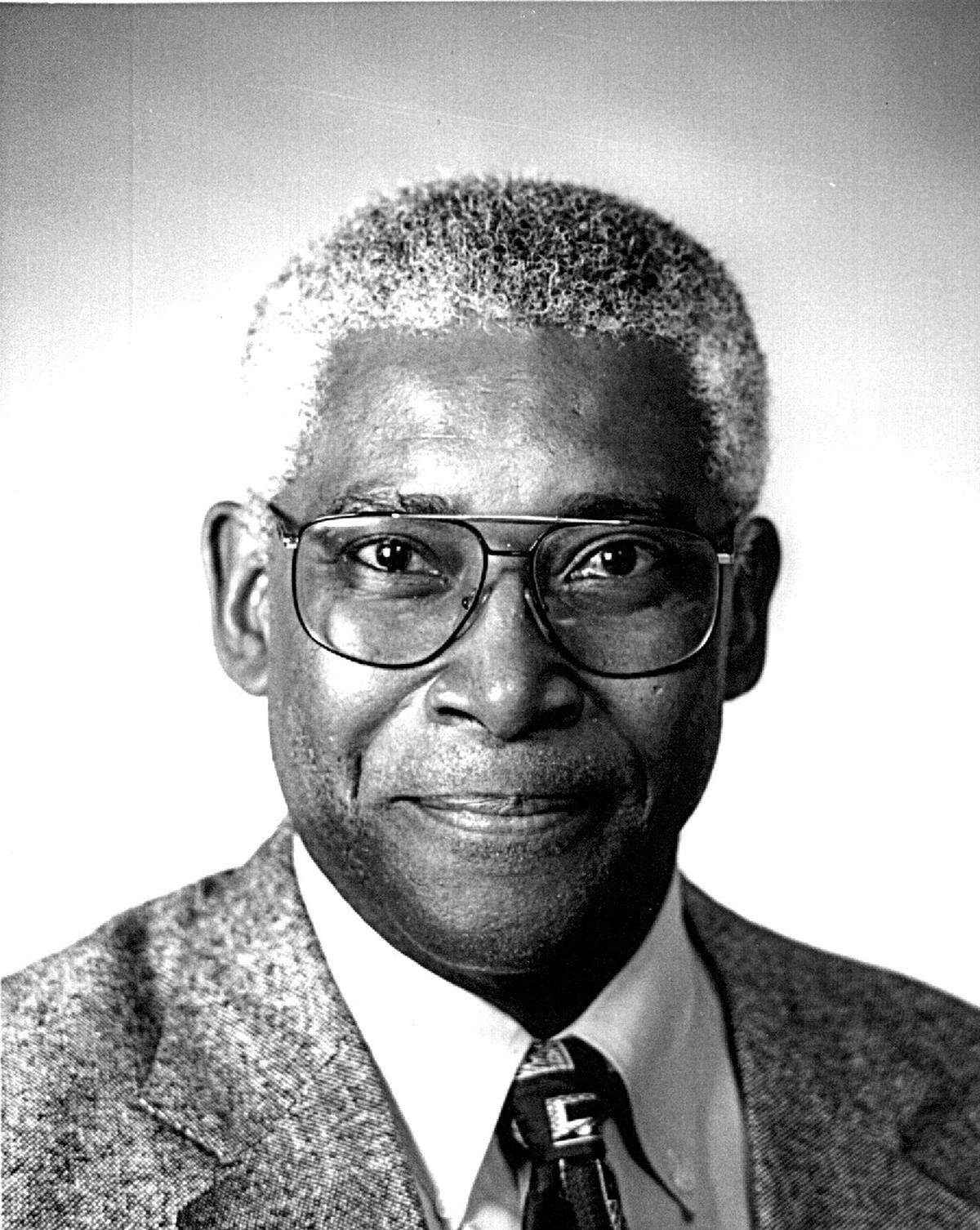
Tim Strege, who was elected to the Tacoma City Council in 1975, described Smitherman as “the brain within a very talented team,” during his time with the city’s community development department.
“It was probably the city’s first real focus on housing and affordability,” he said.
He said Smitherman’s strategy was “to look at individual neighborhoods of the city and what ways he could best improve them.”
That included parks, affordable housing, employment-generating opportunities, small business development and other things. His work helped secure more Section 8 vouchers for Tacoma residents.
He’d explain to officials why the city’s new approach was an effective way to use federal dollars.
“Bill was never really intimidated by power or authority, but more so he practiced the art of communicating expertise and battling for the validation of good ideas,” Strege said.
Strege also remembers that Smitherman took initiative as a freshman legislator following a KING-TV series about pollution in Puget Sound.
Smitherman’s district represented part of the Sound, and he asked Strege — who was a staff member in the state Legislature at the time — to arrange some hearings. He noted that Smitherman’s district included the Asarco smelter, among other sources of pollution.
“Bill had me schedule some rooms in a House office building where we conducted hearings with Bill as the only representative, and kind of chaired these informal meetings, though we scheduled them through the Sergeant at Arms’ office so they were public meetings and invited the Department of Ecology, water quality experts, citizen groups,” Strege said.
After a couple months or so of hearings, maybe five or six meetings, the House of Representatives formed a select committee to address water quality in Puget Sound.
That led to stricter environmental regulations for the Sound.
“Bill actually got it started, and at that point the caucus took notice,” Strege said. “... I think Bill was an instigator in getting that to happen because he wasn’t willing to wait. He thought there needed to be more immediate attention.”
He also said Smitherman worked as a legislator to get the 19th Street overpass on state Route 16 to help with traffic congestion.
Later, he remembered seeing Smitherman as a teacher at what is now Hilltop Heritage Middle School in Tacoma. He’d sometimes see him in the hallway speaking with a student, “talking to them directly rather than down to them, and I kind of wondered to myself, we need more teachers like that who would teach each student like an individual” with potential, he said.
‘Led by example’
Longtime friend Hugh McMillan is another who remembers Smitherman’s semi-retirement working as a social studies teacher and basketball coach at the school. He dressed for the classroom like he dressed for the Senate floor.
“He showed up wearing a suit and tie,” McMillan remembered. “‘I’m expecting my students to respect me,’ he said.”
The students did, and other teachers started dressing up, too.
McMillan said he helped with Smitherman’s campaign, and that the legislator was part of the “panoply of people who give a damn.”
“He was honest,” McMillan said. “There was nothing pretentious about him.”
Smitherman answered every question fully, he said, and he delivered.
“If he said: ‘I’m going to build a box,’ rest assured, the box is going to be built,” McMillan said.
Larry Seaquist, former state representative for the 26th Legislative District who met Smitherman while first running for office, said similar things.
“What really drew me to him was his clear, upright character and the warm connection he made with everyone around him,” Seaquist said via email. “To me as a novice, he seemed the model of everything that I thought a legislator, an elected official, should and could be.”
He described Smitherman as thoughtful and somewhat reserved.
“In these days when there are too many electeds parading disgraceful public behavior, Bill Smitherman remains someone we can all look up to as a reminder of what an admirable public servant looks like,” Seaquist wrote.
Karen Smithman described her husband as compassionate.
“He was a man that really led by example,” she said. “... He was very kind, very patient, very understanding and honest. Very honest.”
They married in 1973. When they were first dating, she remembers he stopped while they were walking in downtown Seattle to offer to help someone who was blind cross the street.
He liked basketball, football, the Seahawks — anything athletic, she said.
He could high jump to 7 feet, 1 inch as a track and field athlete (and he said at one point he was fifth in the nation, though she’s not sure of the specifics).
Strege played basketball with Smitherman and said he’s only person he knew who could do a standing slam dunk.
Karen Smitherman also said he had a great sense of humor and loved cartoons. “Spongebob Squarepants” was a favorite. He could sing the theme song.
She said he’s survived by two daughters, Pam Postuma and Sharon Brunk, and four grandchildren. He didn’t want any services, she said.
“He really wanted people to remember him for what he tried to do, and that he had a sincere hope that people would continue to be motivated by his passion for community service,” she said.
This story was originally published November 16, 2021 at 11:20 AM.