Tacoma street project planned 10 years ago finally to start. Some neighbors say hold on
A Tacoma street improvement project approved a decade ago is finally about to start, leaving some people surprised and upset.
North Baltimore Street between 46th Street and the Tacoma-Ruston border will be getting repaved with added sidewalks, curb and gutters, on-street parking and bike lanes. The street is located in a residential area in North Tacoma.
The project was planned back in 2008 as part of the Environmental Impact Statement (EIS) for the billion-dollar Point Ruston development at the former Asarco smelter site. The EIS predicted increased traffic along Baltimore because of the development, and improving the street was part of the development’s traffic mitigation efforts.
Public comment for the EIS, which included the Baltimore project, was taken in 2008.
That’s why, when Tacoma resident Jamie Otto received a letter in the mail from the developer of the project in August, she said she had no idea what it was about.
“What we learned was that the public comment period was over a decade ago, and we didn’t get a chance as a community to say what our input was,” said Otto, a mother of two who lives at the intersection of 46th and Baltimore.
“We have a park, we have the senior center, we have the VFW all right there within a few blocks of it that’s going to be impacted. There should have been much earlier notice and more involvement of the community.”
Since the letter, Otto said, about 150 neighbors and people who use the nearby park and VFW services along Baltimore signed a “Hands Off Baltimore” petition asking the construction be paused to allow more time for public feedback.
Halting the project is unlikely at this point, according to city staff.
The City of Tacoma’s Planning and Development Services and Public Works staff provided information about the project to The News Tribune that included a time line of actions and public involvement. A Point Ruston project manager for the Baltimore project could not be reached for comment.
“The design for Baltimore St will likely not change substantially as part of the developer funded portion during construction. The developer and City made some modifications to the approved design to address community feedback; however, the modifications do not deviate from the required development mitigation,” city staff said in a statement.
Now, with construction expected to start in early December, residents are still pushing for answers and sounding the alarm on the need for a more transparent process that involves existing neighbors in construction and development projects.
A decade in the making
In August, Nancy Newman got a letter from Point Ruston Inc. in coordination with the City of Tacoma. It alerted her to construction on North Baltimore Street near her home that would start in a couple of weeks.
A resident of Tacoma’s North End since the 1990s, Newman said it was the first she’d heard of the project along Baltimore and its intersection with North 46th Street.
“We feel like we have a right to know why only a few residents received notification, and that first notification was only two weeks away from the proposed groundbreaking,” Newman told The News Tribune.
Point Ruston is a mixed-use development located along Commencement Bay within the City of Tacoma and the Town of Ruston.
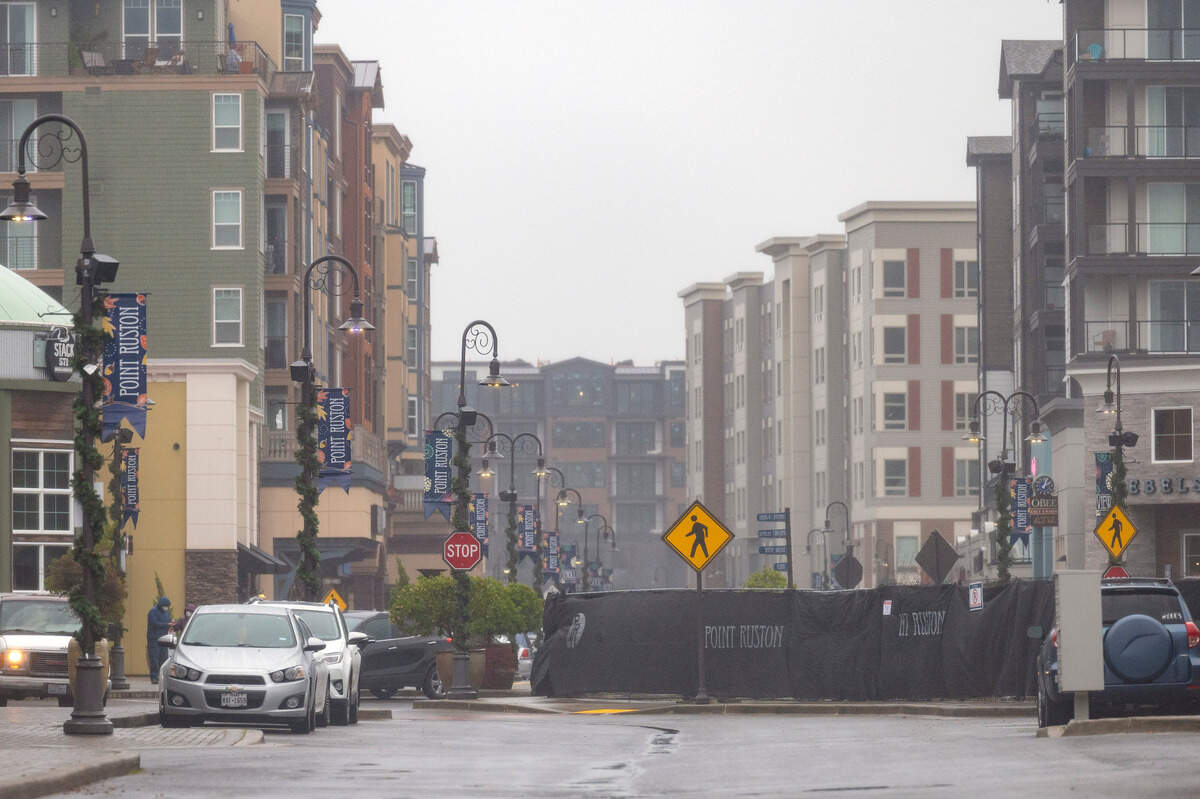
Construction began in 2008. At the time, the developer anticipated it would take 10 years for the full build-out of the $1.2 billion project, which was described as having approximately 130,000 to 228,000 square feet of retail and commercial space, a 150-room hotel, an estimated 800 to 1,000 dwelling units, approximately 50 acres of publicly accessible parks, recreation areas, open space, view corridors and public access with parking for an estimated 3,700 vehicles. The estimated total square footage of the project was 1 million to 1.3 million square feet.
The scale of the project required an Environmental Impact Statement that included various staggered mitigation measures the developer would need to take on as the development grew.
One of those measures had to do with increased traffic the project was expected to draw.
In an effort to lessen congestion, the project’s Final Supplemental Environmental Impact Statement (FSEIS) suggested various road projects, including improvements to Ruston Way — new curbs and gutters, added signals and roundabouts at intersections, and bicycle and pedestrian infrastructure — and Baltimore Street. Baltimore Street is within Ruston’s jurisdiction between North 51st Street through North Ruby Street, where is hits Tacoma city limits.
According to the FSEIS, a “channelization plan” was to be made for Baltimore Street between North 49th Street and North 46th Street to funnel traffic from Point Ruston, including improvements like sidewalks, bike lanes and on-street parking. The street design also narrows the road physically and visually with the intent to reduce speed, according to city documents.
Bike lanes are being added to the North 46th and North Baltimore street intersection and along North Baltimore. A marked crosswalk and pedestrian-crossing beacon will be installed on North 46th Street in addition to a marked crosswalk at North Seaview and North Baltimore for people using the VFW, Senior Center and shared parking lots. Work in and along North Baltimore Street was to start once a certain number of units/square feet of commercial space were met at Point Ruston.
The comment period on the Environmental Impact Statement ran from Jan. 16, 2008 through Feb. 14, 2008, which included the Baltimore Street mitigation project.
Nearly 50 people, organizations and federal, state and local agencies submitted a comment for the environmental impact statement. Among residents of Tacoma and Ruston, those who submitted comments spoke positively of the project to clean up the former Asarco site. Some worried about traffic along Ruston Way and bike and pedestrian access, but comments regarding Baltimore were notably absent.
In 2019 Point Ruston, LLC submitted an application for revised environmental review of the Point Ruston development, and the city issued a public notice regarding that review to property owners living on and within 1,000 feet of the development. The review reaffirmed the project to improve Baltimore Street.
City code lays the foundation for when public comment is required for a project and typically involves a mailing to property owners within a certain distance and posting a sign on the site. In 2020, the city made efforts to increase communication with the public about certain projects by implementing a Director’s Rule to require posting of a sign with the scope of the project and contact information on site prior to construction for projects that require a State Environmental Policy Act (SEPA) review. The rule wouldn’t have applied to the Baltimore project, city staff said.
Tacoma City Council member John Hines told The News Tribune that he’s heard about increased traffic in the general area in North Tacoma and that Baltimore Street needs a face lift.
“Baltimore is in pretty poor shape as a street,” he said.
Hines acknowledged it’s a unique project, being a part of a large-scale, long-term development. He thinks there could be lessons about updating residents for projects like these that might take some time to materialize. Already, the city is working to increase communications with residents about development, such as the Proctor III apartment complex, where city staff, contractors and neighbors are meeting on a regular basis through construction.
“It’s kind of a model I’m hoping to replicate with other projects,” Hines said.
Addressing concerns
Residents near the Baltimore project say they never remember getting any notices about the project prior to August, and they take issue with lack of communication.
They also take issue with the project itself, worried that a left hand turn lane at the North 46th Street intersection would allow through traffic to continue to speed by without slowing down and cause a blind spot for pedestrians looking for oncoming traffic. Both Otto and Newman say the intersection is a dangerous one already and worry the improvements would make it worse.
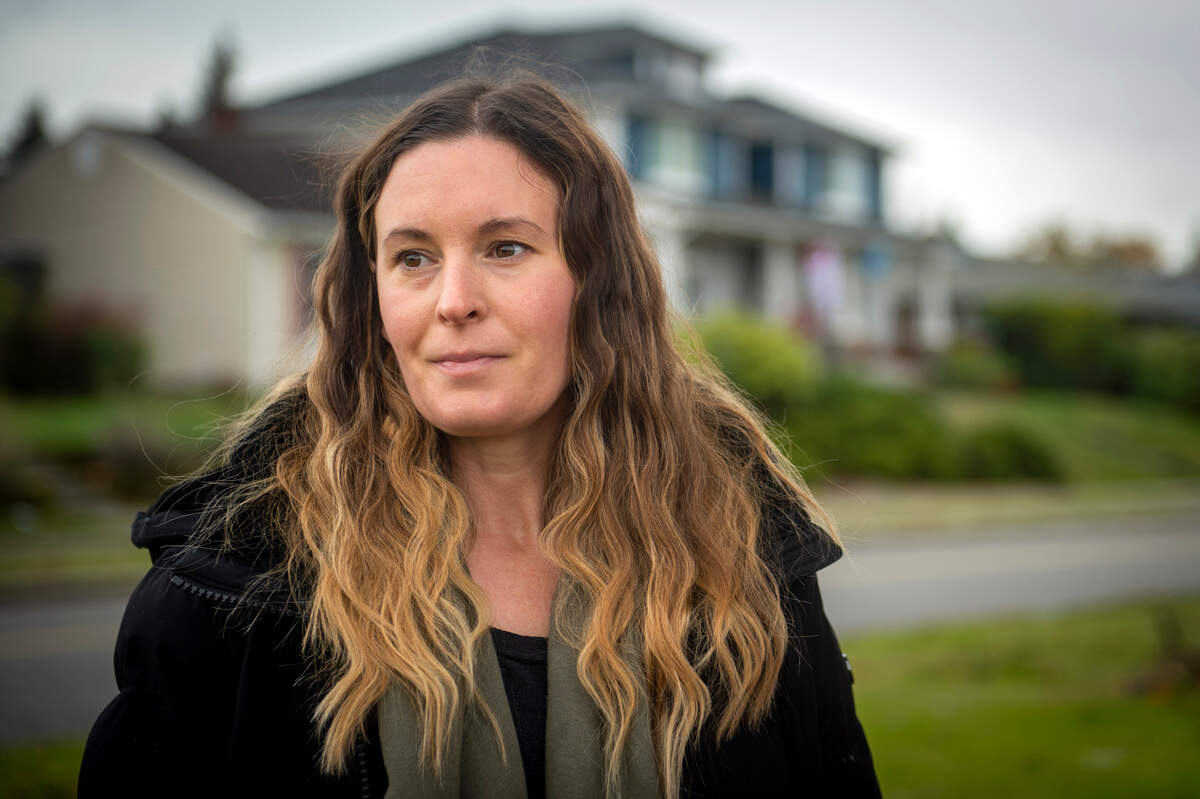
“This is our neighborhood. We live here and have knowledge and experience of excessive speeding and accidents and near misses which have been reported by neighbors on Baltimore and 46th as well as other North End neighbors,” Newman said. “And the city’s decisions are going to impact our lives.”
In response to resident concerns, city engineers told residents in an email at the end of August that requirements for public health and safety had been evaluated and incorporated into the FSEIS for the project and that design engineers have followed the requirements for safety for safe turning movements per the Traffic Impact Analysis study for the project.
Residents also worry about the presence of arsenic in the soil due to the smelter and what will happen if it’s dredged up by construction.
City staff told neighbors in an email on Aug. 30 that they will be disposing of 12 inches of soil below the existing asphalt.
“We have received approval from the Tacoma-Pierce County Health Department to dispose of all excavated materials in the LRI landfill,” staff said. “… As shown from the soils sampling results, removal of the top 12 inches of soil will remove almost all of the contaminated material from the roadway subgrade.”
Residents have asked about a roundabout at the 46th and Baltimore intersection or whether North Ferdinand, a street a few blocks east which connects to Ruston Way, would be a better focus.
Roundabouts have also been used as traffic calming measures, and city staff said it would not be appropriate on 46th Street, which is designated a minor arterial. Staff added that a roundabout at North 46th and North Baltimore streets was not proposed because it did not meet the criteria for vehicular or pedestrian volumes and may have required acquisition of private property.
“The overall project was designed to minimize impacts to private property and private uses in the right-of-way,” city staff said. “No private property will be encumbered by the project.”
Otto said that there are parts of the Baltimore project her neighborhood needs, including improved sidewalks and the paved road itself, but said she wants it done the right way.
“We do need improvements, but we need the right improvements not a huge intersection with a bunch of traffic,” she said.
Since the initial notices in August, the city’s public works and planning staff met with neighbors to take questions and are trying to keep an open line of communication.
“PDS has set up a series of project overview meetings with the developer and the community to create a venue to share information regarding the project timeline, outline some of the key milestones, and provide information on what to expect with the construction sequencing. This will also create a communication channel to both the City and the developer to address any additional concerns,” city staff told The News Tribune.
Construction is slated to start in early December, with completion expected around August 2022.